

A construction site is ready for inspection, but the permanent gas line is still weeks away. A utility is replacing a section of pipeline, yet customers still need heat. An industrial generator has to run through an outage, and the available laydown area is already crowded with equipment. In each situation, the question is whether natural gas is available. It is whether the delivered fuel can provide the required energy, at the required flow, without creating a new operational problem.
That's the practical issue behind compressed natural gas vs LNG. CNG and LNG are both natural gas, but they move, occupy space, and demand different site controls. CNG can often be connected with fewer specialized systems. LNG stores far more energy in a smaller volume, but it brings cryogenic temperatures, vaporization, transfer procedures, and boil-off planning.
| Decision factor | CNG | LNG |
|---|---|---|
| Physical state | Compressed gas | Cryogenic liquid |
| Typical storage condition | Approximately 2,500 to 3,600 psig | Near −162°C, or −259°F, at roughly 10 to 50 psig |
| Main equipment | High-pressure cylinders, regulators, and dispensing equipment | Insulated tanks, transfer equipment, vaporizer, and pressure-management systems |
| Storage footprint | Larger for the same delivered energy | More compact |
| Best operational fit | Shorter-distance, moderate-demand, flexible temporary service | High demand, limited footprint, longer service, or remote delivery |
| Main handling issue | High pressure and temperature-sensitive tank pressure | Cryogenic exposure, vaporization, venting, and boil-off |
The right answer depends on more than fuel price. Demand, duration, delivery distance, footprint, replenishment access, equipment lead time, and interruption risk should drive the selection.
Why Compressed Natural Gas vs Liquefied Natural Gas Matters
A crew is waiting, the generator has to go live, and the temporary fuel setup has one job. Keep gas flowing without turning the site into a storage, transfer, or refill problem.
That is why compressed natural gas vs liquefied natural gas matters in real operations. The decision is rarely won by a spec sheet alone. It is won by the option that fits the pad, can be delivered on time, can be connected safely by the people on site, and can keep running through the ugliest part of the job.
On temporary construction and utility sites, the wrong fuel choice usually shows up in one of three places. Delivery frequency becomes a headache. Setup takes more coordination than the shutdown window allows. Or the equipment footprint starts competing with laydown area, access lanes, and safety clearance. Those are site problems, not textbook problems, and they decide the result.
CNG and LNG solve different field constraints. LNG earns its place when a site needs a lot of gas delivered in a tighter storage envelope, especially when repeat delivery access is difficult. That advantage is why LNG dominates international gas movement at scale, as shown in EIA's international LNG trade analysis. CNG earns its place when speed, simpler handling, and easier temporary deployment matter more than packing the maximum amount of fuel into the smallest tank area.
Here is the practical split. If you are covering a shorter outage, feeding moderate demand, or setting equipment where crews need a system they can stage and connect with less specialized support, CNG is often the cleaner choice operationally. If the site is remote, the load is heavy, and tanker visits need to be minimized because access is restricted or the work window is tight, LNG starts making sense fast.
The site changes the answer
A downtown utility bypass, a storm restoration yard, and a remote pipeline maintenance job can all need temporary gas. They should not all get the same fuel package.
Field rule: Select the fuel around the site's worst operating constraint, not its most attractive specification.
That usually means asking two questions before you talk about fuel economics. How fast can this system be deployed, and how often can this site realistically accept replenishment without disrupting the work? Answer those directly, and the CNG versus LNG choice gets much clearer.
Understanding the Core Differences in State and Pressure
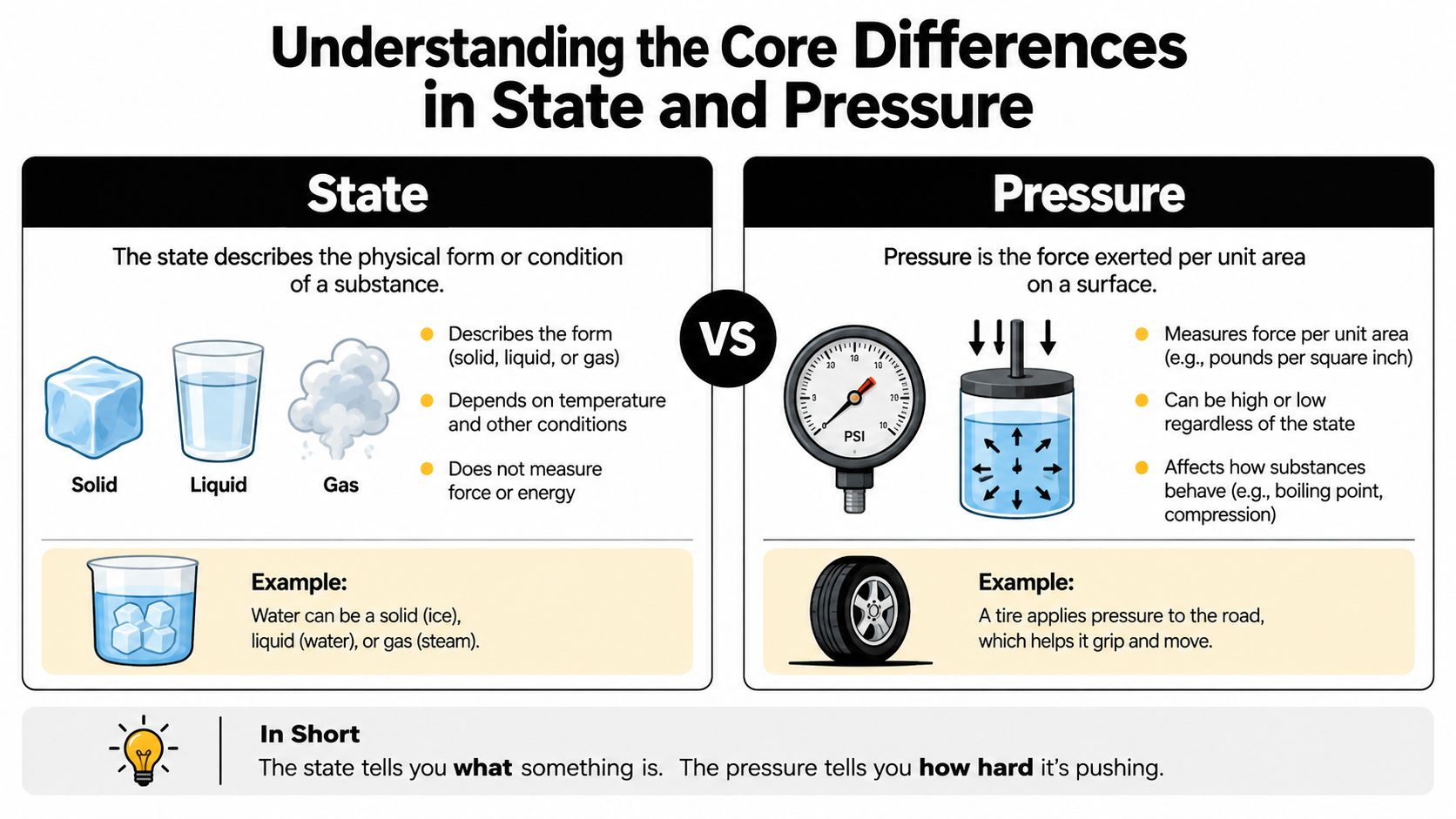
CNG is a high-pressure gas system. LNG is a cryogenic liquid system that must become gas again before conventional natural-gas equipment can use it. That difference controls the tank, trailer, regulator, transfer connection, vaporizer, inspection routine, and emergency plan.
CNG is commonly stored at approximately 2,500 to 3,600 psig, or 17.3 to 24.9 MPa, according to the Alternative Fuels Data Center's equivalency methodology. The Department of Energy's natural gas basics also identifies systems operating at up to 3,600 psi, with some systems rated at 3,000 psi. The cylinders and piping must be rated for that pressure, and the site needs suitable pressure regulation before the gas reaches the appliance or generator.
LNG is stored as a liquid near −162°C, or −259°F, typically at much lower pressure, around 10 to 50 psig. Its tanks are double-walled and vacuum-insulated because ordinary storage vessels can't maintain the required temperature.
What changes at the connection point
A CNG installation usually centers on cylinder storage, isolation valves, pressure-control equipment, and a delivery connection. The gas remains gaseous from the trailer or storage module through the regulator and into the end-use equipment.
An LNG installation adds another conversion stage. The liquid must pass through a vaporizer, pressure must be managed, and the operator must account for cold surfaces, liquid transfer, vapor release, and changing tank conditions.
CNG pressure also responds materially to weather. The DOE identifies 3,600 psi as a typical industry-standard fueling pressure based on a 70°F ambient temperature, and gives a practical rule of roughly 100 psi for every 10°F above or below that reference temperature. The agency notes that CNG tanks are designed to withstand up to 125% of operating pressure, as described in its guidance on natural-gas filling tanks and temperature effects.
That doesn't make CNG difficult, but it does mean operators can't treat the nominal pressure as fixed. LNG has a different management burden. The system must preserve cryogenic conditions and control vapor as the liquid warms.
Energy Density and Storage Volume Analysis
At a crowded temporary site, storage volume is a logistics constraint, not a technical footnote. Every square foot used for fuel competes with generators, cranes, access lanes, fire separation, materials, and delivery vehicles.
The volumetric comparison favors LNG. The cited technical data places CNG at approximately 23,000 to 34,000 Btu per gallon, while LNG provides about 75,000 Btu per gallon. On that measure, LNG holds roughly a 2.2 to 3.3-fold advantage by volume, according to the DOE Alternative Fuels Data Center methodology.
| Storage question | CNG implication | LNG implication |
|---|---|---|
| Same delivered energy | Needs more physical storage volume | Needs less physical storage volume |
| Site layout | More cylinders or larger storage arrangement | Compact inventory, but tank access and clearances still matter |
| Replenishment | May require more frequent deliveries at high demand | Longer intervals may be practical when the tank is correctly sized |
| Equipment burden | High-pressure storage and regulation | Cryogenic tank, vaporizer, pressure management, and transfer controls |
The mistake is to treat density as the only measure of efficiency. A compact LNG tank doesn't automatically create a simpler project. It reduces inventory footprint, but the site must accommodate specialized equipment and operating procedures. A larger CNG arrangement may be easier to connect and service if the site has open outdoor space and moderate demand.
Match volume to the demand profile
For a generator running at high load through an extended construction outage, LNG's compact inventory can be decisive. Replenishment traffic, trailer access, and tank placement all become easier to manage when the stored energy occupies less space.
For a smaller commercial project or a short utility interruption, CNG can win despite its larger footprint. If a trailer can reach the site reliably and the installation has room for the cylinders, avoiding cryogenic equipment may reduce the number of coordination points.
Layout test: Draw the fuel system onto the actual site plan, including delivery approach, emergency access, equipment separation, regulator or vaporizer location, and the space needed to work safely around the installation. The fuel that fits the spreadsheet may not fit the site.
The volume calculation should therefore include more than tank dimensions. Count replenishment frequency, vehicle access, unloading time, operating clearance, and the cost of losing usable work area. Storage density matters most when the site is constrained or the load is substantial.
Operational Requirements for Mobile Delivery
Mobile delivery isn't a tank-drop exercise. The fuel arrives as part of a temporary system, and that system has to be connected, commissioned, monitored, replenished, and eventually removed without disrupting the work around it.
CNG generally offers the faster operational path for moderate loads. The delivery unit supplies compressed gas, the site regulator conditions it for use, and the end-use equipment receives gas without a liquefaction or vaporization stage. The trade-off is clear: the operator accepts high-pressure equipment and a larger storage arrangement in exchange for simpler thermal handling.

What the crew must coordinate
At a temporary CNG site, the delivery and commissioning checklist typically centers on:
- Connection compatibility: Confirm that the cylinders, hoses, regulators, valves, and downstream equipment are correctly rated and matched.
- Pressure control: Verify the operating pressure required by the generator, burner, boiler, or other appliance before gas enters the equipment.
- Trailer access: Keep a workable route for the delivery vehicle, including turning space and a clear unloading position.
- Replenishment timing: Schedule deliveries around expected consumption rather than waiting until the reserve is nearly exhausted.
- Weather planning: Account for temperature-related pressure changes when reviewing fill conditions and system readings.
LNG adds another chain of dependencies. The tank must remain insulated, the liquid must transfer through equipment designed for cryogenic service, and a vaporizer must convert the fuel into gas at the pressure and flow required by the customer's equipment. Operators also need a plan for vapor management if the tank remains unused or service is interrupted.
A practical deployment scenario
A residential builder waiting for gas service may need fuel to commission appliances and support an occupancy milestone. If the demand is moderate, the site has outdoor room, and a delivery vehicle can return easily, CNG is usually the sensible starting point. The builder avoids adding a cryogenic conversion system to a project that may only need temporary service.
A remote industrial project presents a different problem. The load may be high, the service period may extend through a prolonged interruption, and repeated CNG deliveries may consume access capacity that the project needs for construction traffic. LNG's compact inventory can justify its more demanding setup when the alternative is constant replenishment or an oversized CNG footprint.
The operational decision should be made before delivery, not after the equipment arrives. Confirm the fuel pressure or vaporized-gas requirements, site access, safety controls, expected load, replenishment plan, and removal date with the supplier and qualified site personnel.
When to Choose CNG Over LNG for Temporary Sites
Choose CNG when deployment speed, moderate demand, available space, and simple site handling matter more than maximum storage density. That combination appears often in short utility outages, smaller commercial projects, residential construction, and temporary commissioning work.
CNG is particularly practical when the site is close to a dependable delivery route or gas source. A trailer can supply compressed gas directly, and the installation avoids the cryogenic tank and vaporizer required for LNG. That doesn't remove the need for qualified handling. High-pressure cylinders, regulators, isolation points, and temperature-sensitive pressure readings still demand disciplined controls.
Use this screening sequence before committing:
- Define the load. Identify the equipment that must run, its required gas pressure, and whether demand is steady or sharply variable.
- Set the service window. A short interruption usually places less pressure on storage density than an extended outage.
- Inspect the footprint. Confirm that the site can accommodate CNG storage without blocking emergency access, construction traffic, or required separation.
- Confirm delivery access. A CNG plan fails if the trailer can't safely reach the connection point or return for replenishment.
- Review the connection. Make sure the regulator and downstream equipment are suitable for the delivered gas conditions.
Decision rule: If the site has room, the load is moderate, and the fuel can be replenished without disrupting operations, CNG is usually the lower-complexity choice.
CNG also suits temporary work where the gas may sit between operating periods. Because it remains a gas rather than a cryogenic liquid, the project avoids LNG-specific boil-off planning. The installation still needs pressure management, inspection, and a clear shutdown procedure, but the team isn't managing the same cold-temperature hazards.
Don't select CNG because it appears easier. If the storage arrangement consumes the work area, deliveries become difficult, or demand rises beyond the planned profile, its apparent simplicity can disappear quickly.
When LNG Becomes the Necessary Solution
LNG earns its place when energy demand is high, storage space is restricted, delivery distance is challenging, or repeated replenishment would create unacceptable risk. Its advantage isn't that it eliminates operational complexity. Its advantage is that the compact liquid inventory can solve a larger logistical problem.
Large generators, industrial burners, extended construction outages, and remote facilities are the obvious examples. These sites can consume enough gas that a larger CNG footprint or frequent trailer visits becomes impractical. LNG's roughly 600-to-1 volume reduction compared with gaseous pipeline natural gas is the reason it works for large-scale transport and storage, according to the EIA's explanation of liquefied natural gas.
The complexity must buy something
LNG is justified when its compact storage materially improves the project. That benefit might be keeping a congested site open, reducing replenishment movements, supporting a high-load generator, or serving a location that lacks an economical pipeline connection.
It isn't justified merely because LNG stores more energy per unit of volume. The project must also be ready for:
- Cryogenic storage: The tank and connected piping must be designed for extremely low temperatures.
- Vaporization: The system needs equipment that turns liquid LNG into usable natural gas at the required flow and pressure.
- Boil-off planning: Extended storage or low consumption can require a defined approach to venting and pressure management.
- Specialized transfer: Personnel must follow procedures for cold liquid, vapor, connections, and emergency isolation.
- Delivery scheduling: Tank capacity, consumption, access, and supplier availability must align.
Environmental assumptions also need discipline. LNG isn't automatically the cleaner option because it is denser, and CNG isn't automatically superior because it avoids liquefaction. A 2025 assessment cited by the Institute of Energy Economics, Japan reported average LNG supply-chain intensity of about 20 g CO2e/MJ, compared with 12 g CO2e/MJ for natural-gas supply overall. The same assessment found that more than 99% of LNG consumed in 2024 still had lower lifecycle emissions than coal, and that methane abatement could reduce LNG emissions by nearly 25%.
The responsible choice compares the actual supply chain, not the label on the tank. Examine gas source, leakage controls, liquefaction energy, transport distance, and end-use efficiency before making a carbon claim.
Safety and Environmental Considerations
CNG and LNG don't share the same primary hazard. CNG puts pressure management first. LNG puts cryogenic exposure and vapor behavior first. Both require a site-specific plan, trained personnel, compatible equipment, and emergency isolation procedures.
CNG systems operate at high pressure, so the team must protect cylinders, hoses, regulators, and connections from impact and unsuitable operating conditions. Temperature affects pressure, which means readings and fill conditions need context rather than automatic acceptance.
LNG introduces hazards that CNG doesn't present in the same form. LNG is stored around −260°F, and contact with the liquid, cold vapor, tank, or piping can cause cryogenic or freeze burns. LNG is odorless and isn't odorized, so smell isn't a dependable leak-detection method. Immediately after release, cold vapor can be heavier than air and collect near the ground or in low areas, creating fire and asphyxiation concerns. The DOE's natural-gas safety guidance also notes that LNG tanks may vent natural gas when stored unused for an extended period, making ventilation and boil-off planning essential.
Environmental performance depends on the supply chain
The environmental comparison is more complicated than “CNG is cleaner” or “LNG is cleaner.” LNG requires energy-intensive liquefaction, while CNG avoids that stage. But the final lifecycle result depends on leakage, production, processing, transport, and how efficiently the end-use equipment converts gas into useful energy.
The 2025 assessment cited above found that LNG cargo emissions can vary by region, with differences of up to 6.6 g CO2e/MJ in its analysis. That variation is operationally relevant for buyers who have a choice of supply source. It also shows why a single carbon figure can mislead procurement and permitting decisions.
For temporary delivery, use this final test:
- Choose CNG when quick connection, moderate demand, available space, and straightforward replenishment define the job.
- Choose LNG when high demand, limited footprint, long service, or difficult delivery distance makes compact storage worth the added controls.
- Reject either option until the supplier confirms flow rate, pressure, delivery access, safety procedures, replenishment timing, and equipment compatibility.
The fuel decision should also sit alongside the permanent infrastructure plan. Cathodic protection is a regulated pipeline requirement, not a generic maintenance add-on. PHMSA states that gas pipelines installed after July 31, 1971 must be properly coated and equipped with cathodic protection, systems must be tested at least annually, and records must be retained for the life of the pipeline. Rectifiers must be checked six times per year, with no more than 2.5 months between checks, as detailed in PHMSA's cathodic-protection requirements.
Temporary gas keeps work moving, but it doesn't replace qualified pipeline engineering or compliance work.
Blue Gas Express provides temporary mobile CNG and LNG units for construction, residential, commercial, industrial, and utility customers across North Carolina, South Carolina, Tennessee, and Virginia. Review your site's demand, footprint, outage window, and delivery access, then contact Blue Gas Express to discuss a mobile natural-gas setup that fits the operating conditions.