

You arrive before sunrise and find the mechanical rooms colder than the forecast suggested. The permanent gas meter still hasn't been set, the temporary HVAC package is waiting on commissioning, and water-filled piping runs through an unheated basement. A single overnight freeze can turn a nearly finished project into a cleanup operation, especially when nobody has confirmed how heat will reach concealed pipe spaces.
A freeze protection outlet is one part of the answer. It gives the site team a controlled connection point for approved temporary heaters, heat-tracing equipment, temperature sensors, or monitoring controls while permanent utility service is delayed. On larger or more exposed sites, mobile natural gas can supply the temporary energy behind that protection instead of forcing every heating load onto an undersized electrical service.
Why Freeze Protection Outlets Matter on Active Job Sites
A winter shutdown often begins with a small omission. A crawl-space receptacle wasn't installed, a temporary cord was routed through a doorway, or the portable heater was placed in a finished room while the vulnerable piping remained in an exterior wall. By the time a superintendent sees water on the floor, the pipe has already failed and the schedule has already changed.
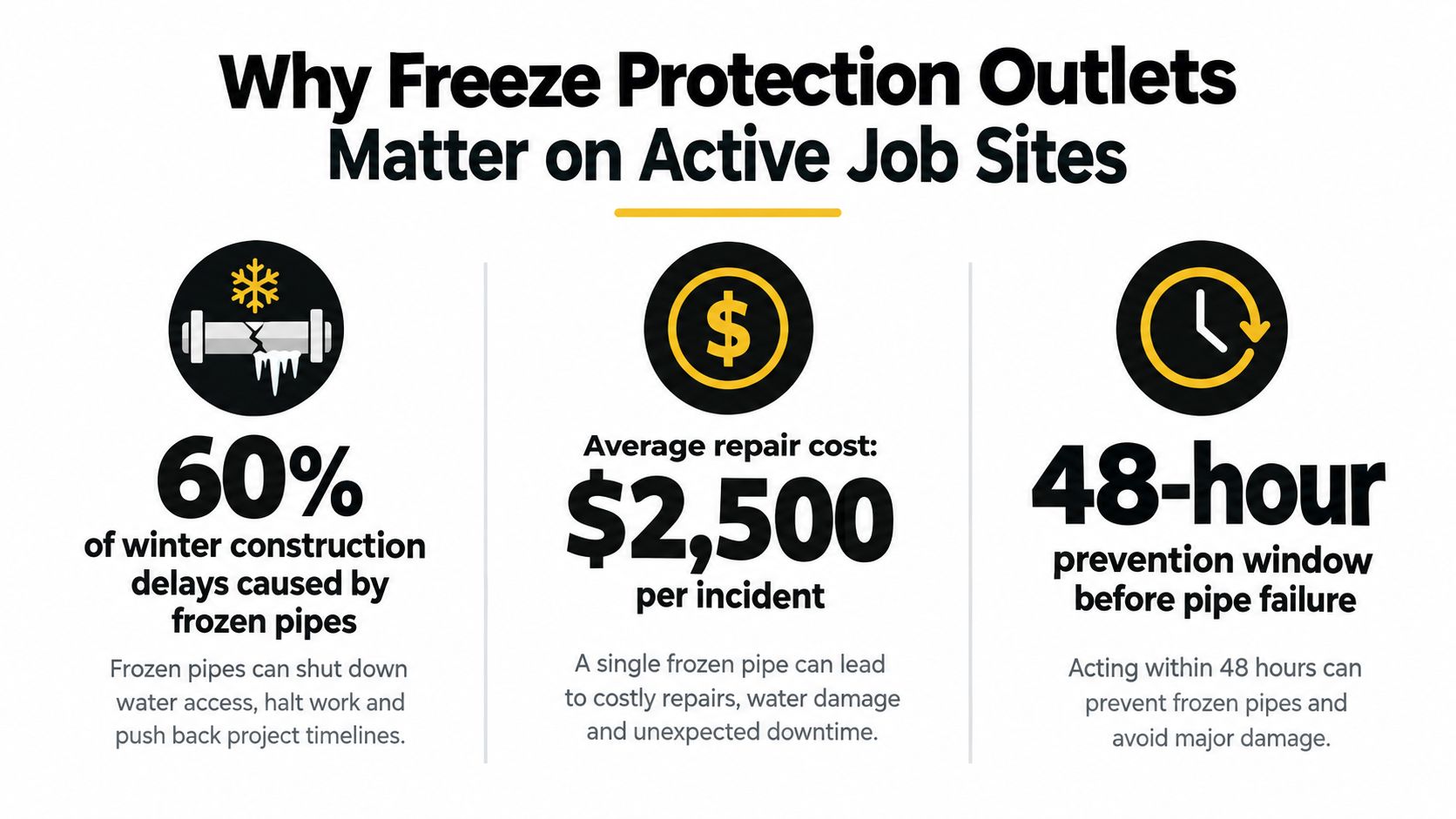
The exposure is substantial. Approximately 250,000 homes and offices reportedly experience damage from frozen pipes each year, according to figures attributed to FEMA and summarized in AmTrust's freezing and bursting pipes guidance. The same guidance states that water damage, including frozen and burst pipes, represents about 22% of homeowners insurance claims, with the average water-damage claim exceeding $5,000.
The vulnerable locations are predictable
Basements, crawl spaces, attics, garages, exterior service areas, and unfinished wall cavities deserve attention before the first cold weather arrives. Inadequate heat is a common condition behind frozen-pipe failures, and approximately 37% of those failures occur in basements, according to the AmTrust guidance linked above.
A properly planned outlet can support a portable heater, heat-trace cable, control panel, or sensor in the location where the risk exists. It won't protect a concealed pipe just because the outlet is energized. The heating device must be suitable for the space, positioned to move heat toward the vulnerable assembly, and checked during an outage or equipment fault.
State Farm reported paying more than $181 million for nearly 9,000 frozen-pipe claims in 2022, with an average claim slightly above $20,000. Its frozen-pipe claims summary also records major losses in states including Texas, New York, Illinois, Michigan, and Colorado. Those losses show why freeze protection belongs in the construction schedule, not on a last-minute winter checklist.
Electrical Requirements and Safety for Outdoor Receptacles
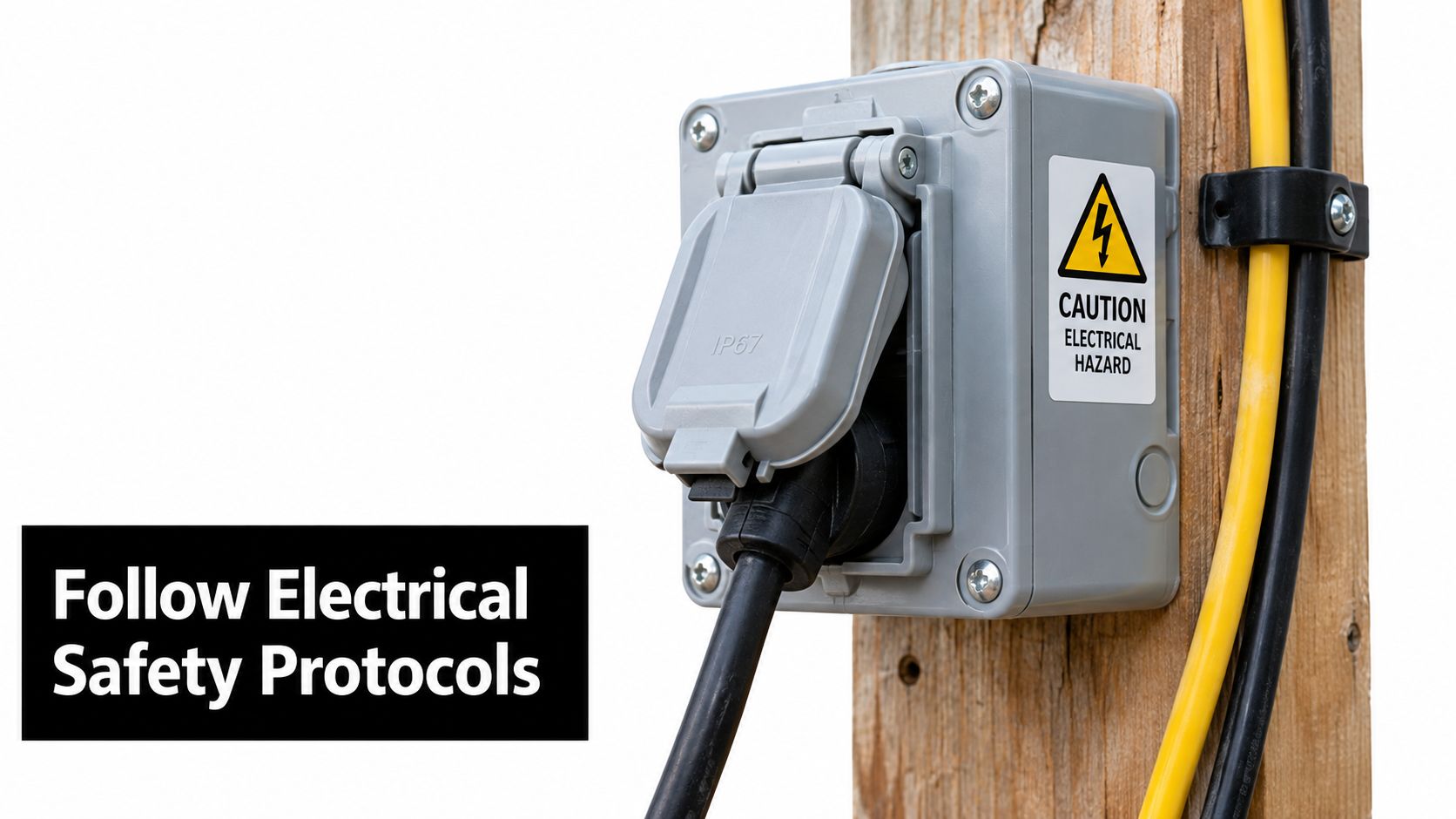
An outdoor freeze protection outlet has to survive the environment and the load. A standard indoor receptacle on a temporary post is not an acceptable substitute for a weather-resistant device installed in a weatherproof box.
For heat-trace cable or another outdoor freeze-control device, use a 120 V circuit only when the equipment nameplate permits it. Confirm that the receptacle and circuit ampacity exceed both the equipment's continuous demand and its startup load. Heat-trace guidance warns against overloading a 120 V outlet, and the installation should follow the equipment manufacturer's instructions rather than a convenient assumption.
Build the connection for wet conditions
Use a weather-resistant receptacle in a weatherproof box. Where rain or snow can reach a plugged-in cord, fit an extra-duty while-in-use cover. A standard flip cover may protect an empty receptacle, but it often leaves the plug and cord connection exposed once equipment is connected. Outdoor residential receptacles in wet or damp locations require weather-resistant devices under NEC-based guidance.
Provide GFCI protection, then test it with the test and reset buttons. Record the test during commissioning and repeat the check after the heating equipment is connected. A tripped GFCI can leave the protected area cold without producing an obvious visual warning at the pipe.
Field check: Inspect the cord, plug, enclosure, strain relief, and cable termination before energizing. Look for crushed insulation, water collection, loose covers, and terminations positioned where snow or condensate can accumulate.
The final inspection should confirm operating current, not just an illuminated indicator. Teams working across jurisdictions should also compare local requirements with practical AS/NZS 3000 compliance tips when Australian or New Zealand electrical practices apply. The principle remains consistent, match the device, protection, enclosure, and load to the actual installation.
When to Choose Mobile Natural Gas Over Grid Electricity
Grid electricity is usually the simplest choice for a small heat-trace circuit or a modest monitoring system. It becomes less attractive when the site has limited temporary service, multiple heaters, a large unfinished envelope, or a permanent gas connection that won't be available before cold weather.
| Consideration | Grid electricity | Mobile natural gas |
|---|---|---|
| Existing capacity | Works when the temporary service can carry the load | Reduces dependence on an undersized electrical service |
| Deployment | Requires suitable circuits, receptacles, and distribution | Uses a delivered fuel supply and compatible equipment |
| Heating scale | Practical for localized heat trace and smaller loads | Better suited to substantial temporary heating demand |
| Utility delay | Doesn't solve a missing gas connection for gas-fired equipment | Bridges the gap until permanent gas service is ready |
| Outage exposure | Stops when the electrical source fails | Can support temporary gas equipment when electrical capacity is the constraint |
The right decision starts with the protection objective, not the fuel preference. If the vulnerable point is a short pipe run and the site already has a verified circuit, electric heat trace may be efficient and easy to monitor. If several areas need heat, the building envelope is incomplete, or temporary electric distribution would require extensive work, mobile CNG or LNG can provide a more practical energy bridge.
Match the source to the failure mode
Mobile natural gas can support temporary heaters or generators selected for the site's ventilation, combustion-air, exhaust, and control requirements. It can also help a builder maintain conditions while waiting for permanent utility work, occupancy approval, or commissioning of the final mechanical system.
The trade-off is that gas equipment needs disciplined placement and management. Fuel delivery, regulators, shut-off valves, clearances, exhaust routing, leak checks, and refueling responsibility must be assigned before the equipment arrives. A gas unit isn't a plug-and-play replacement for an electrical outlet.
Practical rule: Use electricity for a verified localized load. Consider mobile natural gas when the project needs broader temporary heat or when permanent gas service is the missing link in the schedule.
A superintendent should also plan for failure. If a power outage disables electric heat trace, determine whether a temporary gas heater can reach the same concealed spaces. If a generator supplies the electrical outlet, verify that its capacity, grounding, weather protection, and fuel plan support the heating equipment continuously.
Planning the Logistics of Temporary Gas Installations
The installation succeeds or fails before the delivery truck arrives. Start by mapping every water-filled system and exposed pipe space that needs protection. Mark the heat source, sensor locations, access routes, exhaust path, fuel-unit position, electrical connection, and emergency shut-off point on the site plan.
Use a defined planning sequence
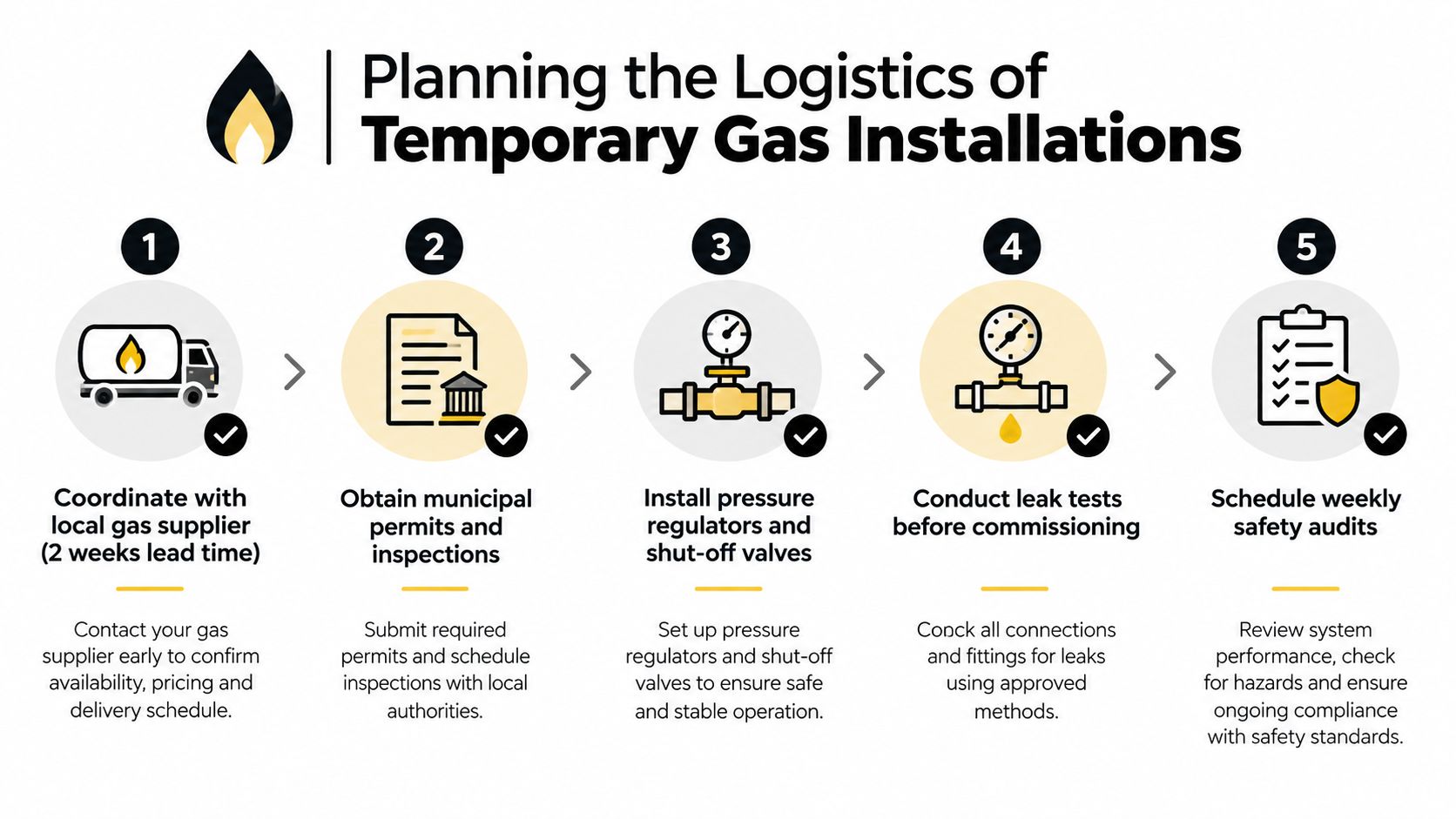
Coordinate with the gas supplier. Share the protected area, expected equipment, access restrictions, delivery conditions, and responsible site contact. Confirm who responds after hours and how the supplier will know when fuel is approaching its reorder point.
Confirm permits and inspections. Ask the municipality and authority having jurisdiction what temporary fuel storage, gas piping, combustion equipment, electrical connections, and inspections require approval. A permit delay can erase the benefit of fast equipment delivery.
Choose equipment from the heat requirement. Don't size the installation from floor area alone. Account for the unfinished envelope, openings, wind exposure, insulation, pipe locations, ventilation, and the consequences of a shutdown. The heater must warm the vulnerable assemblies, not merely the room where workers stand.
Define the fuel and control arrangement. Specify regulators, shut-off valves, hoses, electrical distribution, thermostats, low-temperature alarms, and sensor locations. Put sensors in crawl spaces, exterior-wall cavities, and other cold pockets rather than relying on a warm occupied area.
Write the commissioning and inspection plan. Assign leak testing, operating checks, alarm response, fuel monitoring, and documentation to named people. Contractors handling broader residential gas line work can help clarify the separation between temporary installation practices and permanent residential gas work.
The supplier needs enough information to select a practical unit and delivery arrangement. A site sketch, equipment list, photographs of access points, and a contact roster are more useful than a general request for “temporary heat.”
Before mobilization, confirm where the unit can sit safely, how a delivery vehicle will reach it, and whether snow, mud, fencing, or changing site access will interfere with service. Keep the plan current as walls close, temporary doors move, and permanent mechanical systems come online.
Setting Up and Commissioning Your Temporary Outlet
Physical installation should follow the approved plan, not the shortest route from the fuel unit to the building. Place the mobile gas equipment on a stable surface with required clearances, protected from vehicle impact and unauthorized access. Keep combustion air and exhaust arrangements compliant with the equipment instructions, and keep the unit away from openings where exhaust could enter the structure.
Connect in a controlled order
First, install the regulators, shut-off valves, approved hoses, and temporary piping identified in the plan. Protect lines from traffic, sharp edges, standing water, and construction activities. Label the emergency shut-off clearly and make sure workers can reach it without crossing the hazard area.
Next, set up the electrical side. Install the weather-resistant freeze protection outlet in its weatherproof box, provide GFCI protection, fit the extra-duty cover where direct exposure exists, and connect only equipment approved for the circuit. Keep cords off wet ground and away from walkways where they can be crushed or pulled loose.
Then place the heating and sensing equipment. A portable heater in the center of a room may leave a pipe chase cold. Use temperature sensors at the most vulnerable points, verify that heat can reach those points, and keep combustible materials clear according to the heater manufacturer's requirements.
Commission before the weather turns
Commissioning should include a documented leak test by qualified personnel, valve and regulator verification, heater startup, thermostat response, alarm testing, GFCI operation, and confirmation of operating current. Check that the equipment cycles as intended rather than running continuously because a sensor is poorly positioned or a door is left open.
Test the monitoring path by creating the permitted alarm condition or using the manufacturer's test procedure. Confirm who receives the alert, who acknowledges it, and who visits the site. A sensor that reports to an unattended inbox isn't a dependable protection system.
For water-filled piping protected by a drain-outlet or freeze-protection valve arrangement, geometry matters. Manufacturer guidance recommends vertical mounting with the discharge facing downward, drain valves on both sides where applicable, accessible drainage, and no trapped high points. Route released water away from foundations, walkways, equipment, and any location where it can freeze back against the assembly.
Troubleshooting Common Installation and Safety Issues
Most winter failures come from a break in the chain, not from one dramatic equipment defect. The fuel is available, but a regulator is closed. The generator runs, but the GFCI has tripped. The heater operates, but the sensor sits in a warm corridor while the pipe freezes inside an exterior wall.
Start with the protected location. Compare the sensor reading with an independent thermometer, inspect airflow and door openings, and check whether the heater is aimed or distributed toward the actual piping. If one area remains cold, don't increase output blindly. Look for blocked airflow, an unsealed opening, poor sensor placement, or a disconnected heat-trace section.
Respond safely to faults
If a gas odor is suspected, stop work, keep people away, avoid ignition sources and electrical switching, and follow the site's emergency procedure. Shut off the supply only when it can be done safely, then contact the qualified gas professional or emergency service designated in the plan. Don't restart equipment until the installation has been inspected and cleared.
For electrical faults, disconnect the load only if doing so is safe, investigate the GFCI trip, and inspect for water intrusion or damaged cords. Never bypass GFCI protection to keep a heater running. That converts an inconvenient shutdown into a serious electrical hazard.
Use an inspection log that records fuel status, operating condition, alarm status, outlet and cord condition, sensor readings, valve position, and visible damage. Assign every exception to a person and a deadline. Routine checks work when they produce a corrective action, not when someone merely initials a form.
Ensuring Long-Term Project Success Through Winter
Temporary freeze protection should live inside the project controls. Include it in the weather plan, daily site briefings, equipment handover, and closeout process. As the building changes, the risk map changes with it. Newly enclosed rooms may reduce exposure in one area while creating a sealed, unmonitored cavity somewhere else.
Maintain a live list of protected zones and the equipment serving each one. Record the responsible operator, supplier contact, shut-off location, sensor location, last functional test, and fuel status. Schedule inspections after severe weather, construction changes, power interruptions, and any event that could move, damage, or disconnect the temporary system.
Keep monitoring tied to action
Remote monitoring can alert stakeholders when pipes approach freezing and may support emergency shutoff during leaks, as described in Aon's catastrophe risk analysis. The technology only helps when the alert reaches a person who can respond. Set an escalation path for overnight alarms and test it before the site depends on it.
The heating strategy also needs a clear threshold. FM guidance summarized in Lawrence Livermore National Laboratory's freeze-protection guidance recommends maintaining more than 40°F (4°C) wherever water-filled piping is present, and draining or circulating susceptible systems when that condition can't be maintained. Insulation slows heat loss, but it doesn't add heat. Seal joints and laps continuously, and don't treat insulation as a substitute for active protection when circulation stops or an outage removes the heat source.
Before turnover, verify the outlet, fuel system, alarms, drainage paths, sensor readings, and emergency contacts. A freeze protection outlet is valuable only when the complete system remains energized, accessible, monitored, and matched to the vulnerable piping.
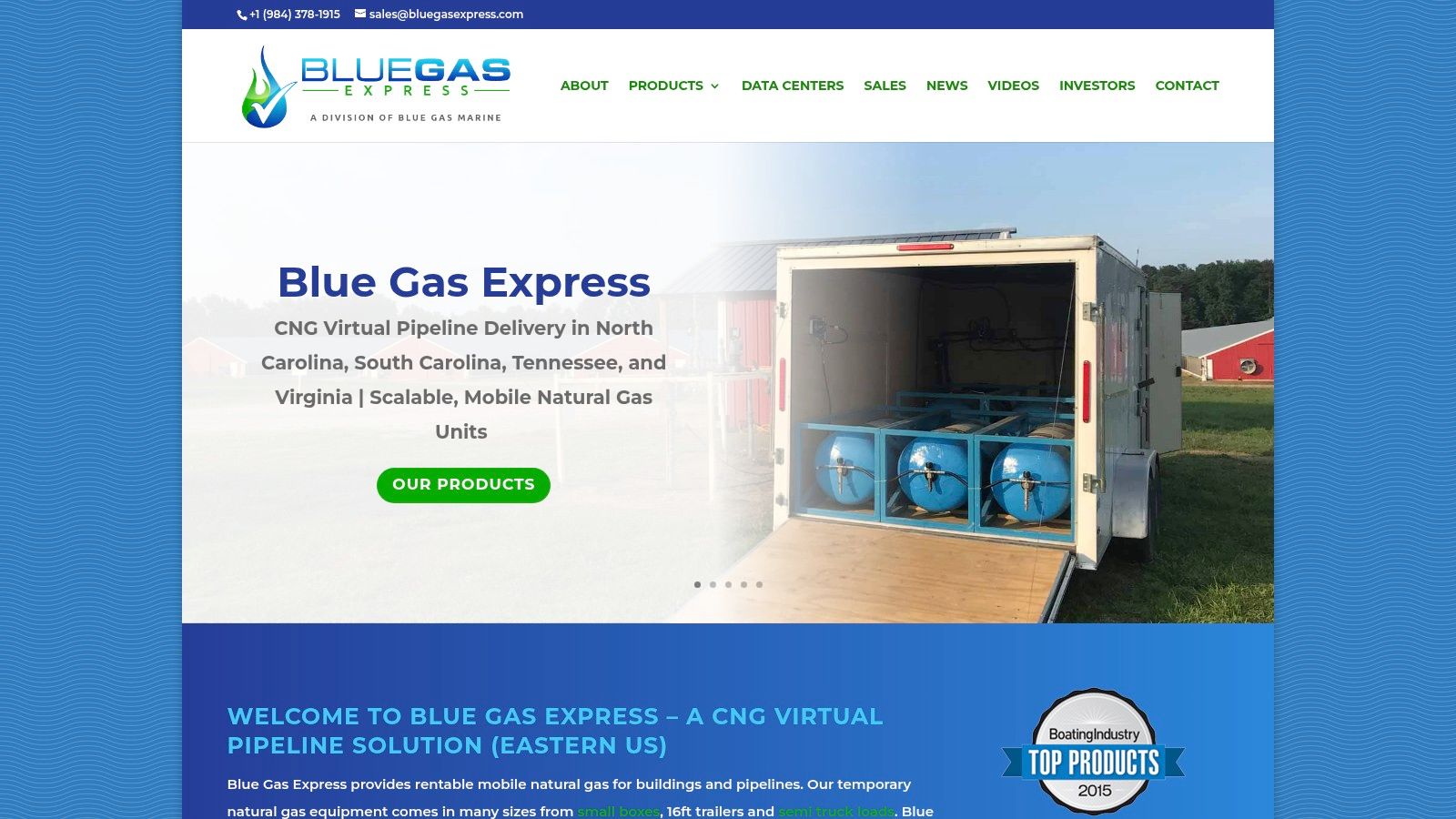
Blue Gas Express provides temporary CNG and LNG delivery for construction, commercial, residential, and industrial projects facing delayed gas service or maintenance outages. If your site needs a dependable energy bridge for temporary heating, generator commissioning, occupancy requirements, or freeze prevention, visit Blue Gas Express to discuss the equipment and delivery plan.