

A construction project is ready for commissioning, but the permanent gas connection isn't. A generator needs fuel, a new building needs an occupancy permit, or an industrial facility has to keep operating through a planned outage. The practical question is not just which fuel performs better. It's which supply can reach the site, stay available, and support the work without creating a second project around deliveries, storage, and refueling.
For temporary and mobile supply, CNG versus LNG is an infrastructure decision first. Range and fuel economy matter, but access to stations, delivery distance, tank configuration, site constraints, and operating procedures usually determine whether a deployment runs smoothly.
| Decision factor | CNG | LNG |
|---|---|---|
| Physical form | Compressed gas | Cryogenic liquid |
| Typical advantage | Simpler high-pressure equipment and broad station access | Compact energy storage and longer-range logistics |
| Typical fit | Shorter-duration, shorter-distance, station-adjacent supply | Higher-volume, longer-distance, space-sensitive supply |
| Main operational concern | Delivery frequency and storage footprint | Cryogenic handling, boil-off, and planned refueling |
| Best starting question | Can reliable deliveries reach the site? | Can the route and site support LNG safely and consistently? |
Understanding CNG and LNG Fundamentals
CNG and LNG start with the same natural gas, but they solve the storage problem in different ways. Compressed natural gas remains gaseous and is held at ambient temperature under very high pressure. LNG is cooled until it becomes a liquid, which makes it far more compact to move and store.
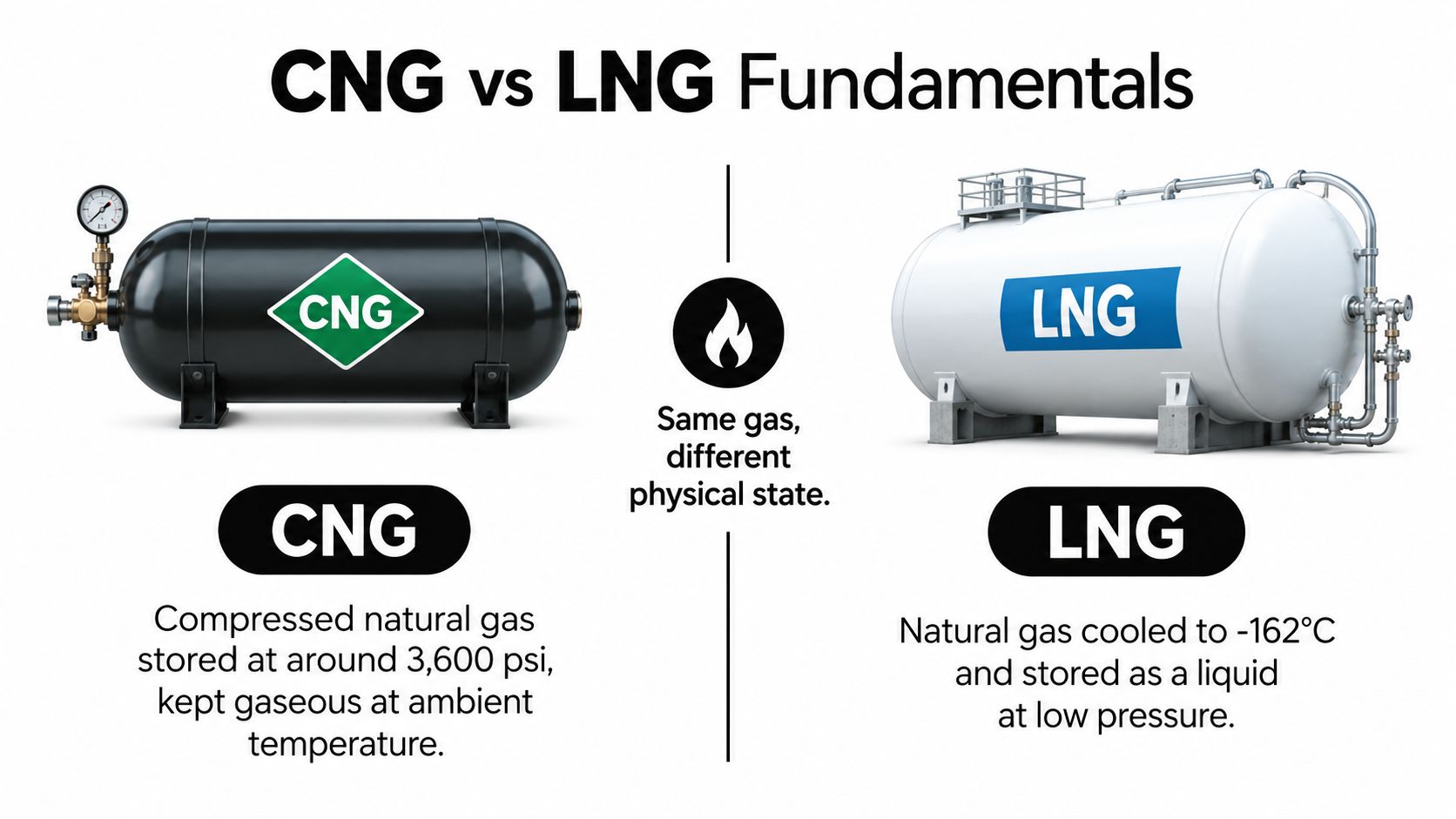
The physical difference explains most of the operational difference. One comparison places CNG's volumetric energy density at about 9 MJ/L, compared with 22 MJ/L for LNG, so CNG provides roughly 42% of LNG's energy density in the same volume. That density gap affects vehicle tanks, mobile storage units, delivery frequency, and the amount of equipment a project manager must reserve. This comparison of compressed and liquefied natural gas provides the underlying energy-density figures.
Where each fuel fits
CNG is generally more practical where vehicles return to a base, stations are reasonably accessible, and the required range is moderate. It uses high-pressure gas hardware and doesn't require the gas to be liquefied before delivery. That makes it a familiar option for station-based fueling and many shorter-range applications.
LNG is the stronger candidate when the project needs more energy in a limited tank volume or when the supply chain must move larger gas volumes over longer distances. Its role in transportation expanded after the 1959 voyage of the Methane Pioneer, the first LNG carrier, demonstrated that LNG could be transported across oceans. The historical and technical overview of CNG describes that milestone.
Practical rule: Choose the physical form that matches the site's supply chain, not the fuel label that sounds more efficient.
For temporary projects, this means asking where the gas will come from, how often a delivery can arrive, how much space the equipment occupies, and whether the site team can manage the required handling procedures. The answer often becomes clear before anyone compares vehicle fuel consumption.
Energy Density and Transport Logistics
The logistics case for LNG starts with one fact: a smaller tank can hold more usable energy. CNG's lower volumetric density means a supplier may need more storage capacity, more frequent deliveries, or more transport movements to maintain the same gas availability at a remote site.
A World Bank analysis of mini and micro LNG compared the transport chains required for CNG and LNG. It found that CNG can require at least twice the LNG-chain transportation fleet for the same gas volume, making CNG less suitable for larger volumes and longer distances. The World Bank comparison of mini and micro LNG and CNG logistics explains why transport efficiency changes as volume and distance increase.
What that means at the project site
A construction manager doesn't experience energy density as a laboratory measurement. They experience it as:
- More delivery coordination: CNG may require tighter scheduling when the site consumes gas continuously.
- More equipment space: CNG storage can demand a larger footprint for the energy supplied.
- Greater exposure to route disruption: A missed delivery matters more when the site has less energy stored per unit of transport capacity.
- More value from long-distance planning: LNG's compact storage can make a planned shuttle model more practical for remote or high-volume work.
LNG's advantage is strongest when range, volume, and packaging efficiency dominate the decision. CNG's advantage is the simpler gas-handling chain and the ability to work well with shorter routes and station-adjacent operations. That doesn't make LNG automatically better. A cryogenic supply that can't be refilled reliably is less useful than a less dense fuel that arrives consistently.
The logistics test
Before choosing, map the complete movement of gas from source to site. Include loading, road access, delivery windows, unloading, storage duration, and the contingency plan if the next shipment is delayed. A project with a nearby CNG supply point may have a shorter and more resilient chain than a project that depends on a carefully timed LNG route.
The cheapest fuel on paper is the wrong choice if the delivery plan can't protect the construction schedule.
For temporary supply, transportation capacity is part of the fuel system. Treat it as a critical-path resource, not a vendor detail.
Storage Systems and Safety Considerations
Storage selection changes the site plan. CNG uses high-pressure vessels, while LNG uses insulated cryogenic tanks, so the project team must prepare for different equipment, procedures, and operating controls.
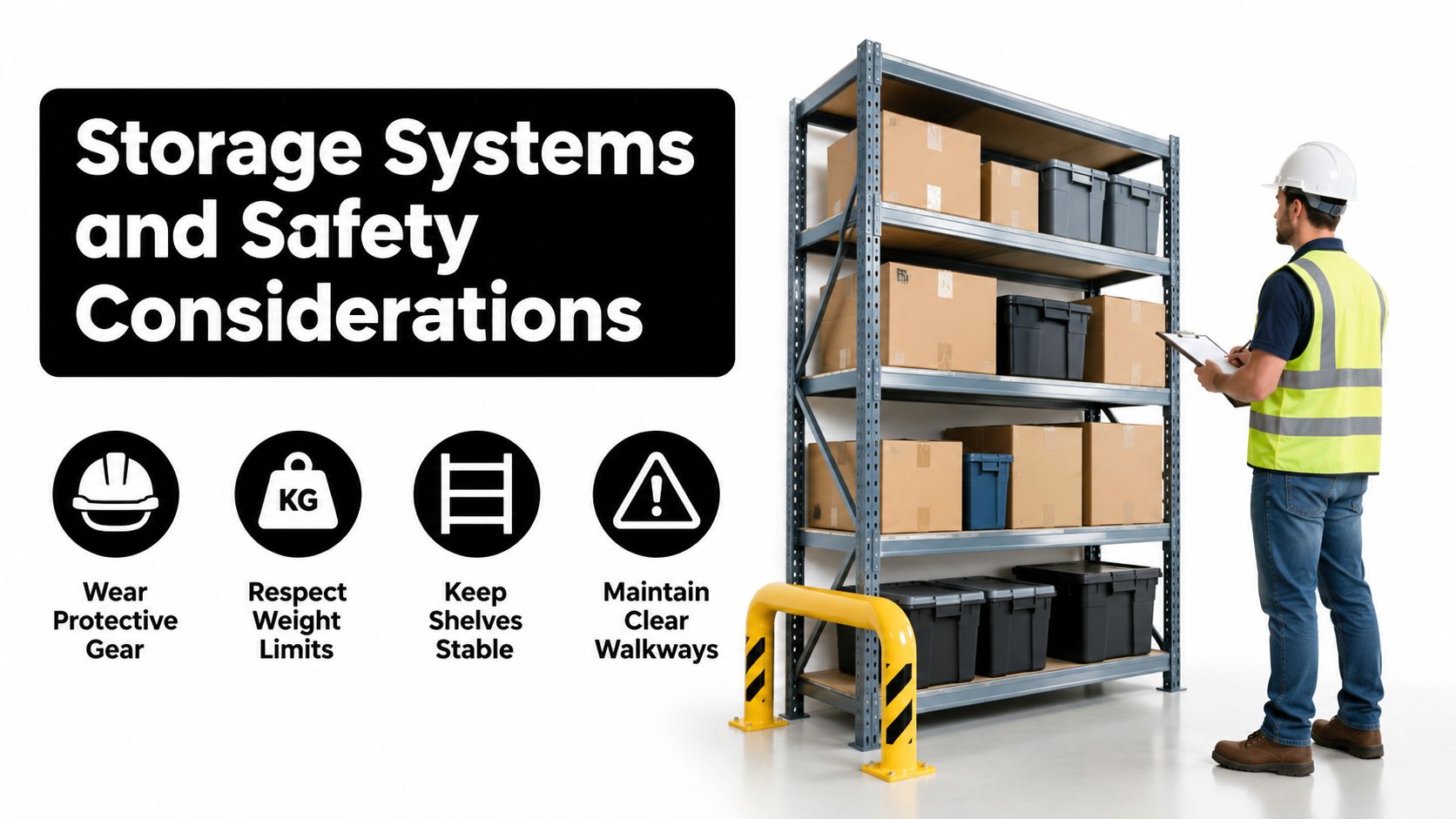
CNG is typically stored at about 2,500 to 3,600 psig. LNG is stored as a cryogenic liquid at about minus 162°C and near-atmospheric pressure. Those conditions affect tank design, connection procedures, insulation, boil-off management, and the physical footprint of the installation. This review of LNG heavy-goods vehicle systems documents the pressure and temperature distinction.
Different equipment, different work controls
A CNG deployment centers on pressure-rated storage, regulators, valves, piping, and compression or dispensing equipment. The system is still highly engineered, but the crew isn't managing a cryogenic liquid. CNG also avoids the liquefaction step and its associated handling requirements.
LNG requires a cryogenic containment system and procedures that account for extremely low temperatures. The team must understand transfer operations, personal protective equipment, connection checks, venting controls, and the possibility of boil-off. These aren't reasons to reject LNG. They are reasons to select a supplier with the right equipment and operating discipline.
A site review should cover:
- Location: Keep storage, vehicle access, piping, and work areas arranged around the actual site traffic pattern.
- Ground conditions: Confirm that the equipment can be positioned securely and accessed for inspection and delivery.
- Emergency planning: Define isolation points, shutdown responsibilities, evacuation routes, and communication procedures before fuel arrives.
- Crew readiness: Make sure operators know the fuel system's procedures instead of treating a temporary unit like ordinary construction equipment.
CNG can be the better choice when a project values straightforward high-pressure gas hardware and frequent access to nearby supply. LNG can be the better choice when compact storage offsets the extra cryogenic controls. Neither decision should be made from tank size alone.
The responsible question is whether the site team can operate the selected system safely for the full temporary period, including delivery changes, shift handovers, weather disruptions, and demobilization.
Infrastructure Access and Station Availability
A fuel system is only useful when the project can replenish it. Many CNG versus LNG comparisons become impractical. They discuss tank capacity and range, but the site manager has to answer a simpler question: where is the next dependable fueling point?
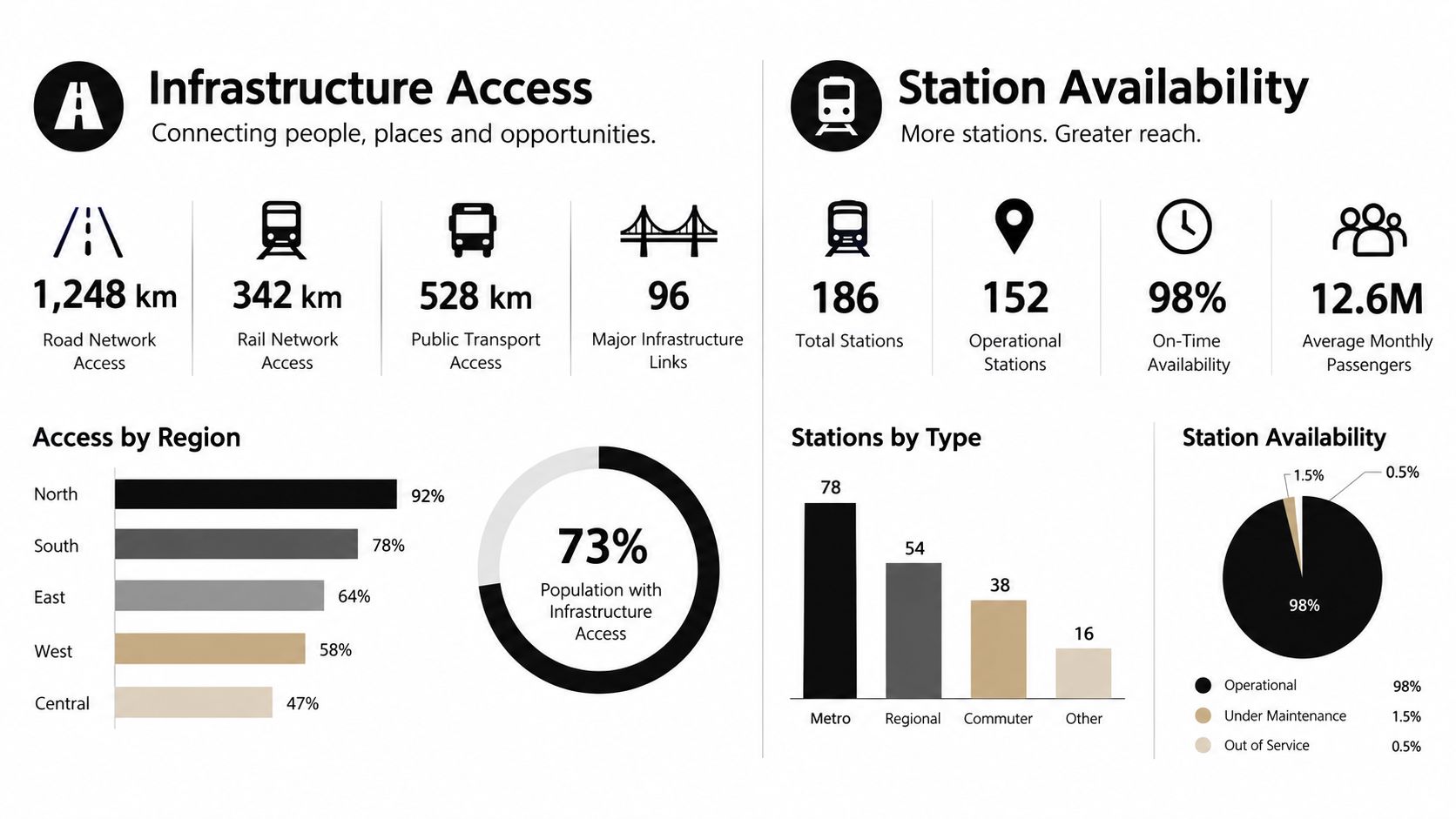
A United States infrastructure snapshot reported 1,385 CNG stations versus 81 LNG stations. That gap makes LNG a poor fit for many routes unless fueling is tightly planned. The infrastructure snapshot on United States natural gas stations shows why station access can outweigh theoretical range.
Station count changes the deployment model
CNG's wider availability gives project managers more options for sourcing, route changes, and backup deliveries. It doesn't eliminate planning, but it can make the supply chain more forgiving. A temporary unit near an established CNG network may be replenished without building a specialized fueling plan from scratch.
LNG works differently. A route may support LNG perfectly when the supplier controls the delivery chain, the storage unit holds enough reserve, and the refueling point is confirmed in advance. The same route becomes vulnerable when the project depends on a station that is distant, operationally restricted, or unsuitable for the vehicle and equipment being used.
A useful availability review should identify:
- Primary source: The station, terminal, or supplier that will provide the fuel.
- Backup source: A second option that can support the site if the first route fails.
- Delivery access: Road restrictions, site gates, turning space, unloading location, and permitted delivery windows.
- Fueling dependency: Whether the project needs public access or can operate through scheduled supplier deliveries.
- Consumption visibility: A method for tracking inventory before the site reaches a critical level.
Station counts are also snapshots, not guarantees of service at a particular location. Confirm current operating status, fuel compatibility, hours, access rules, and delivery capacity before committing equipment.
For a temporary installation, CNG is usually the safer starting point when local accessibility matters most. LNG deserves preference when a supplier can provide a controlled, dependable logistics chain and the project benefits from its higher storage density.
Best Use Cases for Temporary and Mobile Supply
A construction site waiting for permanent utility work doesn't need a theoretical winner. It needs gas on the date the generator is commissioned, the building is inspected, or the production line returns from maintenance.
Consider a commercial building that needs temporary heat and gas service while its permanent connection is delayed. If the site sits near a workable CNG supply network and the demand is moderate, CNG can provide a practical bridge. The supplier can position mobile storage, establish the connection, and schedule replenishment around the site's consumption.
An industrial facility facing a maintenance outage has a different profile. It may need higher-volume supply over a defined operating window, with limited room for repeated deliveries. LNG can make more sense when its compact energy storage reduces delivery pressure and the supplier can manage the cryogenic equipment at the site.
Match the fuel to the project failure point
- Construction and occupancy: Choose the option that can be permitted, delivered, and connected before inspection. A fuel that arrives late has no value, regardless of its range.
- Generator commissioning: Prioritize dependable replenishment and clear operating responsibility. Commissioning teams need stable fuel supply while they test equipment and resolve startup issues.
- Industrial maintenance outages: Examine total volume, delivery access, storage footprint, and the cost of an interruption. Higher-density LNG may suit a concentrated, high-demand outage.
- Freeze prevention: For buildings and systems that must remain protected during a delay, use a delivery plan with enough reserve and a defined monitoring process.
- Remote construction: Select LNG when long-distance transport and limited storage space make repeated CNG deliveries difficult, but only after confirming cryogenic handling capability.
Historical United States station data illustrates the difference in network maturity. As of March 2018, the country had 1,671 public and private CNG stations and 135 LNG stations, showing CNG's much broader fueling network at that time. The Argonne National Laboratory station data also distinguishes LNG as a longer-range, heavy-duty option and CNG as the dominant station format.
Site manager's test: If the project schedule depends on one difficult delivery, the fuel choice is not finished. The backup plan is part of the system.
Some fleets may also compare natural gas with emerging alternatives. For a broader view of zero-emission heavy-duty transport options, this overview of hydrogen fuel cell trucks can help teams understand how another technology changes fueling infrastructure and route planning.
Cost and Emissions Trade-offs
Cost comparisons between CNG and LNG fail when they isolate the fuel price from the delivery chain. CNG may be economical for shorter distances because the equipment and refueling process can be simpler. LNG can become more practical as distance and volume increase because its higher density supports more energy per transport movement.
The project should therefore compare delivered energy, not just the commodity. Include storage rental, delivery frequency, route length, site labor, equipment requirements, standby capacity, and the financial effect of a missed delivery. A lower unit cost can disappear when the site needs extra transport movements or larger storage.
Environmental reporting also needs careful handling. An NREL comparison found no overall general advantage for either fuel in energy efficiency, economics, or environmental effect. It estimated that switching heavy-duty vehicles from diesel would raise CO2-equivalent emissions by 6.2% with CNG and 7.6% with LNG on a 100-year methane time horizon. The NREL comparison of natural gas vehicle pathways provides those findings.
That result doesn't settle every project. Actual reporting can depend on the equipment, supply chain, operating profile, methane assumptions, and accounting method. A sustainability commitment should be tested against the project's chosen boundary and reporting standard, rather than supported by a blanket claim that one fuel is always cleaner.
For local heating decisions outside this specific mobile-supply comparison, a resource such as which fuel saves money in Connecticut offers useful context on how location and application affect fuel economics. The same principle applies here: the site and supply chain determine the result.
How to Choose Between CNG and LNG for Your Project
Start with the schedule, not the equipment brochure. Write down the date gas must be available, the expected operating period, the consequences of a supply interruption, and whether the permanent connection is delayed or unavailable. That defines the risk the temporary system must control.
Use five decision checks
Map the site. Confirm delivery access, storage space, connection location, traffic movement, separation requirements, and the route a supplier's equipment must take. If the unit can't be delivered, positioned, and serviced safely, the fuel isn't a viable option.
Estimate the operating profile. Identify whether demand is steady or intermittent, whether the equipment runs continuously, and whether the site can tolerate scheduled replenishment. CNG generally suits shorter-range, station-connected operations. LNG deserves serious consideration when energy storage and longer-haul delivery efficiency are central.
Verify the supply chain. Ask for a primary delivery plan, a contingency option, expected replenishment intervals, and the supplier's process for monitoring inventory. Don't accept a promise of availability without confirming the route and fueling source.
Review handling capability. CNG requires pressure-rated equipment and disciplined connection procedures. LNG adds cryogenic storage and transfer requirements. Assign responsibility for inspections, operator training, emergency shutdowns, and daily checks before mobilization.
Compare the delivered project cost. Include equipment, transport, labor, storage, standby capacity, and delay exposure. Then evaluate the emissions accounting method required by the owner, regulator, or sustainability program. Neither CNG nor LNG should be selected from a generic environmental or cost claim.
A practical recommendation follows from these checks. Choose CNG when the site is close to dependable supply, the project can support regular deliveries, and simpler high-pressure equipment matters most. Choose LNG when the project needs compact storage, larger volumes, or longer-distance logistics, and the team has confirmed cryogenic handling and refueling access.
For projects in North Carolina, South Carolina, Tennessee, and Virginia, Blue Gas Express provides mobile CNG and LNG units for temporary supply needs such as delayed line installations, generator commissioning, occupancy requirements, and maintenance outages. Visit Blue Gas Express to discuss the site's fuel demand, access constraints, delivery schedule, and the temporary system that fits the work.