

A delayed utility interconnect can turn a nearly finished project into a daily coordination problem. The mechanical rooms are commissioned, the trades are stacked up, and the owner wants a firm occupancy date, but the permanent gas tap keeps moving. Every idle day creates another cost, another schedule call, and another explanation nobody wants to give.
A portable gas supply can bridge that gap. Mobile CNG or LNG equipment can keep boilers, generators, process equipment, and other gas-fired systems operating while the permanent connection is delayed, isolated, or under repair. The trailer itself isn't the difficult part. The difficult part is arriving with the right site conditions, pressure plan, verification records, and handoff process already in place.
When the Gas Tap Is Late and the Clock Is Ticking
The general contractor has a substantial-completion date on the wall. The building envelope is closed, the mechanical contractor has finished most of the commissioning work, and the owner's representative is asking when the boilers can run under normal conditions. The utility has pushed the interconnect again. The new date may be workable for the utility, but it doesn't help the crews standing by today.
A temporary gas trailer changes the decision. Instead of treating the permanent connection as the only path to live gas, the project team creates a controlled bridge. The mobile unit arrives, connects through the approved meter and regulator arrangement, and supplies the downstream equipment while the utility completes its work.
That bridge matters on more than construction sites. A plant may need process heat while a main line is isolated. A hospital may need a backup loop operating while a regulator station is rebuilt. A school addition may need boilers running before the final utility work is complete. In each case, the question isn't whether natural gas exists somewhere in the network. The question is whether the site can receive, regulate, verify, and use gas safely now.
Field rule: A trailer arrival is not a gas deployment. Live gas starts only after the site, connection, pressure, controls, and handoff are ready.
Most failed temporary deployments don't fail because the supplier couldn't find a trailer. They fail because nobody confirmed the access route, the pad, the required inlet pressure, the downstream demand, the regulator arrangement, or the person authorized to accept the system. The trailer arrives, but the project loses another shift waiting for a crane, a grounding point, an inspection, or a missing approval.
This guide is for the people who field those calls. Portable supply is a practical recovery tool, but it works best when the team treats it as an engineered temporary installation rather than a fuel delivery. The sections that follow focus on the work between trailer arrival and dependable operation, because that's where a recovering project either gets back on schedule or spirals into another delay.
What Portable Gas Supply Actually Means
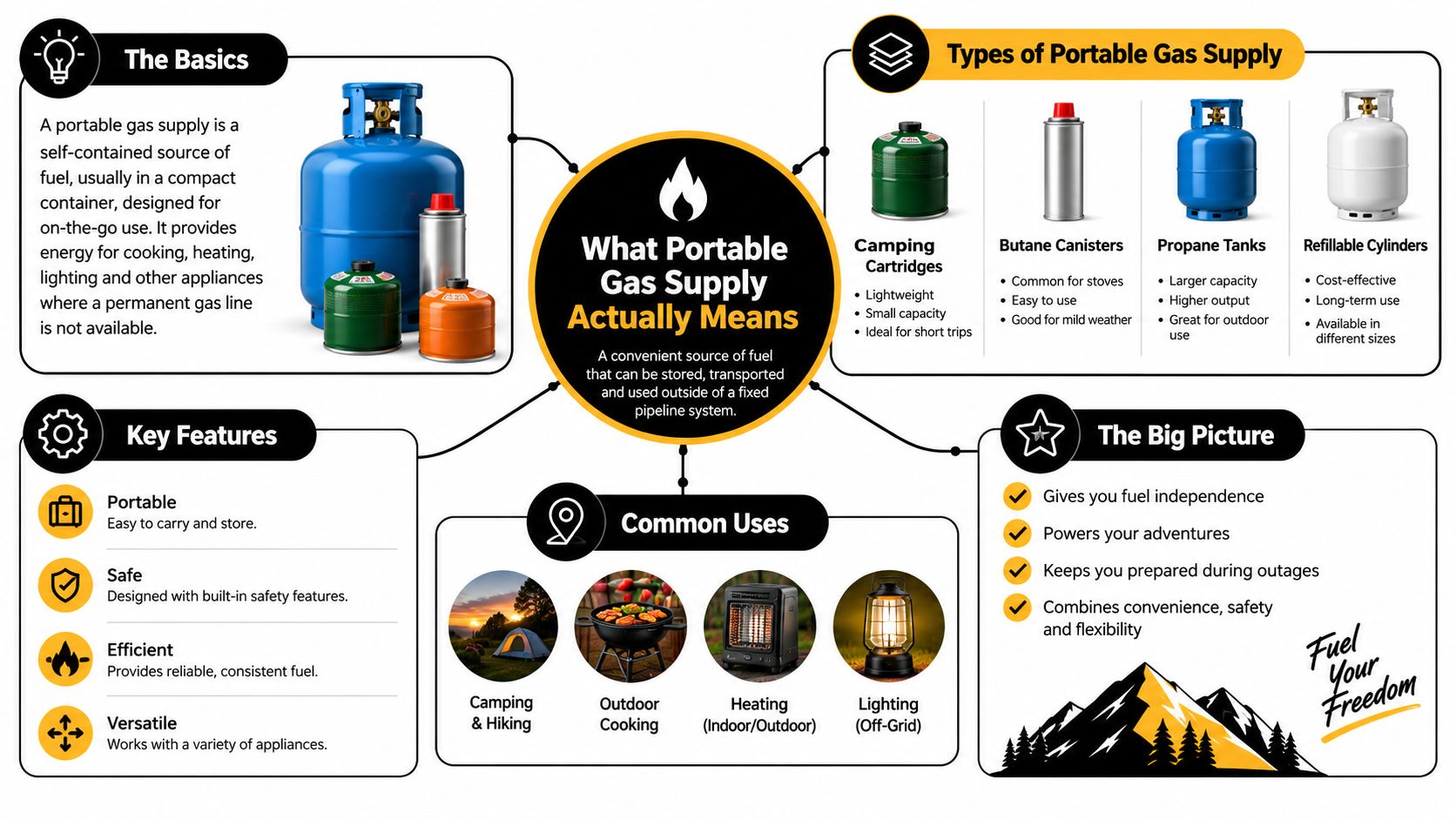
Portable gas supply is natural gas delivered to a site in mobile equipment, stored there temporarily, and distributed to the customer's system without relying on the delayed or unavailable permanent pipeline connection. The gas generally arrives in one of two forms: compressed natural gas, or CNG, stored as a high-pressure gas in cylinders, or liquefied natural gas, or LNG, stored as a cryogenic liquid and converted back to gas through vaporization.
The simplest comparison is a construction-site generator. If the utility transformer isn't energized, the contractor doesn't wait beside the transformer and hope the schedule improves. The contractor brings in a generator, connects it through the approved electrical arrangement, verifies the output, and operates the project until permanent power is available. Mobile gas follows the same operational logic, although the pressure control, vaporization, grounding, exclusion zones, and gas-specific approvals are different.
CNG and LNG are both portable, but they aren't interchangeable packages. CNG uses tube trailers and pressure regulation. LNG uses insulated tanks, transfer equipment, and a vaporizer or regasification system. The selection depends on the required flow, inlet pressure, duration, road access, available footprint, and the site's ability to manage the equipment.
What it isn't
Portable supply isn't the same as an interruptible pipeline contract. An interruptible customer still receives gas through permanent infrastructure, subject to curtailment terms. It also isn't propane-air mixing, which uses a different fuel strategy and equipment arrangement. An on-site LNG peakshaving plant is another category, built for recurring storage and sendout rather than a dispatched temporary trailer.
A site manager who tracks gas by building, process area, or tenant may also benefit from a resource on submeter gas consumption. Submetering can help separate temporary consumption from other loads, support chargeback decisions, and show whether the temporary arrangement is serving the intended equipment.
Suppliers usually coordinate the trailer, transport, pressure-control equipment, vaporization where required, connection hardware, and field support. Utilities, licensed contractors, site safety teams, and local authorities may each control part of the approval path. The customer still owns the receiving site. That means the customer must provide a suitable location, clear access, downstream readiness, and a named person who can accept the handoff.
Mobile CNG vs Mobile LNG and When Each One Wins
Choose the format from the job's load, duration, and access, not from whichever trailer is free. CNG delivers natural gas at high pressure, while LNG arrives as a cryogenic liquid and must be vaporized before the customer's equipment can use it. The U.S. Department of Energy's natural gas station guidance describes mobile LNG fueling from tanker equipment with metering and dispensing hardware. Containerized systems add storage, dispensing, metering, and containment.
Mobile CNG
CNG is usually the simpler temporary arrangement. Tube trailers bring compressed gas to the site, and regulators reduce pressure to the level required by the customer's system. CNG fits short and medium-duration work, moderate loads, clear road access, and sites where trailer changes can be scheduled without interrupting operations.
Its field advantages are a familiar connection sequence, no cryogenic liquid transfer, and a direct path from storage to regulated gas. The limits are storage capacity, trailer swap frequency, and the space needed for the trailer and impact protection. A project with a large continuous load can consume a CNG trailer sooner than the schedule team expects.
Verify the receiving pressure and expected flow before dispatch. A trailer can be available and still fail the job if the regulator arrangement, inlet pressure, or connection point is wrong.
Mobile LNG
LNG stores more usable energy in a compact liquid form. That makes it practical for larger loads, longer runs, or remote sites where repeated CNG deliveries would disrupt the operation. The tradeoff is a more demanding setup. The site needs a suitable tank position, transfer controls, vaporization equipment, trained personnel, protective measures, and procedures for cryogenic handling.
LNG remains at cryogenic temperature, so fueling requires protective clothing and trained workers. The equipment can provide strong throughput, but placing a tank trailer on site does not complete the deployment. Poor preparation can delay the start because of vaporizer power, hose routing, exclusion zones, pressure checks, or approval issues.
| Factor | Mobile CNG | Mobile LNG |
|---|---|---|
| Stored form | High-pressure gas in tube trailers | Cryogenic liquid in insulated tanks |
| Main conversion step | Pressure reduction and regulation | Vaporization and pressure regulation |
| Best fit | Shorter runs, moderate demand, accessible sites | Longer runs, higher demand, remote locations |
| Key constraint | Storage capacity and trailer swaps | Cryogenic controls and vaporization equipment |
| Site priority | Secure pad, impact protection, pressure-control arrangement | Secure pad, transfer area, vaporizer setup, trained operators |
| Cost drivers | Transport, swap frequency, pressure requirements | Tank transport, vaporization, controls, permitting, staffing |
| Operational risk | Underestimating consumption or inlet pressure | Underpreparing for cryogenic transfer and equipment controls |
Selection rule: Choose CNG when access is easy and trailer swaps are manageable. Choose LNG when load, duration, or remoteness makes repeated CNG deliveries impractical.
Confirm the downstream equipment's required pressure and flow first. Then calculate operating duration, delivery route, available space, site controls, and the backup plan. That sequence keeps the decision tied to field conditions and exposes readiness gaps before the trailer arrives. The handoff should include verified pressure, confirmed connections, operating limits, and a named site contact who accepts responsibility for the live system.
Where Portable Gas Supply Shows Up in Practice
A greenfield project can be ready for commissioning while the utility meter or service extension remains weeks away. The boiler room still needs gas, and every delayed startup pushes trades, testing, and turnover off schedule. A mobile CNG unit can support approved equipment while permanent service progresses, but only if the site is ready to receive it. Confirm the pad, access route, connection point, pressure requirements, and responsible operator before dispatch.
A school addition creates the same scheduling pressure in a tighter public setting. New boilers may need to run for testing, balancing, and occupancy preparation while the final gas connection is pending. The temporary system must connect cleanly and hold the required operating pressure through commissioning. A trailer arriving without a verified pressure plan does not solve the outage. It creates another coordination meeting.
Outage response
Emergency work allows little room for site corrections after delivery. A hospital may need a backup gas loop while a utility crew rebuilds a regulator station. The response team must establish the equipment location, protect it from traffic, confirm the connection route, and coordinate the tie-in with facility mechanical and safety personnel.
Texas temporary-installation rules require secure mounting, guardrailing, and controlled LNG venting. Apply those requirements during planning, not after the trailer is on site. A rushed installation often exposes an unmarked traffic path, an unsuitable surface, or a connection point that cannot support the planned pressure.
The handoff should be explicit. Verify inlet and outlet pressure, flow availability, hose and fitting compatibility, shutdown locations, operating limits, and the name of the person accepting control. Record those checks before gas is introduced.
Freeze prevention and process continuity
During a winter cold snap, a facility may need temporary gas to keep vulnerable systems operating while pipeline capacity is reduced or a service problem is corrected. A food processor might use LNG vaporization when repeated CNG trailer changes would interrupt a process load. The decision depends on demand, access, space, delivery conditions, and the facility's ability to operate the temporary equipment.
Temporary supply also supports pipeline repair, assessment, maintenance, and peak demand. National Grid's temporary LNG safety material describes portable LNG's role in bridging supply interruptions and demand pressure. The operating requirement stays the same: establish a controlled gas handoff before permanent infrastructure is ready or available.
Recurring temporary assets need condition checks between deployments. condition monitoring for oil and gas offers useful context for tracking equipment condition instead of relying only on visual inspection. Apply that discipline to trailers, hoses, regulators, meters, grounding, and impact protection. A portable gas installation is ready when the site, pressure plan, equipment, and handoff are all verified.
Safety and Compliance Without the Guesswork
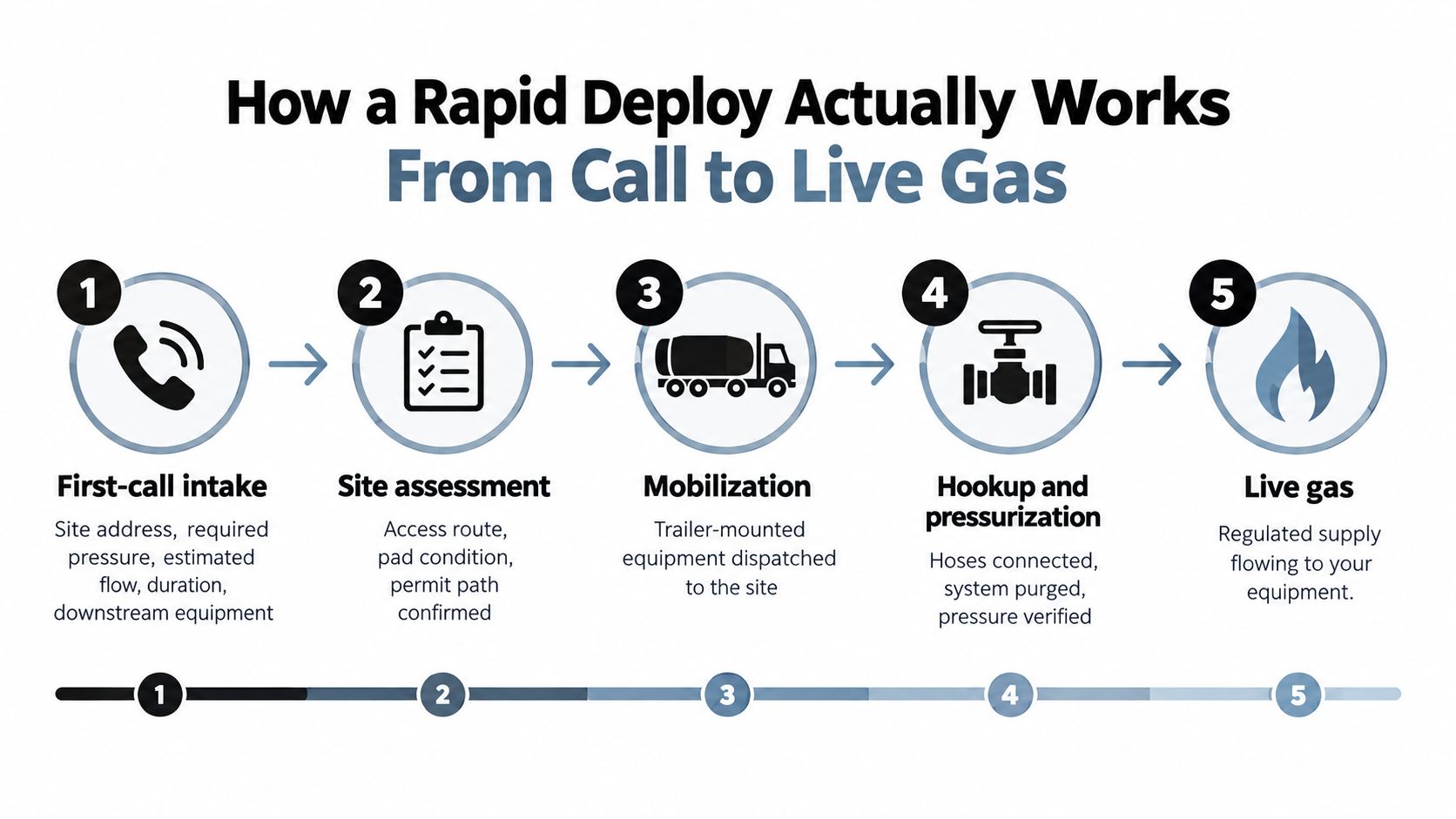
A temporary gas installation becomes safe through verified field conditions, not a stack of disconnected requirements. The compliance review can include DOT cylinder and transport rules under 49 CFR, NFPA 52 for vehicle-fueled and stationary natural gas systems, NFPA 54 for fuel-gas piping and appliance connections, ASME pressure-vessel requirements, and state or local notification and approval rules. Assign an owner for each requirement before dispatch.
Use the rules to build the site plan, then record the checks that prove the plan was followed.
Prepare the site before dispatch
Confirm these items before the trailer leaves the yard:
- Setback and ignition control: Mark separation from ignition sources, hot work, building openings, traffic lanes, and exposed equipment.
- Secure surface: Provide a stable, engineered pad or equivalent secure surface. Do not place storage equipment on bare earth or an unprepared shoulder.
- Impact protection: Install guardrailing, barriers, bollards, or another approved method wherever vehicles or mobile equipment could strike the installation.
- Electrical readiness: Confirm grounding, bonding, electrical classification, and temporary power requirements before arrival.
- Connection point: Identify the approved meter, regulator, hose route, shutoff, and downstream tie-in. Keep the connection out of active traffic paths.
- Emergency access: Keep the emergency shutoff, fire extinguisher, and access route visible and clear.
New York City requirements for mobile CNG systems show how field controls become enforceable conditions. The system must operate outdoors, engines must be off during dispensing, wheels must be chocked, and grounding must be established during dispensing. A portable fire extinguisher with at least a 20-B:C rating must also be available. The Texas temporary-installation rules provide another compliance reference for secure mounting, electrical controls, guardrailing, and controlled LNG venting.
Verify before gas-on
The crew must inspect the regulator, relief devices, hoses, valves, meter, and connection hardware before introducing gas. Perform and record the leak-down test. Record the pressure established, regulator settings, meter status, and any open exceptions in the handoff packet. A missing record creates an avoidable dispute about whether the system was ready.
The site safety officer should receive a short briefing covering the emergency shutoff, contact list, operating limits, delivery procedure, and restart process. Have the responsible customer representative accept the equipment and sign the handoff before gas-on.
If temporary work connects to or affects permanent pipeline assets, keep corrosion-control responsibilities with qualified personnel. The federal cathodic protection guidance is a reference for that separate pipeline-integrity work. It does not replace the temporary installation checks above.
Do not release the system with a verbal “everything looks good.” Hand over records showing what was tested, what pressure was established, who accepted the equipment, and what action to take if readings change. That documentation closes the operational readiness gap between equipment arriving on site and gas being used safely.
How a Rapid Deploy Works From Call to Live Gas
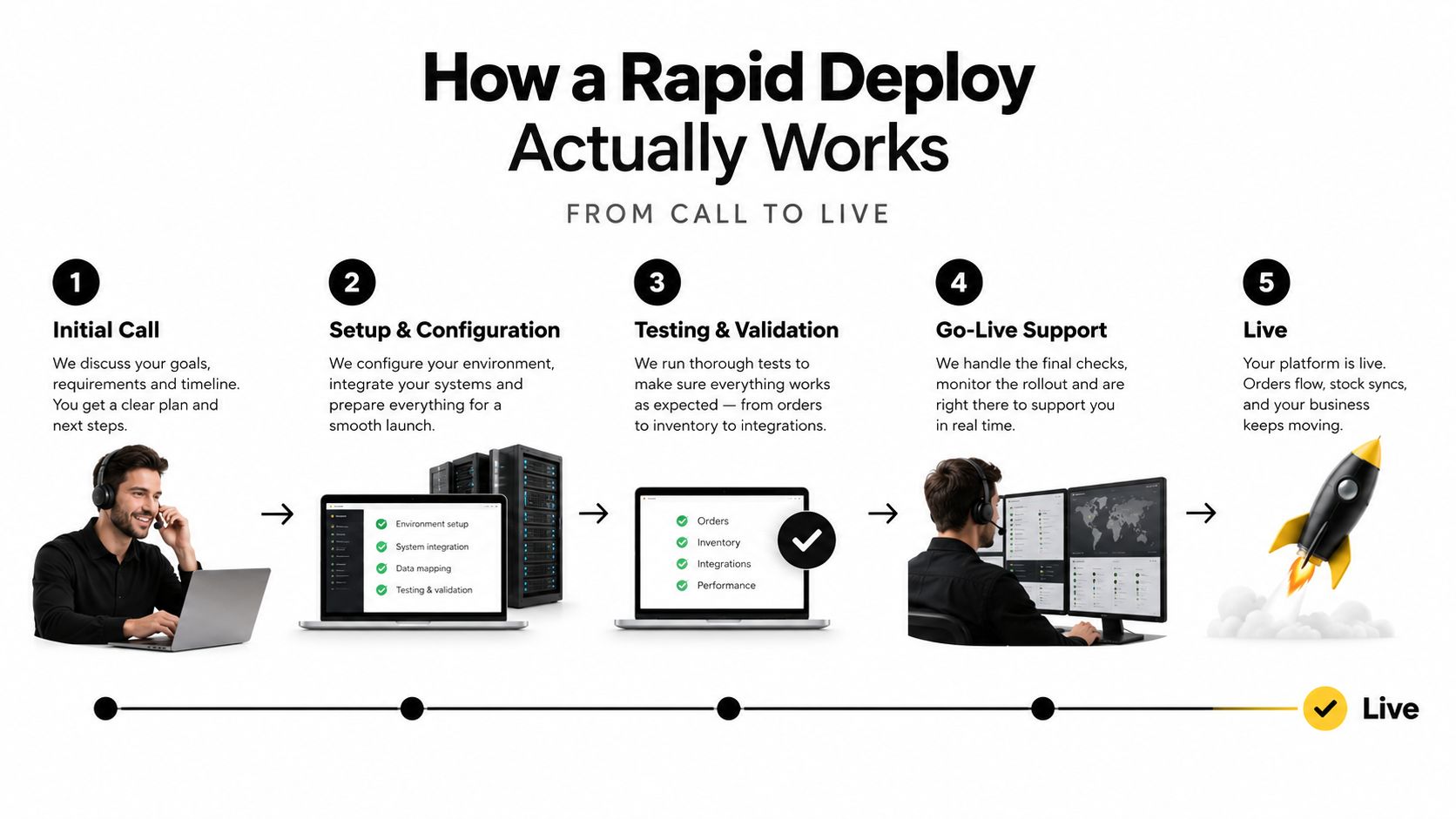
A rapid deployment is won before the trailer leaves the yard. Blue Gas Express follows a workflow that starts with site facts, equipment selection, and readiness checks, not with an automatic search for the nearest available truck. The objective is simple: arrive with the right gas system, connect it safely, and prove that the customer can operate it.
First-call intake
The first call must establish the site address, required pressure, estimated flow, duration, downstream equipment, access restrictions, and responsible contact. Confirm what equipment must run, whether it has been commissioned, and whether the permanent connection is delayed, isolated, or unavailable. A boiler room and a process burner may both use natural gas, yet accept different pressures and respond differently to interruptions.
Ask for the delivery route at the same time. Low bridges, narrow entrances, soft ground, overhead obstructions, restricted delivery hours, and crane requirements can affect the equipment choice and the arrival plan. A dispatch window has little value if the trailer cannot reach the pad.
Equipment selection and mobilization
Choose a CNG tube trailer when the load, duration, and access support pressure-regulated compressed gas. Choose an LNG tanker with a vaporization package when the project needs greater storage density, higher sustained demand, or fewer delivery interruptions. Before mobilization, confirm connection hardware, pressure control, vaporizer requirements, and site-specific approvals.
At arrival, stop and inspect. Check the pad and access route, position the trailer, chock the wheels, establish grounding, install impact protection, and verify that the exclusion zone is clear. Mobile LNG deployments include storage, dispensing, metering, and containment functions rather than only a tank, as described in the U.S. Department of Energy's mobile LNG information.
Hookup and handoff
The field sequence should cover hose connection, valve and regulator verification, system purge, leak testing, pressure verification, meter confirmation, and controlled gas-on. The downstream operator should witness the initial readings and confirm that the equipment receives the intended pressure and flow.
Build the handoff packet while the work is happening:
- Pressure logs: Record inlet and outlet readings during startup and normal operation.
- Regulator settings: Identify installed settings and the limits operators must not exceed.
- Emergency controls: Mark the trailer shutoff, downstream shutoff, and emergency access route.
- Contact tree: List the supplier, site owner, safety officer, utility contact, and after-hours escalation path.
- Exception record: Note unresolved alarms, restrictions, delivery conditions, and follow-up actions.
A fast-delivery promise means little without a controlled handoff. The system is ready only when the final pressure, meter status, shutoff location, operating limits, and accepting representative are documented. That record shows what was tested and gives the site team a clear response if readings change after gas-on.
Choosing the Right Partner and Next Steps
A turnkey mobile-gas provider does more than rebook a trailer. A broker may be useful for sourcing capacity, but the customer needs to know who owns the equipment, who controls the pressure testing, who will arrive at the site, and who answers the phone after normal working hours.
Score each candidate against the work that causes real delays:
- Fleet control: Ask whether the provider dispatches company-controlled trailers or relies entirely on leased assets and third-party availability.
- Mobilization window: Request the expected time from confirmed purchase order to trailer arrival, including the conditions that could change it.
- Testing documentation: Confirm who performs pressure testing, leak checks, meter verification, and gas-quality documentation.
- Startup support: Require the provider to state whether its crew stays through hookup, pressurization, and customer handoff.
- Emergency coverage: Get the night and weekend contact path in writing. A daytime dispatcher isn't enough for a facility that cannot pause its process overnight.
The strongest partner is the one that treats the temporary system as a live operating installation. That means reviewing site photos, checking the access route, confirming the receiving equipment, and documenting the startup. A vendor that drops a trailer and leaves can cost more than a vendor with a higher transport quote if the customer loses a commissioning shift waiting for answers.
Keep two qualified providers on the prequalified list. That isn't overplanning. It protects the project from a trailer maintenance issue, an outage affecting the supplier, or a schedule change that collides with another customer's demand.
Start with three actions. Audit the next 90 days of gas-dependent construction, commissioning, maintenance, and freeze-prevention work. Ask the preferred provider for a written mobilization window tied to the information it needs from your team. Then confirm the emergency contact path before the first trailer rolls, including who can authorize a shutdown, who can approve a delivery change, and who accepts the final handoff.
Blue Gas Express provides rentable mobile CNG and LNG units for temporary natural gas service, including trailer-mounted equipment for construction, commissioning, occupancy preparation, outages, and freeze prevention. Review the available temporary gas options and request a deployment discussion through Blue Gas Express.