

Picture this: you've got a massive project that needs a serious amount of power, but there's no natural gas pipeline anywhere nearby. What do you do?
This is where the concept of a "virtual pipeline" comes in. XNG natural gas is not a new type of gas; it's a service. Think of it as a mobile energy solution that brings Compressed Natural Gas (CNG) or Liquefied Natural Gas (LNG) right to your doorstep, wherever that may be. It’s a game-changer for industries that can't afford to be without a reliable power source, even temporarily.
Bridging the Energy Gap with Mobile Power
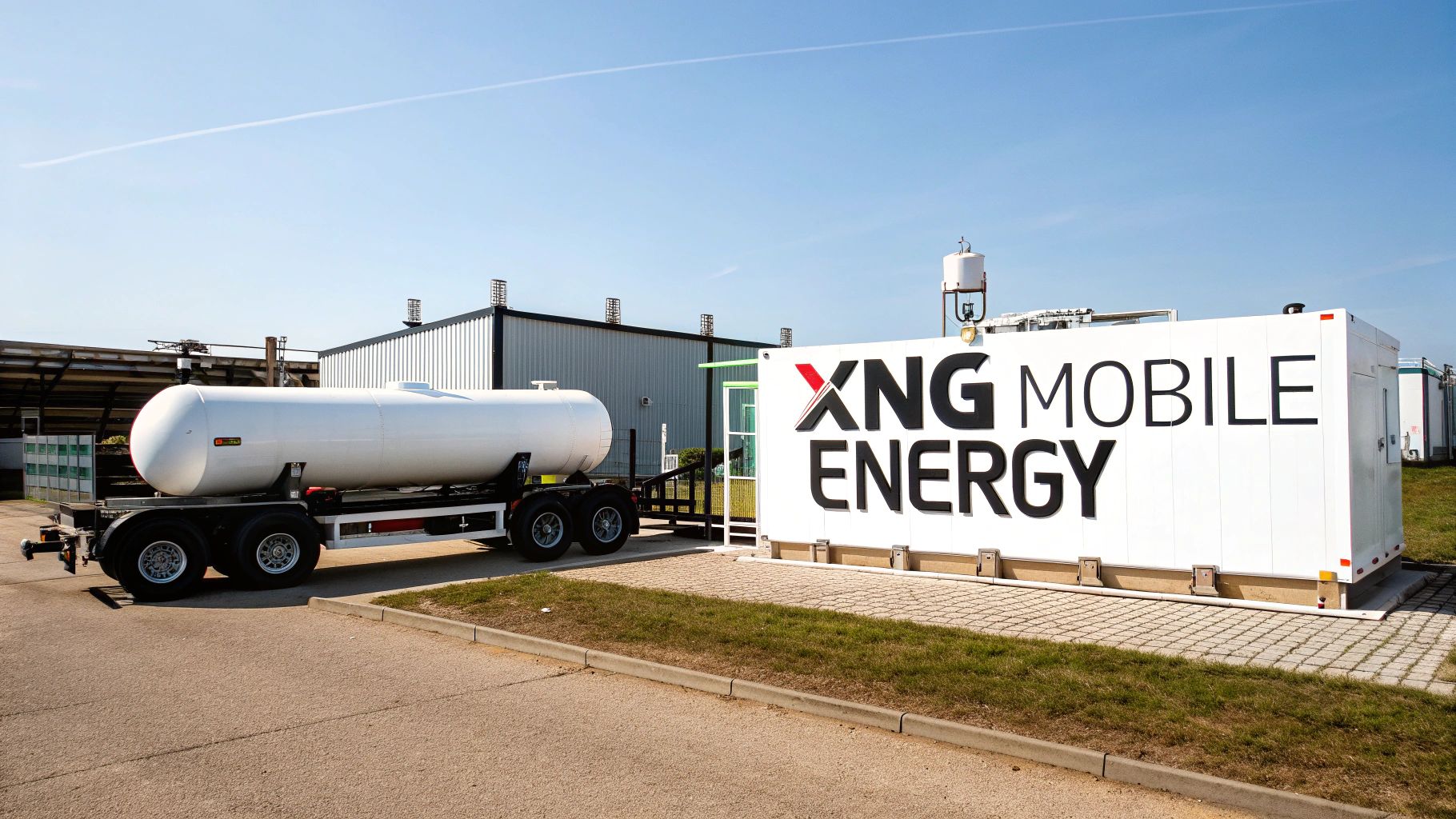
The best way to understand an XNG natural gas solution is to think of it as a huge, industrial-strength power bank for your business. When your phone's about to die and you're miles from an outlet, you grab a portable charger. It's the same idea here, just on a much bigger scale. When a construction site, a manufacturing plant, or a utility company needs the clean-burning power of natural gas but isn't hooked up to a pipeline, these mobile services bridge that critical gap.
This "virtual pipeline" is a fully managed logistical operation. Natural gas is transported by truck and hooked up directly to your equipment on-site. It’s the go-to answer for a surprisingly common problem: how do you keep the lights on and the machines running when permanent infrastructure is down for maintenance, too expensive, or simply doesn't exist yet? Without this kind of mobile solution, many projects would grind to a halt, costing a fortune in delays.
Who Needs a Virtual Pipeline?
A mobile energy service is absolutely essential for a whole host of situations where you can't just plug into the local utility grid. The service is all about ensuring operational continuity, preventing costly downtime, and keeping projects on track by delivering fuel exactly where and when it's needed.
Here are a few classic examples of who relies on these services:
- Utilities: They use it to keep gas flowing to homes and businesses during pipeline repairs, planned upgrades, or important integrity tests. No service interruptions for customers.
- Construction Sites: It's perfect for powering heavy equipment like asphalt plants or providing temporary heat to a new building long before the permanent gas lines are activated.
- Industrial Facilities: A factory might need it to fuel a new expansion before it's connected to the main grid, or to supplement their energy supply during a period of peak production.
A virtual pipeline frees you from the limitations of physical infrastructure. It offers a flexible, resilient energy supply that can adapt to the ever-changing demands of a project or operation. This is more than just delivering gas; it's about delivering uninterrupted progress.
The Core Problem Solved by XNG
At its heart, this service cracks the code on energy access. Building permanent pipelines is incredibly expensive and can take years of planning and construction. And let's be honest, in many cases, the need for that energy is temporary, making a permanent pipeline a poor investment.
A large construction project, for instance, might only need a high volume of natural gas for six months. A utility company might only need to bypass a small section of pipeline for a couple of weeks to perform maintenance.
In scenarios like these, bringing in an XNG natural gas solution is infinitely more practical and cost-effective than any permanent fix. It’s a smart, flexible approach that keeps critical industries powered up, no matter where they are.
Understanding CNG and LNG Delivery Methods
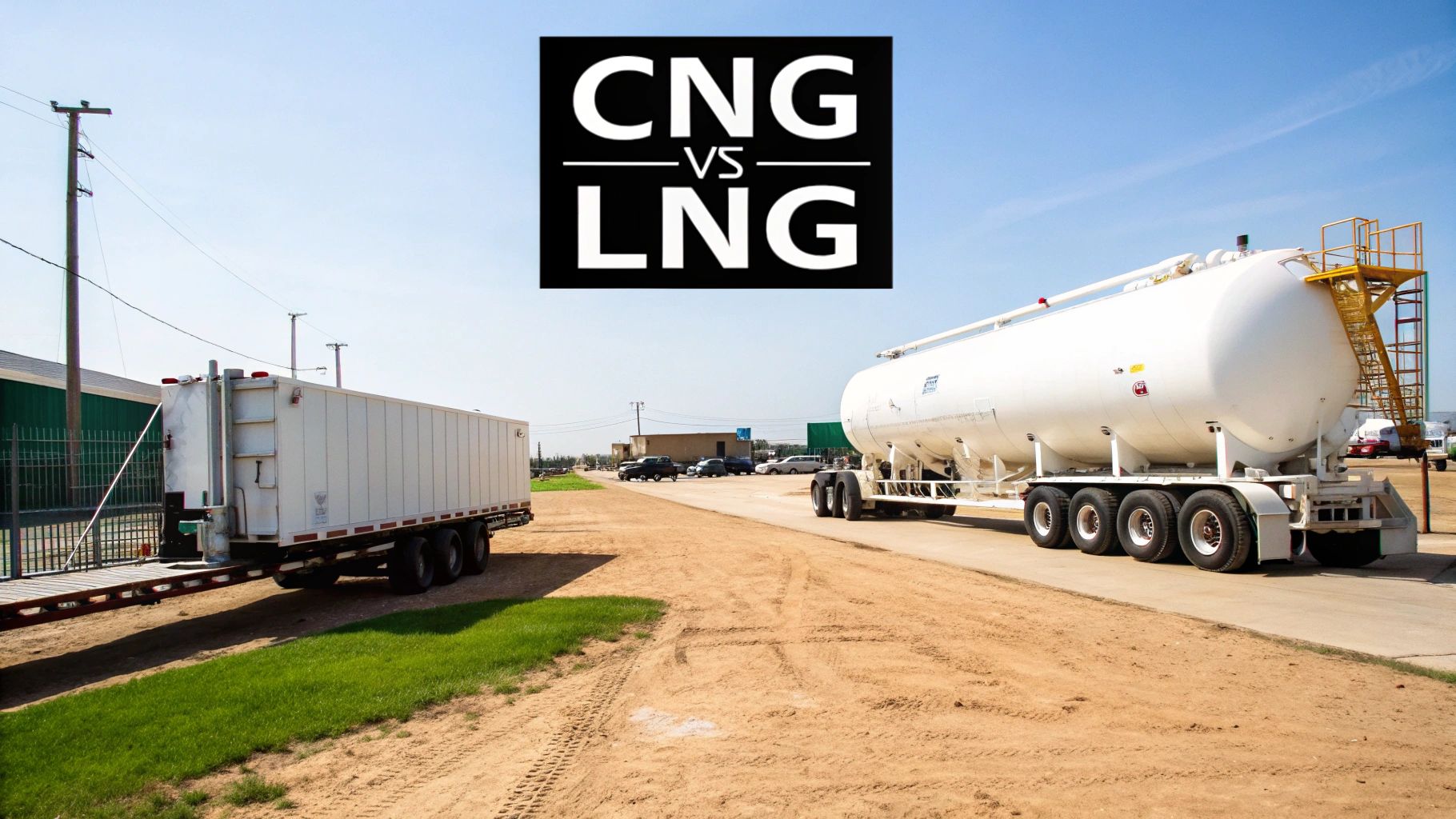
So, how do you get natural gas to a site when there isn't a pipeline? You have to package it for the road. This is where the two workhorses of mobile energy come into play: Compressed Natural Gas (CNG) and Liquefied Natural Gas (LNG).
While both are just different forms of the same natural gas you'd get from a utility, the way they're prepared and handled couldn't be more different. Picking the right one is a crucial first step that hinges on your project's size, timeline, and how much energy you'll need.
Compressed Natural Gas: The Agile Energy Solution
Think of CNG like compressing air into a scuba tank. We take standard natural gas and pressurize it to between 3,000 and 3,600 pounds per square inch (psi). This process dramatically shrinks its volume, making it possible to transport a useful amount on a truck.
The gas is then loaded into what we call "tube trailers"—essentially a bundle of super-strong steel cylinders mounted on a trailer. These trailers act as both the transport and the on-site storage, connecting directly to your equipment.
Because it stays a gas, CNG is a nimble and relatively straightforward solution. It’s perfect for projects with moderate energy needs or shorter durations where getting set up quickly and simply is the top priority.
Liquefied Natural Gas: The High-Density Powerhouse
Now, if CNG is like compressing air, LNG is like turning water into ice. To create LNG, natural gas is chilled to an incredibly cold -260°F (-162°C). At this temperature, it condenses into a liquid, reducing its volume by a staggering 600 times.
This super-cooled liquid travels in cryogenic tankers, which are basically giant thermoses on wheels built to maintain that frigid temperature. The sheer energy density of LNG is its killer feature; a single tanker of LNG packs far more energy than a CNG trailer.
This makes LNG the undisputed champion for large-scale, long-term projects—think major construction sites, industrial plant turnarounds, or utility outages that could drag on for weeks or months. When you have a massive, continuous energy demand, the efficiency of LNG is hard to beat.
The core difference comes down to density and state. CNG is pressurized gas, perfect for rapid deployment and moderate use. LNG is a super-cooled liquid, ideal for storing and transporting huge amounts of energy for sustained, heavy-duty applications.
CNG vs. LNG At a Glance
So, how do you decide between CNG and LNG for a mobile natural gas solution? While there's no single "best" option, one is almost always a better fit for the job at hand. This table breaks down the key differences to help you see which one aligns with your project's needs.
| Attribute | Compressed Natural Gas (CNG) | Liquefied Natural Gas (LNG) |
|---|---|---|
| Physical State | Pressurized gas at ambient temperature | Super-cooled liquid at -260°F |
| Energy Density | Lower | Higher (approx. 3x more than CNG per trailer) |
| On-Site Footprint | Larger; may require multiple trailers for continuous supply | Smaller; a single storage unit holds more energy |
| Equipment | Tube trailers, pressure reduction skids | Cryogenic tankers, storage, and vaporizers |
| Best For | Shorter projects, moderate demand, rapid setup | Long-duration projects, high-volume demand |
| Example Uses | Pipeline integrity digs, quick utility service restoration | Asphalt plants, large manufacturing, extended outages |
Ultimately, understanding these distinctions is the first step in designing a "virtual pipeline" that gives you a reliable, cost-effective energy supply, no matter where your project is located.
How Industries Put Mobile Natural Gas to Work
It’s one thing to know the difference between CNG and LNG, but it’s another thing entirely to see how they solve real-world problems. These mobile energy solutions, sometimes called "virtual pipelines," are far more than just a backup plan. For utilities, construction firms, and industrial plants, they’re a strategic tool for keeping the lights on, avoiding costly downtime, and fueling growth where permanent pipelines just aren't an option.
Think of an XNG natural gas service as an on-demand energy grid. It delivers the clean, efficient power of natural gas but with the flexibility to set up shop almost anywhere. This ensures mission-critical projects stay on schedule and within budget.
Let's dig into the specific situations where this kind of mobile power becomes a game-changer.
Keeping the Lights On for Utility Providers
Utilities are the lifeblood of our energy infrastructure, but their vast pipeline networks aren't indestructible. They need regular maintenance, upgrades, and sometimes, emergency first aid. This is exactly where mobile natural gas steps in to ensure customers never lose service.
Here are a few common scenarios:
- Pipeline Integrity Projects: When a section of pipeline has to be taken offline for inspection or repair, a mobile CNG or LNG unit can be brought in to bypass that segment. This clever workaround lets the utility keep supplying gas to homes and businesses without anyone even noticing.
- Emergency Outage Response: If a pipeline fails unexpectedly, a rapid-deployment team can get a temporary gas supply flowing in a matter of hours. This minimizes the impact on customers and provides a steady energy source while the permanent fix is underway.
- Peak Shaving: During a bitter cold snap, demand for natural gas can skyrocket, putting a serious strain on the existing pipeline. Utilities use mobile LNG vaporization systems to inject extra gas into the system, "shaving" that peak demand to prevent low-pressure issues or widespread outages.
Powering Progress on Construction Sites
Massive construction projects are often located in undeveloped areas where permanent utility lines are still just a blueprint. Yet, these sites are incredibly energy-hungry, needing power for everything from heavy machinery to temporary heat for curing concrete.
An XNG natural gas solution often becomes the primary power source for:
- Asphalt and Concrete Plants: These operations demand a huge amount of consistent, high-temperature heat. Mobile natural gas offers a cleaner and often cheaper fuel than the traditional diesel or propane.
- Temporary Building Heat: Before the permanent HVAC is up and running, large buildings need to be heated so interior work can continue through the winter. Mobile gas can fuel powerful, efficient heaters all over the job site.
- Generator Fueling: On-site generators are a staple, but natural gas-powered units are a much cleaner and quieter alternative to diesel. While our focus is on mobile supply, understanding the best natural gas generators for homes gives you a good idea of the broader market for this kind of equipment.
Fueling Industrial Growth and Resilience
For any industrial facility, an energy interruption means one thing: lost production and lost revenue. Mobile natural gas acts as a critical buffer, allowing plants to expand, manage seasonal peaks, and navigate energy transitions without skipping a beat.
By decoupling energy access from pipeline availability, mobile natural gas empowers industrial facilities to adapt quickly. It supports everything from planned expansions to unexpected supply chain shifts, turning energy into a flexible asset rather than a fixed constraint.
This kind of flexibility is becoming more and more critical. Forecasts show U.S. natural gas demand hitting 81.8 Bcf per day by October 2025—that's a 4.1% increase from 2023 records, pushed by residential, industrial, and LNG export growth. This highlights just how important a reliable gas supply is. You can dive deeper into these natural gas market indicators from the American Gas Association. For industrial clients, mobile solutions are the key to navigating this dynamic landscape, offering a dependable energy source for plant expansions, seasonal production surges, or a cleaner bridge fuel while shifting away from coal or oil.
The Mobile Gas Deployment Process From Start to Finish
You might think bringing a temporary energy source like an XNG natural gas virtual pipeline to your site is a massive headache. In reality, it’s a well-oiled process, broken down into clear, manageable steps. It’s all about making sure the whole operation is smooth, efficient, and above all, safe.
Let's walk through the entire journey, from our first conversation to the day we pack up and leave your site exactly as we found it. This roadmap shows how we tackle a complex logistical puzzle and turn it into a straightforward project.
Phase 1: Initial Consultation and Needs Assessment
Everything starts with a conversation. We need to get a deep understanding of your operational needs—and it goes way beyond just asking "how much gas do you need?" We'll talk about your specific application, your daily and weekly energy consumption patterns, and any big swings in demand you might anticipate.
At the same time, we get practical. Our team will perform a detailed site logistics review. Can a large truck access the site easily? Where's the safest, most logical spot for the equipment? Getting this foundational work right is the key to designing a solution that just plain works.
Think of this as drawing up the blueprint for your temporary energy supply. A solid plan here prevents expensive changes and frustrating delays later on, ensuring the project runs like clockwork.
Phase 2: Custom Solution Design
Once we have a crystal-clear picture of your needs, our engineers get to work. This is where we design a mobile gas solution specifically for you. We’ll finalize whether CNG or LNG makes the most sense based on your energy volume, how long the project will last, and the physical space we have to work with on-site.
A short-term construction project with lower demand? A CNG tube trailer is likely the perfect fit. A large industrial plant needing a steady, high-volume supply for several months? That’s a job for a high-capacity LNG setup.
The final design will map out every piece of on-site equipment, including:
- CNG Tube Trailers or LNG Storage Vessels: This is the core of your on-site fuel supply.
- Pressure Reduction or Vaporization Skids: This equipment conditions the gas to the exact pressure and temperature your machinery needs to run correctly.
- Safety and Monitoring Systems: We include everything from emergency shut-offs and remote fuel tracking telemetry to secure fencing.
This is how we tailor solutions for diverse sectors—from utilities and construction to heavy industry.
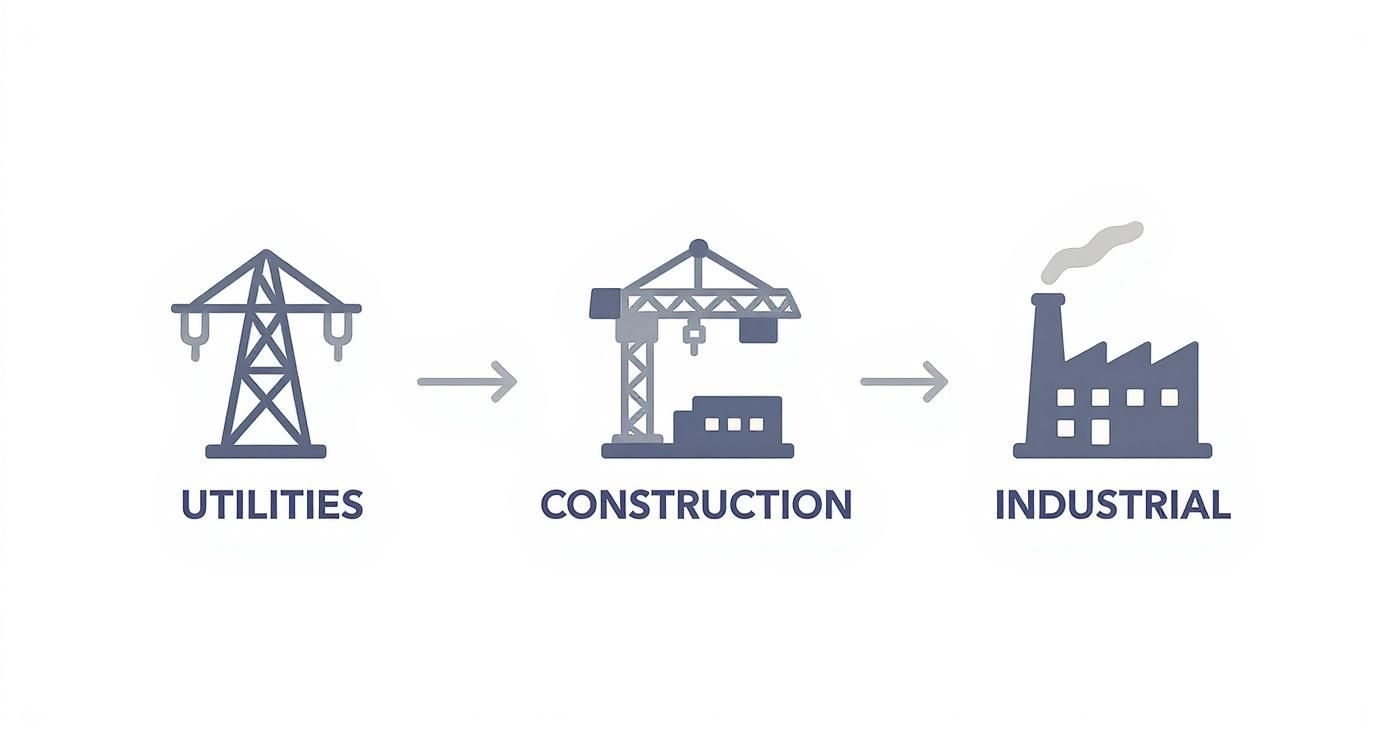
Each industry has unique challenges, and the design phase is where we adapt the core mobile energy concept to solve them.
Phase 3: Permitting and On-Site Installation
Dealing with red tape is a critical part of any energy project, but you don't have to do it alone. Our team takes the lead on securing all the necessary permits and coordinating with local authorities, fire marshals, and utility companies. We make sure the entire installation is 100% compliant with federal, state, and local safety codes, so you don’t have to worry about a thing.
With approvals in hand, the real work begins. Our certified technicians arrive on-site to safely position all the equipment, connect the system to your point-of-use, and run a battery of comprehensive safety checks. We meticulously test everything to confirm it operates flawlessly before we flip the switch.
Phase 4: Operations and Decommissioning
Once your system is up and running, our job is far from over. We provide 24/7 remote monitoring to keep a close eye on fuel levels and overall system performance. The moment our system sees your on-site fuel is getting low, our logistics team is automatically dispatched with a fresh delivery. This ensures a truly seamless, uninterrupted flow of natural gas.
When your project is finished or your permanent pipeline is finally active, we handle the entire decommissioning process. Our team will safely disconnect and remove all of our equipment, leaving your site completely clean and clear. It’s a true end-to-end service, handled professionally from the first call to the final handshake.
Key Safety and Compliance Standards
When it comes to natural gas, safety is everything. It’s not just a box to check; it’s the absolute foundation of every single operation. When a temporary natural gas solution from XNG arrives at your site, it’s not just a delivery—it’s a complete system built on engineered safeguards and strict, non-negotiable safety protocols. This isn't just about compliance; it's about protecting your people, your property, and the environment from the moment we arrive until the moment we leave.
The entire process, from loading the gas to connecting it at your facility, is wrapped in a tight framework of regulations. We’re talking about agencies like the U.S. Department of Transportation (DOT) and the Occupational Safety and Health Administration (OSHA). They set the rules for everything, from how our vehicles are built to how our technicians are trained. Following these rules isn't optional—it’s our license to operate.
This deep-seated commitment to oversight ensures every piece of equipment and every procedure is held to the highest possible standard. It creates a culture where safety isn’t just a department, but a reflex.
Engineered Safety in Every Component
The equipment we use for mobile natural gas is anything but standard. It’s been specifically designed and built with layer after layer of protection. These are highly sophisticated systems, engineered from the ground up to manage the unique physics of compressed and liquefied gas with total reliability.
Here’s a look at what’s built-in:
- Emergency Shut-Off Systems: Think of this as the "big red button." These systems can be triggered manually or automatically to instantly stop the flow of gas if something unexpected happens. It’s an immediate, foolproof way to contain any potential issue.
- Pressure Relief Valves (PRVs): Both our CNG tube trailers and LNG cryogenic tankers have these. If pressure ever builds up beyond a safe limit, these valves automatically and safely vent it, protecting the tank's integrity. It’s a critical, built-in safety net.
- Durable Construction: Our CNG cylinders are crafted from high-strength steel or advanced composite materials, built to handle pressures far beyond what they’ll see in normal operation. Likewise, LNG tankers are like giant thermoses—double-walled, vacuum-insulated vessels designed to maintain super-cold temperatures and handle the rigors of the road.
All these features work in concert to create a secure, resilient energy source right on your property.
Safety in mobile natural gas isn't about a single checklist. It's an integrated system where robust equipment, strict regulatory adherence, and extensive personnel training combine to create a secure operational environment. Every step is meticulously planned to mitigate risk.
The Human Element of Safety
As tough as the equipment is, the most important safety feature we have is our people. Every field technician who sets foot on your site to deploy, operate, or decommission an XNG natural gas system has gone through rigorous, specialized training and holds multiple certifications.
Our technicians are true experts in handling both CNG and LNG, and that’s a critical distinction because the two behave very differently. Their training goes deep, covering everything from the fine points of connection and disconnection procedures to emergency response drills and routine system checks. This level of expertise is what closes the gap on human error.
Better yet, their education never stops. We keep our team constantly updated on the latest safety standards and tech. So, the person managing your fuel supply isn't just a driver; they're a highly skilled energy specialist. It's this blend of advanced engineering, strict compliance, and expert personnel that gives you the confidence to run your operations without a second thought.
Getting a Handle on Costs and Benefits
So, what does a mobile natural gas solution actually cost? It's tempting to just look at the invoice, but the real way to think about an XNG natural gas service is as an investment. You're not just buying fuel; you're buying uninterrupted operations. A project that stays on track and avoids expensive delays is a successful one—and that's exactly what a virtual pipeline is designed to ensure.
The final price isn't a simple, off-the-shelf number. It’s shaped by the unique demands of your site and project. Once you understand what goes into the pricing, you can see how the service is built around your specific needs and where the true value lies.
What Drives the Cost?
The total investment for a mobile natural gas setup comes down to a few key components. Each piece of the puzzle is critical for delivering a safe and reliable stream of energy for your entire project.
- The Hardware: This is the cost for leasing the on-site equipment, like the CNG tube trailers or LNG storage tanks, plus the vaporization or pressure-reduction gear needed to make the gas usable.
- The Gas Itself: The market price for the natural gas (whether it's CNG or LNG) is a major part of the overall cost.
- Getting it There: Logistics matter. This part covers the cost of trucking the fuel to your location, which is based on how far you are and how many deliveries are needed to keep you running without a hitch.
- The Experts: You need certified technicians on the ground for setup, monitoring, and eventual takedown. Their expertise is baked right into the service cost.
The Real-World Value
When you look at these costs, you have to stack them up against the alternatives. The true financial upside of mobile natural gas shines when you consider the cost of not having it. Think about the astronomical expense of running your site on diesel or propane. Or even worse, the crippling financial blow from project delays and total downtime when you have no power at all.
Energy markets are always on the move. For instance, natural gas prices were all over the map through 2024 and 2025. The U.S. Henry Hub benchmark hit an average of $4.62/MMBtu in January 2025, then cooled off to about $3.93/MMBtu later that year. In just one 12-month span, prices jumped by roughly 39.35%. This just goes to show how much market swings can affect your fuel budget. You can dig deeper into the factors driving natural gas price trends on TradingEconomics.com.
Here's the bottom line: a full-service mobile gas provider takes all the logistical chaos off your plate. When one expert team manages your entire energy supply, you get to focus on your actual job, knowing your power is secure and handled by pros.
As you weigh the long-term affordability of XNG natural gas, it's smart to look into funding opportunities. Exploring available renewable energy grants can sometimes help take the edge off the initial investment, particularly for projects aiming to switch to cleaner energy sources. This helps you make a decision based on total value, not just the upfront sticker price.
Common Questions About Mobile Natural Gas
When you're looking into a virtual pipeline or a temporary setup like XNG natural gas, it's only natural to have a few questions. We're talking about some serious logistics and specialized gear, but the ideas behind it all are pretty straightforward. We’ve pulled together the most common questions we hear to give you clear, direct answers and help you see exactly how a mobile solution could work for your project.
Let's dive into the practical side of things, from how quickly we can get you up and running to the environmental benefits.
How Quickly Can You Deploy a Solution?
The timeline really depends on whether you're planning ahead or dealing with an emergency.
For a planned job—like a new construction site that needs power or a scheduled pipeline shutdown for maintenance—we take a more measured approach. From our first chat to having a fully operational system on your site, you’re typically looking at a few weeks. This gives us the time we need for proper engineering, pulling all the right permits, and getting your site prepped for a perfect launch.
Emergencies, however, are a completely different story. If a pipeline fails unexpectedly, we move fast. We can often get a mobile unit on the road, delivered, and running within 24 to 48 hours. That kind of rapid response is absolutely crucial for getting the lights back on and preventing massive, expensive service disruptions.
What Site Preparation Is Required?
A safe, successful installation starts with a solid foundation. Before our trucks even think about rolling out, your site needs to be ready for them. The prep work is simple, but it's vital for a smooth setup.
The main thing we need is a firm, level surface that can handle the weight of our equipment—we're talking fully loaded trailers and heavy operational skids. A compacted gravel pad or a concrete slab usually does the trick.
Beyond that, the area needs to have:
- Clear and Safe Access: The route to the setup spot needs to be wide enough for our large trucks to get in and out without any trouble.
- No Overhead Obstructions: We need a clear sky above the equipment. That means no power lines, low-hanging tree branches, or building overhangs getting in the way.
- Enough Space: The spot has to be big enough for all the gear and the required safety zones, which we figure out during our pre-install site survey.
Proper site preparation isn't just a suggestion—it's essential for safety and efficiency. A site that’s ready for us allows our technicians to work quickly and safely, getting your gas flowing without any hitches or delays.
Is Mobile Natural Gas a Greener Alternative?
Absolutely. When you put it up against other common temporary fuels like diesel, No. 2 fuel oil, or propane, natural gas burns much, much cleaner. It's all down to its simpler chemical makeup, which allows it to combust more completely.
This cleaner burn translates to significantly lower emissions of the bad stuff. We’re talking less greenhouse gas like carbon dioxide, and way less of the pollutants like sulfur dioxide and particulate matter that foul up the air. While it's still a fossil fuel, choosing natural gas over the alternatives is a smart, practical way to shrink your project's environmental footprint.
It often acts as a "bridge fuel," giving you a reliable and cleaner energy source while you wait for a permanent utility line or for renewable options to become viable. This makes XNG natural gas a responsible choice for any operation that cares about its environmental impact.
How Do You Ensure an Uninterrupted Fuel Supply?
Reliability is everything. We guarantee a continuous flow of fuel by combining smart logistics with sophisticated 24/7 remote monitoring. It's a proactive system built from the ground up to make sure you never run out.
Every piece of our on-site storage gear is outfitted with sensors that keep a constant eye on your fuel levels and how fast you're using it. All that data streams back to our central logistics hub in real-time.
The moment your on-site supply hits a pre-set level, our system automatically sends an alert. That's the signal for our logistics team to dispatch a full trailer to your location for a seamless swap-out—long before you're even close to running low. This hands-off, automated process means you get a steady stream of energy without ever having to think about it.
Ready to secure a reliable, on-demand energy supply for your next project? Blue Gas Express provides expert mobile natural gas solutions to keep your operations running without interruption. Learn more and get a quote at https://bluegasexpress.com.