

Ever heard of compressed natural gas, or CNG? It’s exactly what it sounds like: the same natural gas that might heat your home, but squeezed down into a much smaller space.
Think of it this way—imagine stuffing a giant, fluffy sleeping bag into a tiny sack. That’s what happens with CNG. By compressing the gas, we can store a massive amount of energy in a vehicle's fuel tank, making it a real-world alternative to gasoline and diesel.
A Simple Breakdown of CNG
So, what’s actually going on when we talk about CNG? We're taking that methane-rich natural gas and putting it under serious pressure. This process shrinks the gas down to less than 1% of its original volume.
This high-pressure storage is what turned natural gas into a practical fuel for vehicles. It's a big reason CNG became a go-to choice for cleaner transportation, a trend that continues to grow. For a deeper dive into its adoption, you can explore insights on the growth of the global CNG market.
CNG At A Glance
To really get a handle on it, let's break down the core properties of CNG into a quick summary.
| Characteristic | Description |
|---|---|
| Composition | Mostly made of methane (CH4), which is why it burns much cleaner than gasoline or diesel. |
| State | It’s always a gas, but it's kept under high pressure—typically around 3,600 psi—in its tank. |
| Primary Use | A popular fuel choice for vehicles, especially fleets like city buses, delivery trucks, and commercial vans. |
This table gives you the essential rundown, showing how simple the concept is at its heart: a clean, pressurized gas used to power our world.
The Journey From Gas Well To Fuel Tank
Before natural gas can power a single vehicle, it has to take quite a trip. It all starts deep underground, where raw natural gas is pulled from the earth. From there, it travels through a massive network of pipelines to a processing plant for a much-needed cleanup.
At the plant, impurities like water, oil, and other hydrocarbon gases are stripped out. This purification step is crucial because it leaves us with what we're really after: clean, high-quality methane.
The real magic happens once this purified gas reaches a specialized fueling station. Huge compressors get to work, squeezing the gas to an incredible pressure of about 3,600 pounds per square inch (psi). To give you some perspective, that's more than 100 times the pressure in your car's tires.
From Compressor To Vehicle
This is where heavy-duty industrial equipment comes into play, as you can see in the image below.
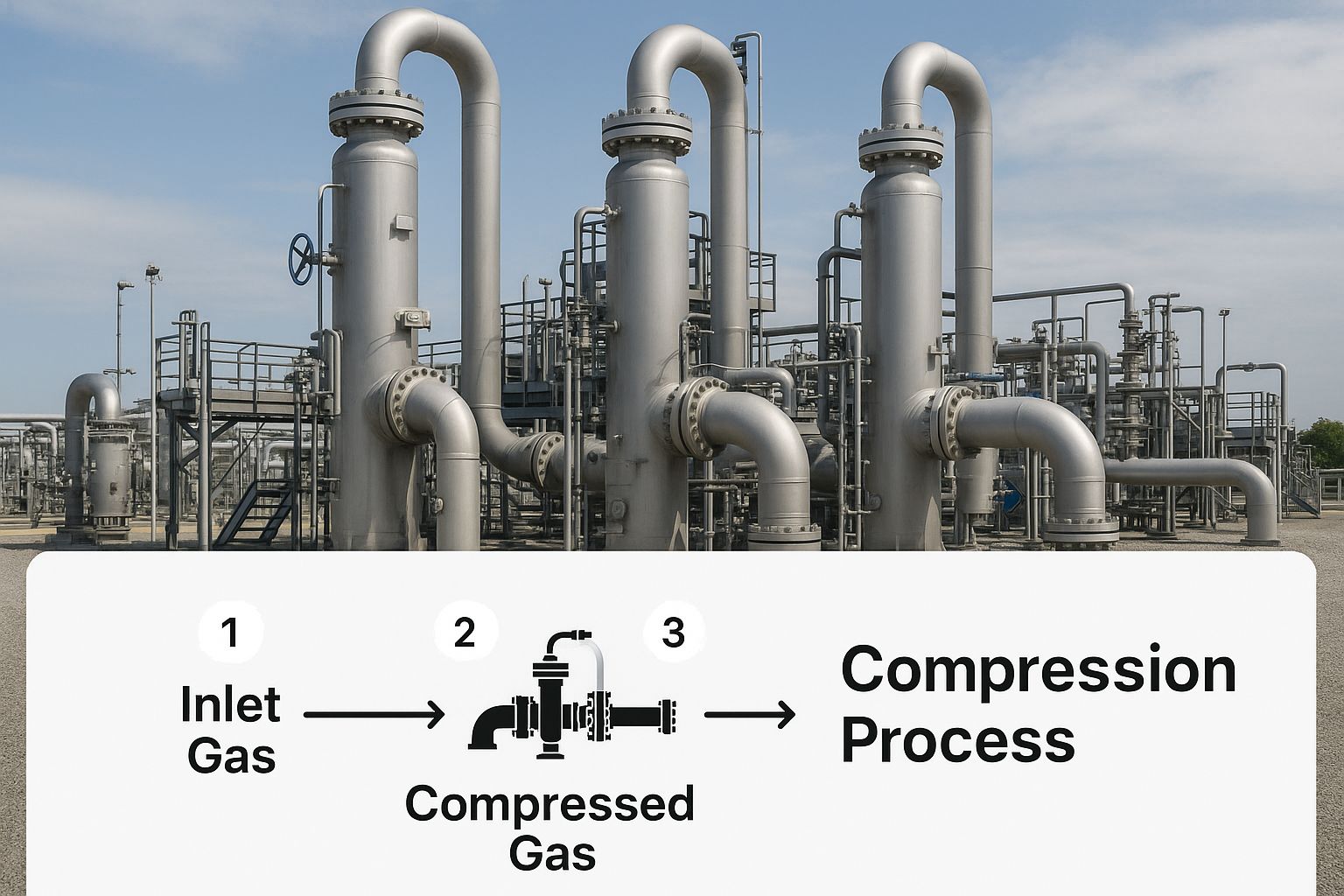
The machinery shown here is what’s needed to safely handle those extreme pressures before the gas is pumped into a vehicle. The highly compressed gas then flows from the dispenser into specially designed, incredibly tough fuel tanks. These aren't your average fuel tanks; they're built to withstand immense force and meet rigorous safety codes.
These tanks are engineered to be far more puncture-resistant than a standard gasoline tank, featuring thick walls often made from steel or carbon fiber composites. This robust construction is a core part of what makes CNG a safe and reliable vehicle fuel.
In the end, this entire process takes a low-pressure gas from deep within the earth and transforms it into a dense, high-energy fuel, ready to power everything from city buses to delivery trucks.
The Real Benefits of Choosing CNG
It’s no secret that more and more fleet managers are turning to compressed natural gas. This isn't just about trying something new; it's a strategic move driven by some very real, tangible benefits that impact everything from the environment to the bottom line.
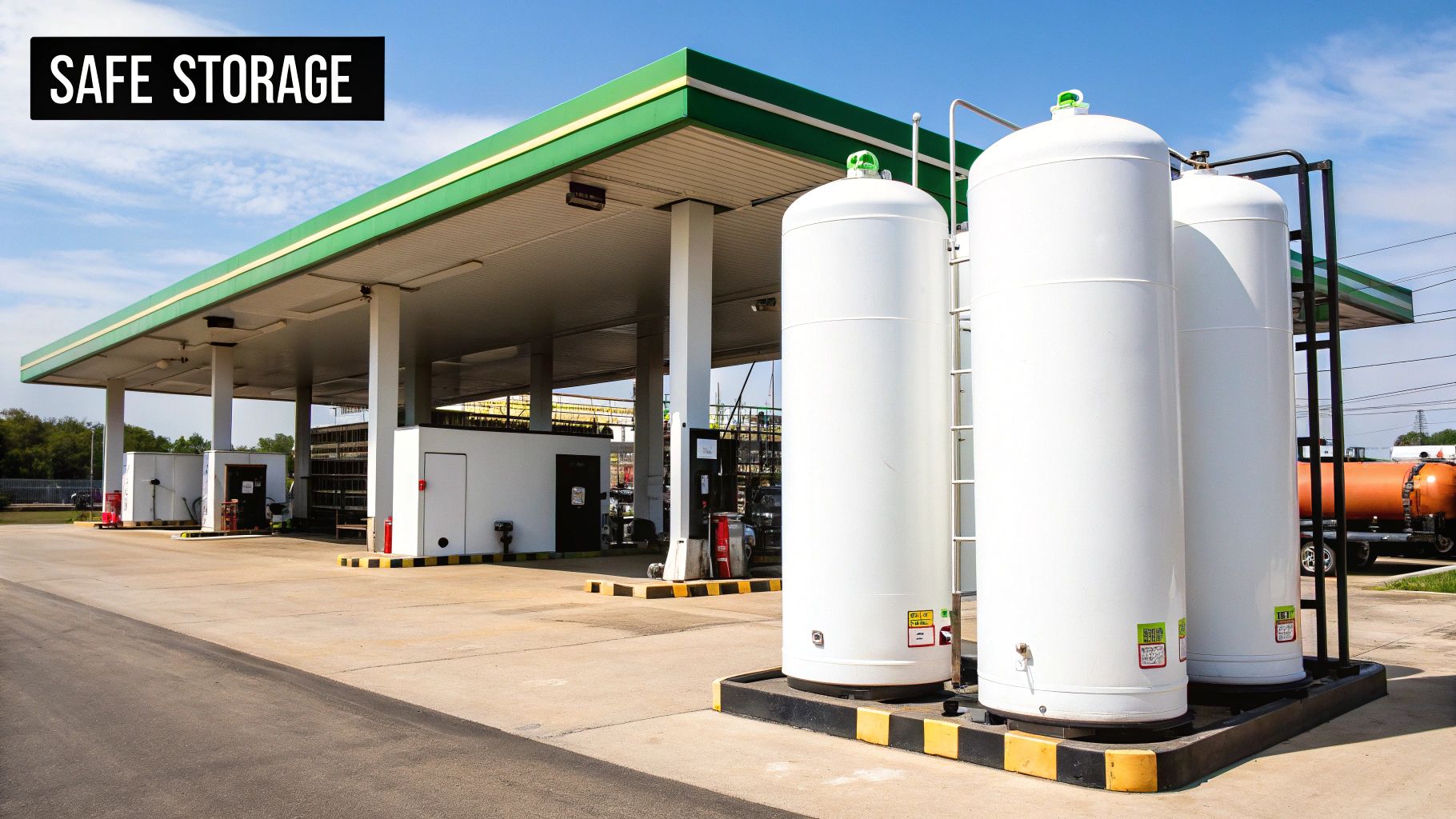
Right off the bat, CNG is a massive improvement for air quality. It’s simply a cleaner-burning fuel than gasoline or diesel, which means it pumps out far fewer harmful emissions.
We're talking about a serious reduction in smog and a much smaller carbon footprint. In fact, vehicles running on CNG can slash greenhouse gas emissions by up to 20-30% compared to those using traditional fuels.
More Than Just a Greener Choice
The financial side of the story is just as powerful. CNG consistently costs less at the pump than gasoline, and for any business running a fleet of vehicles, those savings add up—fast.
It's a big reason why the U.S. compressed natural gas market pulled in revenues around USD 13.43 billion recently, with forecasts showing that figure could nearly double. You can dig deeper into the numbers with this CNG market outlook in the United States.
But the advantages don't stop at savings. CNG also delivers a noticeable performance boost. Thanks to its high octane rating, engines tend to run quieter and smoother. This cleaner burn also means less wear and tear on critical engine parts, potentially leading to lower maintenance costs over the life of the vehicle.
Where You See CNG In Action Every Day
Compressed natural gas isn't some far-off fuel of the future. It’s already here, quietly powering parts of our communities in ways you probably see every day. The most obvious place you'll spot it is in transportation, where big vehicle fleets are making the switch to this cleaner fuel.
Think about your local city bus or the garbage truck that comes by every week. There’s a solid chance it’s running on CNG. These types of vehicles are perfect for CNG because they follow set routes and return to a central hub each night, which makes refueling a breeze. This simple change allows cities to cut down on both smog and street-level noise.
Powering Industries and Commerce
CNG's role doesn't stop at the curb. It’s also a major player in the commercial and industrial worlds. Many companies that run fleets of delivery vans, airport shuttles, or service trucks have moved to CNG to trim their fuel budgets and shrink their carbon footprint.
But its uses go way beyond just vehicles. Industrial plants rely on CNG for all sorts of essential tasks.
- Manufacturing Power: Factories often use CNG for process heating, which provides the clean, steady energy needed to make everything from glass bottles to steel beams.
- Electricity Generation: CNG is also a key fuel for generators that produce electricity, acting as a dependable backup or primary power source, especially in places far from the main grid.
From the truck that picks up your recycling to the factories that build our everyday products, CNG has become a hidden but vital part of our modern world. It’s a true workhorse fuel that’s proving its value across the economy.
CNG Safety And Fueling Infrastructure Facts

Whenever we talk about a new fuel, two questions always pop up: Is it safe, and where can I actually get it? Compressed natural gas has a strong safety record, and a lot of that comes down to its basic physical properties.
Its biggest safety feature is its density. Think about a gasoline spill—it pools on the ground, creating a serious fire hazard. CNG, on the other hand, is lighter than air. If a leak ever occurs, the gas doesn't stick around; it dissipates straight up into the atmosphere, dramatically lowering the risk of a ground-level fire.
The fuel tanks themselves are also incredibly robust. Built from materials like reinforced steel or tough carbon fiber composites, CNG tanks are engineered to handle high pressure and survive serious impacts, often making them tougher than the standard gas tank in your car.
Finding Fuel And Future Growth
You won't find a CNG pump on every corner just yet, but the fueling infrastructure is growing steadily. Thousands of public and private stations are already operating across the country, many placed strategically along major trucking routes to support commercial fleets.
The expansion of CNG infrastructure is directly linked to global energy trends. As natural gas becomes easier to access worldwide, CNG becomes a more practical transportation fuel, which in turn drives more investment in building out the network of fueling stations.
This growth is backed by rising demand. In fact, experts predict global natural gas demand will climb by about 1.5% in the coming year. This trend directly supports the continued expansion of CNG availability, and you can dive deeper into these projections in the latest gas market report.
Common Questions About CNG
As people get familiar with compressed natural gas, a few questions almost always pop up. Getting these details straight is key to understanding where CNG fits into the real world and how it stacks up against other fuels.
Are CNG, LNG, and LPG The Same Thing?
It's a common point of confusion, but no, they're quite different. Think of them as cousins in the fuel family, but each with a unique personality.
CNG is simply natural gas that’s been squeezed into a tank under high pressure, but it stays a gas.
- LNG (Liquefied Natural Gas) is the same natural gas, but it's been chilled to a frigid -260°F (-162°C). This extreme cold turns it into a liquid, making it much more compact to store and transport.
- LPG (Liquefied Petroleum Gas) is a completely different animal. It’s a mix of propane and butane, byproducts of oil refining and natural gas processing.
Can You Convert A Regular Car To Run On CNG?
Absolutely. Many standard gasoline cars can be retrofitted with what’s called a "bi-fuel" system, giving them the ability to switch between gasoline and CNG.
The conversion involves installing a certified kit that adds a tough, high-pressure fuel tank, new fuel lines, and injectors. This isn't a DIY weekend project, though—it's a complex job that should only be handled by a qualified technician to make sure everything is safe and runs correctly.
What’s The Driving Range Like Compared To Gasoline?
On a full tank of CNG alone, a vehicle will typically have a shorter driving range than it would on a full tank of gasoline. Even when compressed, natural gas is less dense than liquid gasoline, so you can't pack as much energy into the same amount of space.
That’s precisely why most converted cars are bi-fuel. This setup gives you the best of both worlds. You can run on cheaper, cleaner CNG for your daily commute and then flip a switch to gasoline for long trips where a CNG station might be out of reach. It’s a practical solution that completely gets rid of "range anxiety."
Facing delays on a natural gas line hookup or just need a temporary power source for your job site? Don't let a fuel gap stop your project in its tracks. Blue Gas Express delivers mobile CNG and LNG solutions to keep your operations powered up. Find out more about our rapid deployment services and keep your work moving.