

Piping cathodic protection is a clever bit of electrochemical engineering. In simple terms, it works by turning the entire pipeline into the cathode of a controlled electrical circuit. This simple shift stops the natural corrosion process that would otherwise chew through the metal over time. It's a remarkably effective way to maintain the integrity of the pipe, stretch its service life, and prevent the expensive, dangerous leaks that come from constant environmental exposure.
Why Cathodic Protection Is a Pipeline's Best Defense
Corrosion is a silent, relentless enemy. It's an invisible force that costs industries billions in damages and downtime every single year, quietly attacking the structural health of critical infrastructure. For steel pipelines buried in soil or submerged in water, this threat is a constant. Without some kind of intervention, it's not a matter of if the pipe will corrode, but when.
This is where piping cathodic protection completely changes the game. It's not just a fancy coating or a simple barrier; it's an active defense system. By manipulating the electrochemical reactions happening on the pipe's surface, it fundamentally rewires the metal's natural tendency to break down. Instead of just slowing corrosion, it stops it cold.
Shifting from Reactive Fixes to Proactive Protection
Too often, corrosion control is treated as just another maintenance chore. That's a huge—and expensive—mistake. A well-designed cathodic protection system is a foundational piece of any serious asset integrity strategy. Getting it right delivers real-world advantages that you can see in your operational efficiency and safety records.
In this guide, we'll break it all down. We’ll cover:
- The basic science behind why metal corrodes in the first place.
- The two main types of cathodic protection systems and how to choose the right one.
- Key design and installation factors you can't afford to get wrong.
- Best practices for keeping your system running effectively for the long haul.
The Real-World Benefits of a Proactive Approach
When you install and manage a cathodic protection system, you're making a strategic investment in the future of your infrastructure. It’s a move away from costly, reactive repairs and toward preventing the problem before it can even start. The positive impact is felt everywhere, from the company's bottom line to public safety.
A properly implemented piping cathodic protection system doesn't just protect a pipeline; it preserves the value of the entire asset, ensures regulatory compliance, and safeguards the environment from potential leaks. It transforms a vulnerable piece of infrastructure into a durable, long-lasting asset.
Think of it this way: you're not just buying a piece of equipment; you're buying peace of mind. The table below lays out the core benefits of making cathodic protection a central part of your pipeline management plan.
Core Benefits of Cathodic Protection for Pipelines
| Benefit | Impact on Pipeline Operations |
|---|---|
| Extended Asset Lifespan | Dramatically slows the rate of corrosion, often extending the functional life of a pipeline by several decades beyond its original design. |
| Reduced Maintenance Costs | Prevents the need for expensive and disruptive excavation, repairs, and section replacements caused by corrosion-related failures. |
| Improved Safety & Reliability | Minimizes the risk of leaks and catastrophic failures, protecting the environment, the public, and company reputation. |
| Enhanced Regulatory Compliance | Helps meet or exceed industry standards and government regulations for pipeline integrity and environmental protection. |
Each one of these benefits contributes to a safer, more reliable, and more cost-effective operation over the pipeline's entire life. It’s one of the smartest investments you can make in your infrastructure.
The Hidden Science of How Corrosion Works
To really get a handle on what piping cathodic protection does, you first have to understand the enemy it's designed to fight. Corrosion is a lot more than just rust—it's an sneaky electrochemical process. Think of it like thousands of tiny, unwanted batteries popping up all over the surface of your steel pipeline.
This natural "battery" doesn't need a neat plastic casing. It forms because no steel surface is ever perfectly uniform. Tiny, microscopic differences in the metal's makeup, stress points, and even oxygen levels create distinct electrical zones. These zones become the positive and negative terminals of a "corrosion cell," setting the stage for the metal to literally eat itself away.
The Anode and Cathode Dynamic
In this miniature circuit, two key players emerge. Some spots on the pipe become anodic, which is like the negative terminal of a battery. This is where the real damage happens. At these sites, the iron in the steel gives up its electrons and dissolves into the surrounding soil or water as ions. That's the pitting and metal loss we call corrosion.
At the same time, other areas become cathodic, acting as the positive terminal. These spots are actually protected. They pull in the electrons that were released from the anodic sites, which completes the electrical circuit. This constant flow of electrons—from anode to cathode—is the engine that drives the entire corrosive process.
The infographic below really brings this conflict to life, showing the natural corrosion threat versus the engineered defense we put in place.

As you can see, without an active defense system, corrosion is an unopposed force chipping away at the pipeline's integrity.
Of course, none of this can happen without a third crucial element: the electrolyte. For a buried pipeline, the soil and any moisture in it act as the electrolyte. It’s the conductive path that lets those ions travel away from the anode and complete the circuit, just like the acid inside a car battery.
If you take away the electrolyte, the circuit breaks, and corrosion grinds to a halt. This is exactly why a pipe buried in dry, sandy soil will often last far longer than one in wet, salty clay. The surrounding environment directly controls how fast and how severe the corrosion will be.
The core principle is simple but incredibly powerful: where you have an anode, you have metal loss. Where you have a cathode, you have protection. The entire goal of cathodic protection is to get rid of all the anodes.
Rewiring the Corrosion Circuit
So, if corrosion is just an unwanted electrical circuit, how do you turn it off? The most effective way is to hijack it and rewire it completely. That’s precisely what piping cathodic protection does. It introduces a new, much stronger electrical current that completely overpowers all those tiny, naturally occurring corrosion cells.
By applying this external current, we force the entire surface of the pipeline to become the cathode in one big, controlled electrochemical cell.
- No More Anodes: When the entire pipeline is forced into a cathodic state, there are simply no anodic sites left to corrode.
- No More Metal Loss: The destructive process of iron dissolving into the soil is stopped in its tracks.
- Complete Protection: The pipe is no longer a patchwork of tiny batteries destroying themselves. It's now a single, uniformly protected structure.
This is the real genius behind the method. Instead of fighting an endless war against millions of microscopic corrosion cells along miles of pipe, we apply one single, overarching solution. Cathodic protection doesn't just slow corrosion down; it changes the electrochemical environment to make it fundamentally impossible for corrosion to even start. It’s this foundational concept that makes it such a reliable and lasting defense for our most critical infrastructure. By mastering this natural circuit, we can ensure a pipeline’s integrity for decades to come.
Choosing Your System: Sacrificial vs. Impressed Current
When it comes to piping cathodic protection, picking the right system is one of the most important calls you'll make. It’s a decision that will ripple through the pipeline's entire lifespan, affecting everything from maintenance budgets to long-term reliability. There’s no single right answer—the best choice is always tied to the specific asset you're trying to protect.
The two main players on the field are sacrificial anode and impressed current systems. They both get the job done, but their methods couldn't be more different.
To make the right choice, you have to think beyond the initial installation. It's a long-term investment in asset integrity, and the industry is taking notice. The global cathodic protection market is expected to jump from about USD 5.1 billion in 2025 to USD 8.5 billion by 2035. That's a huge leap, and as data from Future Market Insights shows, it underscores just how critical this technology has become.
Let's break down these two systems so you can see how they work, where they shine, and what to watch out for.
The Sacrificial Anode Approach
The sacrificial anode system is beautifully simple. It’s a classic case of using basic electrochemistry to your advantage by setting up a controlled galvanic cell. You're essentially giving corrosion an easier, more attractive target.
Think of it like hiring a bodyguard for your pipeline. This "bodyguard" is an anode—a block of a more reactive metal like zinc, aluminum, or magnesium. Because it has a more negative electrochemical potential than the steel pipe, it naturally corrodes first when the two are electrically connected. It literally "sacrifices" itself, giving up its electrons to protect the pipe and making the pipeline the cathode in the circuit.
It's an elegant, self-regulating system that works without any outside help.
- No External Power: It’s a completely passive system. This makes it a perfect fit for remote locations or any place where a reliable power source is a headache.
- Easy Installation: Putting them in is straightforward. In many cases, it’s as simple as burying the anodes near the pipe and wiring them up.
- Low Interference Risk: The low voltages involved mean you don't have to worry much about causing stray current issues for other buried pipes or structures nearby.
But that simplicity has its limits. The driving voltage is low and determined by the metal you choose, so it's really only suitable for smaller, well-coated pipelines or for targeted "hot spot" protection where corrosion is localized.
The Impressed Current System Method
Where sacrificial anodes are the simple bodyguard, the impressed current cathodic protection (ICCP) system is more like a sophisticated, high-tech life support system. It doesn't rely on natural galvanic reactions. Instead, it uses an external power source to actively push a protective current onto the pipeline.
The heart of an ICCP system is the rectifier, which converts AC power into a controlled DC output. The positive DC terminal connects to a set of durable anodes (often made of materials like high-silicon cast iron), while the negative terminal is wired directly to the pipeline. This setup effectively overwhelms any natural corrosion cells, forcing the entire pipeline to become cathodic.
An impressed current system gives you incredible control. You can literally dial the current up or down to respond to changing soil conditions, coating damage, or even future pipeline expansions, ensuring your asset stays protected no matter what.
This power and flexibility make ICCP the system of choice for bigger, more complex jobs.
- High Current Output: It can protect massive pipeline networks, poorly coated or even bare steel, and assets buried in highly corrosive ground where sacrificial anodes just wouldn't cut it.
- Adjustable and Controllable: The ability to fine-tune the protective current is a game-changer, giving you total control over the asset's protection for its entire life.
- Long-Lasting Anodes: The anodes in these systems corrode very slowly, meaning they can last for decades before needing replacement.
The trade-offs are complexity and cost. You need a constant power source, the rectifiers require regular check-ups, and the system must be carefully designed to prevent stray currents from damaging nearby infrastructure.
Direct System Comparison
So, how do you decide? It really comes down to a clear-headed look at your project's scope, budget, and what you’re willing to manage long-term. To make it easier, here’s a straightforward comparison of the two systems.
Comparison of Sacrificial Anode and Impressed Current Systems
| Feature | Sacrificial Anode System | Impressed Current System |
|---|---|---|
| Power Source | None required (self-powered) | Requires external AC or DC power (rectifier) |
| Current Output | Low and fixed | High and adjustable |
| Driving Voltage | Limited (0.5V – 1.2V typical) | High and variable (up to 50V or more) |
| Typical Use Case | Small, well-coated, or isolated pipelines; hot spots | Large, long pipelines; poorly coated structures; high-resistivity soils |
| Initial Cost | Lower | Higher |
| Operating Cost | Very low (anode replacement) | Moderate (power consumption, maintenance) |
| Lifespan | Finite (10-30 years per anode set) | Indefinite with component replacement |
| Interference Risk | Low | Higher (requires careful design/mitigation) |
Ultimately, sacrificial systems offer a simple, "set-it-and-forget-it" solution for smaller or isolated assets. Impressed current systems, on the other hand, provide a powerful, scalable, and controllable solution ideal for the large-scale infrastructure that keeps our world moving.
Designing an Effective Cathodic Protection System

A truly effective piping cathodic protection system isn't something you can just pull off a shelf. It's a bespoke solution, meticulously engineered to handle the unique conditions of its environment. This is where the theory hits the dirt—the design phase is all about translating principles into a practical, real-world plan. Getting the details right here is what makes the difference between a system that works and one that fails.
The entire process is a careful marriage of science and hands-on engineering. It starts long before a single anode is ordered, beginning with a deep dive into the specific challenges your pipeline will face. This isn't just about crunching numbers; it's about building a system that will reliably do its job for decades to come.
This detailed engineering work is big business for a reason. The market for designing these systems hit USD 1.84 billion in 2024 and is on track to reach USD 2.64 billion by 2032. The oil and gas sector is the biggest driver, making up about 42% of that demand. As detailed in this market research on cathodic protection design services, that growth underscores just how much critical infrastructure relies on expert design to stay safe.
The First Line of Defense: Coating Integrity
Before you even start thinking about anodes and rectifiers, the conversation has to begin with the pipeline’s primary shield: its coating. You never design a cathodic protection system to protect bare steel; the amount of electrical current required would be astronomical and completely impractical. The CP system is the crucial backup, not the main player.
Think of the coating as the pipe's raincoat, keeping it isolated from the soil or water. The CP system is the emergency patch kit for any tiny rips, scratches, or "holidays" that inevitably pop up. These flaws can happen during shipping, installation, or simply from ground-stress over the years. The better the coating, the less work the CP system has to do. That means lower electricity bills and anodes that last much longer.
A high-quality coating system is the foundation of any corrosion prevention strategy. Cathodic protection perfects that strategy by providing a vigilant, active shield for any and all imperfections, ensuring complete and total coverage.
So, a core part of the design is knowing the exact type and expected quality of the coating. A modern pipeline with a high-performance, fusion-bonded epoxy coating will need a fraction of the current required by an older pipe with a less-than-perfect wrap.
Understanding the Environment: Soil Resistivity Surveys
One of the most critical steps in any piping cathodic protection design is getting out in the field and running a soil resistivity survey. Simply put, soil resistivity measures how easily electricity can flow through the ground. It's the single most important environmental factor that will dictate your design.
Here’s a simple way to think about it: low-resistivity soil, like wet clay, is an electrical superhighway. Current flows easily, which means corrosion can happen fast. High-resistivity soil, like dry sand or rock, is more like a bumpy country lane—it impedes current, slowing corrosion down.
The survey involves taking measurements along the entire pipeline route at different depths. The data you get back is pure gold. It tells you:
- Corrosivity Hotspots: You can pinpoint areas with low resistivity, flagging them as aggressive zones that will need more protective current.
- Anode Placement: The survey map guides where to place your anodes so they can distribute current most effectively.
- System Type Selection: Extreme soil conditions can be the deciding factor between a simple sacrificial system or a more powerful impressed current setup.
Without this data, you're just guessing. A thorough survey gives you the roadmap you need to build an efficient and cost-effective system.
Key Design Considerations Checklist
Pulling all these pieces together is a systematic process. Engineers have to balance a whole host of variables to create a system that’s both technically sound and economically viable. This checklist hits the high points of what needs to be nailed down during the design phase.
- Calculate Current Requirements: This is where the math comes in. Based on the pipe’s surface area, the quality of its coating, and the soil resistivity data, engineers calculate the total current needed to keep the entire pipeline protected.
- Select Anode Type and Material: Will sacrificial anodes (like zinc or magnesium) do the job, or do you need the power of an impressed current system with anodes made of high-silicon cast iron? The choice depends on current demand, soil conditions, and the system's target lifespan.
- Determine Anode Placement and Spacing: Anodes have to be placed just right. The goal is to get uniform current distribution along the pipeline, avoiding spots that are over-protected (which wastes energy) or under-protected (which allows corrosion).
- Design Monitoring Systems: You have to be able to check your work. The design must include test stations at regular intervals so technicians can easily take measurements and verify that the pipe is receiving the right level of protection.
- Mitigate Stray Current Interference: For impressed current systems, you have to consider the neighbors. The design must account for any potential electrical interference with other nearby pipelines or structures, ensuring your system doesn't accidentally cause a problem for someone else.
By methodically working through these points, an engineer turns a pile of raw data into a robust, reliable plan that will protect a critical asset for years to come.
Installation and Maintenance Best Practices
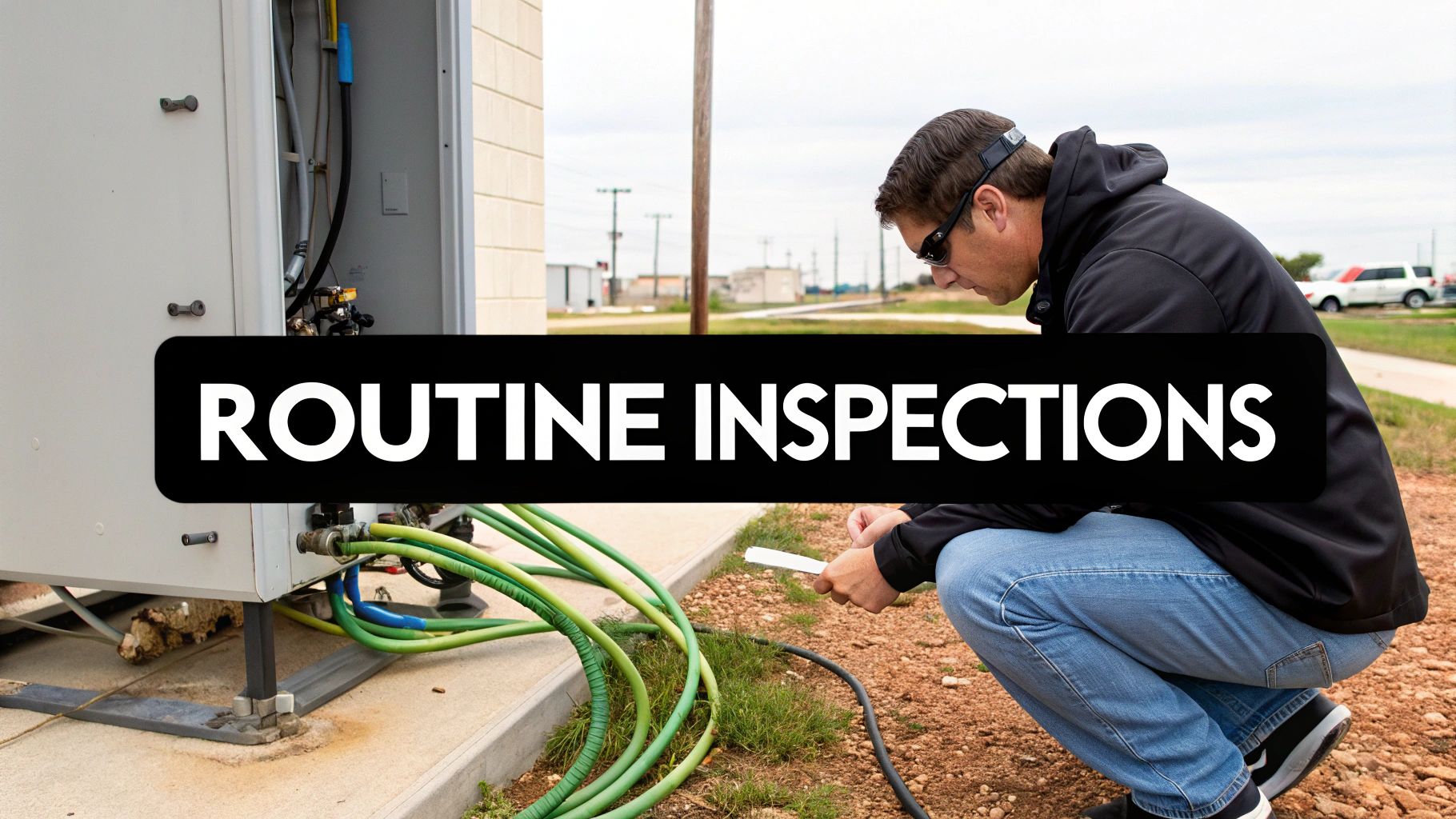
A well-engineered piping cathodic protection design is your blueprint, but it’s the on-the-ground installation and a disciplined maintenance routine that truly make it work. This is where theory meets reality, and precision is everything. A seemingly minor slip-up—a damaged cable, a poorly mixed anode backfill—can undermine the entire system and leave your pipeline exposed.
Think of it this way: a great installation sets the stage for decades of reliable corrosion control, turning a smart design into a long-term asset. But the job isn't done once the system is buried. Ongoing maintenance is the active strategy that ensures it keeps performing as designed, year in and year out.
Executing a Flawless Installation
Getting the installation right comes down to sweating the small stuff. For sacrificial anode systems, one of the most critical steps is preparing the anode backfill. This isn't just dirt; it's a specific mix of materials like gypsum and bentonite clay that creates a low-resistance environment. Get this right, and the anode sacrifices itself evenly and efficiently, delivering its protective current just where it's needed.
Cable handling is just as crucial. Every connection needs to be spotless, secure, and completely watertight. We're talking high-quality splice kits and zero compromises. A single nick in a cable’s insulation can bleed current into the soil, weakening the system's effectiveness or even causing new corrosion hot spots.
Finally, a smart installation includes strategically placed test stations. These are your windows into the underground system. They allow technicians to take critical pipe-to-soil potential readings without digging everything up. Placing them at regular intervals and key locations, like where pipelines cross, is essential for managing the system effectively for its entire service life.
Adopting a Proactive Maintenance Mindset
Once your cathodic protection system is up and running, the mission shifts to proactive monitoring. This isn’t about waiting for something to break; it’s about collecting data to prevent problems before they start. And the financial incentive is massive. Globally, corrosion costs industries over USD 2.5 trillion a year. That number alone shows just how valuable effective corrosion control really is.
A solid maintenance plan always includes a few core activities:
- Routine Potential Surveys: Technicians regularly take pipe-to-soil potential readings at every test station. This is how you verify the entire pipeline is getting enough protective current to meet industry standards (like the -850mV criterion).
- Rectifier Inspections: For impressed current systems, the rectifier is the engine. Monthly or quarterly checks are needed to confirm it's delivering the right voltage and amperage. It's also a chance to spot any physical wear and tear.
- Anode Consumption Tracking: By monitoring the current output, you can track how quickly the anodes are being consumed. This helps you predict their remaining lifespan and schedule replacements before they fail.
Regular monitoring transforms cathodic protection from a "set and forget" installation into a dynamic, managed system. It provides the data needed to make informed decisions, adjust for changing conditions, and guarantee uninterrupted protection.
Of course, cathodic protection is just one piece of the puzzle. It works best when paired with high-performance coatings. These two systems create a powerful one-two punch against corrosion. Emerging technologies like graphene coatings for industrial corrosion protection are even pushing the boundaries of what's possible. By integrating a robust CP system with a quality coating, you're building a multi-layered defense that keeps your pipeline safe and operational for decades.
Real-World Applications Across Industries
It’s one thing to understand the science behind piping cathodic protection, but it’s another to see it in action. This isn't some niche, experimental tech; it's a workhorse asset protection strategy used everywhere, safeguarding critical infrastructure from the constant threat of corrosion.
You’ll find cathodic protection systems guarding everything from massive energy networks buried in corrosive soil to vital structures submerged in saltwater. Let's look at a few examples that really show how indispensable this technology has become.
Oil and Gas Transmission
Think about the thousands of miles of steel pipelines crisscrossing the country, carrying oil and natural gas through some of the harshest environments imaginable. For these assets, corrosion isn't just a maintenance headache—it's a massive safety and environmental liability. A single failure can be catastrophic.
This is where impressed current cathodic protection systems really shine. Long-distance pipelines need a powerful, consistent, and adjustable current to protect their entire length, and that's exactly what these systems deliver. In the oil and gas sector, for instance, ensuring the longevity and safety of infrastructure, such as through expert PG&E certified gas line trenching, is paramount, often integrating cathodic protection from the outset.
Municipal Water and Wastewater Systems
Hidden beneath our cities are sprawling networks of ductile iron and steel pipes that bring us clean water and take away wastewater. These lines face their own unique challenges, from stray electrical currents leaking from subway systems to wildly inconsistent soil conditions. A burst water main is more than an inconvenience; it can flood streets, damage property, and cut off service to thousands.
To combat this, you'll often see a hybrid approach. Sacrificial anodes are perfect for targeted "hot spot" protection in high-risk areas, while smaller impressed current systems are used to guard larger, critical mains. It's all about ensuring the long-term reliability of our public water infrastructure.
By preventing premature failures, cathodic protection helps municipalities avoid costly emergency repairs and extend the life of their existing pipeline assets, saving taxpayer money and ensuring public health and safety.
The proof is in the numbers. The global market for cathodic protection was valued at USD 5.58 billion in 2025 and is expected to climb past USD 10.08 billion by 2034. This growth is fueled by industrial expansion and the urgent need to protect aging infrastructure worldwide. You can dive deeper into the research on the cathodic protection market for more detailed projections.
Common Questions About Piping Cathodic Protection
Even when you've got a good handle on the theory, a lot of practical questions pop up when it's time to actually consider a piping cathodic protection system. Asset managers and engineers often want straight answers about cost, lifespan, and how this all fits into the bigger picture of keeping their infrastructure safe. Let's tackle some of the questions we hear most often.
Think of this as your go-to cheat sheet. These answers get right to the real-world operational and financial side of things, helping you make smarter decisions for your assets.
How Long Does a Cathodic Protection System Last?
This is a big one, and the honest answer is: it completely depends on which type of system you install. The two main paths forward have very different lifespans.
Sacrificial Anode Systems are designed to be consumed. That's their job. These anodes are essentially "sacrificed" over time and typically last anywhere from 10 to 30 years. How long they hold up is a direct function of their size, the current they put out, and just how aggressive the surrounding environment is. Once they're used up, they have to be replaced.
Impressed Current Systems, on the other hand, can theoretically run forever with the right maintenance. The anodes are made from tough, slow-corroding materials that can last 20 to 40 years, sometimes even longer. As long as the rectifier is powered and you stay on top of maintaining and replacing components as they wear out, the system will keep protecting that pipeline.
Can Cathodic Protection Be Used Without Coatings?
Technically, yes, but in the real world, it's almost never done. Why? Because it would be incredibly inefficient and wildly expensive. Imagine trying to protect a huge, bare pipe—the amount of electrical current needed would be astronomical. You'd be looking at a massive impressed current system and an eye-watering power bill to match.
Coatings are your first line of defense; they're the main barrier keeping the pipe isolated from corrosive soil or water.
Cathodic protection is the crucial backup system. Its whole purpose is to protect the small, unavoidable defects—what we call "holidays"—that exist in every single coating. The combination of a good coating and a well-designed CP system isn't just a good idea; it's the industry standard for keeping a pipeline safe for the long haul.
What Are the Main Cost Factors for a CP System?
When you're budgeting for piping cathodic protection, the initial price tag is just the start. You have to think about the total cost of ownership, which includes everything from the installation to the long-term upkeep.
Several key things drive the cost:
- Pipeline Size: It’s simple math—the bigger the pipe's surface area, the more current you need to protect it.
- System Type: Impressed current systems usually cost more upfront because of the rectifiers and more complex installation. Sacrificial systems are generally simpler and cheaper to get in the ground initially.
- Environmental Corrosivity: If your soil is highly corrosive (meaning it has low electrical resistance), it's going to demand a lot more current. That could mean more anodes or a beefier rectifier.
- Design and Installation: The cost of proper engineering, conducting soil surveys, and the actual physical installation labor all add up and play a significant role in the final project cost.
At Blue Gas Express, we know that keeping a project on schedule is paramount, especially when permanent gas line installations hit a snag. If you're facing delays that put your timeline at risk, our mobile CNG and LNG solutions deliver the temporary natural gas you need to keep operations running smoothly. Make sure your projects stay powered and on track—learn how we can help at Blue Gas Express.