

Think of the natural gas that flows into your facility through a pipeline. Now, what if you could bottle that same energy and take it anywhere? That's the core idea behind converting natural gas to CNG.
We’re not changing the fuel itself, just how it's stored and delivered. It's a simple but powerful process: we take standard pipeline natural gas, compress it to a high pressure, and load it onto specialized trailers. Suddenly, that reliable energy source is no longer tied to a physical location. It’s ready to go wherever you need it, whenever you need it.
Unlocking Energy Independence with Mobile CNG
Imagine your facility's energy supply is like a hard-wired internet connection. It’s great when it’s there, but you’re tethered to one spot. A mobile natural gas to CNG solution is like a powerful, industrial-grade Wi-Fi hotspot. You get the exact same high-quality service you rely on, but without being physically anchored to the grid.
This mobility is a game-changer for businesses facing pipeline interruptions or for projects located miles from the nearest utility hookup. It's crucial to remember that CNG isn't some alternative fuel—it's the very same pipeline-quality natural gas you're used to, just compressed so we can transport it efficiently.
The Concept of a Virtual Pipeline
Industry folks often call this approach a "virtual pipeline." Instead of depending on thousands of miles of buried steel, we move the energy on wheels. This creates an incredibly flexible and responsive energy supply that keeps your operations humming, no matter what’s happening with the local utility.
A virtual pipeline bridges the gap between the natural gas grid and your operational needs, ensuring 100% uptime even when physical connections are unavailable or compromised. It transforms a static utility into a dynamic, mobile asset.
This isn’t just a clever workaround; it's a major shift in how businesses are securing their energy. The global market for compressed natural gas was valued at a huge USD 159.87 billion in 2023 and is on track to nearly double to USD 344.60 billion by 2030. This boom is fueled by a demand for cleaner energy and the sheer logistical sense that mobile solutions make. You can get a deeper dive into these numbers over at Grandview Research.
To help clarify the differences, let's break down how traditional pipeline gas and mobile CNG stack up against each other.
Pipeline Natural Gas vs Mobile CNG at a Glance
This table provides a quick comparison between traditional pipeline natural gas and mobile CNG solutions, highlighting their primary differences and applications.
| Feature | Pipeline Natural Gas | Mobile CNG (Compressed Natural Gas) |
|---|---|---|
| Delivery Method | Fixed, underground infrastructure | Mobile trailers (trucks) |
| Availability | Limited to areas with existing grid | Available anywhere with road access |
| Best Use Case | Continuous, long-term supply for established facilities | Temporary supply, emergency backup, remote sites |
| Flexibility | None; completely static | Highly flexible; can be deployed on demand |
| Setup Time | Months to years (for new connections) | Hours to days |
As you can see, each has its place. But when you need energy now and can't afford to wait—or when the grid lets you down—mobile CNG is the clear answer.
Why It Matters for Your Business
Getting a handle on the natural gas to CNG process is the first step toward using it to your advantage. By turning a stationary utility into a portable resource, you can protect your bottom line in several powerful ways.
Here’s what that looks like in the real world:
- Business Continuity: No more shutting down during a utility outage or planned maintenance. A mobile supply can save you from potentially millions in lost revenue.
- Operational Flexibility: You can now take on large-scale projects in remote locations where a pipeline is years away or just too expensive to build.
- Accelerated Timelines: Don't let a delayed gas line stall your project. Mobile CNG allows construction and generator commissioning to move forward right on schedule.
Ultimately, a mobile CNG service turns your energy supply from a potential liability into a reliable, on-demand asset. It's a custom-fit solution that keeps your operations powered and productive, no matter the location or timeline.
From Pipeline to Portable Power: How We Bring Natural Gas to You
So, how do we take natural gas—something that usually travels through a massive, underground network of pipes—and turn it into a portable, on-demand energy source? The answer is a clever bit of engineering we call a "virtual pipeline."
Think of it like this: we're bottling the energy. We tap into the main pipeline, compress the gas into specialized containers, and truck it directly to your job site, facility, or event. It's a way to get the reliability and cost-effectiveness of pipeline gas, even when you're miles away from the nearest connection.
The journey starts by connecting to a standard utility pipeline, ensuring we're using the same high-quality gas that heats homes and powers businesses. From there, the real transformation begins.
This diagram breaks down the simple, three-step journey from the pipeline to your site.
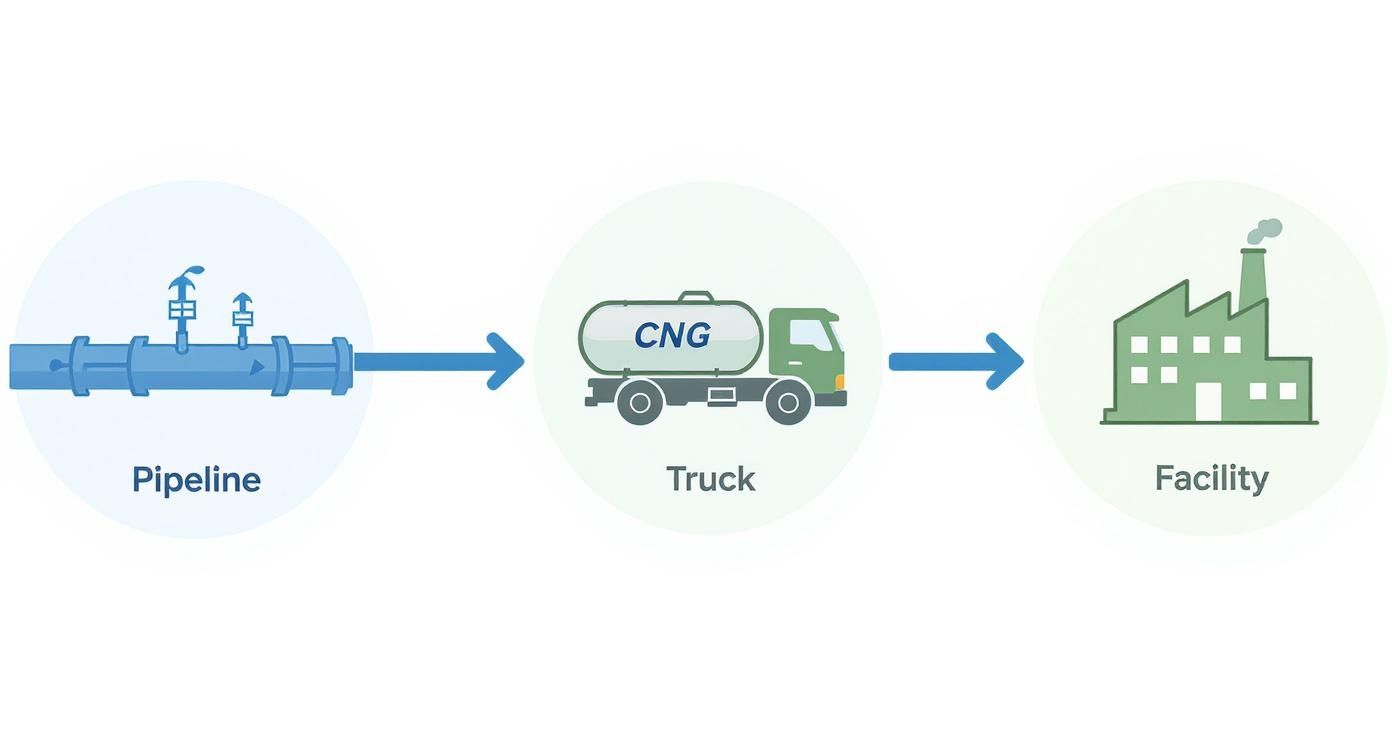
As you can see, we essentially create an energy bridge, delivering an uninterrupted supply wherever you need it, completely independent of the physical grid.
The Mother Station: Compressing the Gas
The first stop is a specialized facility we call a mother station. This is where the heavy lifting happens. Powerful compressors pull the gas directly from the utility line and squeeze it under immense pressure—typically up to 3,600 psi (pounds per square inch).
Why so much pressure? It’s all about volume. By compressing the gas, we can pack a huge amount of energy into a surprisingly small, transportable space. It's the key to making the whole concept work.
From the compressors, the gas is loaded into high-strength, certified cylinders bundled together on a trailer. This mobile storage unit is now ready to hit the road, having passed rigorous safety checks.
On the Road and to Your Site
Once loaded, these trailers become the backbone of our virtual pipeline, carrying CNG over the road to its final destination. That could be a remote construction project, a factory needing a temporary supply during an outage, or a new commercial building waiting for its permanent gas line. Our logistics team at Blue Gas Express handles these deliveries every day across the Carolinas, Tennessee, and Virginia.
When we arrive at your location—what we call the daughter station—it's more than just a simple drop-off. Our expert technicians get to work integrating the mobile supply seamlessly with your equipment.
The core idea is simple: we bring the pipeline to you. The daughter station is a temporary, custom-engineered setup that perfectly mimics a permanent utility connection, so you experience zero interruption.
This on-site setup includes some crucial equipment that does the exact opposite of what happened at the mother station.
Decompression and Final Integration
The final, critical step is decompression. The high-pressure CNG on our trailers is far too powerful for standard equipment, which runs on much lower pressure. We have to step it down safely and precisely.
- Pressure Regulation: First, the gas flows through a pressure reduction system (PRS). This device carefully dials back the pressure from 3,600 psi to the exact level your machinery needs to operate correctly.
- Gas Heating: When gas expands this rapidly, it gets incredibly cold due to a phenomenon called the Joule-Thomson effect. To prevent this cold from damaging your equipment or causing freeze-ups, we use specialized heaters to warm the gas back to a safe, stable temperature.
- Seamless Integration: Once the gas is at the right pressure and temperature, it’s fed directly into your system—ready to power generators, cure concrete, or provide temporary heat for your facility.
This entire meticulous process ensures that the natural gas we deliver is not just portable but perfectly conditioned for your specific needs, giving you reliable, pipeline-quality power anywhere, anytime.
Why Mobile CNG Gives You a Strategic Edge
Think of mobile natural gas as more than just a utility stopgap. It's a powerful tool that directly protects your bottom line and gives you a real strategic advantage. This isn't just about getting a temporary gas supply; it’s about turning a potential disaster into a non-event and opening up entirely new ways to operate. It’s how you build resilience right into your energy plan.
The biggest win? Absolute business continuity. A planned pipeline maintenance or, worse, an unexpected outage can bring your entire operation to a grinding halt. We've all seen it happen—days of downtime, skyrocketing financial losses, and blown project deadlines. A mobile CNG service bridges that gap, turning a potential shutdown into a seamless transition with practically zero interruption. Your facility just keeps running, as if nothing ever happened.
This proactive approach stops the domino effect of a shutdown before it starts. No idle crews, no stalled production lines, and no missed deadlines or contractual penalties. It's basically an insurance policy against the unpredictability of a fixed pipeline.
Go Where the Pipeline Can't: Unlocking Off-Grid Opportunities
Another huge advantage is the freedom to work in places that were once off-limits. So many promising industrial or construction sites are just too far from existing natural gas lines, making them a logistical and financial nightmare. Mobile CNG tears down that barrier, letting you run full-scale operations in remote, off-grid locations.
It’s like bringing the utility grid with you. This empowers businesses to:
- Develop Remote Land: Build and operate facilities in areas where a pipeline connection is years away.
- Get a Head Start on Projects: Kick off construction or commissioning without waiting for the permanent utilities to be installed.
- Set Up Temporary Sites: Power up fully functional worksites for large-scale infrastructure projects, no matter where they are.
Having the ability to energize any location with reliable, pipeline-quality gas completely changes the game.
By decoupling your energy supply from the physical grid, you gain the freedom to pursue projects based on strategic value rather than utility access. It's a fundamental shift from being reactive to proactive in your operational planning.
A Cleaner, More Efficient Fuel for Temporary Needs
When you need temporary power or heat, the go-to options are often diesel or propane. But mobile CNG offers a much cleaner and more efficient alternative. Natural gas is a clean-burning fuel, which means you can meet your operational needs while also hitting your environmental targets.
This is a big deal for companies working under strict emissions regulations or those who have made serious sustainability commitments. Using CNG for generator commissioning, temporary heat, or process energy shrinks your carbon footprint and shows you're serious about environmental responsibility. The world is already moving this way—just look at the 23 million natural gas vehicles on the road globally. It's solid proof of the fuel's efficiency and lower emissions. While the U.S. has been a bit slower on the uptake, other countries have fully embraced CNG. You can find more insights on natural gas vehicle adoption at afdc.energy.gov.
In the end, choosing mobile CNG isn’t just about getting gas. It’s about gaining a competitive edge. You get the reliability of a pipeline with the flexibility of a mobile solution, ensuring your operations are always powered, productive, and profitable—no matter what.
Mobile CNG Solutions in Action Across Industries
The real value of turning natural gas into CNG shines brightest when you see it solving problems out in the field. The science is solid, but the practical, on-the-ground applications are what truly show its power. Mobile CNG is much more than a simple backup fuel; it's a strategic tool that lets projects push forward when they'd otherwise be stuck waiting for a permanent utility connection.
From muddy construction sites to mission-critical industrial plants, this "virtual pipeline" technology delivers the energy needed to keep operations moving and protected from costly disruptions. Let’s look at a few common scenarios where mobile CNG really makes a difference.
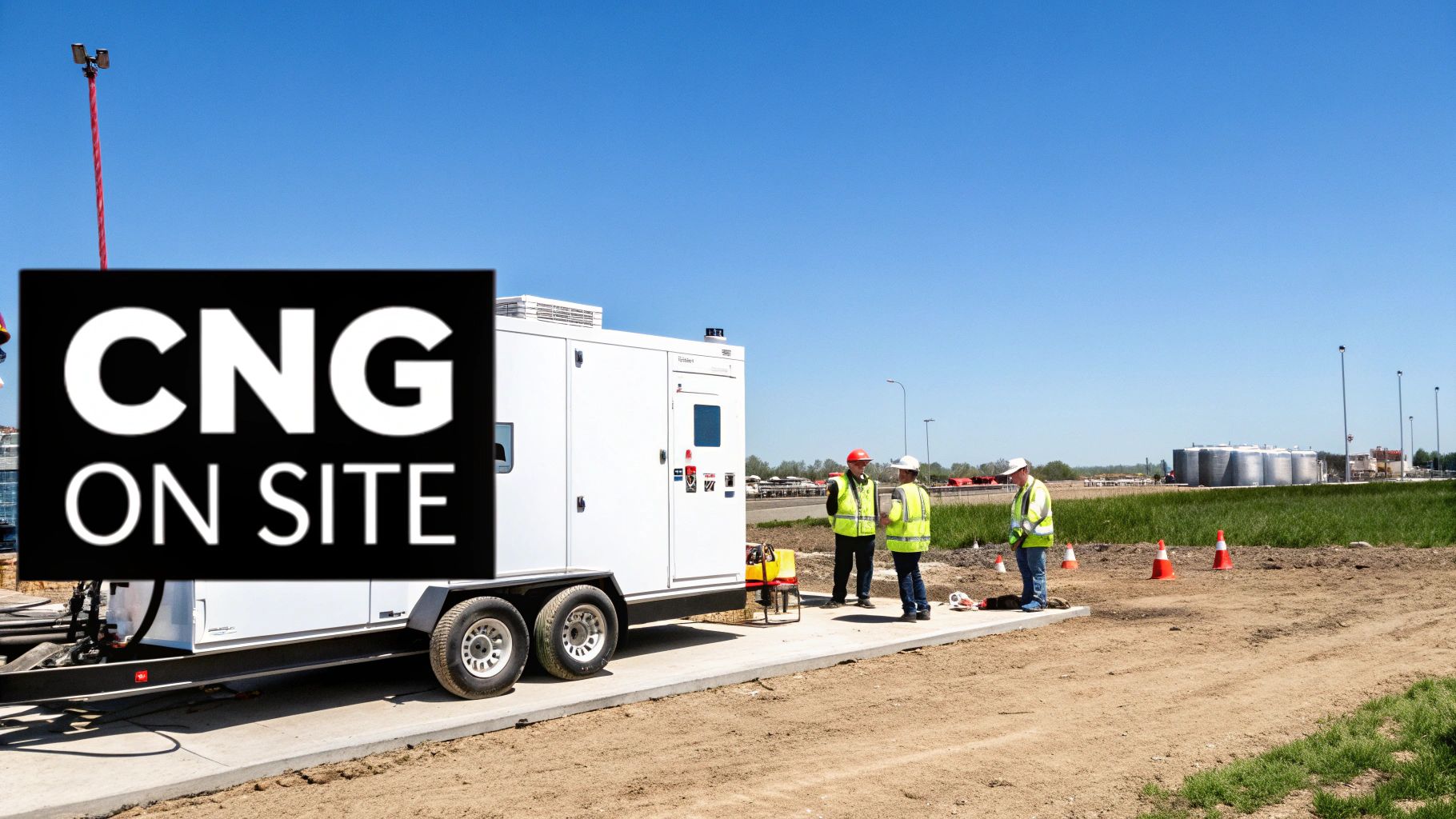
Powering Progress on the Construction Site
Picture a large commercial building project, just a few months from its deadline. The structure is up, but the permanent gas line has been delayed for weeks—maybe even months. It’s a classic bottleneck that can stop a job in its tracks, especially in the cold, when temporary heat is crucial for crews to work safely and for materials like paint and drywall mud to cure.
This is exactly where a mobile CNG solution steps in. Rather than falling back on expensive and less efficient propane or diesel heaters, a mobile CNG unit can be brought right to the job site. It hooks directly into the building's own piping system, delivering clean, affordable heat precisely where it's needed most.
- Concrete Curing: In winter, new concrete needs to stay warm to cure properly and hit its target strength. Mobile CNG can power hydronic ground heaters, ensuring a project’s structural integrity isn't put at risk by a cold snap.
- Temporary Building Heat: It delivers consistent, powerful heat for all the interior finishing work, letting painters, drywallers, and flooring crews stay on schedule no matter what the weather is doing outside.
- Occupancy Permits: In many cases, a building can't get its final certificate of occupancy until the HVAC systems are proven to work. Mobile CNG allows for the full testing and commissioning of these systems long before the utility ever sets a meter.
By bringing in mobile CNG, construction managers can work around utility delays and keep their projects on time and on budget.
Fueling Generator Commissioning and Testing
Before a new data center, hospital, or power plant can open its doors, its backup power systems have to be put through their paces. This process, called commissioning, involves running massive natural gas-powered generators for hours on end to prove they’ll perform perfectly in an emergency.
The problem? The permanent natural gas pipeline is often one of the very last utilities to get connected. Without fuel, those multi-million dollar generators just sit there, holding up the entire project.
Mobile CNG delivers the high-volume, pipeline-pressure gas needed to commission and test large-scale generators. This effectively disconnects the project timeline from the utility’s schedule, making sure critical infrastructure is ready to go on day one.
A fleet of CNG trailers can be brought to the site to act as a temporary, high-capacity fuel source. This gives engineers all the gas they need to complete load bank testing and performance validation, checking off a huge milestone and pushing the project toward completion without having to wait on the local gas company.
Preventing Disasters in Manufacturing and Industry
For many industrial facilities, an unexpected cold snap paired with a pipeline problem can be a catastrophe. Processes that depend on natural gas for heat—like keeping chemical tanks at the right temperature or just preventing pipes from freezing—are suddenly at risk. A shutdown isn't just an inconvenience; it can mean damaged equipment, ruined product, and millions of dollars in losses.
This is where mobile CNG becomes a lifeline. Whether it's for a planned maintenance outage or a sudden emergency, a mobile gas solution from a provider like Blue Gas Express can be deployed fast.
The system is designed to tie in seamlessly with the facility's existing pipes, getting the gas flowing again in a matter of hours. This quick response can prevent freeze damage, keep production lines moving, and ensure the business stays online. It turns a potential crisis into a manageable event, protecting valuable assets and shielding the company's bottom line from the huge hit of an unplanned shutdown.
Understanding CNG Deployment Logistics and Safety
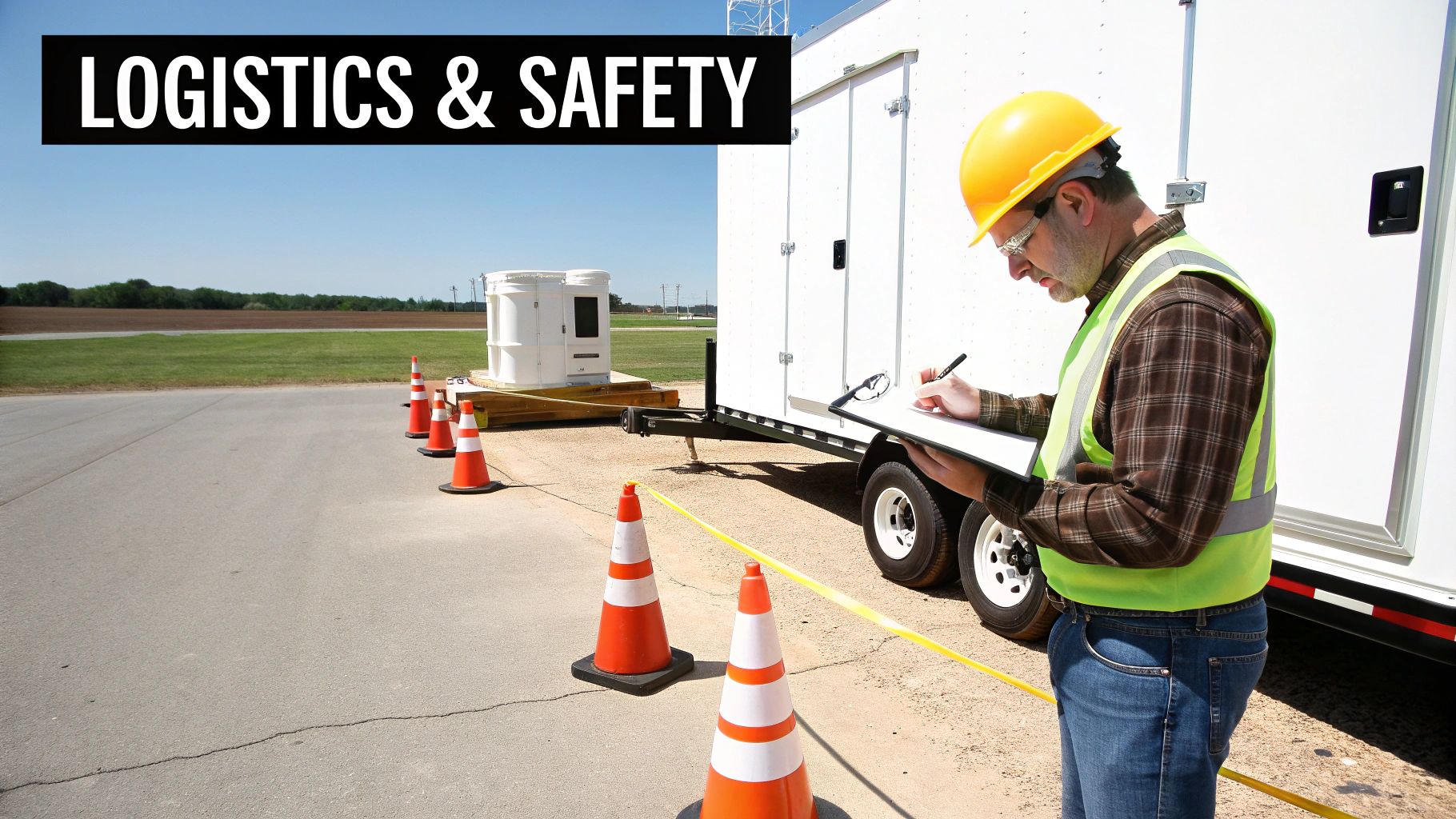
So, you need a temporary natural gas supply. How does it actually get to your site and work safely? It’s a lot more than just dropping off a fuel tank; think of it as a fully engineered, temporary utility service. The entire process, from our first conversation to the day we pack up, is designed to be crystal clear and fit right into your operations, so you get the energy you need without any headaches.
We'll walk you through the entire journey. It starts with understanding exactly what you need and ends when our equipment is safely on its way home. Let's break down what that process actually looks like, covering the timeline, costs, and the safety measures that are at the core of everything we do.
The Project Lifecycle From Start to Finish
Getting a mobile CNG solution up and running is a structured, step-by-step process. We have to make sure every technical, regulatory, and safety box is checked long before any gas starts flowing.
It all kicks off with a detailed chat where we get to the bottom of your needs—how much gas you require, at what pressure, and for how long. This discovery phase is key because it lets us tailor a solution that’s a perfect fit for your job.
Next, our team gets boots on the ground for a thorough site assessment. We’ll figure out the best spot for the CNG trailers and the pressure reduction gear, making sure everything is accessible and efficient. This is also our chance to spot and solve any potential logistical hurdles ahead of time.
With a solid plan in hand, we dive into the engineering and permitting. Our experts design the exact equipment setup for your site and handle all the necessary permits with local authorities. Once we get the green light, we mobilize. Our team delivers, installs, and commissions the whole system, getting you online right on schedule.
Realistic Timelines and Cost Considerations
One of the first questions we always get is, "How long will this take?" The speed of mobile CNG is a huge plus, but the timeline depends on a few things. For straightforward projects with easy site access, we can often get you up and running in as little as 24-48 hours, which is a lifesaver in an emergency.
But some jobs need a bit more lead time. Factors that can stretch the timeline include:
- Permitting Requirements: Some jurisdictions are faster than others when it comes to regulatory approvals.
- Site Complexity: A congested or remote site might require more planning for delivery and setup.
- Custom Engineering: If you have highly specific pressure or volume needs, we may need to configure a custom solution.
As for cost, there's no flat rate. Pricing is built around your specific project and includes the equipment rental, the volume of gas you use, and the logistical services to manage it all. Yes, it’s a direct expense, but you have to weigh that against the catastrophic cost of downtime. Stopping a multi-day shutdown from happening delivers a return on investment that’s exponentially greater than the price of the mobile gas service itself.
The true value of a mobile CNG solution isn't measured by its cost, but by the revenue it protects and the deadlines it helps you meet. It transforms a potential multi-million dollar loss into a manageable operational expense.
To give you a clearer picture, a typical project unfolds in predictable stages.
Typical Mobile CNG Project Deployment Phases
This table outlines the key stages and estimated timelines involved in a standard mobile CNG deployment project.
| Project Phase | Key Activities | Typical Timeline |
|---|---|---|
| 1. Initial Consultation | Discuss project scope, volume, pressure, and duration. | 1-2 hours |
| 2. Site Assessment | On-site evaluation for equipment placement and logistics. | 1-3 days |
| 3. Engineering & Permitting | Design system configuration and secure local permits. | 1-10 days (Varies by jurisdiction) |
| 4. Mobilization & Setup | Deliver, install, and commission all CNG equipment. | 12-24 hours |
| 5. Operations | Provide continuous gas supply with on-site monitoring. | As per project duration |
| 6. Demobilization | Safely disconnect and remove all equipment from the site. | 12-24 hours |
As you can see, the front-end planning is crucial, but once approved, the physical deployment happens quickly to get you online.
An Uncompromising Commitment to Safety
At the end of the day, nothing is more important than safety. It dictates every single thing we do. Natural gas is an incredibly safe and reliable fuel when handled by experts, and our protocols are designed to keep it that way. Our entire operation is built on a foundation of best-in-class equipment, redundant safety systems, and strict procedures carried out by highly trained technicians.
Every piece of gear we use—from the high-pressure storage tubes to the regulators and heaters—is ASME-certified and goes through constant, documented inspections. This guarantees every component can safely handle the pressures involved.
Our on-site systems are also loaded with multiple layers of safety features:
- Pressure Relief Valves: These automatically vent gas to prevent over-pressurization in the unlikely event it's needed.
- Emergency Shut-Down (ESD) Systems: We place these buttons in strategic locations to allow for an immediate stop to all gas flow.
- Continuous Monitoring: Our technicians stay on-site 24/7, keeping a close eye on pressures, temperatures, and overall system performance.
A critical part of maintaining safety involves being prepared for anything. This means staying current on local regulations and knowing who to call for specialized gas leak detection and repair services as part of a complete safety plan. From start to finish, our goal is to give you a reliable energy supply with total peace of mind.
Got Questions About Turning Pipeline Gas into CNG? We've Got Answers.
Even after you get the basic idea, it's normal to have some practical questions about bringing temporary natural gas to a site. Let's tackle some of the most common ones we hear from our clients.
Is CNG the Same Gas That Comes Out of a Pipeline?
Absolutely. It’s the exact same stuff. The only real difference is how it gets to you.
Think of it this way: CNG is just standard pipeline-quality natural gas that we've compressed to a high pressure—usually around 3,600 psi—and loaded into special cylinders for transport. Once it arrives at your location, we safely reduce the pressure back down to whatever your equipment needs. At that point, it’s indistinguishable from the gas a utility would deliver through a fixed pipe.
How Safe Is It to Have CNG Stored and Used Onsite?
Safety is non-negotiable for us, and mobile CNG setups are governed by strict federal and local regulations. The gas is contained in incredibly robust, ASME-certified steel cylinders built to handle extreme pressures and tough job site conditions.
Every piece of our equipment is outfitted with multiple safety mechanisms, like pressure relief valves and emergency shut-off systems. Plus, our highly trained technicians are on hand, monitoring the entire setup 24/7 to ensure everything runs safely and smoothly from start to finish.
What's the Real Difference Between CNG and LNG?
Both CNG (Compressed Natural Gas) and LNG (Liquefied Natural Gas) start as the same natural gas, but they're stored in completely different states. An easy analogy is water: CNG is like water held under pressure in a tank, while LNG is like turning that water into ice.
CNG (Compressed Natural Gas): We pressurize the gas, but it stays a gas. This approach is logistically simpler and often the more economical choice for projects that last anywhere from a few days to several months.
LNG (Liquefied Natural Gas): We cool the gas way down to about -260°F until it turns into a liquid. Because liquid is much denser than gas, LNG lets you store a massive amount of energy in a relatively small space. This makes it the go-to solution for very large projects or those needing a long-term, high-volume fuel supply.
Don't let a pipeline delay or an unexpected interruption put your project on hold. Blue Gas Express delivers dependable, on-demand CNG and LNG solutions to keep your operations running on schedule. Get in touch with us today to secure your energy supply.