

So, you’re looking to make the switch to natural gas. The first big decision you need to make is how you’re going to get that gas to your site. This single choice sets the stage for everything that follows—from costs and timelines to the nuts and bolts of your daily operations.
It really comes down to what you need the gas for. Are you powering a permanent facility for the long haul, or do you need a more immediate, flexible solution for a temporary project?
Choosing Your Natural Gas Conversion Path
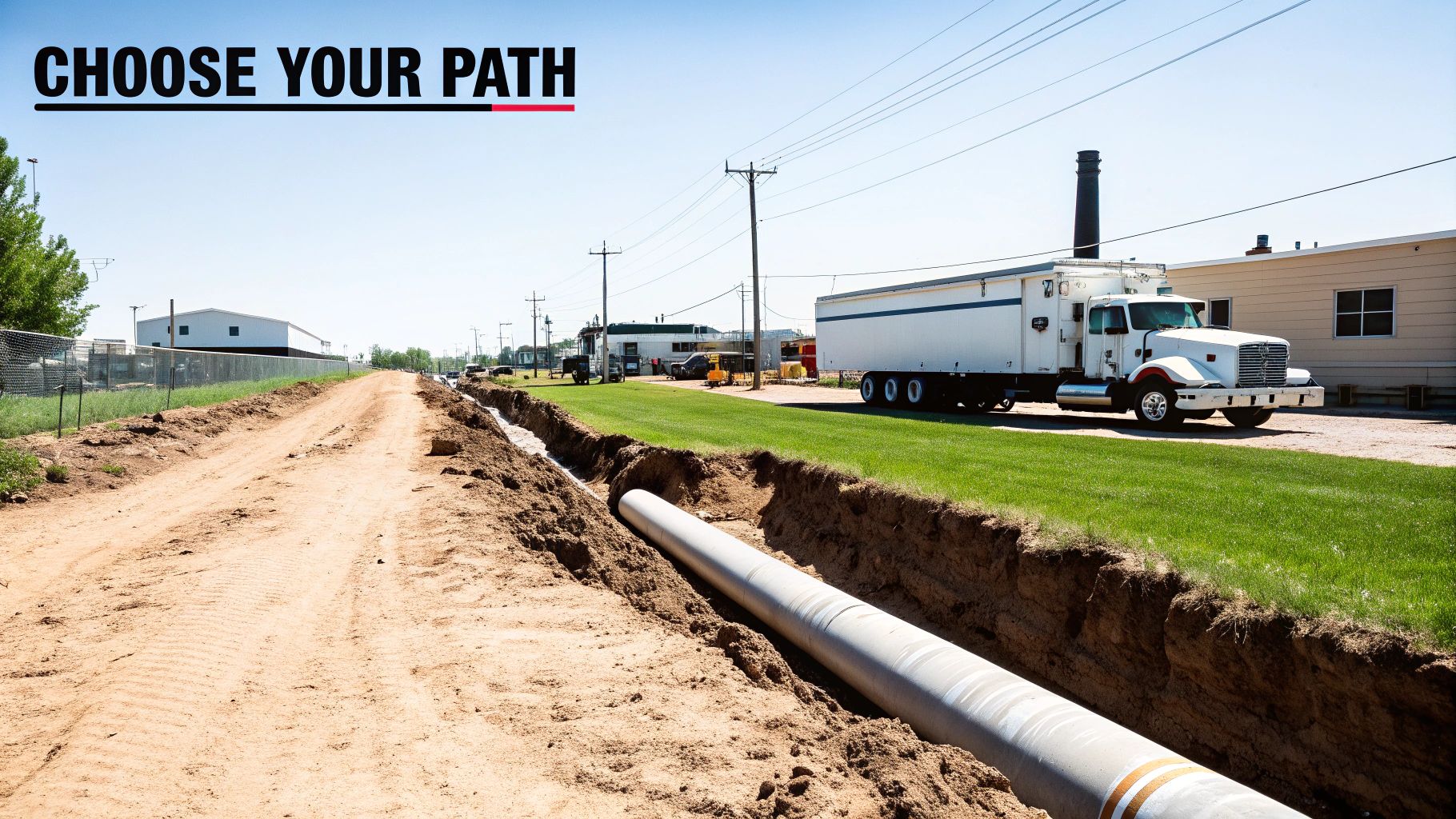
Before you start worrying about permits or equipment, take a step back and look at your operational goals. Is your main objective to lock in the lowest possible long-term energy cost for a permanent factory or commercial building? Or do you need a fast, adaptable energy source for a remote job site or to bridge a gap in utility service?
Your answer will point you in one of two directions: a permanent utility pipeline or a mobile solution like Compressed Natural Gas (CNG) or Liquefied Natural Gas (LNG). Each has its place, and understanding the trade-offs is key.
The Permanent Pipeline Option
Tying directly into the utility grid with a permanent pipeline is the go-to solution for facilities with steady, high-volume energy demands. We’re talking about large manufacturing plants, hospitals, and big commercial complexes that plan to operate for years, if not decades. For these kinds of operations, the primary goal is getting the lowest cost per unit of energy over the long term.
The upfront cost of extending a pipeline can be steep, and it requires a lot of back-and-forth with local utilities. But the payoff is direct, uninterrupted access to the natural gas grid, which almost always delivers the most stable and competitive pricing.
Imagine a food processing plant running massive ovens and boilers 24/7. Their energy consumption is predictable and constant. For them, investing in a permanent pipeline is a no-brainer. The high initial cost gets spread out over years of significant operational savings. This is the long-game approach for maximum financial efficiency.
The Mobile Gas Solution
On the other hand, mobile gas solutions using CNG or LNG are all about speed and flexibility. They're perfect for situations where a permanent pipeline just isn't feasible, is too far away, or would take too long to build.
I see this solution used all the time for:
- Remote construction sites that need temporary power or heat.
- Facilities hit with a utility gas outage that need an emergency fuel source to stay online.
- Projects waiting on a permanent pipeline that can't afford to sit idle until the utility work is done.
A classic example is a new housing development. They often need gas to commission the HVAC systems to get their occupancy permits, but the local utility’s pipeline extension is months away. A mobile gas provider like Blue Gas Express can roll in a "virtual pipeline" and keep the project moving. That kind of agility is invaluable for hitting deadlines and avoiding costly delays.
Choosing between a permanent connection and a mobile setup involves weighing different factors. The table below breaks down the key considerations to help you decide which path makes the most sense for your project.
Permanent Pipeline vs. Mobile Natural Gas (CNG/LNG)
| Consideration | Permanent Pipeline Conversion | Mobile Gas (CNG/LNG) |
|---|---|---|
| Upfront Cost | High (construction, trenching, utility fees) | Low (equipment rental, setup fees) |
| Timeline | Long (6-24+ months for permits & construction) | Fast (days to weeks for delivery & setup) |
| Long-Term Cost | Low (direct access to utility rates) | Higher (includes transportation & processing) |
| Flexibility | Low (fixed, permanent infrastructure) | High (can be deployed anywhere, anytime) |
| Best For | Permanent facilities with high, stable demand | Temporary sites, emergencies, bridging utility gaps |
| Infrastructure | Requires extensive underground pipe network | Requires on-site storage & vaporization equipment |
Ultimately, the best choice depends on your specific circumstances. A permanent pipeline is a long-term investment for stable operations, while mobile gas offers a powerful, flexible solution for immediate or temporary needs.
This increasing reliance on natural gas is a global trend. In 2024, worldwide demand for natural gas jumped by 2.9%, largely due to industrial growth and power generation in places like China and the United States. You can dig into the data behind this shift in the 2025 Cedigaz First Estimates. This trend really shows how both permanent and mobile solutions are vital for helping more industries tap into cleaner, more efficient fuel sources.
Navigating The Red Tape: Permits and Utility Coordination
Once you've decided to make the switch to natural gas, the real work begins—and I'm not talking about the physical installation. This is where you enter the world of permits, utility companies, and local authorities. It’s a phase filled with paperwork, phone calls, and meetings, and frankly, it's where most projects get bogged down in frustrating delays.
The key to getting through this without pulling your hair out is to be proactive. Get in touch with your local utility and municipal planning department the moment you have a rough idea of your project scope. Don't wait. Starting this dialogue early helps you get a clear picture of their requirements, spot potential roadblocks, and build a timeline that’s actually based in reality.
Your First Call: The Gas Utility
Your most critical relationship will be with the local gas utility. For a permanent pipeline, their involvement is mandatory. Even for a temporary mobile setup, it’s a good idea to keep them in the loop. The very first conversation needs to answer one simple question: is there enough gas in the pipeline for you?
I once worked with a manufacturing facility that was absolutely certain connecting to the nearby gas main would be a piece of cake. They were months into their internal planning before they finally called the utility, only to find out the existing line couldn't handle the load from their massive industrial boilers. That discovery forced a complete project redesign and tacked on nearly a year to their schedule.
To avoid a nightmare like that, your initial call should confirm a few key things:
- Pipeline Capacity: Does the main have the volume and pressure to meet your projected energy needs?
- Tie-In Point: Where’s the closest, most practical place to connect, and how far is it from your property line?
- System Upgrades: Will the utility need to upgrade its own infrastructure to serve you? And the million-dollar question: who pays for it?
Here’s a hard-earned piece of advice: Utilities run on their own schedule. It’s a schedule dictated by regulations, crew availability, and a backlog of other projects. Whatever timeline they give you, mentally add a buffer. Trust me.
Decoding the World of Permits
Beyond the gas company, you'll be dealing with local—and sometimes state—agencies for a whole host of permits. This isn't a one-and-done application. It's a series of approvals that have to be managed in the right order. Missing just one can stop your project dead in its tracks.
The exact permits you'll need depend on your location, but most natural gas conversion projects require some combination of these:
- Building Permits: For any new structures, like the concrete pads for LNG tanks or the housing for a CNG pressure-reduction skid.
- Trenching/Excavation Permits: Essential for any digging, especially if you're working near public streets or sidewalks.
- Environmental Assessments: Sometimes triggered if your project site is near wetlands, protected habitats, or involves major land disturbance.
- Right-of-Way (ROW) Agreements: You'll need these if your new gas line has to cross anyone else's property, including public roads or railroad tracks.
It's also crucial to show you have a plan for what's already in the ground. Knowing about techniques like non-destructive digging for utility work is a huge plus. This method lets you excavate safely without tearing up existing buried cables or pipes, which is a major concern for any permitting authority.
Building a Timeline You Can Actually Trust
One of the biggest mistakes I see is underestimating the administrative marathon. Application reviews, public comment periods, scheduling inspections—it all adds up. A good timeline has plenty of padding built in for these slow-moving parts of the process.
For instance, just negotiating a right-of-way to cross a single neighboring property can easily take months. The utility's own internal engineering review can take 3 to 6 months before they even think about scheduling their crews.
Here’s a more realistic look at the administrative milestones:
- Initial Utility Talks & Feasibility Study: (1-2 months)
- Formal Application & Engineering Review: (3-6 months)
- Permit Applications & Public Reviews: (2-4 months)
- Utility Construction, Tie-in & Inspections: (2-6 months)
By mapping out these steps and treating them with the same seriousness as pouring concrete, you’ll be much better equipped to navigate the bureaucracy that sidelines so many otherwise well-planned projects.
How To Select And Size Your Conversion Equipment
Picking the right hardware for your natural gas conversion is a lot like choosing the right engine for a heavy-duty truck. Go too small, and you'll constantly struggle. Go too big, and you're just wasting money on fuel. Getting this right from the start means matching the equipment precisely to your facility's energy appetite, ensuring everything works together as a cohesive, efficient system.
The core components you’ll be dealing with are things like regulators to manage pressure, vaporizers if you're using LNG, and pressure reduction skids for CNG. Each piece of this puzzle has to be sized perfectly based on your total energy demand, which we measure in BTU/hour.
Calculating Your Total Energy Demand
Before you can even think about equipment, you need an exact, no-guesstimates-allowed picture of your facility's peak energy consumption. This means it’s time for a detailed energy audit. You have to sum up the maximum potential BTU/hour load of every single piece of equipment that will be running on natural gas.
Let's walk through a real-world example: a mid-sized food processing plant. Their energy needs are a mix of different applications:
- Process Heating: Think large industrial ovens, high-capacity fryers, and pasteurization units.
- Boiler Load: They need a ton of steam for sanitation, cooking processes, and just heating the building.
- HVAC Systems: Multiple rooftop units keep the office and production floors at the right temperature.
You'll need to go out on the floor and physically gather the nameplate data from each appliance. That little metal plate lists its maximum BTU/hour rating. Add all those numbers up, and you've got your total connected load.
Here’s a pro tip born from experience: Always plan for growth. Once you calculate your current peak demand, add a 15-25% buffer. Trust me, it is far cheaper to install slightly oversized equipment now than it is to rip out and replace an undersized system in a few years when you expand.
Matching Equipment to Your Needs
With your peak BTU/hour number in hand, you can finally start looking at the main components. If you're going with a mobile LNG setup, the vaporizer is the absolute heart of the system. If your plant needs 5 million BTU/hour, you need a vaporizer that can deliver that output without redlining.
For a CNG system, the pressure reduction station is the critical component. CNG is delivered at incredibly high pressure (around 3,600 psi), and this skid's job is to safely drop that down to the low pressure your equipment actually uses, which is often less than 1 psi. Sizing this isn't just about the BTU load; you also have to understand the required flow rate in standard cubic feet per hour (SCFH).
Here’s a quick-glance table of the core hardware:
| Equipment Type | Primary Function | Sizing Metric |
|---|---|---|
| LNG Vaporizer | Converts liquid natural gas back into a usable gas. | BTU/hour or MMbtu/hr |
| CNG Pressure Skid | Reduces high-pressure gas to a safe, low-pressure level. | SCFH & outlet pressure |
| Regulators | Fine-tunes and maintains consistent gas pressure to appliances. | Flow capacity & pressure range |
The good news is that the supply side of this equation is stronger than ever. The United States is on track to break natural gas production records in 2025, with forecasts showing output climbing to 107.7 billion cubic feet per day (bcfd). This boom is fueled by both strong domestic demand and a huge increase in LNG exports, which helps ensure a reliable and stable supply for industrial users. This production surge is a game-changer for global energy markets. You can get more details on these record-breaking trends from the experts at OilPrice.com.
Why Certification and Compliance Are Non-Negotiable
Let me be blunt: never, ever compromise on equipment certification. Every single component in your system, from the main tank down to the smallest valve, must be certified and compliant with industry standards. In the U.S., a key standard that often applies to mobile gas infrastructure is NFPA 52 (Vehicular Natural Gas Fuel Systems Code).
Making sure your equipment meets these codes accomplishes two critical things:
- It Guarantees Safety: Certified parts have been put through the wringer—rigorously tested to handle the intense pressures and temperatures involved.
- It Satisfies Inspectors: The local authority (your AHJ) simply will not sign off on your system without seeing the proper documentation and certification marks on the hardware.
When you're comparing quotes from vendors, don't let price be your only guide. Scrutinize the spec sheets and verify that every piece of equipment is certified for your specific application. This diligence is the final, essential check in building a natural gas system that is safe, efficient, and built to last.
Getting Your Site Ready for Installation
Once the permits are approved and your equipment is on its way, the project moves from paper to pavement. This is the exciting part where plans become reality. Getting this phase right comes down to meticulous site prep, a smart installation sequence, and an absolute, unbending focus on safety from start to finish.
The first physical work involves building a rock-solid foundation for your new system. If you're setting up a temporary mobile gas service, this usually means pouring reinforced concrete pads for the LNG storage tank or the CNG pressure-reduction skid. These aren't just any concrete slabs; they're engineered to support immense weight and must be perfectly level to keep the equipment stable and safe.
At the same time, crews will start trenching for the new gas piping. This is a delicate operation that requires careful planning to steer clear of existing underground utilities like water mains or electrical lines. The trench itself is critical—it needs to be at the right depth with the proper bedding to support the pipe and protect it from damage over the years.
This flow chart gives you a good visual of the logic that goes into equipment selection, which is the foundation of the entire installation plan.
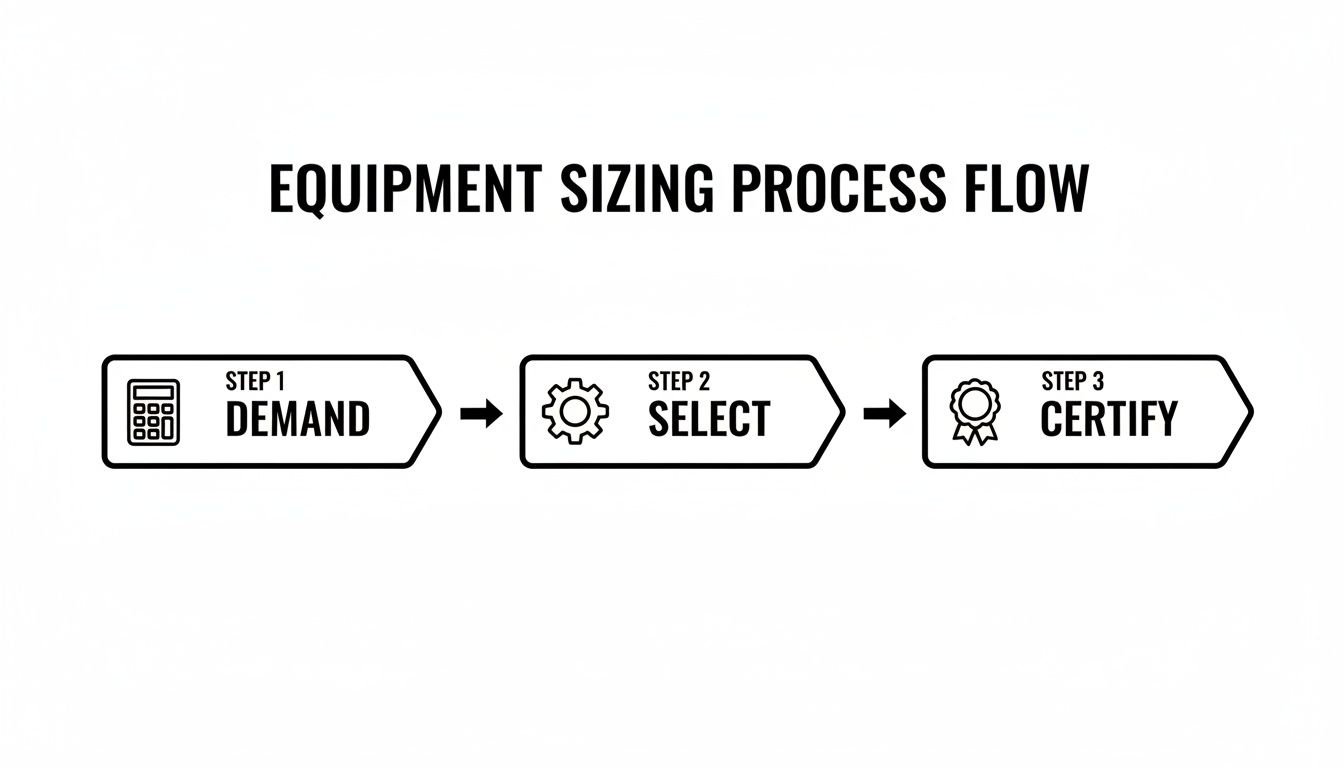
As you can see, a smooth installation is the direct result of solid upfront work in calculating demand and choosing the right certified gear.
Creating a Safe Work Zone
Before a single piece of heavy equipment arrives, the very first thing you have to do is lock down your safety protocols. A natural gas installation is a live construction site with its own specific risks, and protecting your people and property is paramount. This goes way beyond just putting up a few signs; it's about building a tightly controlled environment.
You’ll start by setting up a clear exclusion zone around the installation and staging areas. This perimeter, usually marked with caution tape and physical barriers, keeps unauthorized people out. Nobody gets inside without the right personal protective equipment (PPE), which always includes:
- Hard hats and safety glasses
- Steel-toed boots
- High-visibility vests
- Flame-resistant clothing (FRC) when gas components are being handled
Everyone on that site—from the crane operator to the apprentice electrician—must be part of a daily safety briefing, often called a "toolbox talk." This is where the team runs through the day's work, flags potential hazards, and reviews emergency plans. It’s a simple but powerful way to get everyone aligned and thinking safety-first.
The Installation Sequence: A Step-by-Step Look
With the site prepped and the safety zones established, the actual installation can begin. It follows a methodical order to make sure every piece fits together correctly. The details can change from one project to the next, but the general flow for a mobile gas setup is pretty standard.
- Placing the Storage Vessel: The biggest component, whether it's an LNG tank or a CNG tube trailer, is the first to go in. A crane will carefully lift and set it onto its concrete pad. Precision is everything here—it has to be positioned and anchored perfectly.
- Installing the Vaporizer or Skid: For an LNG system, the vaporizer (which turns the liquid back into gas) is installed next. For CNG, the entire pressure reduction skid is set in place.
- Running and Connecting the Pipes: Now it's time for the plumbing. High-pressure stainless steel pipes connect the storage vessel to the vaporizer or skid. From there, lower-pressure carbon steel piping is run to your facility's main gas header.
- Wiring the Control Systems: The last major step is integrating all the electrical and control wiring. This means hooking up emergency shutdown (ESD) buttons, gas detection sensors, and the main control panel that keeps an eye on system pressures and temperatures.
Throughout this process, constant quality control is non-negotiable. Every weld needs to be inspected, every bolt torqued to spec, and every wire double-checked. Trying to rush this stage is just asking for trouble later on.
Commissioning Your System for Safe Operation
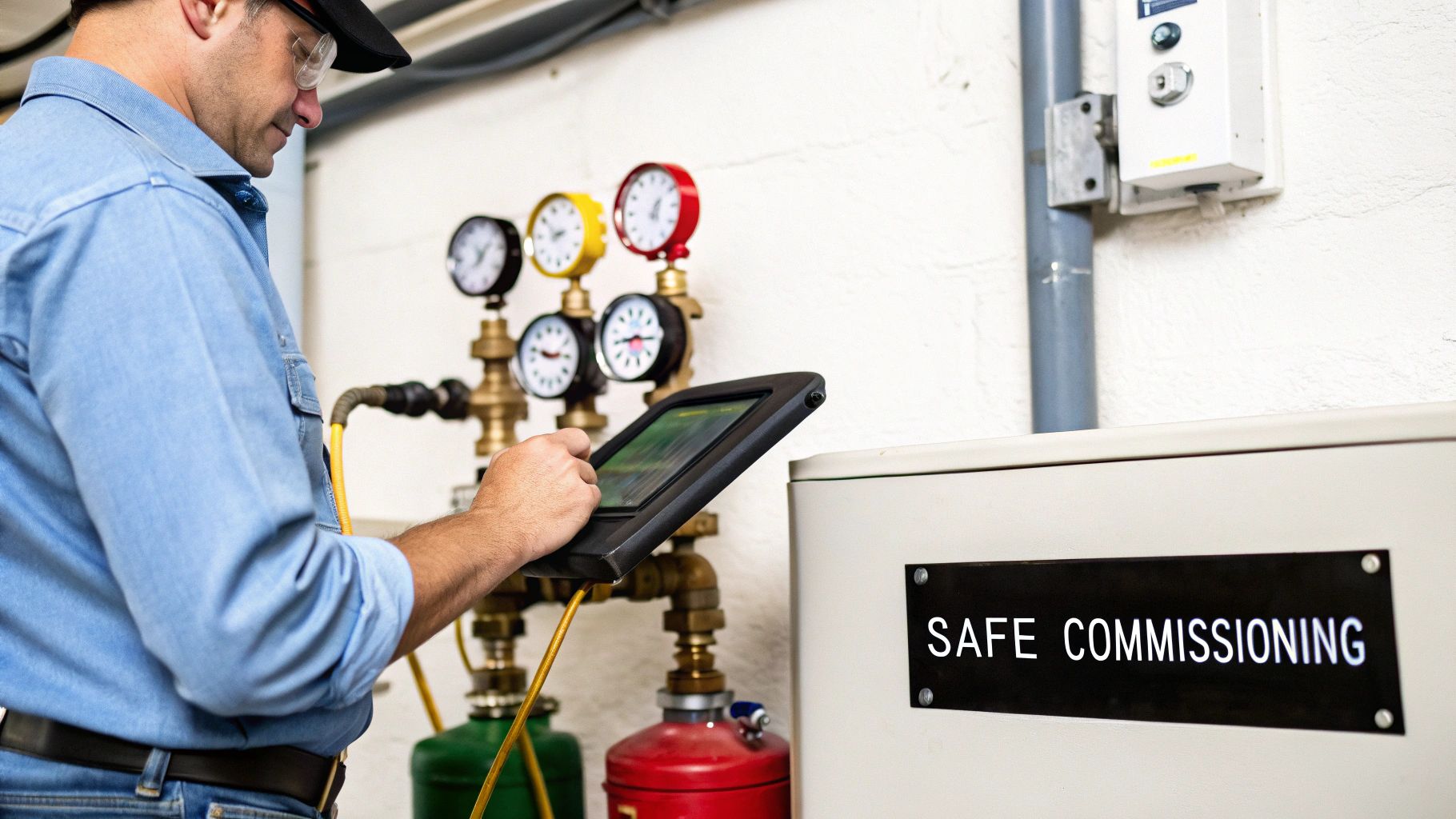
This is the moment of truth. Commissioning is the final, painstaking process of bringing your newly installed natural gas system to life. It's so much more than just flipping a switch or opening a valve; it’s a systematic series of checks and tests that guarantee your system operates safely, reliably, and efficiently from the get-go.
Think of it as the pre-flight check for your entire energy setup. Every single component, from the largest vaporizer down to the smallest sensor, gets verified before it’s officially handed over. Trying to rush this stage is a recipe for serious problems, making a disciplined, step-by-step approach an absolute must.
Preparing the System for First Gas
Before a single molecule of natural gas enters the piping, the entire system has to be purged of ambient air. This is a non-negotiable safety step to remove oxygen, which could otherwise create a combustible mixture inside the lines. Technicians use an inert gas, almost always high-purity nitrogen, to flush the system completely.
This purging process isn't finished until oxygen sensors confirm the internal atmosphere is inert. Only then is it safe to begin the slow, careful introduction of natural gas. This "gas-in" procedure is done gradually, with technicians glued to their monitors and using handheld detectors to check for any leaks at every flange, weld, and connection point.
Running Critical Safety and Performance Tests
Once the system is live and holding the correct operating pressure, a whole battery of tests begins. These aren't just suggestions on a checklist; they're essential verifications to ensure everything functions exactly as designed under real-world conditions.
The most crucial tests always include:
- Leak Detection Survey: This is a thorough "sniff" test using highly sensitive gas detectors on every joint, valve, and fitting. Even the tiniest leak has to be found and fixed before anything else happens.
- Emergency Shutdown (ESD) Verification: The team will deliberately trigger the ESD system from multiple points—push buttons, remote signals, you name it. They need to see those main safety valves slam shut instantly, cutting off the gas flow without hesitation.
- Meter and Gauge Calibration: All pressure gauges, temperature sensors, and flow meters are double-checked against calibrated instruments to ensure they’re giving you accurate data. Bad data can easily lead to unsafe operating conditions.
The goal of commissioning isn't just to see if the system works—it's to prove it will fail safely. Every emergency system is tested to ensure it performs flawlessly when you need it most.
Final Tuning and the Pre-Startup Safety Review
With the core safety checks in the rearview mirror, the focus shifts to performance. For equipment like boilers or industrial heaters, this means it's time for flame tuning. A technician will carefully adjust the air-to-fuel ratio to achieve that perfect, efficient blue flame, maximizing heat output while keeping emissions to a minimum.
The final step in this whole process is the Pre-Startup Safety Review (PSSR). This is a formal walkthrough where the installation team, your facility operators, and sometimes a third-party inspector go over the entire system with a fine-tooth comb. They verify that every item from the engineering plans has been installed correctly and that all tests have been passed and documented.
The increasing reliance on natural gas for power generation really highlights how critical these protocols are. The U.S. power sector is undergoing a huge expansion, with plans to add roughly 40 gigawatts of new gas-fired capacity by 2030. This shift is making natural gas the backbone of the nation's energy grid, and that makes rigorous commissioning practices more vital than ever. You can read more about these global gas market trends on worldbank.org.
Only after the PSSR is signed off by every single stakeholder is the system considered officially commissioned and ready for you to take the keys.
Your Top Questions About Switching to Natural Gas
Thinking about a natural gas conversion often opens up a Pandora's box of questions. It’s a big project, and you need to get a handle on the timelines, costs, and safety requirements before you can make a smart decision. We've been in the trenches on these projects for years, so we’ve put together some straightforward answers to the questions we hear the most.
How Long Does a Natural Gas Conversion Actually Take?
This is usually the first thing people ask, and the honest answer is: it depends entirely on which route you take.
If you’re going for a permanent pipeline connection, you need to think of it as a marathon, not a sprint. Realistically, you should budget anywhere from 6 to 24 months from your first call to the utility to the day you’re up and running.
The biggest hurdle, and the part that chews up the most time, is almost always getting the utility on board and securing permits. This administrative slog can easily take 4 to 12 months all on its own. It’s a slow dance of engineering reviews, right-of-way negotiations, and waiting on local approvals.
Once you finally get the green light, procuring the right equipment—things like regulators, meters, and specialized piping—can add another 3 to 9 months to your timeline, especially if you need custom or large-scale components. The actual on-site construction is usually the quickest part, often wrapping up in just 1 to 3 months.
Now, if you go with a mobile CNG or LNG solution, you're on a completely different timeline. These systems are designed for speed. Because you’re not digging trenches and laying miles of pipe, a temporary system can be delivered, set up, and commissioned in as little as 2 to 6 months. This makes it a fantastic option for bridging a gap or hitting a deadline that just won't wait.
What Are the Major Costs I Should Plan For?
The budget for a natural gas project has a few big-ticket items you need to watch.
For a permanent pipeline, the most significant—and often unpredictable—cost is the utility's "contribution in aid of construction" (CIAC). This is what the utility charges to extend their main gas line to your property line. Depending on the distance and how complex the terrain is, this fee can be anything from a few thousand dollars to hundreds of thousands.
Beyond that, you’ll have major capital expenses for the equipment itself:
- Core Hardware: This includes things like LNG storage tanks, CNG pressure reduction skids, vaporizers, and regulators.
- Installation & Labor: Don't forget to budget for the site work. This covers concrete pads, all the mechanical piping and welding, and the electrical work needed for controls and sensors.
And then there are the soft costs, which can sneak up on you. We’re talking about engineering and design fees, permit application fees, and the cost of any consultants you bring in. If you opt for a mobile solution, you’ll have ongoing operational costs like fuel deliveries and possible equipment rental fees.
The only way to get a firm grip on the numbers is to invest in a detailed feasibility study before you commit to the project.
Are There Any Rebates or Incentives Available?
Yes, and you should absolutely look into them. Tapping into these programs can seriously slash your project's bottom line. Many local gas utilities and government agencies offer incentives to encourage businesses to switch to natural gas, which is cleaner and more efficient than fuels like oil or propane.
These incentives usually come in a few different flavors:
- Equipment Rebates: You can often get money back for installing new high-efficiency boilers, furnaces, or water heaters.
- Line Extension Credits: Some utilities will offer credits to help offset that hefty CIAC fee for bringing a new gas line to your property.
- Tax Credits: Keep an eye out for state and federal programs that offer tax credits for projects that boost energy efficiency or cut down on emissions.
Your local utility's website is the best place to start. After that, check with your state's energy office or department of environmental quality. These programs change all the time, so make sure you have the most current information on what’s available and who qualifies before you get started.
What Are the Main Safety Considerations?
When it comes to natural gas, safety is everything. There’s no cutting corners. The entire process—from design to installation to daily operation—is built around managing risk.
The primary focus is always on leak prevention and detection. This starts with using top-quality materials and certified installers, followed by intense pressure testing on every single pipe and connection. No exceptions.
Gas detection systems with loud alarms and bright visual alerts are non-negotiable, especially in enclosed spaces or low-lying areas where gas could pool. For any mobile setup, the site plan has to follow NFPA code requirements for safe clearances between the equipment, your buildings, and your property lines.
A mandatory Emergency Shutdown (ESD) system is another critical safety layer. It gives you a "big red button" to instantly and remotely kill the gas supply if something goes wrong. Finally, comprehensive training for your team is an absolute must. Anyone who works near the system needs to understand how to operate it safely and know exactly what to do in an emergency.
When your project can't wait for a pipeline, a reliable temporary energy source is your best friend. Blue Gas Express specializes in providing mobile CNG and LNG solutions to keep operations running and projects on schedule. If you’re facing delays or need gas service now, see how our mobile gas solutions can help.