

So, what exactly is a mobile gas truck? Think of it as a fully equipped, professional-grade gas station that comes to you. It's designed to deliver gasoline or diesel directly to your vehicles and equipment, right where they're parked.
This on-demand service completely flips the traditional fueling model on its head. Instead of your fleet going to the fuel, the fuel comes to your fleet, saving a ton of time and making your entire operation run smoother.
The Modern Gas Station Comes to You
Let's put this into perspective. You're running a busy construction site with a dozen or more pieces of heavy equipment. Your bulldozers, excavators, and generators are all thirsty for fuel every single day. The old way? You either send a worker on endless, time-killing trips to the gas station with jerry cans, or you try to move the massive machines themselves—a logistical headache that brings work to a screeching halt.
Now, imagine a specialized truck pulling onto your site after everyone's gone home for the day. It methodically refuels every single piece of equipment, ensuring they're ready to go at the crack of dawn. That's the magic of a mobile gas truck. It's less like a truck and more like a strategic partner in your operation.
It’s a lot like ordering food delivery, but instead of a pizza, you’re scheduling a fill-up for your entire commercial fleet through a simple app. This one change can take a daily, frustrating chore and turn it into a quiet, automated background task. And it's not just for construction sites—this model is a game-changer across many industries.
Who Benefits From Mobile Fueling?
Bringing the pump directly to the fleet delivers the biggest bang for your buck in industries where equipment is often stationary or operates in a specific zone. When time is money, mobile fueling is a no-brainer.
Here are a few examples of who benefits the most:
- Construction Companies: Keeping heavy machinery topped off on-site means projects stay on track and your skilled labor stays focused on their actual jobs, not on "fuel runs."
- Logistics and Delivery Fleets: Imagine every truck in your depot being refueled overnight. They all start the day with a full tank, which means more time on the road making deliveries.
- Landscaping Businesses: Crews can have their trucks and mowers refueled at a central yard, eliminating disruptive trips to the pump in the middle of a packed workday.
- Rental Car Agencies: Keeping a huge lot of cars at an airport or downtown location fueled up becomes incredibly efficient. No more paying employees to drive each car to a gas station and back.
The core idea is simple but powerful: a mobile gas truck service turns fueling from a daily logistical problem into a managed, predictable resource. You're essentially buying back lost time and cutting out the operational fat.
Ultimately, this service redefines how a business thinks about its fuel. By bringing fuel straight to your assets, you reclaim countless hours of productivity that were just evaporating into thin air. That efficiency boost drops right down to your bottom line, creating a real competitive advantage.
How On-Site Fueling Actually Works
Ever wondered how a fleet of delivery vans gets refueled overnight without anyone driving to a gas station? The process is a lot like ordering a pizza or calling an Uber—surprisingly simple on the front end, but powered by some impressive logistics behind the scenes. It all starts with a business realizing there’s a better way to fuel its equipment.
The entire service hinges on smart scheduling and dispatch. Gone are the days of last-minute, panicked calls for fuel; modern on-site fueling is a far more elegant solution.
The Customer Experience: A Simple Request
The whole process kicks off not with a trip to the pump, but with a few taps on a screen. Businesses usually work through a dedicated mobile app or an online portal, which acts as the command center for their entire fleet's fueling needs.
From there, it’s a straightforward flow:
- Schedule a Delivery: The fleet manager picks a date, time, and location for the refueling. This could be a one-off for a specific project or a recurring schedule, like nightly top-offs for a logistics company.
- Specify the Assets: They pinpoint exactly which vehicles or machines need fuel—whether it's a single excavator on a job site or a lot filled with 50 delivery vans.
- Confirm and Track: After the request is sent, the system confirms the order. The manager can then watch the delivery's progress in real-time, getting updates when the mobile gas truck is on its way and when the job is done.
This approach flips fueling on its head, turning a manual, time-draining chore into a predictable, hands-off part of the daily routine.
This visual breaks down how a fleet's needs are met using on-demand tech and a dispatched mobile gas truck.
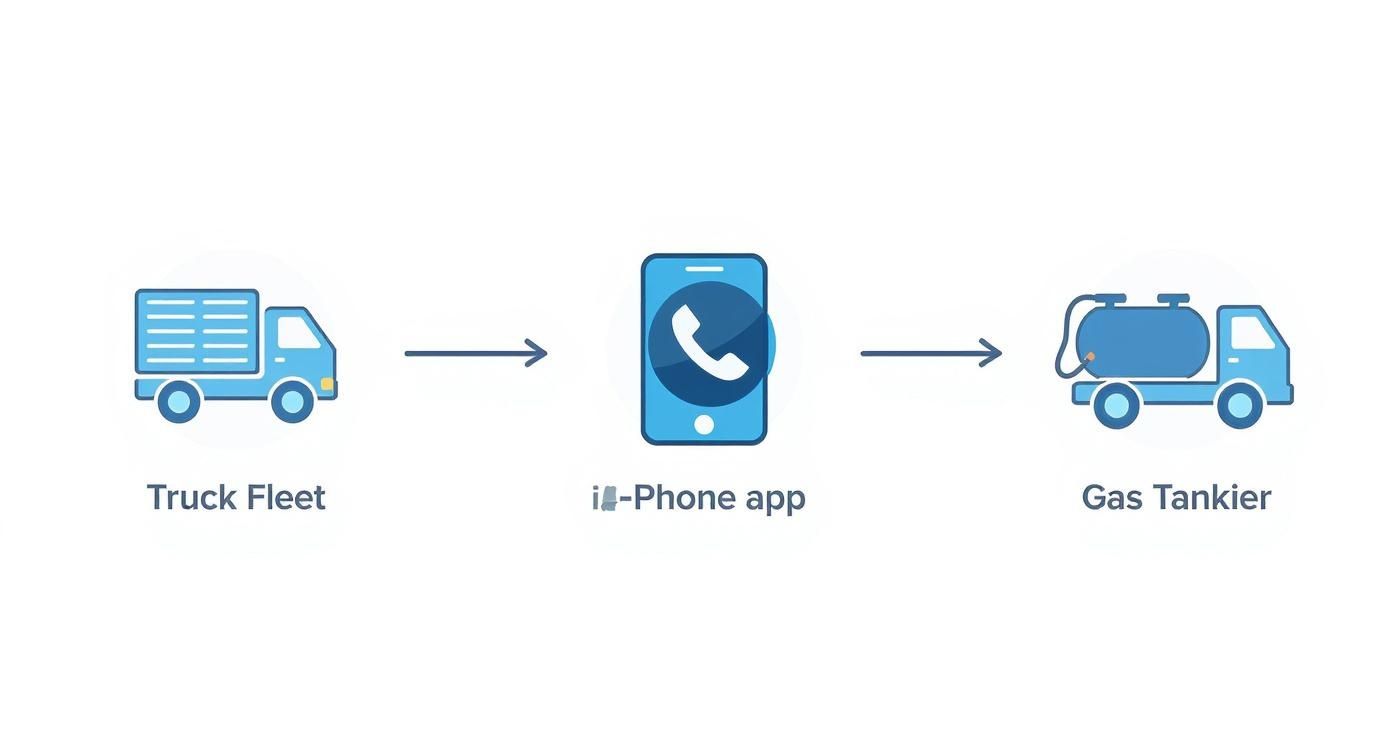
The flow from the fleet's request to the app and finally to the truck shows just how much more efficient a digital service is compared to the old way of doing things.
Behind the Scenes: The Technology in the Truck
While the customer experience is smooth and simple, the operation itself runs on some pretty sophisticated tech. As soon as a fuel request comes in, route optimization software instantly assigns the job to the closest available mobile gas truck. This logic ensures quick service and keeps travel time—and costs—to a minimum.
When the truck arrives, the operator uses a handheld device to identify each vehicle scheduled for fueling, usually by scanning a barcode or an RFID tag. This simple step guarantees that the right vehicle gets the right type and amount of fuel.
The real magic of this service lies in its precision and accountability. Every single gallon is metered, tracked, and tied to a specific vehicle, giving businesses a level of detailed fuel data that a pile of gas station receipts could never provide.
The trucks themselves are more than just tanks on wheels. They are outfitted with certified, high-precision meters for accurate dispensing. Safety is also a huge priority, so they come standard with automatic shut-off nozzles, spill containment gear, and proper grounding equipment to prevent any chance of static discharge. Once the last vehicle is filled, the system automatically creates a detailed invoice, completely getting rid of manual paperwork.
This blend of convenience and technology is why the market is booming. The mobile fuel delivery sector is expected to grow from $5.84 billion in 2025 to $11.93 billion by 2035. This growth is fueled by things we now take for granted, like mobile apps, GPS tracking, and automated billing. While diesel currently accounts for about 62% of deliveries, the industry is quickly adapting to new energy demands. You can find more details on this growth in a market analysis from Future Market Insights.
The Real Payoff: What Fuel Delivery Actually Does for Your Business
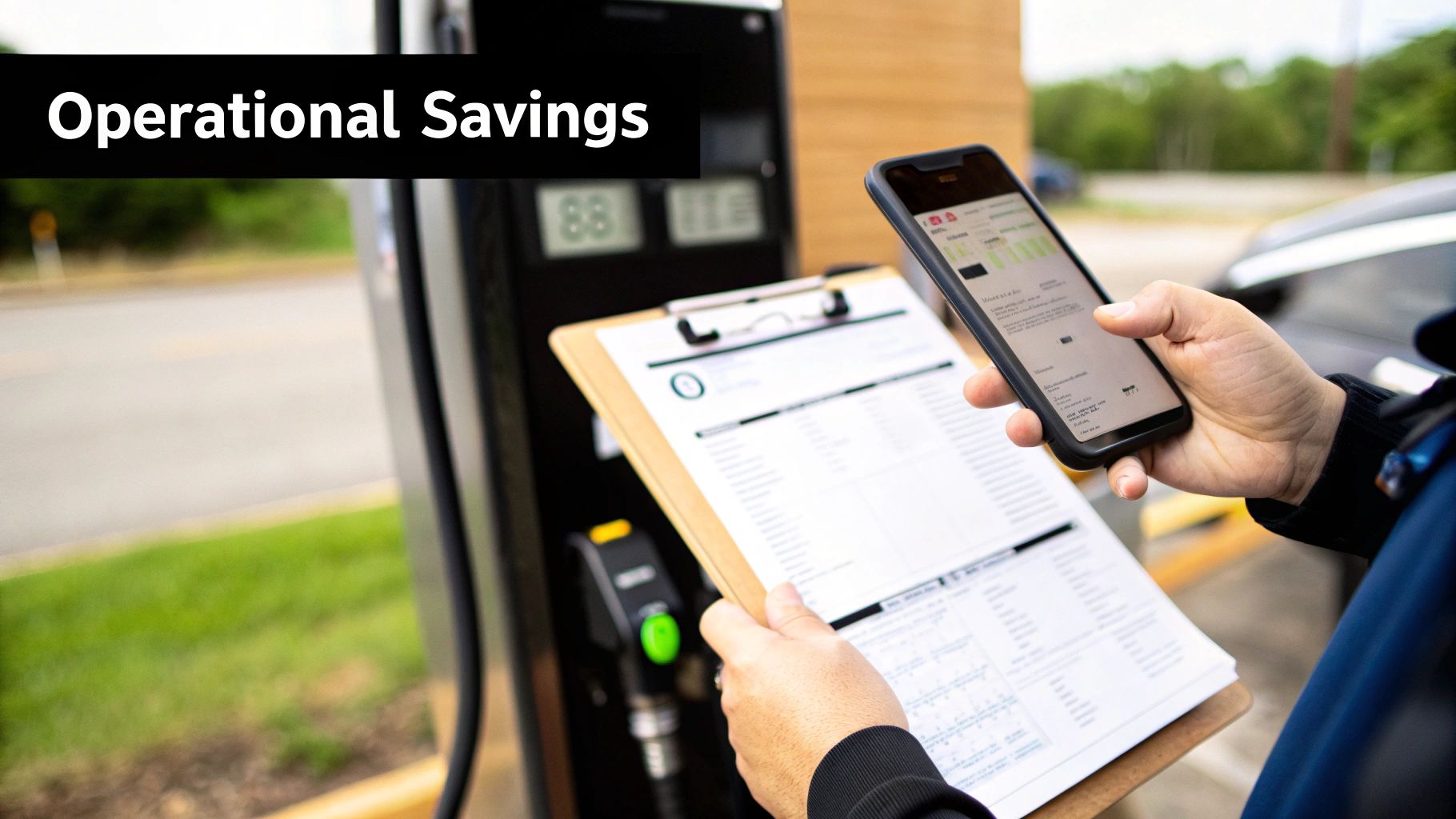
Sure, having a gas truck show up at your job site is convenient. But let's be honest, convenience doesn't always justify a new line item in the budget. The real value is buried in the numbers—the measurable impact on your bottom line.
When you stop thinking about fueling as just a chore and start treating it as a strategic part of your operation, everything changes. On-site fueling delivers real-world gains in four critical areas: operational productivity, direct cost savings, job site safety, and environmental responsibility. It's about turning a necessary evil into a genuine business advantage.
Keeping the Wheels Turning and the Work Flowing
For any business with a fleet or heavy equipment, time is money. And nothing kills time like a trip to the gas station. Every time a driver detours or a machine operator has to stop, you're bleeding productivity.
Picture a busy construction site. An excavator runs low on diesel midday. The operator has to shut it down, then someone has to drive off-site, fill a jerry can, drive back, and carefully refuel the machine. That whole song and dance can easily burn an hour, bringing a whole crew to a halt. A mobile gas truck flips that script entirely. It refuels everything during downtime—overnight, during lunch breaks—so your equipment is ready to go the second the workday starts.
It's a simple shift that results in more hours spent doing what you actually get paid for. By keeping your assets on-site and fueled up, you maximize uptime and keep projects on schedule. This is the difference between reacting to problems and preventing them from happening in the first place.
It's About More Than the Price at the Pump
Focusing only on the cost per gallon is a classic mistake. The real cost of fueling is a combination of the fuel itself, the labor you waste getting it, the wear and tear on your vehicles, and the potential for fuel to "disappear." A mobile gas truck tackles all these hidden costs head-on.
Let's break down the soft costs of a gas station run. You're not just paying for fuel; you're paying a skilled employee's wage to drive, wait, and pump. Industry data consistently shows that a single off-site fueling trip can gobble up 30 minutes of unproductive labor time per vehicle. Every single day.
The biggest win here is getting that time back. Multiply those wasted hours across your entire fleet for a year, and the savings in labor alone are often staggering enough to make the switch a no-brainer.
Plus, every one of those off-route miles puts extra wear on your trucks—tires, oil, engine hours. Mobile fueling services also give you pinpoint-accurate reports on every gallon pumped into every piece of equipment. This puts a stop to fuel slippage and gives you the hard data you need for accurate job costing and budgeting.
A Safer Way to Handle a Hazardous Job
Let's face it: fueling can be risky, especially on a chaotic job site. Spills, static sparks, and simply mishandling flammable liquids are real dangers. Asking your crew to haul fuel around in portable cans just multiplies that risk.
Mobile gas services take that entire risk off your plate and put it in the hands of trained, certified professionals. These operators live and breathe safety protocols from regulatory bodies like the Department of Transportation (DOT).
- Trained Professionals: They're certified in handling hazardous materials.
- The Right Gear: Trucks come equipped with automatic shut-off nozzles, spill containment kits, and proper grounding equipment.
- Less Risk for Your Team: Your employees are no longer directly involved in fueling, keeping them out of harm's way.
This professional oversight drastically cuts the risk of accidents and spills, creating a safer site for everyone. It also helps you stay compliant with tough environmental and safety regulations, saving you from potential fines that come with improper fuel handling.
Fueling Smarter, Not Harder
Bringing a single, efficient fuel truck to your site instead of sending a dozen vehicles out to various gas stations is a massive win for the environment. Every trip you eliminate is a direct reduction in your company's carbon footprint.
It's a simple concept of consolidation. One large, optimized delivery route is far more efficient than countless individual trips. This means less total fuel burned and a smaller environmental impact. On top of that, these professional services are built to prevent spills that contaminate soil and water. Their precise metering and safety gear ensure every drop goes where it's supposed to.
On-Demand Fueling vs. Traditional Gas Station Fueling
To really see the difference, it helps to put the two methods side-by-side. The contrast shows how mobile fueling transforms a logistical headache into a competitive edge.
| Factor | Mobile Gas Truck Service | Traditional Gas Station |
|---|---|---|
| Labor Costs | Eliminates unproductive labor time by fueling during off-hours. | Incurs significant costs as employees are paid to drive, wait, and pump. |
| Productivity | Maximizes uptime; vehicles and equipment are always fueled and ready for work. | Causes downtime and project delays with frequent, disruptive trips for fuel. |
| Fuel Management | Provides detailed tracking and reporting for every gallon, preventing theft/misuse. | Offers limited tracking, making it difficult to control fuel slippage. |
| Safety & Compliance | Reduces risk with trained professionals and specialized, compliant equipment. | Increases risk of spills and accidents due to employee handling. |
| Vehicle Wear & Tear | Minimizes non-revenue miles, extending the life of fleet vehicles. | Adds unnecessary mileage and accelerates maintenance needs. |
| Environmental Impact | Lowers emissions by consolidating fueling into a single, efficient delivery. | Increases emissions through multiple, individual vehicle trips to various stations. |
As you can see, the benefits go far beyond simple convenience. Adopting a mobile fueling strategy is a proactive business decision that boosts efficiency, cuts hidden costs, and creates a safer, more sustainable operation.
Which Industries Depend on Mobile Fueling?
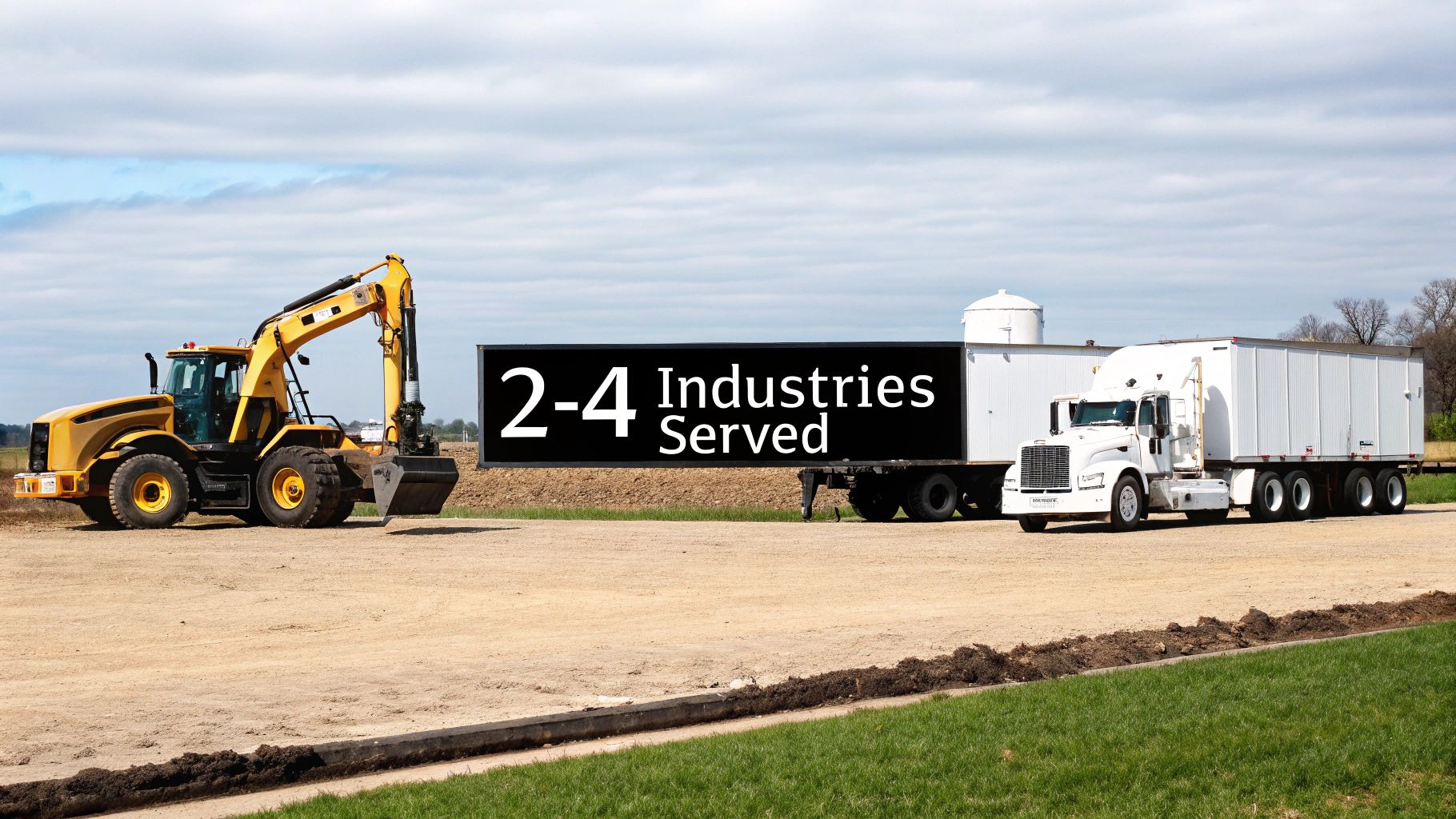
A mobile gas truck is much more than a convenience—for many businesses, it’s a mission-critical tool. You'll find them at the heart of any operation where downtime directly eats into the bottom line. Whether it's a hectic downtown construction site or a remote farm, on-site fueling solves some of the toughest logistical puzzles.
The value proposition is simple but powerful: keep your assets running by bringing the fuel to them. This one strategic shift unlocks incredible efficiency. It's no surprise, then, that the global market for fuel and lube trucks was valued at $1.86 billion in 2024 and is expected to hit $2.50 billion by 2030. This growth is being fueled by industries that can't afford to stand still.
Construction and Heavy Equipment
Nowhere is the benefit of a mobile gas truck more obvious than on a construction site. Think of it as a complex ecosystem of hungry machines—cranes, excavators, generators, and bulldozers all need a constant supply of fuel to keep a project on schedule.
Pulling just one of those machines off the line for a trip to the pump can trigger a cascade of delays, wrecking timelines and bloating labor costs. After all, these sites have to juggle complex logistics and often have strict construction site signage requirements and safety protocols to manage.
On-site fueling flips the script, turning a major disruption into a seamless background task. A mobile truck can roll in after hours and top off the entire fleet, making sure every piece of equipment is ready to go the second the crew clocks in.
Logistics and Fleet Management
For companies in the logistics and delivery game, every minute a truck isn't on its route is lost revenue. The old way of having drivers hunt for a gas station mid-shift is just plain inefficient. It wastes time, burns extra fuel, and makes delivery schedules a guessing game.
This is where overnight fleet fueling changes everything. A mobile gas service can refuel an entire fleet of delivery vans, semi-trucks, or work vehicles while they’re parked at the home depot.
- More Time on the Road: Drivers start their day with a full tank, completely cutting out fuel stops.
- Lower Labor Costs: You're no longer paying your team to wait in line at the pump.
- On-Time Departures: Every truck is ready to roll out on schedule, boosting reliability.
This simple service transforms a parking lot into a highly efficient operational hub.
By bringing the fuel directly to the fleet's home base, logistics companies can streamline their morning roll-out and ensure every vehicle hits the road with maximum efficiency.
Agriculture and Farming
Farming often happens across sprawling, remote properties, miles from the nearest gas station. During the critical windows of planting and harvesting, tractors, combines, and irrigation pumps are a farm's lifeline. Even a single day of lost productivity can have a massive financial fallout.
A mobile gas truck delivers fuel right to the machinery in the field, a service that has become indispensable for modern agriculture. This eliminates the slow and often dangerous chore of hauling fuel cans across rough terrain. It gives farmers the ability to work nonstop when the weather is right, maximizing their yield.
Niche and Specialized Applications
Beyond these core industries, the sheer flexibility of mobile fueling makes it a perfect fit for all sorts of specialized jobs. These examples really show how adaptable the service can be.
- Marine Fueling: Boats and yachts at a marina can get refueled right at the dock, saving owners the hassle of a dedicated trip to a fuel station on the water.
- Event Power Generation: Think about music festivals or large corporate events. They all rely on generators for power, and mobile fueling keeps them running without a hitch.
- Municipal Services: Fleets of snowplows, street sweepers, and city maintenance vehicles can be refueled at a central yard during off-hours, ensuring they’re always ready for duty.
In every one of these cases, the core idea is the same. A mobile gas truck brings the fuel where it's needed, when it's needed, turning a logistical headache into a simple, scheduled service that keeps the wheels turning.
Choosing the Right Mobile Fueling Partner
Picking a mobile fueling service isn't just about chasing the lowest price per gallon. It's about finding a genuine partner who can make your operations run smoother. The right provider becomes a reliable extension of your own team, while the wrong one can bring a world of headaches—delays, safety issues, and confusing bills. Taking the time to choose wisely from the start is what really unlocks the benefits of on-site fueling.
Your decision should hinge on more than a slick sales pitch. It's about the fundamentals: safety, reliability, and the technology that ties it all together. A solid partner will be open about their track record and have a bulletproof process for making every single delivery safe and on time.
Vetting Potential Providers
Before you even think about signing a contract, you need to do your homework. Treat it like you're hiring a critical new employee. You have to check their references and make sure they’re truly equipped for the job. This means asking the tough questions that get past the surface-level answers.
Here’s what you absolutely need to dig into:
- Safety and Compliance Record: Don't just take their word for it. Ask to see their safety certifications and find out what kind of training their drivers go through. Any good mobile gas truck operator will be proud to show you how they comply with Department of Transportation (DOT) and National Fire Protection Association (NFPA) standards.
- Service Area and Fleet Size: Make sure your job sites are comfortably within their normal routes. A company that’s spread too thin is a recipe for late deliveries. Ask them straight up about their fleet size and how they handle sudden spikes in demand.
- Fuel Offerings: Can they actually supply every type of fuel you need? Check if they offer all the right grades of gasoline, both on-road and off-road diesel, and even alternative fuels if your fleet requires them.
A provider’s real strength is their ability to show up consistently, day in and day out, without ever cutting corners on safety. Their history is the best predictor of their future performance, so don't hesitate to ask for references from businesses like yours.
This first pass will help you narrow the field to a shortlist of contenders who have the basics down.
Technology and Transparency
In this day and age, the technology behind the service is just as important as the fuel in the truck. A modern provider should offer a digital platform that puts you in the driver’s seat, giving you a clear view of everything that’s happening. Look for a company with an easy-to-use app or website that makes scheduling and tracking a breeze.
Here are the tech features that should be non-negotiable:
- Real-Time Tracking: You should be able to see exactly where your delivery truck is and get an accurate ETA. This simple feature gets rid of the guesswork and lets you plan your day with confidence.
- Detailed Fuel Reporting: The system needs to give you precise reports showing how much fuel went into which vehicle or piece of equipment. This data is gold for job costing, managing budgets, and spotting unusual fuel consumption.
- Automated Invoicing: Clean, digital invoices that arrive automatically will save your admin team a ton of time and prevent simple accounting mistakes.
The mobile gas truck industry is booming, and that competition is fueling some serious innovation. Take EzFill, for example. This app-based company started with just four trucks in Miami and has since grown to a fleet of 139 across six states. For 2025 alone, they're projecting to deliver 16 million gallons of fuel from their new trucks. That kind of explosive growth shows just how crucial a strong tech foundation is for managing it all. You can get a better sense of this expanding industry by reading this press release about the mobile fuel delivery system market on GlobeNewswire.
Got Questions About Mobile Gas Trucks? We've Got Answers.
Making the leap to on-site fueling is a big move, so it's only natural to have a few questions. I've talked to countless fleet managers who were curious about the nuts and bolts before they committed to a mobile gas truck service. Let's tackle those common questions head-on so you can see the real-world value of bringing fuel directly to your equipment.
Here are the answers to the most frequent things people ask about safety, pricing, scheduling, and data. My goal is to clear up any doubts you might have, helping you make a confident, well-informed choice for your business.
Is Mobile Gas Delivery Safe and Regulated?
Absolutely. Safety isn't just a talking point for reputable providers—it's the entire foundation of the service. Mobile gas truck operators are held to incredibly strict standards set by federal and local authorities, including the Department of Transportation (DOT) and the National Fire Protection Association (NFPA).
These aren't just pickups with tanks bolted to the back. They are purpose-built machines decked out with specialized safety gear. Think automatic shut-off nozzles that prevent spills, full-blown spill containment kits for immediate response, and proper grounding equipment to get rid of any static electricity risk. On top of that, the operators go through serious training for handling hazardous materials, making sure every single delivery is done by the book.
How Does Mobile Fueling Pricing Compare to the Gas Station?
It's easy to get hung up on the price per gallon, but that's not the whole story. While the number on the invoice might look a bit different, the total cost of fueling your business is almost always significantly lower with a mobile service. The price usually includes the fuel itself plus a service fee, but this model is designed to deliver a serious return on your investment.
The real savings are hiding in plain sight. Once you start calculating the lost productivity from drive time, the wages you pay employees to sit in traffic, and the extra wear-and-tear on your vehicles from all those off-route trips, the financial argument for mobile fueling becomes crystal clear.
Most services offer straightforward, volume-based pricing. When you maximize your fleet's uptime and slash all those wasteful expenses, a mobile gas truck service proves its worth as the smarter, more cost-effective choice for commercial operations.
Can I Schedule Fueling Outside of Business Hours?
Yes, and honestly, that's one of the biggest perks. The best mobile fueling companies are built around your schedule, operating 24/7. Scheduling fuel drops for evenings, nights, or weekends isn't just an option—it’s how they do business.
This whole approach is designed to make sure your fleet is gassed up and ready to roll the second the next workday begins. By refueling everything during its natural downtime, there’s zero disruption to your team’s workflow. They show up, turn the key, and get straight to work.
What Kind of Reporting and Data Do I Get?
Forget about shoeboxes full of faded gas station receipts. Modern mobile fueling services are backed by powerful digital platforms that give you incredible insight into your operations. You get access to a central dashboard with all the data you could ever need.
You can expect to see detailed invoices that show exactly how much fuel each truck or piece of equipment received, right down to the time and location. This lets you:
- Track Consumption Accurately: See exactly where every drop of fuel is going across your entire fleet.
- Manage Costs Effectively: Keep a tight grip on your fuel budget with data that’s always up to date.
- Identify Inefficiencies: Quickly spot strange consumption patterns that could point to a maintenance problem or even theft.
This kind of data gives you a level of control and transparency that's just impossible to get from the pump, helping you run a much smarter and more efficient operation.
Ready to eliminate downtime and streamline your operations? Blue Gas Express provides reliable, on-demand mobile natural gas solutions to keep your projects on schedule. Learn more about our temporary CNG and LNG services at bluegasexpress.com