

Ever thought about what would happen if the gas station came to you? That's the simple but powerful idea behind mobile fueling stations, a solution that's completely changing the game for businesses running vehicle fleets and heavy machinery.
Instead of losing valuable work time sending equipment off-site to a traditional fueling station, these units bring the fuel directly to your job site, fleet yard, or even the most remote locations.
Your Fueling Partner on Wheels
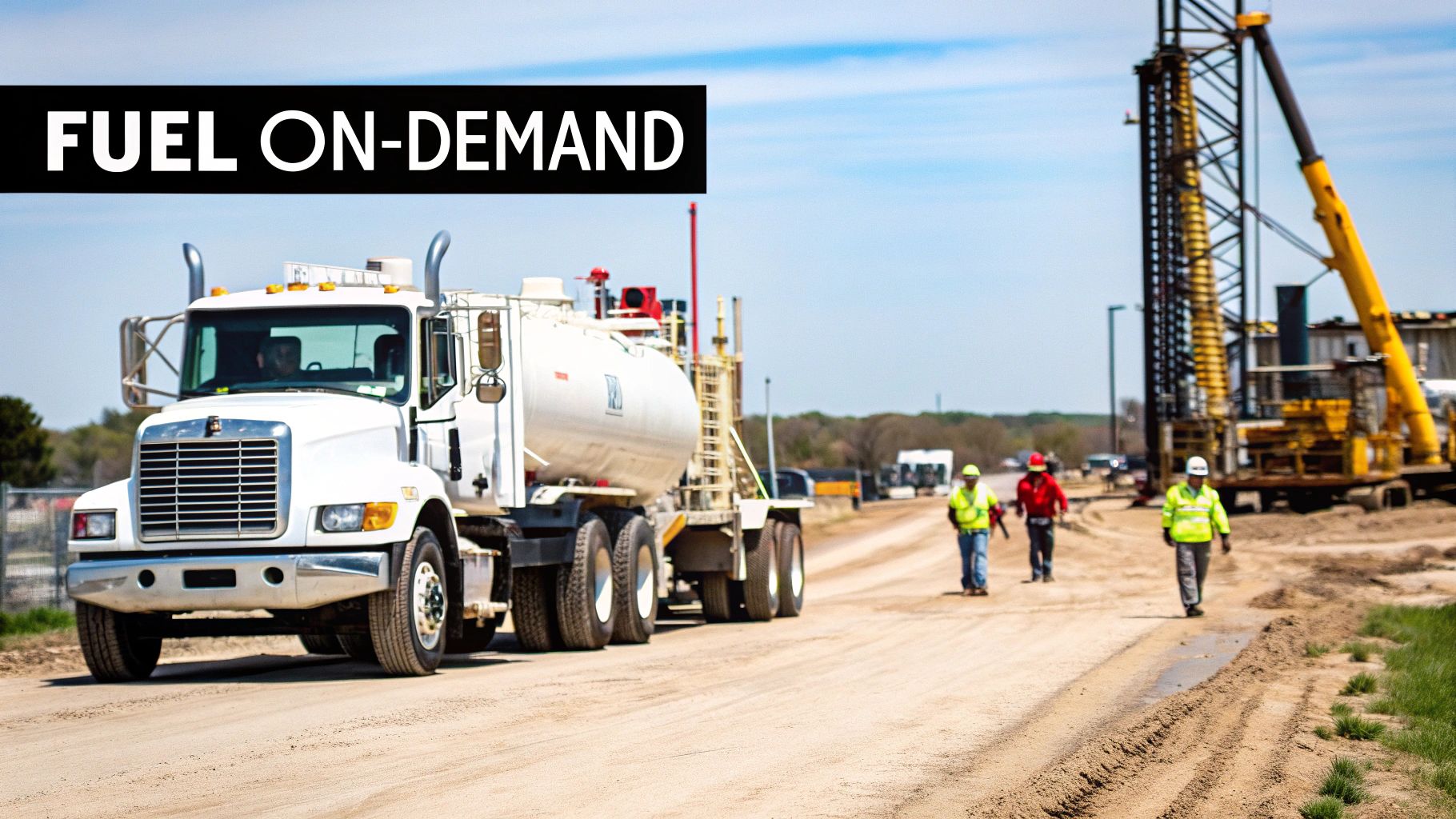
Think of it less like a gas station and more like a dedicated pit crew for your entire fleet. It delivers exactly what you need, right when you need it, cutting out the logistical nightmares and downtime that come with traditional fueling. This on-demand service isn't just a simple convenience; it's a strategic move that tackles some of the most stubborn operational hurdles that fleet-reliant companies face every day.
The old way of doing things is full of hidden costs. Every time you send a truck or a piece of heavy equipment off-site, you're not just paying for the fuel. You're also paying a skilled operator to stop what they're doing, drive to a station, wait in line, and then drive all the way back. Those hours add up fast, translating directly into wasted labor costs and project delays.
Solving Critical Operational Problems
This is precisely where mobile fueling comes in. By bringing the fuel directly to your assets, what was once a time-sucking chore becomes a streamlined, almost invisible part of your operation. It’s about taking back control over one of your biggest variable expenses.
The benefits are immediate and tangible:
- Eliminate Wasted Labor: Your people stay on the job and stay productive, instead of doubling as fuel runners.
- Reduce Vehicle Downtime: Equipment gets refueled during its natural downtime—overnight or during shift changes—so it’s ready to go when you are.
- Increase Fuel Efficiency: You stop burning fuel just to get more fuel. Those unnecessary trips to the pump are eliminated, saving on consumption and reducing vehicle wear and tear.
The real magic of mobile fueling is its ability to convert unproductive dead time into valuable operational hours. An entire fleet can be refueled overnight, meaning not a single minute of the workday is lost. Compare that to a driver losing an hour just to refuel one truck.
These solutions come in all shapes and sizes, from nimble diesel trucks servicing construction sites to sophisticated mobile natural gas systems designed for large-scale industrial operations. Getting a handle on how they work is the first step to seeing how they can give your business a serious competitive edge.
The Real-World Wins of On-Demand Refueling
Bringing fuel directly to your equipment isn't just a matter of convenience—it's a strategic move that fundamentally changes how you manage your assets and your bottom line. The impact ripples across your entire operation, touching everything from project timelines to a safer work environment. These advantages really boil down to three core benefits: maximizing your operational uptime, slashing hidden costs, and making your worksite a safer place.
Think about it from a practical standpoint. You have a construction crew in the middle of a critical concrete pour. The last thing you want is for an excavator to shut down and drive to a gas station miles away. That one fuel run could halt the entire project, put you behind schedule, and waste the time of your skilled crew. But with a mobile fueler on-site, that machine gets topped off during a planned break, and the work never misses a beat.
Maximize Operational Uptime
The most immediate and powerful benefit of mobile fueling is how it reclaims lost time. Those hours your team used to spend driving to and from a gas station? They're gone. Instead, your vehicles and heavy equipment are refueled during their natural lulls in activity, like overnight or between shifts.
This means every single asset is ready to go the second the workday starts. For a logistics company, it’s the difference between a staggered start and having the entire fleet of delivery trucks fueled up and rolling out by 6 AM sharp. That kind of readiness isn't just efficient; it's a massive competitive advantage that lets you complete more jobs and keep clients happy.
This infographic paints a clear picture of how on-demand refueling directly boosts key business metrics.
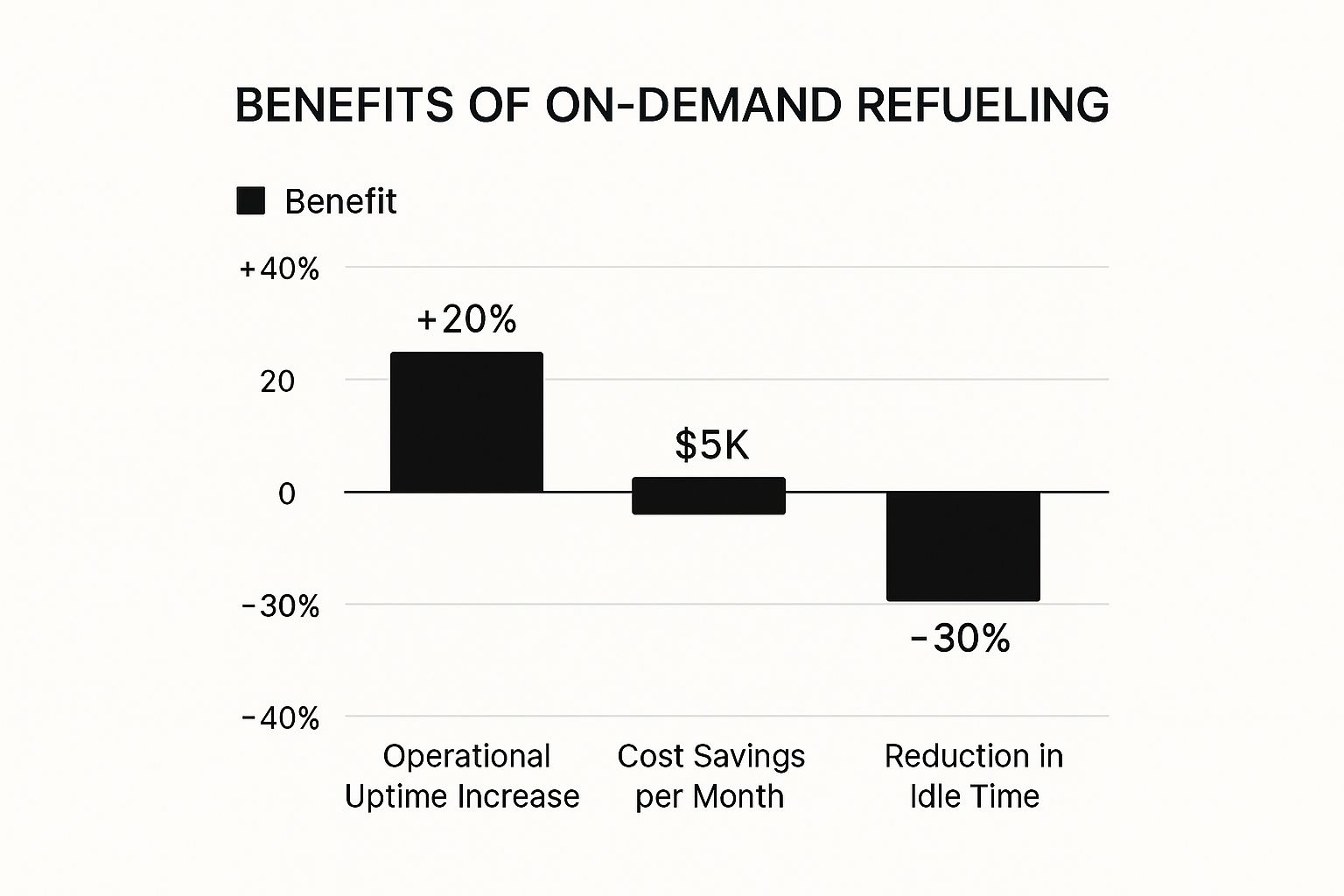
As you can see, the benefits all feed into each other. When you increase uptime and cut down on idling, the cost savings naturally follow.
Drive Significant Cost Savings
At first glance, the price per gallon for mobile delivery might look similar to what you'd pay at the pump. But the real savings are hiding in plain sight, in all the indirect costs you stop paying.
- Reduced Labor Costs: You're no longer paying your crew for their time spent driving to a gas station, waiting in line, and driving back.
- Lower Fuel Waste: You stop burning fuel just to go get more fuel. It sounds simple, but those miles add up across a fleet.
- Decreased Wear and Tear: Fewer non-essential trips mean less mileage on your vehicles, which extends their operational life and cuts down on maintenance.
This is exactly why the global mobile fuel delivery market is expected to explode, growing from $5.84 billion in 2025 to a projected $11.93 billion by 2035. Companies are catching on to the value. If you're interested in the data, you can explore the full report on mobile fuel delivery market trends and see how this shift is playing out.
Improve Worksite Safety
Finally, let’s talk about safety. Bringing the fuel to a designated spot on your job site creates a far more controlled and secure environment. It immediately reduces the traffic of heavy machinery moving in and out of a busy area, which lowers the odds of a collision.
By centralizing refueling activities under the supervision of trained professionals, you reduce the chances of spills and other hazardous incidents associated with self-service fueling by untrained employees.
This isn't just about protecting your people. It's also about staying compliant with tough environmental and worksite regulations, giving you one less thing to worry about.
Comparing Mobile Fueling System Types
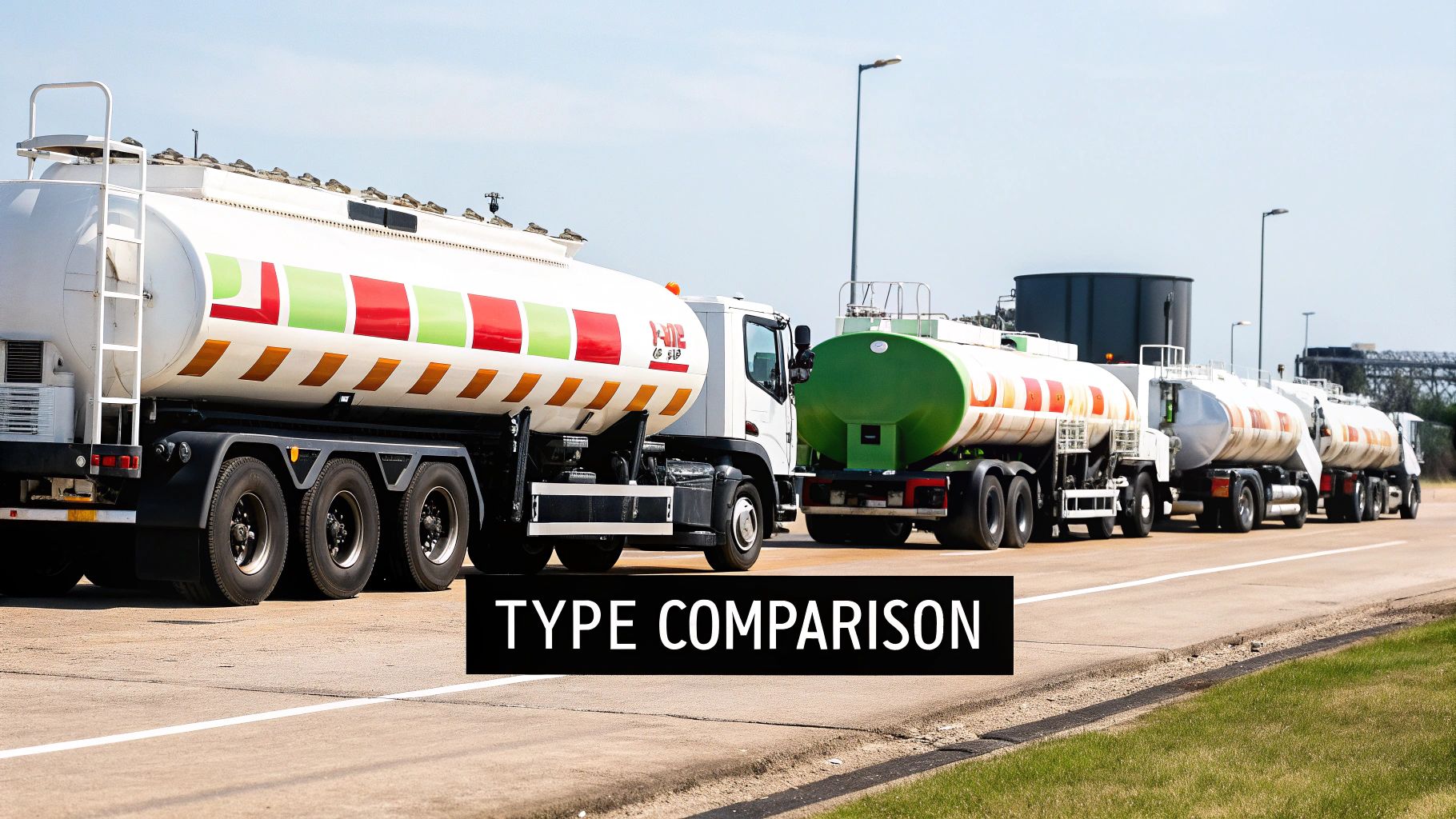
When you start looking into mobile fueling, you'll quickly realize it’s not a one-size-fits-all solution. Think of it like picking the right tool for a job—you wouldn't bring a hand shovel to do an excavator's work. The system you need really boils down to your industry, the fuel your equipment drinks, and how big your operation is.
From versatile diesel and gasoline units that keep busy construction sites running to highly specialized systems for aviation or natural gas, the options are incredibly diverse. Understanding these differences is the first step to making on-site refueling work for your business.
Traditional Fuel Mobile Stations
The most familiar mobile fueling stations are basically tankers on wheels, built to deliver conventional fuels like diesel and gasoline directly where they're needed most. These are the dependable workhorses of the industry, loved for their flexibility and how easy they are to operate.
They are a game-changer for industries with heavy machinery that can't just drive to a gas station.
- Construction: Keeping excavators, bulldozers, and generators topped off without a single interruption.
- Logistics & Trucking: Refueling an entire fleet of trucks overnight in a central yard, ensuring they're ready to roll at dawn.
- Agriculture: Fueling up tractors and harvesters in remote fields right in the middle of harvest season.
The biggest win here is simplicity and accessibility. Since most heavy equipment runs on diesel, these units solve a universal problem in the most direct way possible.
Mobile fueling for conventional fuels tackles the two biggest headaches in fleet management: downtime and wasted labor. Bringing the pump to the asset turns a logistical nightmare into a smooth, efficient operation.
Specialized and Alternative Fuel Systems
Moving beyond standard diesel, we're seeing a rise in specialized mobile fueling stations designed for unique industries and environmental goals. These systems often involve different technology and handling protocols, but they solve very specific challenges.
Take aviation and marine operations, for instance. They rely on highly regulated mobile units to refuel aircraft on the tarmac or vessels at port, where safety and fuel quality standards are non-negotiable. This is a crucial service where a permanent fueling station is either impossible or would create a major bottleneck.
At the same time, the push for cleaner energy is creating demand for alternative fuel systems. Mobile units that deliver Liquefied Natural Gas (LNG) and Compressed Natural Gas (CNG) are becoming essential for heavy-duty trucking and industrial sites looking to shrink their carbon footprint.
It's a trend that mirrors what's happening in the electric vehicle space, where a similar debate is unfolding between stationary versus mobile EV charging solutions.
To give you a clearer picture, let's break down the common types of mobile stations.
Comparison of Mobile Fueling Station Types
This table compares some of the most common mobile fueling solutions, outlining what makes each one suited for different jobs.
| Station Type | Fuel Type | Common Capacity | Primary Use Case | Key Advantage |
|---|---|---|---|---|
| Diesel/Gasoline Tanker | Diesel, Gasoline | 500 – 10,000 Gallons | Construction, Agriculture, Fleet Yards | High flexibility, widely compatible |
| CNG Daughter Station | Compressed Natural Gas | 3,000 – 5,000 DGE | Fleet depots, remote industrial sites | Lower emissions, stable fuel costs |
| LNG Mobile Fueler | Liquefied Natural Gas | 10,000 – 15,000 Gallons | Heavy-duty trucking, marine, rail | High energy density for long haul |
| Aviation Refueler | Jet A / Avgas | 3,000 – 10,000 Gallons | Airports, private airfields | Meets strict aviation safety standards |
As you can see, the "best" option depends entirely on your operational needs and goals.
The most frequently used mobile fuel units right now fall into the 10–30m³ and 30–50m³ capacity ranges, with major demand coming from airports, industrial zones, and passenger stations. This growth is being pushed by logistics companies trying to slash fuel-related downtime. Mobile refueling cuts costs by eliminating unnecessary trips and reducing the need for vehicles to carry extra fuel.
The Shift to Mobile Natural Gas Fueling
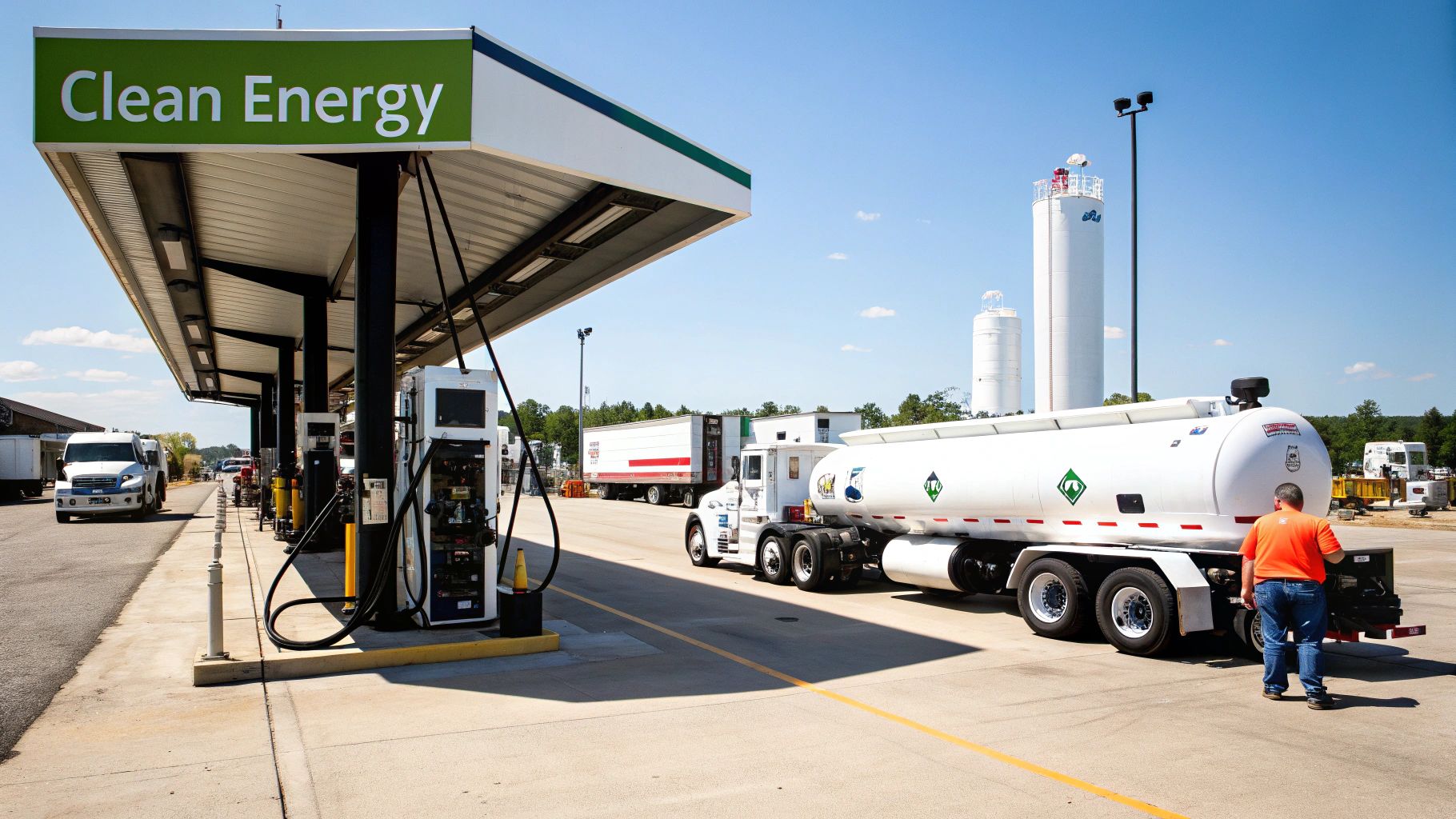
For a long time, the conversation around fueling was mostly about convenience. Now, sustainability is driving the discussion. This change is behind a major shift toward mobile natural gas fueling, particularly for industries feeling the pressure to clean up their act. We're seeing sectors like heavy trucking, shipping, and mining look to these solutions to hit tough emissions targets and follow through on their own green goals.
The biggest draw is pretty clear: environmental benefits. Natural gas—whether it’s Liquefied (LNG) or Compressed (CNG)—burns much cleaner than diesel. That means fewer greenhouse gas emissions and a serious drop in the nasty particulate matter that causes air pollution. For any company that's serious about its environmental footprint, switching to mobile natural gas is a practical and powerful move.
Why Industries Are Making the Switch
This isn't just about feeling good, though. It's a smart strategic decision. As environmental regulations get tighter, businesses that get ahead of the curve with cleaner fuels are simply better prepared for the future. They sidestep potential fines and can even gain an edge by attracting partners and customers who care about sustainability.
Mobile natural gas stations are what make this all possible without the sticker shock of building a massive, permanent fueling site from day one. They offer incredible flexibility.
- Test and Transition Fleets: A company can start bringing natural gas vehicles into its fleet without committing to a permanent station. It's a "try before you buy" approach.
- Support Remote Operations: Think about a mine or a remote port. Mobile units can bring cleaner fuel directly to them, far from any pipeline.
- Ensure Fuel Supply During Outages: If a permanent station is down for maintenance, a mobile unit can roll in and keep the fleet running.
Of course, this change brings new operational challenges. LNG, for instance, is a cryogenic fuel stored at incredibly cold temperatures, which demands special equipment and strict safety protocols. But for big operations, the long-term advantages usually make it well worth the effort.
The move toward mobile LNG and CNG is more than a trend—it's an adaptation. It reflects a deeper understanding that operational efficiency and environmental responsibility must go hand-in-hand for future success.
The numbers back this up. The global market for LNG mobile fueling stations hit roughly $1.5 billion in 2023 and is expected to grow to $4.2 billion by 2032. This isn't surprising, as heavy-duty industries are grabbing onto it as a cleaner alternative to diesel to meet new regulations. Europe is really leading the charge here, with countries like Germany and France actively promoting its use through policy and investment. For a closer look at the market forecast, you can discover more insights about the LNG mobile fueling market on dataintelo.com.
How to Bring Mobile Fueling to Your Operation
Switching to an on-site fueling solution isn't like flipping a switch. It's a planned process. To get it right and actually see the cost savings and efficiency boosts you're after, you need to start with a solid understanding of what your fleet truly needs.
Think of this initial stage as creating a blueprint for your new fueling strategy. It all begins with a deep dive into your current operations. You'll need to get a handle on your fuel consumption, pinpoint when you're using the most fuel, and know exactly where your vehicles and equipment are parked. This homework is the foundation for every decision you'll make from here on out.
Start With a Real-World Needs Assessment
Before you even think about calling a provider, you need to know exactly what you're asking for. And it’s about more than just a total gallon count. A proper needs assessment digs into the specifics of your daily grind.
Get granular by tracking your fleet's activity for a typical week or even a month.
- Fuel Burn: How much fuel is each truck or piece of machinery burning through each day?
- Operating Hours: When are your assets running, and when are they sitting idle? Those overnight and weekend downtimes are the perfect window for refueling.
- Parking & Logistics: Where do your vehicles end up when the day is done? Are they all in one central yard, or scattered across different job sites?
- Fuel Types: Are you running a mixed fleet? Do you need both diesel and natural gas available?
This data helps paint a clear picture of your operational rhythm, which is precisely what a good provider needs to build a service plan that actually works for your business.
A huge mistake I see people make is forgetting about the "soft costs" of fueling the old way. When you're adding up expenses, don't forget to include the paid driver time spent traveling to a station and waiting in line, the productivity you lose, and the extra wear-and-tear from all those unnecessary miles.
For anyone considering a container-based setup, getting practical guidance on container mobility is a must during the planning phase. It's key to making sure you can place and move the equipment safely and efficiently on your site.
Choosing the Right Fueling Partner
Once you have your needs mapped out, it's time to find a partner who can deliver. This is about so much more than just finding the lowest price per gallon. You’re looking for a dependable operator who lives and breathes safety, compliance, and clear communication.
As you vet potential providers, here's what to focus on:
- Safety & Compliance: Don't be shy. Ask to see their safety records, training protocols, and proof of compliance with all relevant regulations. A trustworthy company will have this information ready to go.
- Scheduling Flexibility: Your operation doesn't stop, and neither should their service. Look for a partner who can work around your schedule, offering overnight and weekend fueling to keep disruptions to a minimum.
- Technology & Data: The best providers use technology to manage deliveries and give you detailed reports. This data is gold—it can offer you powerful insights into your fleet's consumption and help you spot new ways to save money.
- The Service Level Agreement (SLA): Read the contract carefully. It should spell out everything: delivery schedules, pricing, emergency protocols, and who is responsible for what. This document is your protection, so make sure you understand every word before you sign.
By taking a smart, data-first approach, you can weave mobile fueling stations into your workflow seamlessly. You’ll start seeing the benefits—more uptime, lower costs, and fewer headaches—almost immediately.
Common Questions About Mobile Fueling
Switching up something as fundamental as how you fuel your fleet is a big decision, and it’s only natural to have a few questions. When people start looking into mobile fueling stations, their concerns usually boil down to the practical stuff: Is it safe? Is it actually cost-effective? And how does it all work day-to-day?
Let's cut through the noise and tackle the most common questions we hear from companies thinking about making the switch. Our goal here is to give you straight answers so you can see exactly how this works in the real world.
Are Mobile Fueling Stations Safe and Regulated?
Absolutely. In fact, you might be surprised to learn that the regulations for mobile fueling are often stricter than what a typical public gas station has to follow. For any legitimate provider, safety isn't just a priority—it's the entire foundation of the business.
These aren't just loose guidelines; they're comprehensive safety protocols that cover everything:
- Tough Equipment Standards: Every truck and piece of fueling equipment is built and maintained to exacting standards designed to prevent any possibility of a leak or spill.
- Highly Trained Operators: The technicians handling the fuel go through rigorous training. They know how to handle fuel safely, respond to emergencies, and follow every site-specific safety rule.
- Strict Regulatory Compliance: Operators are bound by rules from organizations like the National Fire Protection Association (NFPA) as well as a whole host of other federal and state authorities.
A professional provider will never hesitate to show you their safety record, compliance documents, and proof of insurance. It's an open book.
Is On-Site Fueling More Expensive?
This is the big one. While the per-gallon price might look a little higher on paper, the total cost of ownership is almost always lower. The price you see at the pump is only a tiny part of the story; it completely ignores all the hidden costs that drain your budget.
Think of it this way: mobile fueling eliminates the invisible costs that eat into your profit margins. You stop paying for skilled labor to sit in traffic, for fuel wasted on non-productive trips, and for the accelerated wear and tear on your vehicles.
Once you look at the complete picture—labor, downtime, maintenance, and all—the savings from on-site fueling become crystal clear. It stops being an unpredictable expense and becomes a managed, efficient part of your workflow.
What Businesses Benefit the Most?
Just about any company running a fleet or operating heavy machinery will see an improvement, but for some industries, the impact is game-changing. If your vehicles or equipment come back to a central yard or work on specific project sites, mobile fueling is practically tailor-made for you.
We see the biggest wins in sectors like:
- Construction and Mining: Fueling heavy equipment right where it sits, especially in remote areas far from the nearest gas station.
- Logistics and Transportation: Getting the entire fleet refueled overnight so every truck is 100% ready for dispatch at dawn. No more staggered start times.
- Agriculture: Bringing fuel directly to harvesters and tractors in the field, which is a lifesaver during critical planting or harvest windows.
- Waste Management: Fueling up garbage trucks at the depot during their off-hours, maximizing their time on routes during the day.
How Does Scheduling and Delivery Work?
This isn't just a guy with a truck showing up when he feels like it. Modern mobile fueling stations are powered by sophisticated logistics to make the whole process smooth and dead-on reliable. The best providers use scheduling software that lets you manage everything from a simple web portal or an app on your phone.
You can set it and forget it with recurring services—like topping off your entire fleet every night at 2 AM—or call in an on-demand delivery if something unexpected comes up. The top-tier services can even integrate with your fleet's GPS and telematics data to monitor fuel levels in real time. They can proactively schedule a delivery before a truck is even close to running low, ensuring an empty tank never stops your operation.
At Blue Gas Express, our entire business is built around making sure your projects keep moving forward with dependable mobile natural gas solutions. If you’re dealing with delays or just need a temporary gas supply, we bring CNG and LNG right to your job site.
See how our rapid deployment services can keep your operations running without a hitch at https://bluegasexpress.com.