

At its core, a gas to electricity converter is a machine that takes the chemical energy locked inside fuels like natural gas and turns it into electricity you can actually use. Think of it like a car engine, but instead of making wheels turn, its entire job is to spin a generator to power homes, businesses, and construction sites.
This technology is a game-changer, giving you a reliable power source completely separate from the traditional electric grid.
What Is a Gas to Electricity Converter?
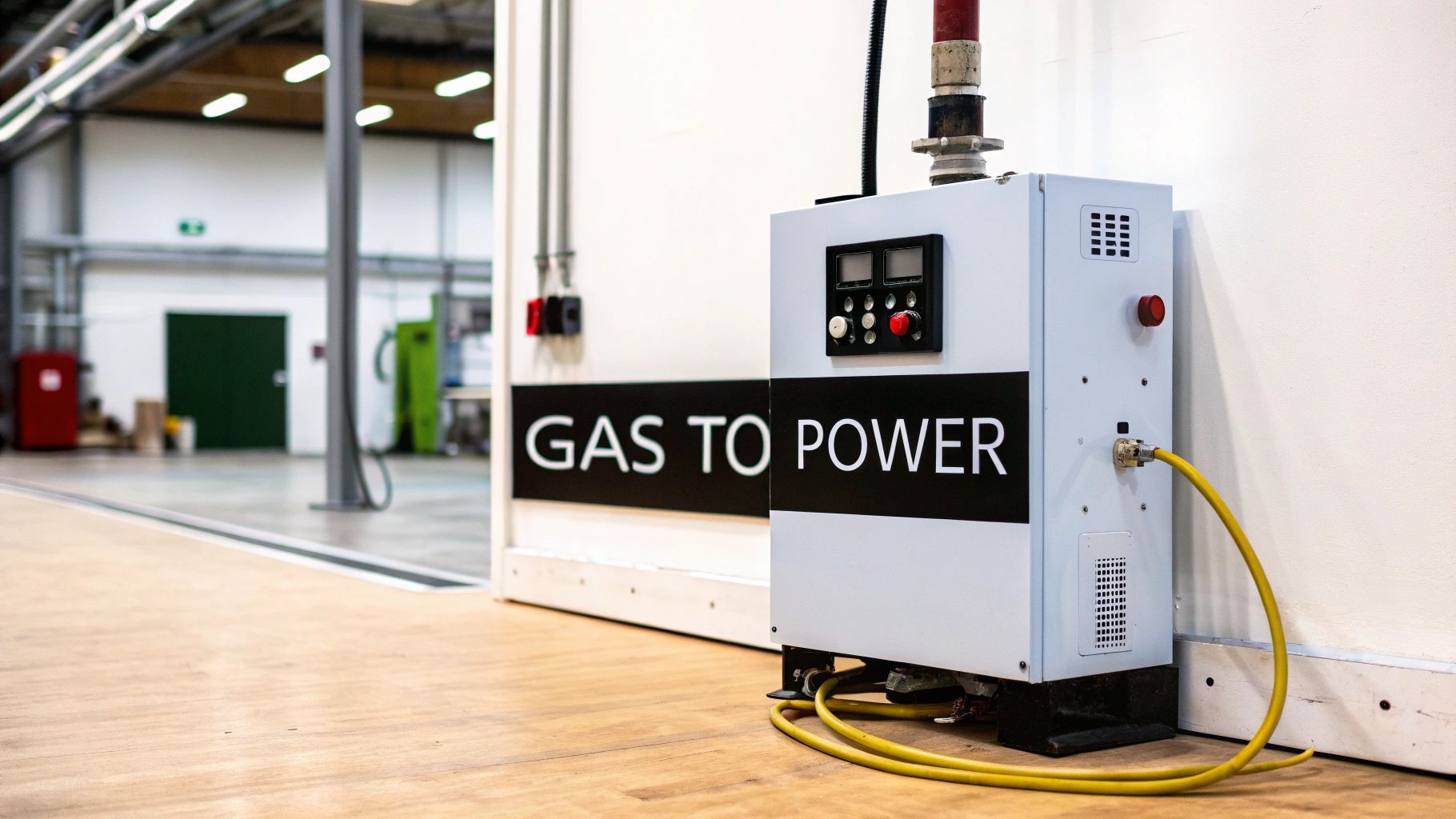
You can think of a gas to electricity converter as a miniature, self-contained power plant. It’s designed to meet a specific energy need by taking a fuel—usually natural gas or propane—and using it to produce an electrical current right where you need it.
This on-demand capability is crucial for any temporary or remote power needs, especially in places where connecting to a utility would be impractical, expensive, or just take too long. In these scenarios, the converter steps in as the main source of electricity, letting work continue without a hitch.
The Basic Principle of Conversion
So, how does it actually work? The process starts with the controlled combustion of gas inside the unit. This creates a high-pressure force that pushes a mechanical part, like a piston in an engine or the blades of a turbine. That physical motion is then used to spin a generator, which converts the rotational energy into electricity through electromagnetism.
This kind of on-site power generation is becoming a key part of modern energy planning, filling infrastructure gaps and boosting resilience against outages. You can see this shift in the market numbers. The global power-to-gas market was valued at USD 36.35 million in 2023 and is expected to grow at a compound annual growth rate of 19.2% from 2024 to 2030. This growth isn't just a number; it shows a real, increasing reliance on these technologies. For a deeper dive, you can read the full research about these market projections to understand the global trend.
A Glance at Common Converter Types
While the basic idea is the same, the technology that makes it happen comes in a few different flavors. Each type has its own strengths, making it a better fit for certain jobs.
Before we get into the nitty-gritty, here’s a quick look at the main types of converters available.
Overview of Gas to Electricity Conversion Technologies
| Technology Type | Primary Fuel | Common Application |
|---|---|---|
| Reciprocating Engine | Natural Gas, Propane | Continuous power for industrial sites |
| Microturbine | Natural Gas, Biogas | Combined heat and power (CHP) |
| Fuel Cell | Hydrogen, Natural Gas | High-efficiency, low-emission power |
Getting familiar with these categories is the first step. Each one strikes a different balance between efficiency, cost, and operational demands, which will guide you toward the right choice for your project.
The Four Main Ways to Turn Gas into Electricity
When you dig into how gas-to-electricity converters actually work, you find a few core technologies doing the heavy lifting. Think of it like choosing a vehicle: you wouldn't use a sports car to haul lumber or a semi-truck for a quick trip to the store. Each is built for a specific job.
The same idea applies here. Four distinct technologies dominate the world of on-site power generation, and each one turns fuel into electricity in its own unique way. Knowing the difference is the key to matching the right machine to your project.
Reciprocating Engines: The Dependable Workhorse
The most common and easily understood technology is the reciprocating engine generator. If you can picture a standard car or truck engine, you’re already on the right track. It works on the exact same internal combustion principle, where pistons move back and forth (reciprocate) inside cylinders.
This motion spins a crankshaft, which is hooked up to a generator. As the engine hums along, the crankshaft's rotation drives the generator, and voilà—you have electricity. These engines are the industry's go-to workhorses, prized for their rugged design, reliability, and knack for handling heavy power demands around the clock.
- Think of it as: A powerful diesel truck engine—built for endurance and pure pulling power, not for zipping around town.
- Perfect for: Providing steady, 24/7 power for large construction sites, industrial plants, or remote operations.
- Its biggest advantage: It's a proven, durable, and cost-effective technology, especially when you need a lot of power for a long time.
Microturbines: The Miniature Jet Engine
Next up, we have microturbines, which couldn't be more different from a piston engine. The best way to visualize a microturbine is to imagine a tiny jet engine that's been repurposed to generate electricity.
Instead of pistons, a microturbine uses a single rotating shaft. It sucks in air, compresses it, mixes it with fuel, and ignites the mixture. The resulting blast of hot, high-pressure gas spins the turbine at astonishing speeds—often hitting over 90,000 RPM. This super-fast rotation drives a generator, producing a very clean and stable supply of electricity. Their compact footprint and low emissions make them a great fit for tight spaces or environmentally sensitive locations.
CHP Systems: The "Two-for-One" Efficiency Play
Combined Heat and Power (CHP), often called cogeneration, isn't a completely different type of engine. Instead, it's a smarter way of using the engines we already have. Any engine—whether it's a reciprocating engine or a microturbine—produces a massive amount of waste heat. A CHP system is ingeniously designed to capture that heat and put it to work.
A typical generator might convert only 35-45% of its fuel into usable electricity. A CHP system captures the waste heat for other tasks, pushing its total energy efficiency to over 80%. It’s the ultimate energy recycling solution.
This captured thermal energy isn't wasted; it can be used for heating buildings, warming water, or powering industrial processes. It’s a true "two-for-one" deal, giving you both electricity and useful heat from the same tank of fuel, which drastically cuts down on energy costs.
Fuel Cells: The Clean, Quiet Chemical Reaction
Finally, there are fuel cells—the most unique technology in the lineup. Fuel cells don't burn anything. They operate more like a battery that never needs to be recharged, as long as you keep supplying it with fuel. They generate electricity through a quiet, clean electrochemical reaction.
It breaks down like this:
- A fuel, usually hydrogen that has been stripped from natural gas, is sent to one side (the anode).
- Oxygen from the air is sent to the other side (the cathode).
- The fuel cell uses a special membrane to trigger a chemical reaction that pulls electrons from the hydrogen, creating a direct electrical current (DC). The only byproducts are a little heat and water.
Because there’s no combustion, fuel cells are incredibly quiet and produce almost zero harmful emissions. This makes them ideal for powering facilities in residential areas or providing ultra-reliable backup power for businesses where clean, silent operation is a must. This kind of innovation is driving major growth in the industry. In 2024, the global power-to-gas market was valued at up to USD 41.6 million, and it's projected to climb as high as USD 126.9 million by 2034. You can discover more insights about these power-to-gas market trends to see where the industry is heading.
Choosing and Sizing the Right Converter
Picking the right gas-to-electricity converter is a lot like choosing the right tool for a big job. You wouldn't use a hand saw to fell a giant oak, and you certainly wouldn't bring a chainsaw for delicate woodwork. The goal is to match the equipment's capabilities perfectly with your project's specific demands.
To get there, you need a solid grasp of your power needs, the conditions on the ground, and your budget. By asking a few key questions, you can zero in on the perfect solution. This methodical approach ensures you get a converter that not only works but works well.
How Much Power Do You Really Need?
First things first: you have to calculate your total power load. This isn't a ballpark guess. It means adding up the wattage of every single piece of equipment that will draw power from the converter—from heavy machinery and welders down to the lights and computers in the office trailer.
You also have to account for the difference between running watts (the power something uses continuously) and starting watts (the extra jolt needed to turn it on). Electric motors are famous for this initial power surge, which can easily be two or three times their normal operating load. A generator sized only for running watts will trip the moment a large motor tries to kick on.
As a rule of thumb, always spec your gas-to-electricity converter with at least 20-25% more capacity than your calculated maximum load. This buffer handles unexpected power draws and keeps the unit from redlining, which boosts efficiency and extends its life.
Continuous or Intermittent Power Demands?
Next up, think about how you'll be using the power. Do you need a steady, round-the-clock supply, or will your demand spike and dip throughout the day?
- Continuous Load: A remote work camp or an industrial facility needing 24/7 power requires a prime-rated generator, like a reciprocating engine built for the long haul.
- Intermittent Load: A construction site where big tools run on and off has a variable load. Here, a converter that can ramp up quickly to meet power spikes without guzzling fuel during lulls is a much better fit.
This distinction has a huge impact on which technology is the most cost-effective. A machine built for continuous duty can be wasteful for a job with long idle periods, while a smaller, more responsive unit would be pushed to its breaking point by a constant heavy load.
The different technologies each have their own sweet spot, whether it's raw power, quiet efficiency, or something in between.
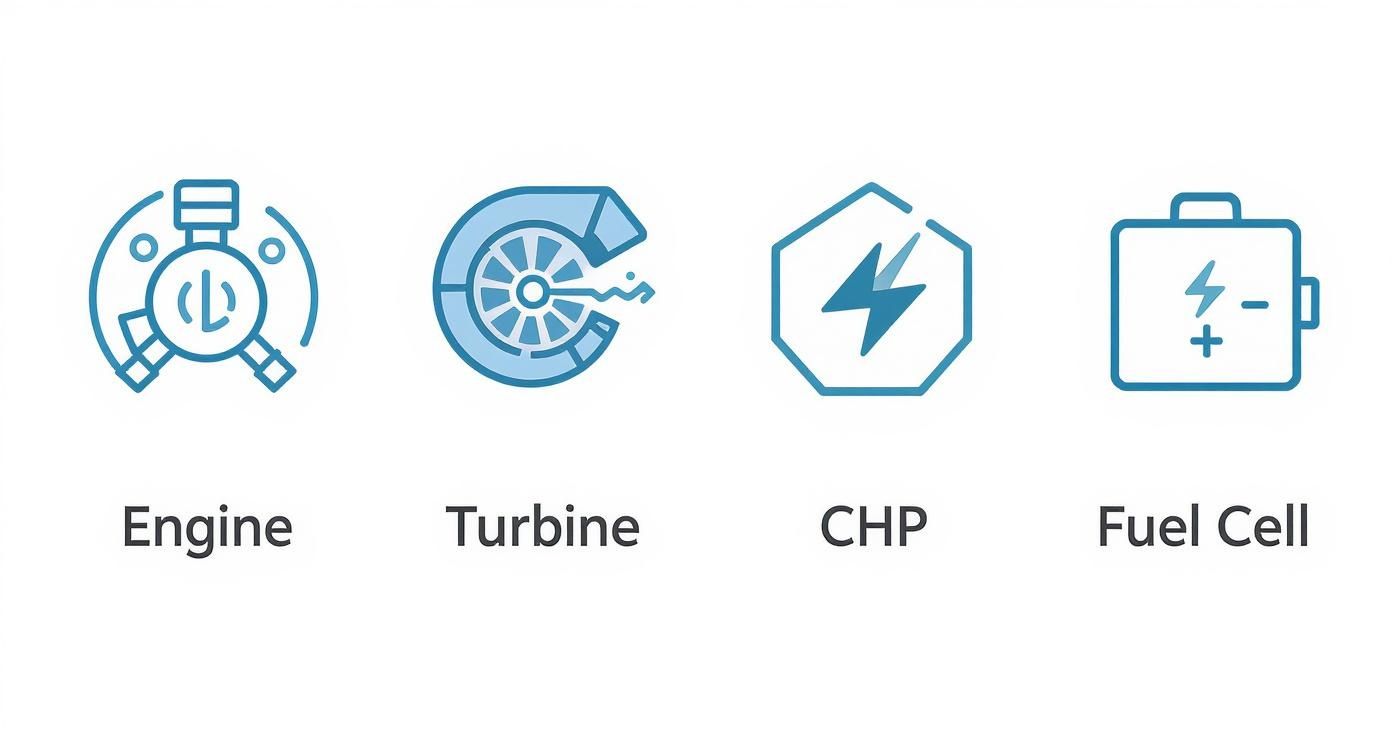
As you can see, while engines are the workhorses for raw power, technologies like fuel cells are masters of clean, quiet operation, making each suited for different jobs.
Technology Comparison for Converter Selection
With your power load and usage pattern figured out, you can start comparing the core technologies side-by-side. Each one brings a different mix of benefits to the table, from upfront cost to long-term efficiency. Understanding these trade-offs is the key to finding the best gas-to-electricity converter for your situation.
This table breaks down how each technology stacks up across the most important decision-making factors.
| Feature | Reciprocating Engine | Microturbine | CHP System | Fuel Cell |
|---|---|---|---|---|
| Upfront Cost | Low to Moderate | High | High | Very High |
| Electrical Efficiency | Good (35-45%) | Moderate (25-35%) | Good (35-45%) | Excellent (50-60%) |
| Total Efficiency | Low | Low | Very High (>80%) | Moderate |
| Maintenance Needs | Regular (oil, filters) | Low | Regular | Very Low |
| Emissions | Higher | Low | Varies | Near Zero |
| Best For | Heavy, continuous loads | Clean power, CHP | Maximum energy use | Ultra-clean, quiet power |
Ultimately, there’s no single "best" option—only the best fit for your specific goals. A reciprocating engine is often the most practical choice for temporary power on a tight budget. On the other hand, a CHP system delivers unbeatable long-term value for any facility that can make good use of the captured heat. By weighing these factors, you can confidently choose a converter that delivers reliable and efficient power.
Navigating Fuel Supply and Safety Logistics
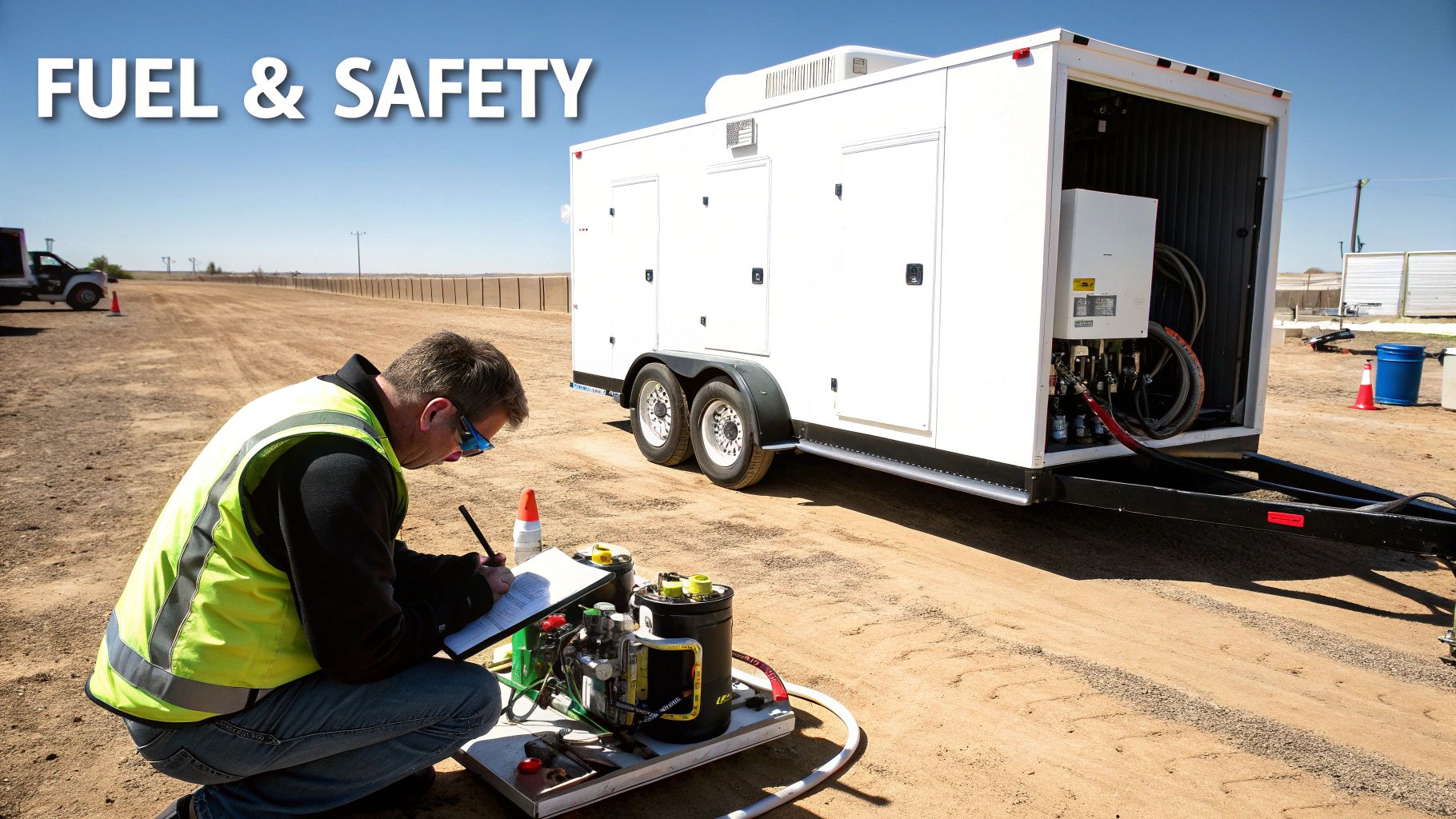
Getting a gas-to-electricity converter running is about more than just picking the right machine. You have to think through the entire chain: fuel delivery, permits, and, most importantly, safety. Your generator is only as good as its fuel source, so a steady, reliable supply is the bedrock of any on-site power project.
Sure, a traditional natural gas pipeline is great—if you have one. But for new construction sites, remote locations, or during pipeline maintenance, that’s often not the case. This is where solid logistical planning is absolutely critical to prevent expensive downtime.
Mobile Fuel Solutions for Uninterrupted Power
So, what do you do when there's no pipeline? This is where mobile gas delivery really shines. Solutions like truck-delivered Compressed Natural Gas (CNG) or Liquefied Natural Gas (LNG) bring the fuel straight to you, creating a “virtual pipeline” on demand.
This approach is a lifesaver in a few key situations:
- Out-of-the-Way Jobs: Think mining operations or rural construction projects far from any utility grid.
- Short-Term Needs: Perfect for commissioning new equipment or as a bridge fuel while permanent gas lines are being installed.
- Emergency Response: When a utility outage hits, mobile gas can be deployed fast to power critical facilities.
Providers like Blue Gas Express can get these mobile units to your site in a matter of hours, keeping your project on track even when permanent service is delayed. That kind of rapid response can be the difference between meeting a deadline and facing financial penalties. It's no surprise the market for these flexible solutions is growing; in North America alone, the power-to-gas market hit USD 14.91 million in 2024.
Demystifying Permitting and Compliance
Before you can fire up any generator, you have to navigate the world of permits and regulations. It can look intimidating, but it all comes down to one thing: proving your setup is safe for people and the environment.
The exact permits you'll need will depend on the size of your unit, its emissions, and how long you plan to run it. Typically, this involves getting air quality permits from environmental agencies and installation approvals from local building and fire departments.
This is where leaning on an experienced provider pays off. They know the ropes and can guide you through the paperwork, ensuring your setup meets all the standards and passes inspection without any last-minute surprises.
Essential Safety Protocols for Natural Gas
When it comes to natural gas, safety is everything. It’s an incredibly reliable fuel, but it has to be handled with respect and strict adherence to protocols. There's simply no cutting corners on training or equipment.
Here are the non-negotiables:
- Proper Ventilation: The converter must be in a well-ventilated space to keep exhaust gases and any unburned fuel from building up.
- Leak Detection: Install methane detectors and make it a habit to regularly inspect all hoses, pipes, and fittings for potential leaks.
- Secure Connections: All fuel lines need to be locked down tight and shielded from physical damage to prevent them from breaking or coming loose.
- Emergency Shutoffs: Everyone on site should know where the emergency shutoff valves are and have clear access to them.
It's also critical to stay vigilant about understanding carbon monoxide poisoning risks whenever you're running gas-powered equipment. By getting these logistics right, you’re not just getting power—you’re getting a safe, compliant, and reliable solution from day one.
Gas to Electricity Converters in Action
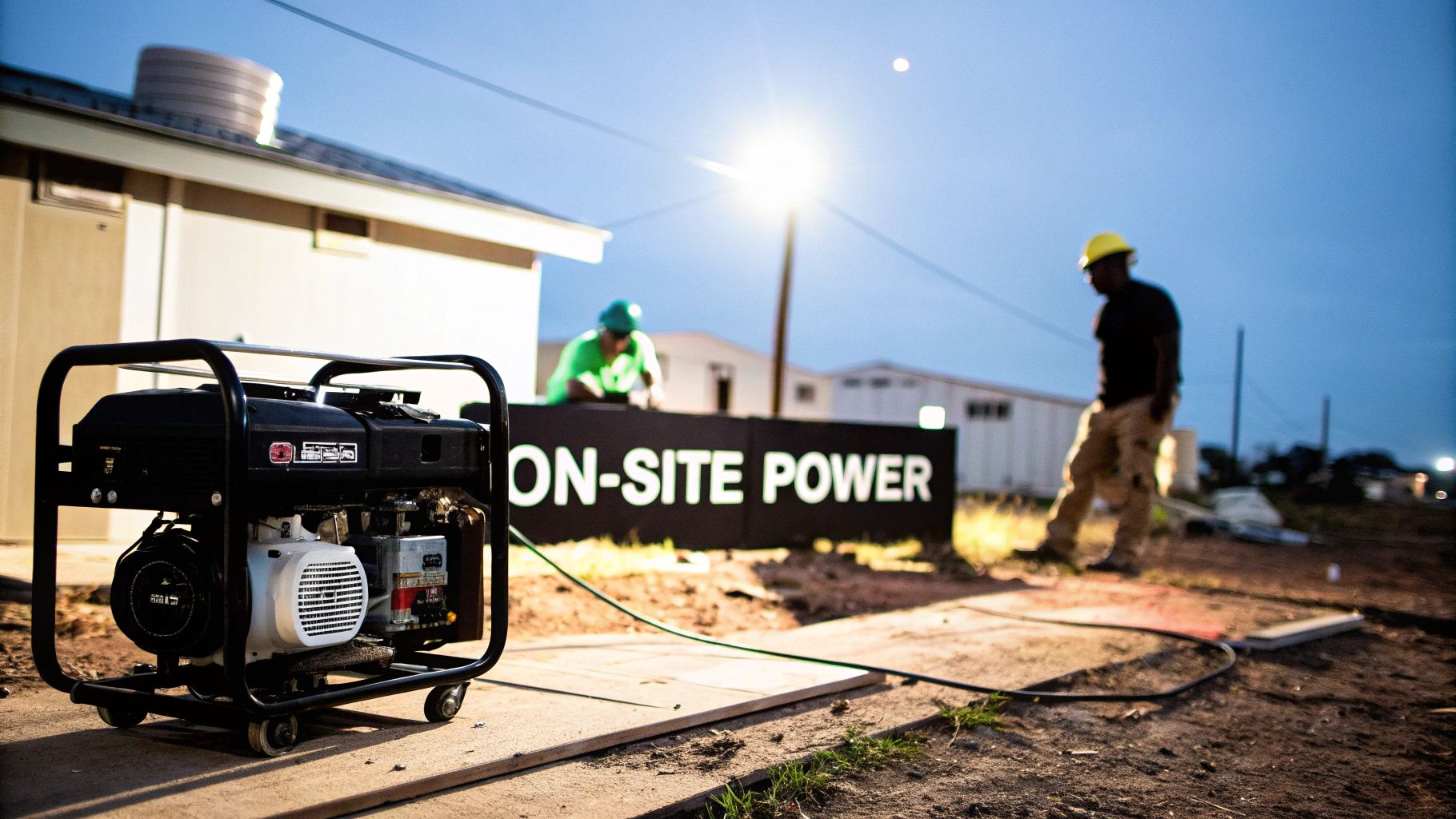
It’s one thing to understand the mechanics of a gas-to-electricity converter, but it's another to see it solving real-world problems. This is where the technology truly shines. These units aren’t just sitting on a spec sheet; they’re out in the field every day, bridging power gaps and keeping critical operations afloat.
From construction sites miles from the nearest utility pole to brand-new facilities waiting for the grid to go live, these converters deliver essential, reliable power. Their flexibility makes them invaluable across countless industries and scenarios, turning logistical headaches into simple, manageable tasks.
Powering Remote Construction and Development
Think about a major construction project breaking ground in a remote location. The power lines are miles away, and getting the grid extended would take months and cost a small fortune. But the project needs power now—for welders, cranes, site trailers, and security lights. This is the classic scenario where a gas-to-electricity converter saves the day.
By rolling in a mobile reciprocating engine generator fueled by trucked-in CNG or LNG, the site can have a solid power source running in just a few hours. Work can start immediately, keeping aggressive timelines on track without having to wait for permanent infrastructure. The converter essentially creates a self-contained power island, pushing the project forward without costly delays.
For projects located beyond the reach of the traditional grid, on-site gas-to-electricity generation is not just a convenience—it's the enabling technology that makes the entire operation possible.
This ability to provide instant, grid-independent power is a game-changer for builders and developers. It removes a massive variable from the project plan, giving them direct control over their energy supply and keeping the whole schedule moving.
Commissioning New Facilities and Equipment
Commissioning a new industrial plant or commercial building presents another common challenge. The facility is built, the multi-million dollar equipment is installed, but the permanent natural gas and electricity services from the utility haven't been turned on yet. This typical delay can bring the crucial process of testing and calibrating new machinery to a dead stop.
A temporary gas-to-electricity converter, paired with a mobile gas supply, is the perfect bridge solution. It provides the juice needed to:
- Test and commission generators to make sure they're ready for permanent operation.
- Run HVAC systems to get occupancy permits, which is especially critical during extreme weather.
- Power up production machinery to check functionality and train staff before the official ribbon-cutting.
This temporary setup lets businesses get a head start on critical pre-launch activities. Instead of losing weeks or even months to unproductive downtime while waiting on the utility, they can turn that limbo period into a productive phase, speeding up their path to becoming fully operational.
Ensuring Business Continuity During Outages
Power outages are far more than an inconvenience. For most businesses, they’re a direct threat to revenue, safety, and reputation. Whether it’s due to a storm, equipment failure, or planned utility work, a power cut can shut everything down. A gas-to-electricity converter acts as a powerful line of defense.
Unlike a standard diesel backup generator that might have limited fuel on-site, a natural gas unit can run for as long as you can supply it with fuel. During a prolonged outage, a business can bring in mobile CNG or LNG to keep its generator humming indefinitely. This is crucial for protecting data centers, refrigerated warehouses, manufacturing lines, and security systems.
By ensuring the lights stay on no matter what, these converters offer invaluable peace of mind. They protect assets, maintain productivity, and allow a business to keep serving its customers even when the rest of the grid is dark.
Looking at the Real Costs and Payback
When you're looking at a gas-to-electricity converter, it’s easy to get hung up on the initial price tag. But that's only a tiny piece of the story. The smart way to look at it is through the lens of Total Cost of Ownership (TCO), which factors in every single expense you'll encounter while the machine is running.
This means you’re not just thinking about the purchase or rental fee. You’re also adding up the ongoing costs for fuel, routine maintenance, and any unexpected repairs down the road. For most operations, the true financial "aha!" moment comes when you stack these numbers up against the old standby: diesel generators. Diesel units might look cheaper upfront, but their running costs tell a completely different tale over time.
The Game-Changer: Natural Gas Fuel Costs
By far, the biggest win with a gas-to-electricity converter is the fuel. Natural gas is almost always cheaper and its price is far more stable than diesel for the same amount of energy (BTU). We're not talking about pocket change here; this difference can lead to massive savings, especially if you need power around the clock.
Think about it: a generator running 24/7 burns through an incredible amount of fuel. With natural gas often costing 30-50% less than diesel for the very same energy output, those savings pile up fast and make a real difference to your project's profitability.
The stable pricing and lower cost per kilowatt-hour (kWh) are the bedrock of the business case for making the switch from diesel. It turns fuel from a huge, unpredictable budget item into a manageable, predictable operating expense.
Calculating Your Return on Investment
So, how do you figure out if the switch makes financial sense? You calculate the Return on Investment (ROI). This tells you exactly how long it will take for the savings to cover the initial cost and start putting money back in your pocket. A key first step is to accurately calculate your electrical energy consumption.
To get your ROI, you balance the upfront investment against the money you'll save on operations. The math is pretty straightforward:
- Figure Out Annual Diesel Costs: (Diesel Price per Gallon) x (Gallons Used per Hour) x (Total Hours per Year) + (Annual Maintenance).
- Figure Out Annual Natural Gas Costs: (Gas Price per Unit) x (Units Used per Hour) x (Total Hours per Year) + (Annual Maintenance).
- Find Your Annual Savings: (Annual Diesel Costs) – (Annual Natural Gas Costs).
- Calculate the Payback Period (ROI): (Initial Investment) ÷ (Annual Savings) = Years until it pays for itself.
Let's put this into a real-world context. Imagine a construction site that needs a 500 kW generator running 12 hours a day for six months. Just by choosing natural gas over diesel, the fuel savings alone could easily hit tens of thousands of dollars in that short time. Add in the reduced maintenance and less wear and tear on the engine, and the financial case for a gas-to-electricity converter becomes crystal clear.
Got Questions About Gas Converters? We've Got Answers.
Even after walking through the technology, you probably still have a few questions rolling around. That’s perfectly normal. Let's tackle some of the most common things we get asked about putting a gas-to-electricity converter to work.
How Does Natural Gas Stack Up Against Diesel on Emissions?
This is a big one. Natural gas generators are a clear winner when it comes to being cleaner than their diesel counterparts. On average, a natural gas unit kicks out about 20-30% less carbon dioxide (CO2).
But the real story is in the local air pollutants. Natural gas releases drastically lower levels of harmful stuff like nitrogen oxides (NOx) and particulate matter. That makes it a much better choice not just for the environment, but for the air quality right there on your site.
What's the Lifespan on One of These Converters?
How long a gas-to-electricity converter will run depends a lot on the specific technology and, most importantly, how well you take care of it.
- Reciprocating Engines: These are the workhorses. With a solid maintenance routine, you can expect 20,000 to 30,000 operating hours before it’s time for a major overhaul.
- Microturbines: These are built for the long haul. With fewer moving parts, microturbines can easily hit 40,000 to 60,000 hours of dependable service.
I can't stress this enough: consistent, proper maintenance is the single best way to get the most life out of any unit.
Are These Converters Only for Huge Industrial Jobs?
Not at all. While they’re a favorite for massive industrial operations, gas converters aren't just for heavy-duty applications. There's a whole world of smaller, more portable models out there.
These units are perfect for everything from keeping a small commercial building online during a blackout to powering a residential construction site. The technology scales beautifully, meaning there's an option to fit almost any power need you can think of.
The key is correctly sizing the gas to electricity converter to your specific load. Whether you're powering a small worksite or a large manufacturing plant, there's a unit designed to meet your needs efficiently and cost-effectively.
Ready to power your project with clean, reliable natural gas, even without a pipeline? Blue Gas Express delivers mobile CNG and LNG solutions directly to your site, ensuring you have the fuel you need, when you need it. Keep your operations running seamlessly with our on-demand fuel services.