

For countless businesses and communities, a direct connection to a natural gas pipeline simply isn't an option. This is where a CNG virtual pipeline comes in. It’s a complete logistics system designed to move compressed natural gas (CNG) over land using trucks, effectively creating a mobile, flexible energy highway.
This system bridges the gap, ensuring a steady energy supply for industries and communities that would otherwise be cut off from clean, affordable natural gas.
What Is a CNG Virtual Pipeline?
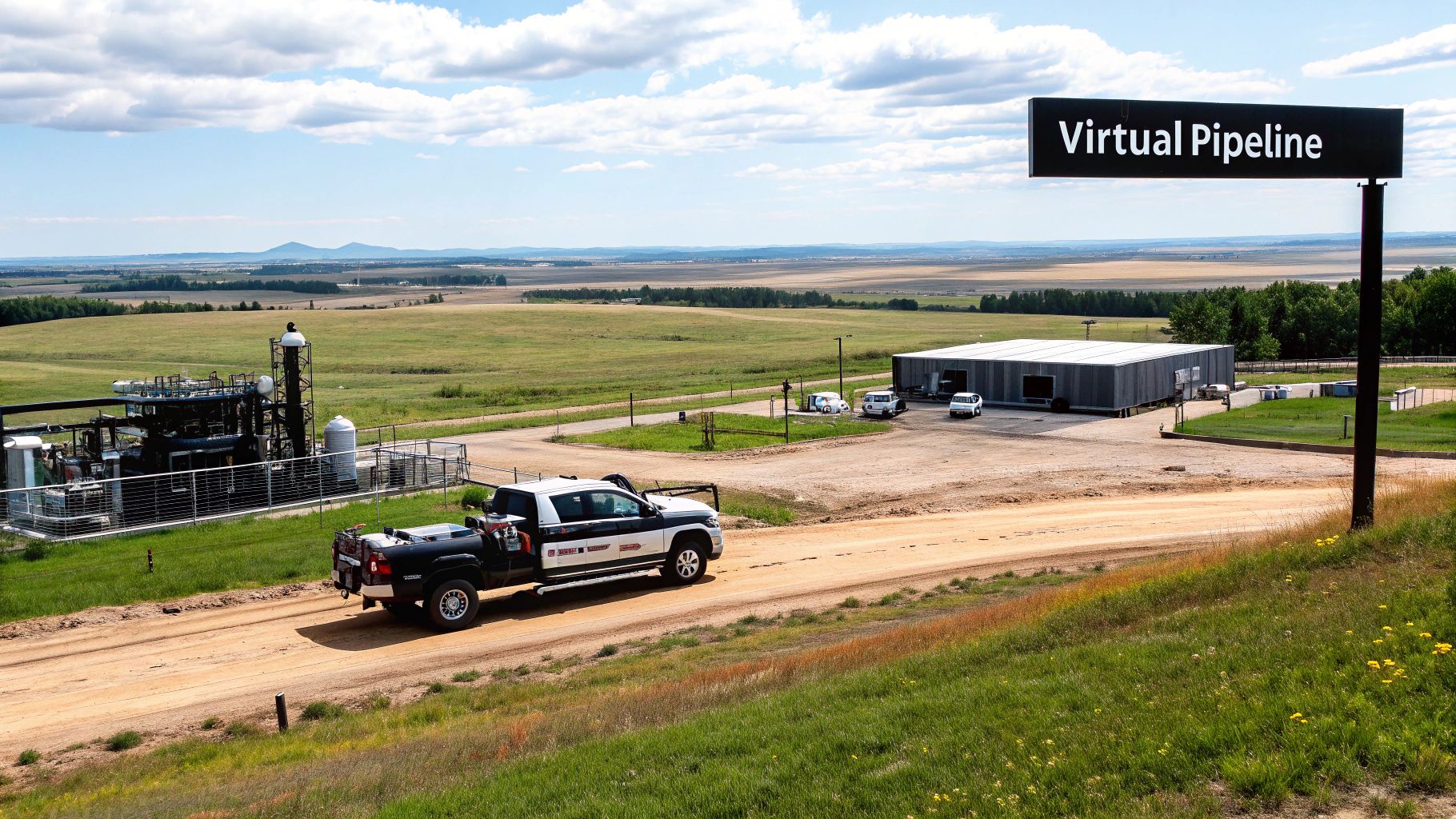
The best way to understand it is with a simple analogy. Imagine a remote town that needs fresh water, but there are no pipes running to it. Instead of undertaking a massive, multi-year construction project, you’d simply fill up water tanker trucks from a city source and drive them to the town.
A CNG virtual pipeline works on the exact same principle, just with natural gas.
It’s not one piece of equipment but a full end-to-end delivery chain. The process starts at a compression station, where natural gas is drawn from a primary pipeline and pressurized. This highly compressed gas is then loaded into specialized, high-pressure containers mounted on trailers.
These "pipelines on wheels" are then driven to their destination—whether that’s a manufacturing plant, a commercial bakery, or a new housing development beyond the reach of the existing gas grid.
The Core Components
So, what makes this system tick? A CNG virtual pipeline really boils down to three distinct, essential stages.
The entire virtual pipeline system is built around a few key pieces of hardware, each playing a critical role in moving energy from point A to point B safely and efficiently.
Key Components of a CNG Virtual Pipeline
| Component | Function |
|---|---|
| Compression Station | This is the starting point. It takes gas from a physical pipeline and compresses it to about 250 times atmospheric pressure. |
| Mobile Storage Modules | These are the high-tech, DOT-certified containers mounted on trailers that hold the pressurized CNG for transport. |
| Prime Mover (Truck) | The truck that hauls the mobile storage trailer, forming the "pipeline on wheels." |
| Pressure Regulating Unit (PRU) | Located at the customer's site, this unit safely decompresses the gas back to a low, usable pressure for their equipment. |
Each element works in concert to create a seamless flow of energy.
This entire setup offers incredible versatility. A fixed pipeline can take years and millions of dollars to build. In contrast, a CNG virtual pipeline can be set up quickly to handle immediate, temporary, or fluctuating energy needs.
A virtual pipeline brings clean energy to areas that lack traditional access. It is an essential logistics solution for remote industries, emergency power, and regions awaiting permanent infrastructure.
In the end, this mobile distribution model means businesses can keep operating and communities can continue to grow, all without being held back by their distance from the physical gas grid. It’s a practical and efficient solution built for today’s energy challenges.
How the Virtual Pipeline Process Works
Think of a CNG virtual pipeline as a way to turn a fixed, underground natural gas resource into a mobile energy source. The whole system is a carefully orchestrated process, moving gas from a major pipeline to a customer's doorstep without any permanent pipes connecting the two. It's a journey with three critical stages.
The entire operation comes down to pressurizing the gas, moving it safely, and then de-pressurizing it for use at its final destination. Every step demands specialized equipment and deep expertise to maintain a safe and reliable energy supply.
Step 1: Gas Compression
It all starts at a "mother station." This is a facility tapped directly into a high-volume, physical gas pipeline. Here, natural gas gets pulled from the main line and pushed into a series of powerful compressors, which squeeze the gas up to a pressure of about 3,600 psi (pounds per square inch).
Why so much pressure? Compressing the gas shrinks its volume dramatically. This allows a massive amount of energy to be packed into a manageable space. This highly pressurized CNG is then loaded into mobile storage modules—basically, specially-engineered, high-strength containers mounted right onto truck trailers.
Step 2: Mobile Transportation
Once they're filled, these trailers effectively become a "pipeline on wheels." Trucks take over, hauling the mobile storage modules over the road to deliver energy wherever it’s needed. This transport leg is the very heart of the CNG virtual pipeline, giving it the flexibility to reach remote industrial sites, utility customers, or communities far from the grid.
Of course, moving high-pressure gas isn't like a regular delivery. Operating a CNG virtual pipeline means following strict Hazmat shipping requirements to ensure safety and full compliance. Drivers are specially trained to handle these systems, and the trailers themselves are loaded with safety features built to manage the unique properties of CNG in transit.
At its core, the virtual pipeline is a logistics solution. Success hinges on precise scheduling, safe transport protocols, and smart routing to guarantee a continuous, uninterrupted flow of energy to the customer.
This infographic breaks down the three main stages of the virtual pipeline process, from compression to final delivery.
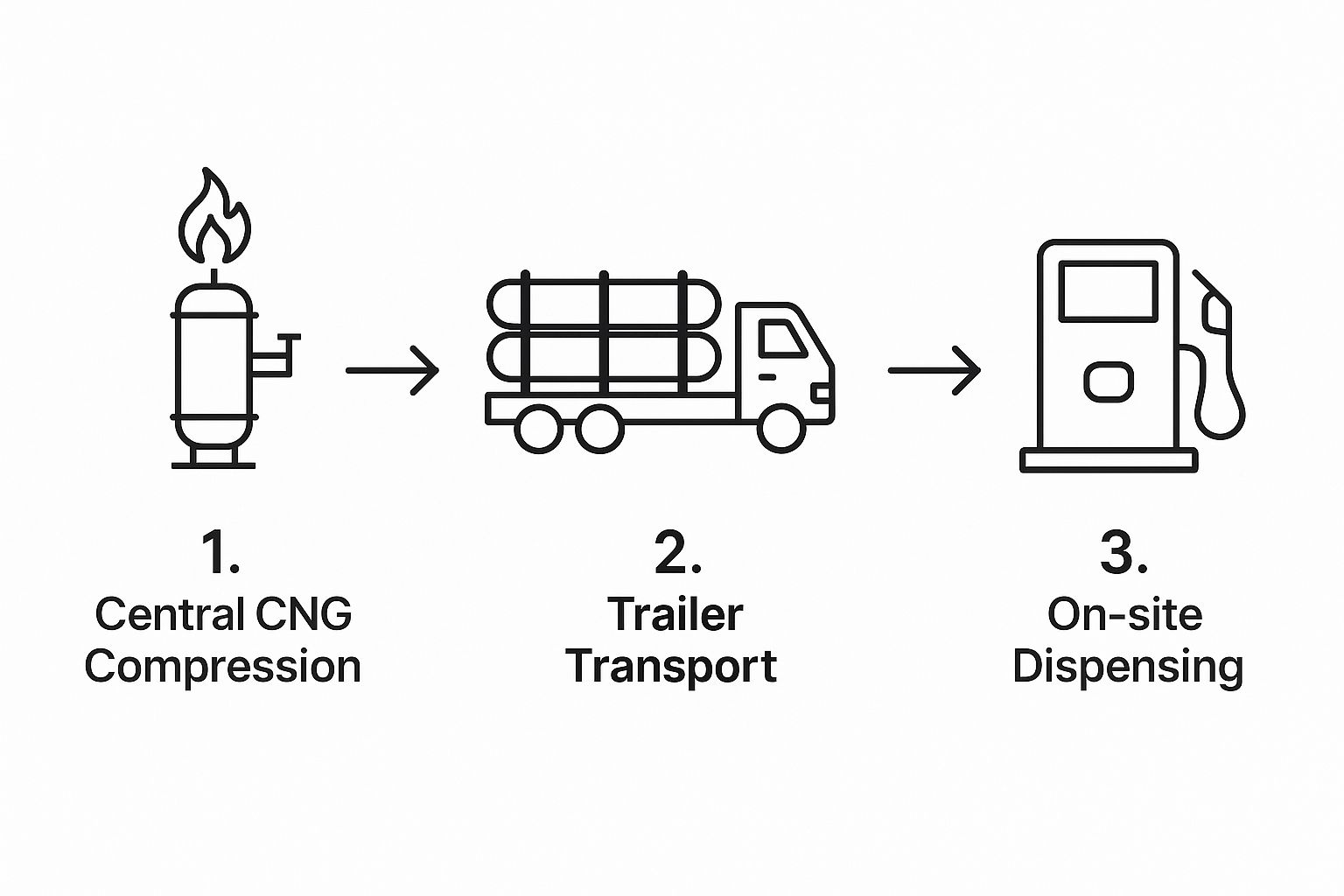
As you can see, the gas is compressed at a central facility, transported by specialized trailers, and then regulated for use on-site.
Step 3: Decompression and Last-Mile Delivery
When the truck arrives, the process is simply reversed at what’s known as a "daughter station." The high-pressure trailer hooks up to a Pressure Regulating Unit (PRU), which works like a sophisticated control valve. This unit carefully and safely steps the gas pressure all the way down from 3,600 psi to the low, usable level the customer’s equipment needs.
This final step completes the journey. The low-pressure gas flows from the PRU directly into the customer’s on-site network or appliances, providing the power they need to keep operations running. By constantly rotating trailers—dropping off a full one and picking up an empty one—providers like Blue Gas Express ensure the energy supply never skips a beat.
The Strategic Benefits of Virtual Pipelines
Beyond the nuts and bolts of how they work, the real story of a CNG virtual pipeline is what it can do for a business. For industries and utilities, this mobile energy solution opens up some serious financial, operational, and environmental doors that fixed infrastructure just can't. It’s a system designed for speed, adaptability, and getting things done.
The most obvious win? You get to skip the astronomical costs and endless waiting that come with building physical pipelines. Laying permanent pipe is a multi-year, multi-million-dollar headache, tangled up in red tape and geographic roadblocks. A virtual pipeline simply sidesteps that entire process.
This means you get access to energy now. A new facility can be powered by clean natural gas in a tiny fraction of the time, making it the perfect way to bridge the gap until a permanent line is built—or to serve locations where one is never going to be practical.
Unlocking Operational Flexibility
A virtual pipeline gives you incredible flexibility. Unlike a fixed pipe with a set capacity, a mobile CNG system can be scaled up or down at a moment's notice. If a factory hits its busy season and needs more fuel, we just send more trailers.
On the flip side, if demand drops, service can be scaled back without leaving expensive infrastructure sitting idle. That kind of agility is a game-changer for managing fluctuating energy needs without wasting money.
This on-demand scalability creates some huge operational advantages:
- Rapid Deployment: We can get energy to a new site in days, not years. This is essential for things like new construction projects or emergency situations where power is needed immediately.
- Temporary Supply: It's the perfect backup plan. If there's planned pipeline maintenance or a sudden outage, a virtual pipeline can keep a business running and prevent expensive downtime.
- Phased Growth: A company can start operations with a virtual pipeline and then switch to a physical one later on. This lets them match their energy spending with their actual revenue growth.
The real magic of a virtual pipeline is that it delivers energy exactly when and where it's needed. It takes natural gas from being a static, location-based resource and turns it into a flexible, on-demand commodity.
Environmental and Economic Advantages
Making the switch to natural gas via a virtual pipeline also delivers a powerful one-two punch of savings and sustainability. For any business currently relying on diesel or propane, CNG is a much cleaner and often cheaper fuel.
Natural gas burns cleaner, producing far lower emissions of carbon dioxide, nitrogen oxides, and soot. This helps companies meet tough environmental standards and hit their own sustainability targets. In that sense, the CNG virtual pipeline is a practical bridge, helping industries move toward a lower-carbon future without disrupting their operations.
From a purely financial standpoint, the model is a clear winner, especially for remote or off-grid sites. The cost of trucking in CNG is often much lower than the premium prices paid for other fuels in areas that are hard to serve. That difference goes straight to the bottom line, lowering operating costs and boosting profitability. It's a smart business decision that's also good for the planet.
Real-World Applications and Industries
The real power of a CNG virtual pipeline snaps into focus when you see where it's being used every day. This isn't just an interesting concept; it's a practical, on-the-ground solution that keeps the lights on for industries and communities alike.
Think of it as energy on demand, delivered exactly where traditional infrastructure can't reach. From factories far off the beaten path to city centers facing a sudden outage, virtual pipelines are quietly ensuring things keep running.
Powering Industrial and Manufacturing Operations
It’s common for large industrial plants—think food processing, glass manufacturing, or asphalt production—to be located in remote areas. The land is cheaper, but it often comes with a major catch: no connection to the natural gas grid. For years, the only options were more expensive and less environmentally friendly fuels like diesel or propane.
A CNG virtual pipeline flips that script entirely.
We can bring a steady, affordable supply of natural gas directly to these sites, fueling everything from industrial boilers to massive ovens. This shift does more than just slash fuel costs; it also helps these facilities reduce their emissions and meet ever-tightening environmental standards. This is one of many mobile solutions for the oil and gas industry that keep operations efficient.
Ensuring Energy Security for Critical Services
What happens when a physical pipeline needs maintenance or suffers an unexpected failure? The consequences can be severe, leaving entire neighborhoods and essential facilities in the dark. In these moments, a CNG virtual pipeline acts as a critical lifeline.
It’s an emergency response system for energy, ensuring continuity for:
- Hospitals and Healthcare Facilities: A constant gas supply is non-negotiable for heating, sterilization, and backup generators.
- Commercial Centers and Data Hubs: For businesses that rely on uninterrupted power, downtime means huge financial losses.
- Municipal Services: A virtual pipeline can keep a city’s bus fleet fueled and on the road, even when the primary supply is down.
By providing a rapid, mobile energy source, a virtual pipeline is like an insurance policy against infrastructure failure. It protects public safety and keeps the economy moving.
Supporting New Construction and Development
Developers often face a classic chicken-and-egg problem. They can't finish a new residential or commercial project without a gas connection, but waiting for the local utility to lay new pipes can stall a project for months. This means delays in everything from commissioning HVAC systems to getting occupancy permits.
Blue Gas Express bridges that gap. We can set up a temporary natural gas supply on-site, allowing construction to move forward without a hitch. Builders can keep their projects on schedule and on budget, turning a major roadblock into a simple logistical step.
This kind of flexibility is a big reason why the demand for virtual pipelines is growing so fast. The global market was valued at around USD 2.32 billion in 2023 and is projected to hit USD 3.65 billion by 2032. With a commanding 64% market share, CNG is clearly the backbone of this expansion.
Where Mobile Gas Distribution Is Headed
The CNG virtual pipeline isn't just a clever workaround; it’s a glimpse into the future of energy logistics. As the world pushes for more sustainable and flexible energy sources, mobile gas distribution is becoming less of a niche solution and more of a mainstream strategy. This isn't just a trend—it's a significant evolution driven by new technology and shifting economic realities.
The market numbers back this up. The global virtual pipeline industry is on a serious growth trajectory, projected to expand from $1.36 billion in 2024 to nearly $4 billion by 2034. That’s a compound annual growth rate of about 11.4%. Here in North America, we’re seeing a huge part of that growth, with the U.S. market alone expected to top $428 million by 2032. If you want to dig into the data, you can see the complete analysis in this virtual pipeline market growth report from Introspective Market Research.
Innovations Driving the Next Wave of Energy Delivery
So, what’s next for the CNG virtual pipeline? The focus is all on making the entire system lighter, smarter, and more efficient. Innovation is happening at every step of the process, from the materials used for storage tanks to the software coordinating deliveries.
Here’s where we’re seeing the biggest leaps forward:
- Lighter, Stronger Tanks: The move is toward advanced carbon fiber composites instead of traditional steel for storage tanks. These new materials are much lighter, meaning each trailer can haul more gas per trip. This directly translates to lower transportation costs and a smaller carbon footprint.
- Smarter Logistics: The future of managing these mobile pipelines is in AI-driven software. Imagine platforms that can reroute trucks in real-time to avoid traffic, predict when equipment needs maintenance before it breaks down, and manage gas inventory with pinpoint accuracy. That’s the kind of reliability and cost-efficiency we're moving toward.
- Better Compression & Decompression: New technologies are making the process of compressing gas at the source and reducing its pressure at the destination faster and more energy-efficient. This means quicker turnaround times at both ends, which boosts the productivity of the entire system.
This model of direct, on-demand delivery is already incredibly efficient, and these new technologies will only enhance it.
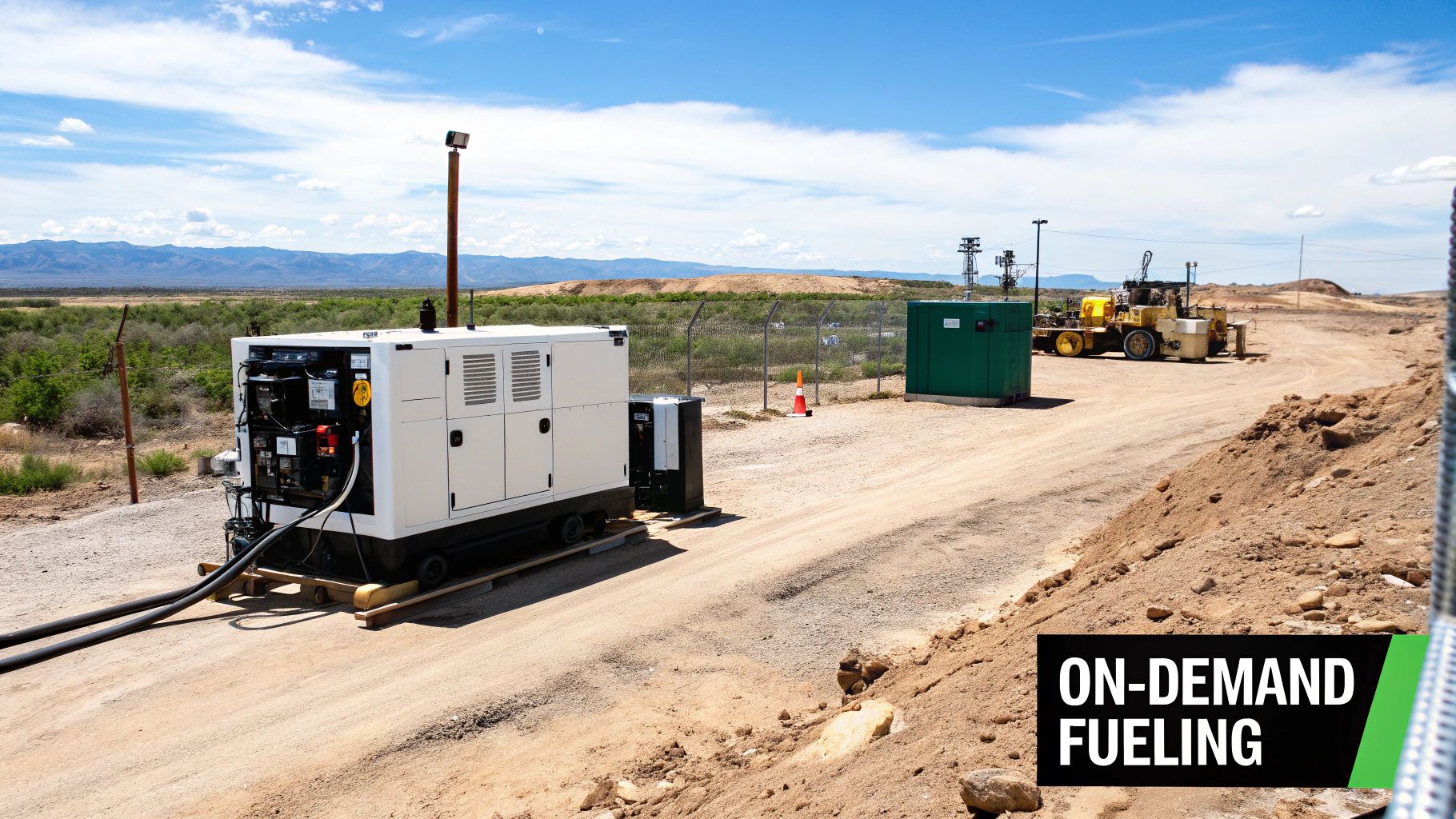
As you can see, the setup is straightforward: a specialized trailer hooks directly into an on-site unit, showing just how adaptable this direct-to-customer model is.
Growth Beyond North America
While North America is a major player, some of the fastest growth is happening in the Asia-Pacific region. As countries there industrialize and move away from coal, they need flexible energy solutions—fast. Virtual pipelines are allowing them to power new industrial parks and get energy to remote areas without waiting years to build permanent pipelines.
The virtual pipeline is becoming a cornerstone of global energy resilience. It offers the agility needed to react to sudden market changes, back up intermittent renewables, and maintain energy security in a world that’s anything but predictable.
At the end of the day, the CNG virtual pipeline is maturing from a niche player into a vital part of any modern, diversified energy strategy. It’s a technology perfectly suited for a future that demands speed, flexibility, and a much smarter way of getting clean energy where it’s needed most.
Got Questions? We’ve Got Answers
When you're exploring new energy solutions, it's natural to have questions. Let's dig into some of the most common ones about CNG virtual pipelines to give you a clear, practical understanding of how it all works.
Just How Safe Is a CNG Virtual Pipeline?
Extremely safe. In fact, safety is the cornerstone of the entire operation, not just an afterthought. Every piece of equipment—from the powerful compressors to the transport trailers and the pressure-regulating units at your site—is built to meet, and often exceed, strict federal and industry safety regulations.
The mobile storage units themselves are built like tanks, constructed from high-strength steel or advanced composite materials. They go through rigorous testing to ensure they can handle high pressures and withstand impacts on the road. On top of that, our drivers aren't just drivers; they're highly trained specialists who know exactly how to handle compressed natural gas and respond to any situation that might arise. This dedication to solid engineering and expert training has given the system an incredible safety record.
How Does This Compare to a Traditional Pipeline?
The biggest difference comes down to one thing: flexibility versus permanence. A traditional pipeline is a fixed, underground network built for moving massive amounts of gas continuously. It's a powerhouse of efficiency, but it comes with a massive price tag, years of planning, and disruptive construction.
A CNG virtual pipeline is all about logistics on wheels. We use trucks to bring the energy to you, which makes it the perfect solution for a few key scenarios:
- Hard-to-Reach Places: It can get natural gas to locations where building a physical pipeline just isn’t feasible, whether due to tough terrain or prohibitive costs.
- Temporary Demand: It's a fantastic fit for short-term projects, seasonal energy spikes, or as a reliable backup during a pipeline outage.
- Smart, Scalable Growth: Businesses can start using natural gas right away with a virtual supply, scaling up their energy use without having to wait years for permanent infrastructure to catch up.
Simply put, it provides speed and adaptability in situations where a fixed pipeline can't.
What’s the Difference Between CNG and LNG Virtual Pipelines?
Both are clever ways to transport natural gas without a physical pipeline, but they work with the gas in two different forms. The best choice usually depends on how far you're going and how much gas you need.
CNG stands for Compressed Natural Gas. We take natural gas and pressurize it, but it stays in its gaseous state. LNG, or Liquefied Natural Gas, is a whole different process. It involves chilling the gas down to a frosty -260°F (-162°C) until it turns into a liquid.
The big advantage of LNG is its density. Because it's a liquid, a single tanker can carry way more energy than a CNG trailer. This makes LNG the go-to choice for very long distances, especially for shipping overseas. For shorter hauls and smaller volumes, however, CNG is often the more cost-effective option because the process is less complex.
What Factors Into the Cost of the Service?
The final price tag for a CNG virtual pipeline service is shaped by a few key variables. The two biggest drivers are pretty straightforward: the total volume of gas you need and the distance we need to transport it. Just like any delivery, a larger order going a longer way will naturally cost more.
A few other factors also play a role:
- The current market price of natural gas.
- The costs associated with running the compression and decompression equipment.
- Standard trucking expenses like fuel and driver time.
- The length and specifics of your service contract.
Even with these variables, a virtual pipeline is often the most economical choice, especially when you compare it to the staggering cost of building a permanent pipeline or relying on more expensive fuels like propane or diesel. It gives you access to clean, reliable energy without the crippling upfront investment.
Ready to secure a reliable, temporary natural gas supply for your project? Blue Gas Express delivers mobile CNG solutions directly to your site, ensuring your operations continue without interruption. Contact us today to get started.