

Ever seen a gas station for natural gas vehicles? That's essentially what a CNG refueling station is—a high-pressure hub designed to fuel fleets with a cleaner, more affordable alternative to gasoline or diesel. Think of it as the linchpin for companies looking to cut fuel costs and shrink their carbon footprint. For commercial fleets, from city buses to heavy-duty trucks, this infrastructure is a game-changer.
What Are CNG Refueling Stations
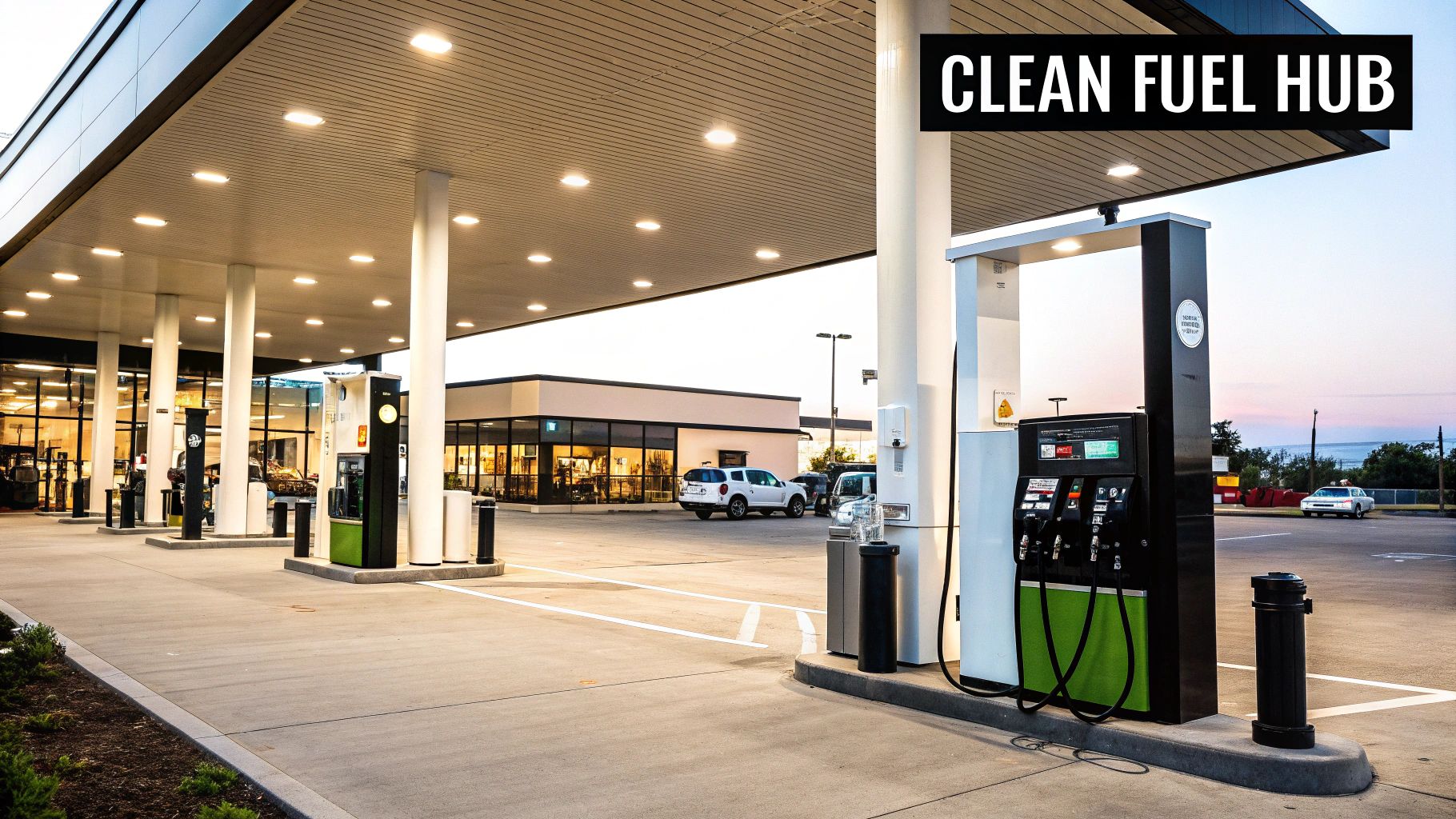
At its heart, a compressed natural gas (CNG) station is a specialized energy hub. It taps into a standard utility pipeline, takes the natural gas, and pressurizes it to extremely high levels. From there, it safely dispenses the compressed fuel into vehicles built to run on it. The goal is the same as any filling station—get vehicles fueled up and moving—but the process behind the pump is far more advanced.
These stations are the backbone for any organization shifting away from diesel and gasoline. For industries like construction, logistics, and public transit, reliable access to CNG is what unlocks major operational savings and helps them meet tough emissions standards. A well-designed station makes the promise of cheaper, cleaner fuel a practical reality.
The Growing Need For CNG Infrastructure
The move to alternative fuels is more than just a green initiative; it’s a smart financial decision. Natural gas has consistently been cheaper and more price-stable than diesel. When you're running a fleet of dozens of vehicles, that price difference adds up quickly, often saving companies hundreds of thousands of dollars a year.
As a real-world example, some municipalities have reported fuel costs as low as $1.10 per gallon equivalent for CNG—nearly half the price of conventional gasoline.
This economic edge is paired with significant environmental perks. Natural gas is one of the cleanest-burning fossil fuels out there, making it an effective tool for hitting sustainability goals and complying with air quality regulations.
Natural gas is critical to ensuring the reliability of our energy systems. As power consumption grows, so will the need for more natural gas and the infrastructure that supports its delivery to end-users, including vehicle fleets.
Permanent vs Mobile Refueling Solutions
When you're exploring a switch to CNG, you'll encounter two main types of refueling setups. Each serves a different purpose.
Permanent Stations: These are the heavy-hitters—fixed, high-capacity facilities built for the long haul. They are the perfect fit for large, centralized fleets that return to a home base every day, like a city bus depot or a major shipping company's distribution center.
Mobile Refueling Units: Think of these as "stations on wheels." They bring the fuel directly to where you need it, offering incredible flexibility for temporary job sites, disaster recovery, or even as a pilot program before investing in a permanent station.
Whether permanent or mobile, CNG stations are a key piece of our modern energy grid. They function as essential assets that often require robust critical infrastructure protection strategies to ensure they can reliably deliver cleaner fuel for our transportation needs.
How CNG Refueling Technology Works
Ever filled a scuba tank with compressed air? The basic idea behind a CNG refueling station is surprisingly similar, just scaled up for industrial use. It all starts with ordinary natural gas, the same kind you might use at home, flowing from a standard utility pipeline at a very low pressure.
This pipeline gas is the raw material. It’s pulled into the station and fed directly into the system's powerhouse: a high-duty, multi-stage compressor. This is where the magic happens, as this machine takes that low-pressure gas and gets it ready for a vehicle's tank.
The Compression and Storage Process
The compressor is the heart of the operation. It takes the incoming gas, which is typically around 60 psi (pounds per square inch), and squeezes it down until it reaches an impressive 3,000 to 3,600 psi. This massive increase in pressure is what packs a huge amount of energy into a small space, making it a viable vehicle fuel.
But where does all that pressurized gas go? It doesn't go straight to the pump. Instead, it's channeled into a series of interconnected, high-pressure storage tanks. This setup is known in the industry as a "cascade system."
Think of a cascade system like a series of water tanks on a hill, one slightly lower than the other. It allows the station to dispense fuel rapidly by drawing from the highest-pressure tank first, ensuring a fast, consistent flow without overworking the compressor for every single fill-up. It's all about efficiency.
The infographic below breaks down this straightforward, three-step journey from pipeline to pump.

As you can see, the process transforms low-pressure utility gas into a high-pressure fuel that's ready to be dispensed using one of two common methods.
Two Methods for Dispensing Fuel
Once a vehicle pulls up and connects to the dispenser, the station transfers the fuel using one of two different approaches. The right choice really comes down to how a particular fleet operates and what its daily schedule looks like.
1. Fast-Fill Refueling
This is exactly what it sounds like. It’s designed to be as quick and familiar as a regular trip to the gas station, filling up a vehicle in just 5-10 minutes. Fast-fill systems are the go-to solution for fleets that can't afford to sit still, like long-haul trucks or delivery vans that need to get back on the road immediately.
2. Time-Fill Refueling
Time-fill is the opposite—a slow and steady approach. It's perfect for vehicles that return to a central yard and park for long periods, such as city buses, garbage trucks, or school buses. Drivers simply hook up their vehicles at the end of a shift, and the tanks are gradually filled overnight. This method is gentler on the equipment and uses less energy.
This demand for flexible fueling options is a sign of a much larger trend. The market for these stations is booming, projected to hit $5 billion in 2025 and grow at a 15% CAGR through 2033. This growth is being driven by the transportation industry's search for cleaner and more cost-effective fuel sources, especially for heavy-duty commercial vehicles. You can dig into more statistics on the natural gas refueling station market on Acumen Research and Consulting.
At the end of the day, the technology behind a CNG station is built to be both powerful and adaptable. Whether a business needs the quick turnaround of a fast-fill system or the overnight efficiency of a time-fill setup, the core process remains the same—delivering a reliable, cleaner energy source for the vehicles that keep our economy moving.
Comparing Mobile and Permanent CNG Stations
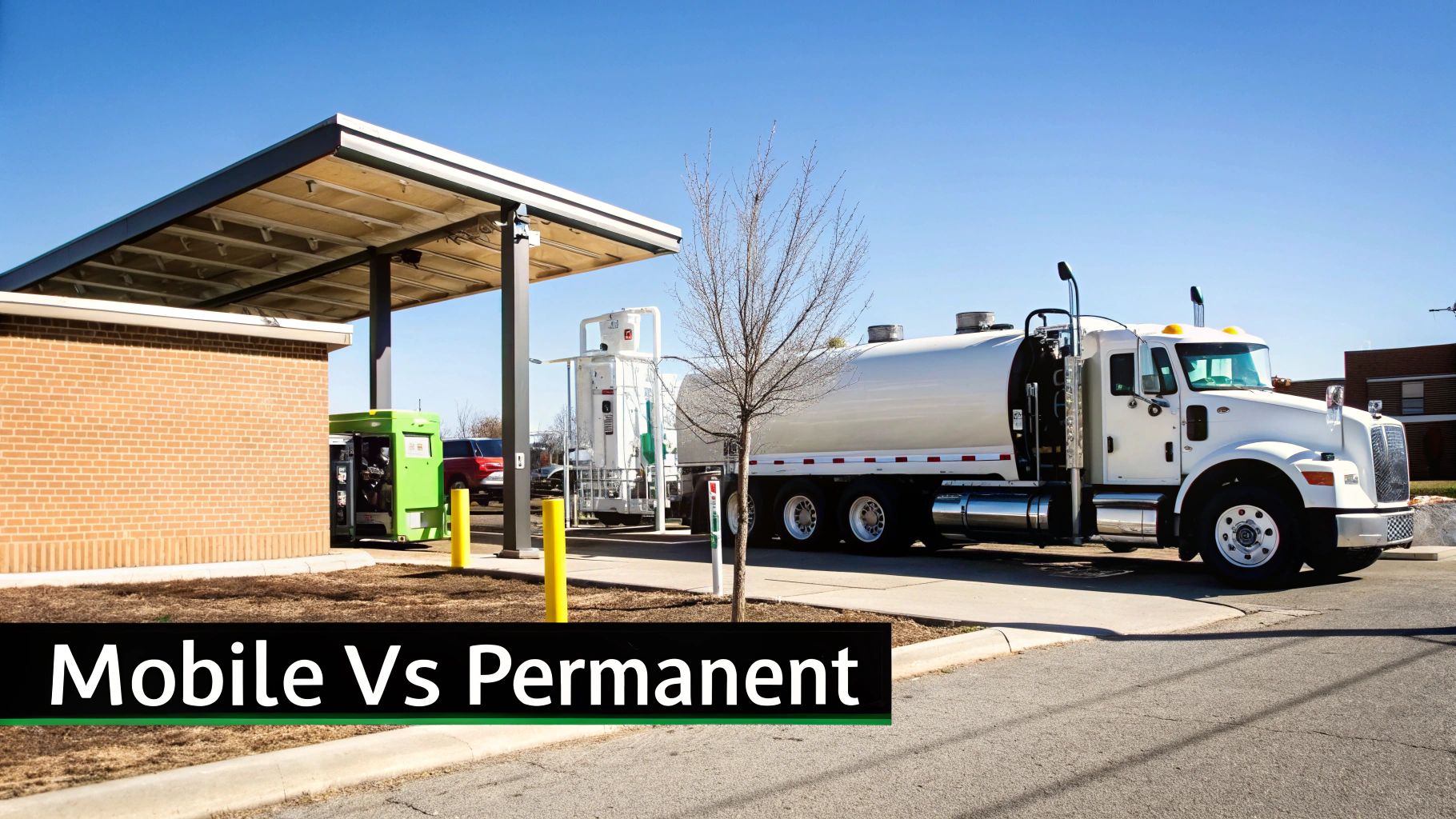
Choosing the right CNG infrastructure isn't a one-size-fits-all decision. The best path forward—whether it’s a permanent station or a flexible mobile unit—really comes down to your fleet's mission, your long-term goals, and what you need on the ground right now. Each option brings a totally different set of advantages to the table, and understanding them is key.
Permanent CNG refueling stations are the industry’s workhorses. Think of them as the established backbone for large, centralized fleets that run on predictable routes and schedules. You’ll see these powerful, high-capacity facilities at municipal bus depots, major logistics hubs, or large-scale waste management operations.
Their real strength is handling massive volume with incredible efficiency. They're built for the long haul, designed to refuel dozens, or even hundreds, of vehicles day in and day out.
The Case for Permanent CNG Stations
Putting in a permanent station is a serious capital investment, no doubt about it. But for the right kind of operation, the long-term payoff is huge. They are the clear choice for any organization with a big, stable fleet and a solid, long-term commitment to running on natural gas.
Once built, these stations deliver the lowest possible per-gallon fueling cost because they tap directly into an existing natural gas utility line. That direct connection cuts out the transportation costs you’d have with mobile fueling, which maximizes your savings over the life of the station. We've seen some counties with their own permanent stations drive their CNG costs down to an incredible $1.10 per gallon equivalent.
Here’s what makes a permanent station stand out:
- High Fueling Capacity: They can easily support huge fleets with either fast-fill or time-fill dispensers, making sure vehicles are always ready to roll for the next shift.
- Maximum Cost Efficiency: By connecting straight to the utility grid, they offer the most economical way to buy natural gas fuel, period.
- Centralized Operations: They are perfect for fleets that return to a home base every day, which creates a simple, predictable refueling routine.
Of course, this kind of setup requires a lot of planning. You have to find the right site near a suitable gas line, navigate zoning laws, and make a significant upfront investment. For instance, one county spent $1.4 million to install its quick-fill station—a big number, but one that was easily justified by the massive long-term fuel savings for its fleet of trucks and SUVs.
The Flexibility of Mobile Refueling
Now, let's talk about the complete opposite: mobile CNG refueling units. These are essentially "stations on wheels." They are all about agility and adaptability, bringing the fuel directly to wherever you need it most. This model is a total game-changer for any business that can't be tied down to a single location.
Mobile units are the perfect solution for temporary job sites, like large-scale construction projects or remote industrial operations where building permanent infrastructure just isn't practical. They can be deployed incredibly fast, getting a new fleet up and running without the months-long wait for a permanent station to be built.
Mobile CNG solutions bridge the gap between an immediate need and long-term planning. They let you start reaping the cost and environmental benefits of CNG today, without the huge commitment and timeline of a permanent build.
This flexibility also makes them an amazing tool for piloting a CNG program. You can test out the performance and ROI of natural gas vehicles on your actual routes before you sink millions into a permanent facility. If the pilot proves successful, you can move forward with a permanent station knowing it's a data-backed decision.
A Head-to-Head Comparison
To really make the right call, it helps to see the two options laid out side-by-side. The best fit really just depends on what you prioritize—is it speed, cost, scalability, or permanence?
The table below breaks down the key differences between a permanent installation and a mobile unit.
| Feature | Permanent CNG Station | Mobile CNG Refueling Unit |
|---|---|---|
| Deployment Speed | Slow (6-18 months) | Fast (Hours to days) |
| Upfront Cost | High capital investment | Low to moderate (Often leased) |
| Site Requirements | Fixed location with utility access | Any accessible location with space |
| Scalability | Fixed capacity, expandable later | Highly scalable, add units as needed |
| Best Use Case | Large, centralized fleets | Temporary sites, pilot programs, remote operations |
Ultimately, it all comes down to your operational reality. Permanent stations offer efficiency that’s hard to beat for established, high-volume fleets. But mobile cng refueling stations provide the speed and flexibility that modern businesses need to adapt to new projects and opportunities, making them a critical tool for both short-term needs and long-term strategic transitions.
Here’s the rewritten section, designed to sound completely human-written and natural.
Key Benefits of Adopting CNG Fuel
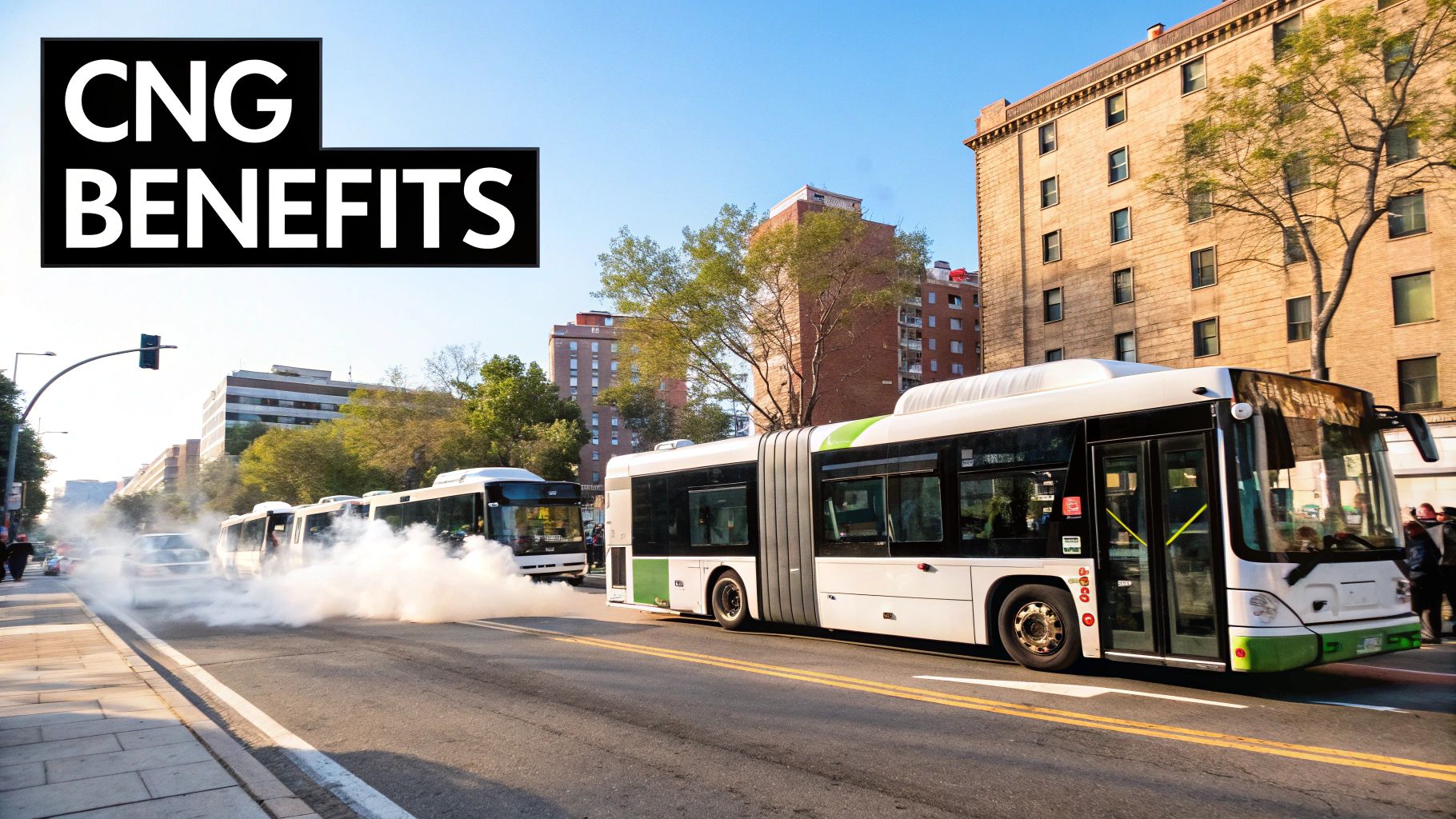
Understanding the tech behind CNG is one thing, but let's be honest—for any fleet manager, the real question is about the bottom line. What difference does switching to compressed natural gas actually make for your business? The answer is pretty compelling, and the benefits really boil down to three core areas: your budget, your environmental goals, and even your day-to-day operations.
These advantages build a powerful case for getting access to cng refueling stations, whether that means a permanent setup on your property or a more flexible mobile solution. It's about making a smart, strategic move that can pay you back for years.
Significant Cost Savings
The first thing most people notice—and the most powerful motivator for making the switch—is the dramatic drop in fuel expenses. Historically, natural gas has been far more price-stable and significantly cheaper than diesel or gasoline. When your fleet burns through thousands of gallons a week, those savings add up fast and go straight to your bottom line.
Just look at a real-world example from Hamilton County, Indiana. Over one period, they were paying an average of just $1.10 per gallon equivalent for CNG. At the same time, they were paying $1.91 for regular gasoline. That kind of price gap creates a clear and quick path to a solid return on your investment.
The global market is definitely responding to these numbers. While natural gas infrastructure is growing across the board, the demand for compressed natural gas solutions is especially strong. The global CNG market was valued at $159.87 billion in 2023 and is projected to hit $344.60 billion by 2030. That growth is being fueled by government incentives and the undeniable cost advantages for vehicle fleets. You can dig into more of these CNG market trends and forecasts at Grand View Research.
Powerful Environmental Advantages
Beyond the wallet, moving to CNG delivers some serious environmental wins. Natural gas is one of the cleanest-burning fossil fuels out there, making it a fantastic tool for companies trying to hit ambitious sustainability targets and keep up with ever-tightening air quality regulations.
When you run a CNG-powered fleet, you're putting far fewer harmful pollutants into the air. That commitment to cleaner air isn't just good for the planet; it's also a powerful branding tool that connects with customers and communities who care about corporate responsibility.
Here’s a quick breakdown of what that looks like:
- Greenhouse Gases: CNG vehicles can cut greenhouse gas emissions by up to 20% compared to their diesel counterparts.
- Nitrogen Oxides (NOx): These smog-forming pollutants are slashed, with reductions often hitting over 80%.
- Particulate Matter: That black soot you see from diesel engines? It's virtually eliminated with CNG, which is a huge win for public health.
This cleaner profile helps fleets not only meet but often exceed local and federal emissions standards, helping you avoid fines and boost your public image.
Adopting CNG is a direct and practical step toward decarbonization. It allows companies to make a measurable impact on their environmental footprint while simultaneously improving their operational efficiency.
Key Operational Perks
Finally, a few operational advantages make managing a CNG fleet a bit easier. One of the first things you'll notice is the noise—or lack thereof. CNG engines run significantly quieter than diesel engines, which is a massive plus for vehicles operating in residential areas, like sanitation trucks or delivery vans on early-morning routes.
Less noise pollution makes for a better environment for your drivers and the communities you work in. On top of that, the cleaner burn of natural gas can mean less wear and tear on engine components over time. Because it burns so cleanly, CNG reduces carbon buildup, which can translate into lower long-term maintenance bills and a longer engine life for well-cared-for vehicles.
When you add these day-to-day wins to the major cost and environmental benefits, it builds a pretty convincing argument for making the switch.
Planning Your CNG Station Deployment
Putting in a CNG refueling station is a lot more involved than just picking a spot and flipping a switch. It takes serious planning to get it right. Think of it like building a custom home—the blueprint and foundation work you do upfront determines whether you end up with a solid investment or a money pit.
From scouting the perfect location to lining up your financing, every decision you make now will impact the success of your station for years to come. This kind of careful planning is more important than ever as the industry continues to expand. The global market for natural gas fueling stations is expected to hit $47.78 billion in 2025 and is projected to grow at a 6.6% clip every year through 2033. This isn't just a trend; it's a clear signal that more fleets are moving away from diesel. You can dig into the numbers yourself in these market projections for natural gas fueling stations.
Site Selection and Regulatory Hurdles
Your first big decision is where to build, and this can make or break the entire project. There’s one golden rule here: you absolutely must be near a suitable natural gas utility line. If you don't have easy access to a pipeline with the right pressure and volume, your costs will explode, and the project could become dead on arrival. The site also needs enough room for all the hardware—compressors, storage tanks, dispensers—plus enough space for trucks to get in and out safely.
Once you’ve found a promising piece of land, it’s time to dive into the paperwork. Navigating local regulations is a huge part of the process. You'll typically be dealing with:
- Zoning Laws: Making sure the property is zoned for the right kind of industrial or commercial use.
- Permitting Requirements: This isn't just a building permit. You'll likely need environmental clearances and special approvals for handling high-pressure gas.
- Safety Codes: You’ll need to meet strict safety standards that dictate everything from where equipment can be placed to what kind of emergency shutdown systems are required.
Planning for Future Growth and Scalability
It’s easy to get tunnel vision and only plan for the fleet you have today. But what happens in five years when your fleet has doubled in size? The smartest approach is to plan for scalability from the very beginning. A modular station design is a great way to do this, letting you add more capacity as your needs grow.
Think of it like building with LEGOs. You can start with a basic setup—one compressor and a small storage cascade. Later, as you add more vehicles, you can simply click on another compressor or more storage tanks without having to tear everything down and start over.
This kind of forward-thinking saves you from getting stuck with an undersized station that will cost a fortune to upgrade down the line. Build for your future, not just your present.
Mapping Out Your Financial Roadmap
Finally, let's talk money. There's no sugarcoating it—the upfront cost of a permanent CNG station can be steep. You have to account for the equipment, construction, and installation. But the good news is, you don't have to foot the entire bill alone.
Plenty of federal and state programs offer grants, tax credits, and other incentives to help companies switch to cleaner fuels. For instance, businesses can look into programs like California's Alternative Energy and Advanced Transportation financing programs for financial support. The final step is to run the numbers on your return on investment (ROI). By calculating how much you'll save on fuel over time, you can pinpoint your breakeven point and show key stakeholders that the project isn't just an expense—it's a smart financial move.
Got Questions About CNG Refueling?
Switching to a new fuel is a big decision, and it’s natural to have questions. Even after seeing all the benefits, fleet managers usually want to know about the day-to-day realities. Let's tackle some of the most common questions about refueling times, safety, and what it takes to get a station on your property.
Getting these practical details straight is the best way to see how a CNG station would fit into your operation.
How Long Does It Take to Fill Up a CNG Vehicle?
This is probably the number one question we get, and the answer is: it depends on the type of station you choose. There are two main approaches, each built for a different kind of fleet.
Fast-Fill Stations: Think of these just like a regular gas station. You pull up, connect the nozzle, and you're back on the road in about 5-10 minutes. This is the perfect setup for vehicles that can't afford long downtimes, like delivery vans or over-the-road trucks.
Time-Fill Systems: This is the ideal solution for fleets that return to a central yard every night. You simply park the vehicles, hook them up, and they refuel slowly overnight. It's a much more energy-efficient process and works great for school buses, city buses, and waste-hauling trucks that have predictable downtime.
Are CNG Refueling Stations Safe?
Absolutely. Safety isn't an afterthought; it's built into every part of a CNG station. These systems are designed to meet strict federal and industry standards, with multiple safety measures working together.
The fuel tanks on the vehicles themselves are incredibly tough—often far more puncture-resistant than a standard gasoline tank. The stations are also loaded with safety gear, including emergency shutdown systems, sensitive methane detectors, and pressure relief valves to prevent any issues.
One of the biggest built-in safety features of natural gas is its physics. It’s lighter than air. So, in the unlikely event of a leak, the gas just rises and dissipates into the atmosphere. It doesn't pool on the ground and create a lingering fire hazard like gasoline or diesel.
Can I Just Install a CNG Station Anywhere?
Not quite. Where you can build a station depends heavily on the site itself. The most critical factor is having access to a natural gas utility pipeline that can supply enough volume and pressure to run the compressor. Without that, a permanent station just isn't feasible.
On top of that, you have to consider local zoning laws, building codes, and safety regulations. These rules govern everything from setbacks from property lines to the specific construction materials you can use. You also need enough room for the equipment itself and for your trucks to get in and out safely. This is exactly why working with an experienced infrastructure partner is so important—they know how to navigate all these requirements and find the right spot.
Is a delay in your gas line installation or a temporary outage putting your project on hold? Don't let it stop you. Blue Gas Express delivers mobile CNG and LNG solutions to keep things moving. We bring temporary natural gas right to your job site across the Carolinas, Tennessee, and Virginia. Contact us today to keep your project right on schedule.