

Picture this: you pull into your driveway after a long day, plug in your car, and wake up the next morning to a full tank. While that might sound like the daily routine for an electric vehicle owner, it’s a reality for anyone with a CNG home fuel station.
This setup is essentially your own personal fuel pump, right in your garage. It connects directly to your home's natural gas line, the very same one that fuels your furnace or stove, and handles the rest while you sleep.
Your Personal Gas Station in the Garage
Think of a home CNG refueling station as a way to turn your garage into a private, incredibly convenient fueling hub. No more detours or waiting in line at the pump. You refuel on your own schedule—overnight, while you're at work, or just relaxing at home. It’s a simple change, but one that completely redefines how you manage your vehicle's fuel.
So, how does it work? A specialized compressor unit, typically no bigger than a small filing cabinet, is installed in your garage. This machine taps into your home’s low-pressure natural gas supply and, over several hours, compresses it to the high pressure needed for natural gas vehicles (NGVs)—around 3,600 psi. A dedicated hose then delivers the pressurized gas straight into your car’s tank.
The Driving Force Behind Home CNG
Why would someone want their own fueling station? The idea is catching on for a few powerful reasons that speak directly to concerns many of us have about money, the environment, and our own time.
- Serious Fuel Cost Savings: Let's be honest, gas prices are a headache. Natural gas is consistently cheaper than gasoline or diesel, and fueling up at home can slash your annual fuel bill by 40-50%. That’s real money back in your wallet.
- A Lighter Environmental Footprint: CNG is a much cleaner fuel. It produces 20-30% fewer greenhouse gas emissions compared to gasoline. By making the switch, you're directly helping to improve the air quality in your own neighborhood.
- The Ultimate Convenience: Imagine never having to make a special trip to the gas station again. For busy commuters or small business owners who rely on their vehicles, getting that time back is invaluable.
This isn't just a niche trend. The global market for compressed natural gas was valued at USD 92.21 billion and is expected to climb to USD 121.42 billion by 2032. As you can read in this CNG market research from Data Bridge, it's a clear sign that people worldwide are looking for smarter, cleaner, and more affordable energy.
A CNG home fuel station is more than just a cool gadget for your garage; it's a practical step toward energy independence. You get to control your own fueling schedule and costs, turning a regular chore into a simple, set-it-and-forget-it task.
Before we dive deeper, let's look at the big picture. Installing a home CNG station is a significant decision with clear advantages and some important considerations.
Home CNG Fueling At a Glance
| Aspect | Key Benefits | Main Challenges |
|---|---|---|
| Cost | Drastically lower fuel costs (40-50% savings). | High upfront equipment and installation cost. |
| Convenience | Refuel overnight at home; no more gas station trips. | Refueling is slow, typically taking several hours. |
| Environment | 20-30% fewer emissions than gasoline or diesel. | Relies on the natural gas infrastructure. |
| Installation | Uses existing home natural gas line. | Requires professional installation, permits, and inspections. |
| Vehicle | Ideal for high-mileage drivers or home-based fleets. | Only works with dedicated NGVs or converted vehicles. |
This table gives you a quick snapshot, but as you can see, the benefits of convenience and long-term savings are weighed against the initial investment and slower refueling time.
How Your Home CNG Refueling System Actually Works
Ever wondered how you can turn the same natural gas that heats your water into fuel for your truck? It's less complicated than you might think. Imagine the main compressor unit as a super-powered, automated pump that works diligently overnight.
It starts by tapping into your home's existing low-pressure natural gas line—the very same one that runs to your furnace or stove. This simple, professional connection is the first step in creating vehicle-grade fuel right in your own garage.
From there, the system gets to work, compressing the gas up to the high pressure your vehicle needs. This isn't a quick, forceful process. Instead, the gas is pressurized methodically in stages, which is both safer and more efficient. It gradually builds up to about 3,600 pounds per square inch (psi), the pressure needed to pack enough fuel into your tank for a useful driving range.
This diagram shows just how simple the nightly routine is.
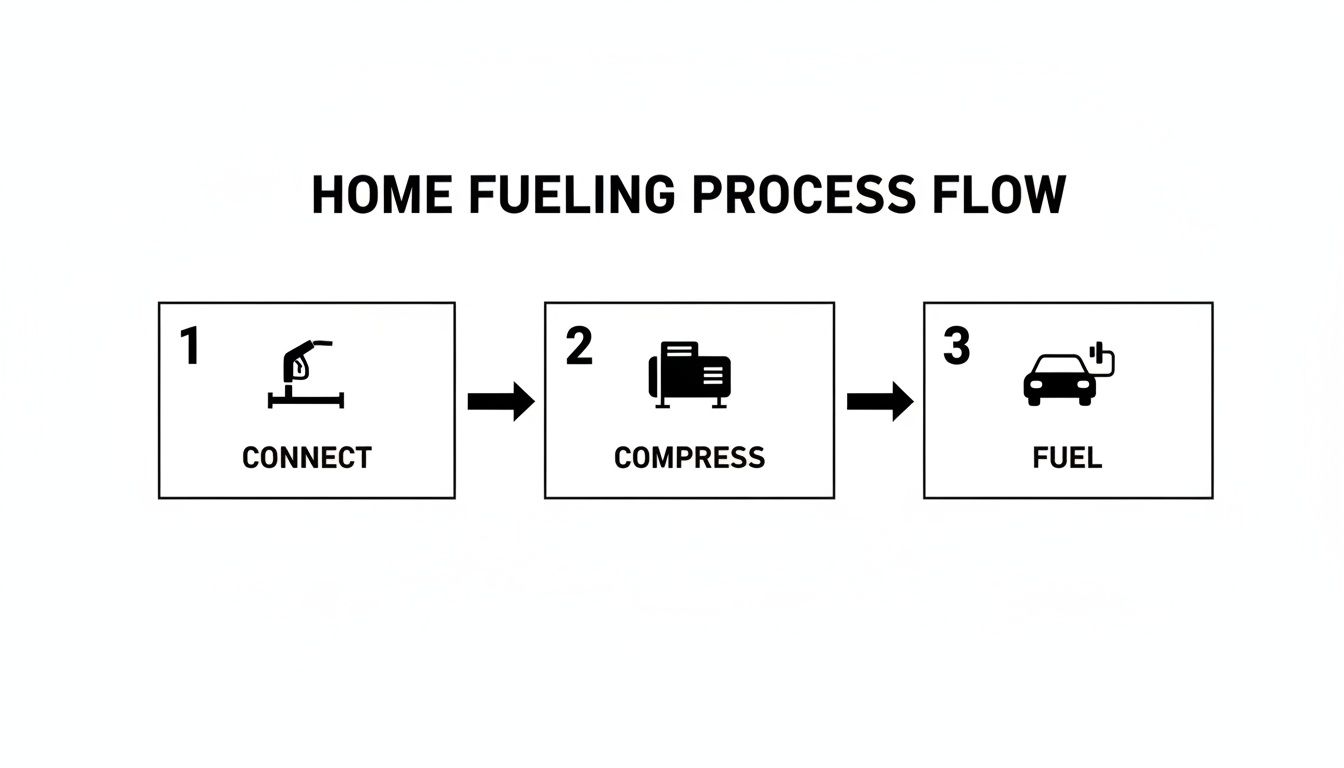
As you can see, the process is designed to be totally hands-off. You connect the hose, and the compressor does all the heavy lifting, moving fuel from your home's gas line directly to your vehicle.
The Core Components Explained
A CNG home fuel station isn't some monolithic piece of equipment. It's actually a system of three key parts working together seamlessly. Each piece has a specific role to ensure the gas is compressed, cleaned, and delivered safely. Knowing how they work takes the mystery out of the technology.
Here are the three main components:
- The Compressor: This is the heart of the whole operation. It's an electric-powered unit that pulls in the low-pressure gas and gets to work pressurizing it. These compressors are built for the long haul and are surprisingly quiet—many are no louder than a modern dishwasher.
- The Dryer (or Filter): Before the gas gets fully compressed, it has to pass through a crucial filtration stage. The dryer strips out any moisture or impurities. This is a critical step that prevents corrosion and keeps your vehicle's sensitive engine and fuel system in top shape.
- The Dispensing Equipment: This is what you handle—the specialized high-pressure hose and a nozzle built to lock securely onto your vehicle’s fueling port. It's packed with safety features like breakaway couplings and check valves to make sure no gas escapes.
At its core, a home CNG system simply purifies and squeezes a large volume of natural gas into a much smaller, pressurized space. It’s the exact same principle commercial stations use, just smartly scaled down for safe and efficient overnight fueling at home.
The Step-by-Step Refueling Process
So, what’s it actually like to use one of these every day? The experience is designed to be as effortless as plugging in an electric vehicle. You don't have to watch gauges or fiddle with valves.
Here’s how the process breaks down:
- Connect to Your Home's Gas Supply: First, a certified technician makes a permanent connection from your home's gas plumbing to the compressor unit. This is a one-and-done setup that feeds the entire system.
- The Compressor Kicks On: Once you connect the hose to your vehicle, the compressor automatically starts its slow-fill cycle. It draws in gas and begins its multi-stage compression, which typically takes 6 to 10 hours, depending on how much fuel you need.
- Filtration and Drying: As the gas makes its way through the system, the built-in dryer scrubs it clean. This guarantees that only pure, dry natural gas makes it into your vehicle, which is essential for protecting its components and getting the best performance.
- Automatic Shut-Off: When your vehicle's tank hits the target pressure of 3,600 psi, the system shuts itself off completely. There’s zero risk of overfilling. You can literally connect it, walk away, and wake up to a full tank ready for the day ahead.
Is a Home CNG Station a Good Fit for You?
The idea of having your own personal fuel station is compelling, but a CNG home fuel station isn't a one-size-fits-all solution. It's designed for a very specific kind of driver and property. Before you start thinking about the investment, let's figure out if this technology actually makes sense for your property, your car, and your daily routine.
This is about more than just wanting cheaper fuel. It’s about making sure you have the right setup and driving habits to see a real return on your investment. Let's break down what you'll need.
First Things First: The Home Infrastructure Checklist
Before you even start looking at equipment, your home has to pass a few basic checks. These aren't suggestions; they're the absolute must-haves for a safe and functional installation.
- You Need a Natural Gas Line: The whole system runs on the natural gas that already feeds your furnace or water heater. If your home uses propane, heating oil, or is all-electric, you’re at a major roadblock. Getting a utility to run a new gas line can be a massive and expensive undertaking.
- You Need Enough Electrical Juice: These compressors are power-hungry. You’ll need a dedicated 240-volt circuit, the same kind that powers an electric clothes dryer or stove. An electrician will likely need to install a new circuit and outlet right where the unit will live.
- You Need the Right Space: The compressor needs a permanent home. An attached or detached garage is usually the best spot because it needs to be well-ventilated but also protected from rain and snow. It also has to be a clear, dedicated space, away from clutter or anything flammable.
If you can’t say "yes" to all three of these, a home CNG station probably isn't in the cards for you. If you can, then it's time to look at the next piece of the puzzle: your driving habits.
Just having the infrastructure isn't enough. The real value of a home CNG station is unlocked when your daily driving habits generate enough fuel savings to justify the upfront cost.
Are You the Right Kind of Driver?
A personal fueling station really pays off for people who burn through a lot of fuel. The more you drive, the faster you’ll make your money back from the savings.
See if you fit one of these profiles:
- The Super-Commuter: Do you have a seriously long drive to work every day? If you’re racking up 15,000 miles or more each year, the savings can be huge. Many people in this situation find the system pays for itself in just a handful of years.
- The Small Business Owner: If you run a small fleet—think plumbing vans, landscaping trucks, or local delivery vehicles—this is a game-changer. You can refuel all your vehicles overnight at your shop or home, cutting out those time-wasting, costly trips to public fueling stations during the workday.
- The Visionary Home Builder: For developers, a pre-installed CNG home fuel station can be a powerful selling point. It’s a premium, green-tech amenity that grabs the attention of eco-conscious buyers and makes a property stand out from the competition.
This isn't just a niche trend. The global market for CNG is expected to more than double, growing from USD 159.87 billion to an estimated USD 344.60 billion by 2030. That growth is fueled by real-world benefits: CNG can slash fuel costs by 40% compared to gasoline while also cutting down on harmful emissions. You can dig into the numbers in this Grand View Research CNG market analysis, which lays out the economic and environmental advantages.
Understanding Slow-Fill vs. Fast-Fill
One last thing to get straight is the type of fueling you'll be doing. A home CNG station is what’s known as a slow-fill system. That means it’s built to refuel your vehicle slowly and steadily, usually over a period of 6 to 10 hours.
This is by design. A slow-fill system uses a smaller, quieter, and far more affordable compressor that’s perfect for plugging in overnight. You just "set it and forget it." The fast-fill systems at commercial gas stations, which can fill a tank in minutes, rely on enormous, loud, and incredibly expensive machinery that simply isn't feasible for a home garage. Knowing and accepting that you're getting a slow-fill system is key to being happy with your decision.
Calculating the Costs and Return on Investment
Let's get down to brass tacks: what does a home CNG station really cost, and when does it start paying you back? Thinking about this as a financial investment is key. It’s not just about the incredible convenience of fueling up in your own garage; it's about making a smart decision that saves you serious money every time you drive.
The heart of the system, the compressor unit, is where the biggest part of your initial investment will go. A smaller, slower unit might run you a few thousand dollars, while a top-of-the-line model with faster fill times could be over ten thousand. The right choice really hinges on your vehicle and how much you drive every day.

But buying the compressor is just step one. To get the full picture, you need to account for a few other essential costs that ensure your setup is safe, legal, and ready to go.
Breaking Down the Full Installation Cost
Getting a complete and accurate budget means looking beyond the hardware. Professional services and potential upgrades to your home's infrastructure are just as important.
- Professional Installation: This is not a DIY project. You absolutely need a certified technician to handle the high-pressure gas lines and electrical work, which will typically run between $1,500 and $3,000.
- Electrical Upgrades: These compressors are powerful and require a dedicated 240-volt circuit. If your garage doesn't have one, an electrician will need to install it, adding another $500 to $1,500 to the total.
- Permits and Inspections: Your local city or county will want to sign off on the installation to make sure it meets all safety codes. Budgeting $200 to $500 for these administrative fees is a good rule of thumb.
It’s interesting to note that there's some overlap here with other home energy upgrades. For example, many of the cost considerations for installing an EV charger at home involve similar electrical and permitting steps.
When you add it all up, the total upfront cost for a CNG home fuel station—including the equipment, labor, and permits—usually lands somewhere between $7,000 and $15,000. It's a significant investment, no doubt, but for anyone who puts a lot of miles on their vehicle, the payback can be surprisingly quick.
Estimated Cost and ROI Breakdown
To make this tangible, let's run the numbers for a typical high-mileage driver. This simple breakdown shows just how quickly the annual fuel savings can offset the initial setup cost.
| Cost Component | Estimated Range | ROI Factor |
|---|---|---|
| Compressor Unit | $4,000 – $10,000 | One-time hardware cost |
| Installation & Electrical | $2,000 – $4,500 | One-time service cost |
| Permits & Fees | $200 – $500 | One-time administrative cost |
| Total Upfront Cost | $7,000 – $15,000 | Initial Investment |
| Annual Fuel Savings | $2,500 – $5,000+ | Annual Return |
| Payback Period | 2.5 – 4 years | Time to Break Even |
As you can see, once you’re past that break-even point, the savings go directly into your pocket year after year.
A Real-World ROI Scenario
Let’s put this into a real-world context. Imagine a consultant named Sarah who drives her CNG pickup truck for work, racking up about 30,000 miles per year. Her truck gets an average of 15 miles per gallon equivalent (GGE).
Here’s a look at her annual fuel bill:
- With Gasoline: At an average of $3.75 per gallon, Sarah would be spending $7,500 on fuel each year (30,000 miles / 15 mpg * $3.75).
- With Natural Gas: Fueling at home, her cost drops to $1.80 per GGE. Her annual fuel expense plummets to just $3,600 (30,000 miles / 15 mpge * $1.80).
Just by making the switch, Sarah saves a whopping $3,900 in one year. If her all-in installation cost was $11,000, she’d pay for the entire system in just under three years. After that, the $3,900 she saves every year is pure financial upside, slashing her transportation costs for as long as she owns the truck.
This is how a CNG home fuel station goes from a major purchase to a powerful money-saving tool. The initial sticker shock fades fast when you see the long-term benefits of fuel independence and thousands of dollars in savings.
Keeping Your System Safe and Sound
Bringing a fueling station into your garage might sound a little intimidating, but safety is the absolute number one priority. Let's be clear: modern CNG systems are designed with so many layers of protection they're just as safe as your furnace or water heater. It all comes down to understanding how natural gas works and sticking to the strict safety codes that govern every installation.
First off, natural gas itself has a built-in safety feature. Unlike gasoline, which pools on the ground and creates a dangerous fire hazard, natural gas is lighter than air. In the incredibly rare event of a leak, it just floats up and away, quickly dissipating into the atmosphere instead of hanging around where it could ignite.
Of course, we don't just rely on physics. Your cng home fuel station is packed with active safety technology that acts like a vigilant watchdog, constantly monitoring the system and ready to react in a split second.
Built-in Safety Features
Think of these as the system's automatic reflexes. They're always on, working in the background to keep everything secure without you having to do a thing.
- Automatic Shut-Off Valves: The moment the system senses any unusual pressure or flow, it instantly slams the door shut, stopping gas from entering from your home's main line.
- Pressure Monitors: The compressor keeps a constant eye on its own internal pressure. If it ever climbs beyond safe limits, the whole unit shuts down immediately to prevent any issues.
- Methane Detectors: Many setups include dedicated methane sensors in the garage. They work just like a smoke detector, sounding a loud alarm if they sniff out even the tiniest amount of natural gas in the air.
Alongside these automated systems, it's always smart to have a plan for proactive checks. Regular gas leak detection is a crucial part of home safety for anyone using natural gas.
Navigating the Rules and Regulations
A cng home fuel station isn't a DIY project you can buy on Amazon. The entire process, from planning to installation, is tightly controlled to make sure it's done right and, most importantly, safely.
The rulebook for these installations is NFPA 52, the Vehicular Gaseous Fuel Systems Code. This is the gold standard across the country, and any certified installer worth their salt knows it inside and out. It dictates everything—where the unit can be placed, what kind of ventilation is needed, and even the specific pipes and electrical wiring required. Your city or county will also require permits and send out an inspector to sign off on the job, confirming that every last detail meets code.
Following these codes isn't just a suggestion—it's the law. This ensures every installation is done properly, giving you the ultimate peace of mind that your system is reliable and safe for daily use.
Your Simple Maintenance Checklist
While a certified pro will handle the heavy lifting, a little bit of routine care on your part goes a long way. The good news is that it's incredibly easy and mostly just involves using your eyes and ears.
Here’s a quick checklist to keep in mind:
- Monthly Visual Inspection: Once a month, just give the compressor and hoses a quick once-over. Look for any obvious wear and tear, corrosion, or damage. Make sure all the connections are snug and the area around the unit is clean and uncluttered.
- Filter Changes: Your CNG compressor has filters to keep the gas pure, much like your furnace. A technician will typically swap these out for you during their annual service visit.
- Listen for Unusual Noises: You'll quickly get used to the normal hum of the compressor. If you ever hear any weird grinding, rattling, or hissing, shut the system down immediately and give your service technician a call.
- Annual Professional Service: This one is key. Have a certified technician come out once a year to give the system a thorough check-up. They’ll test all the safety sensors and shut-off valves, inspect for wear, and keep your station running in top condition for years to come.
Solving Gas Delays for Builders and Developers
While a personal CNG station is a neat idea for homeowners, the same technology offers a game-changing solution to one of the biggest headaches in construction: utility delays.
Picture this: you've just finished a brand-new housing development. The homes are perfect, the roads are paved, but the entire project is at a standstill. The reason? The permanent natural gas line from the utility company is months behind schedule.
This one bottleneck can stop everything. You can't fire up the HVAC systems, you can't test the backup generators, and you definitely can't pass final inspections. Most critically, homeowners can't move in, which means no Certificates of Occupancy are issued. Suddenly, your project's timeline and budget are in serious jeopardy.
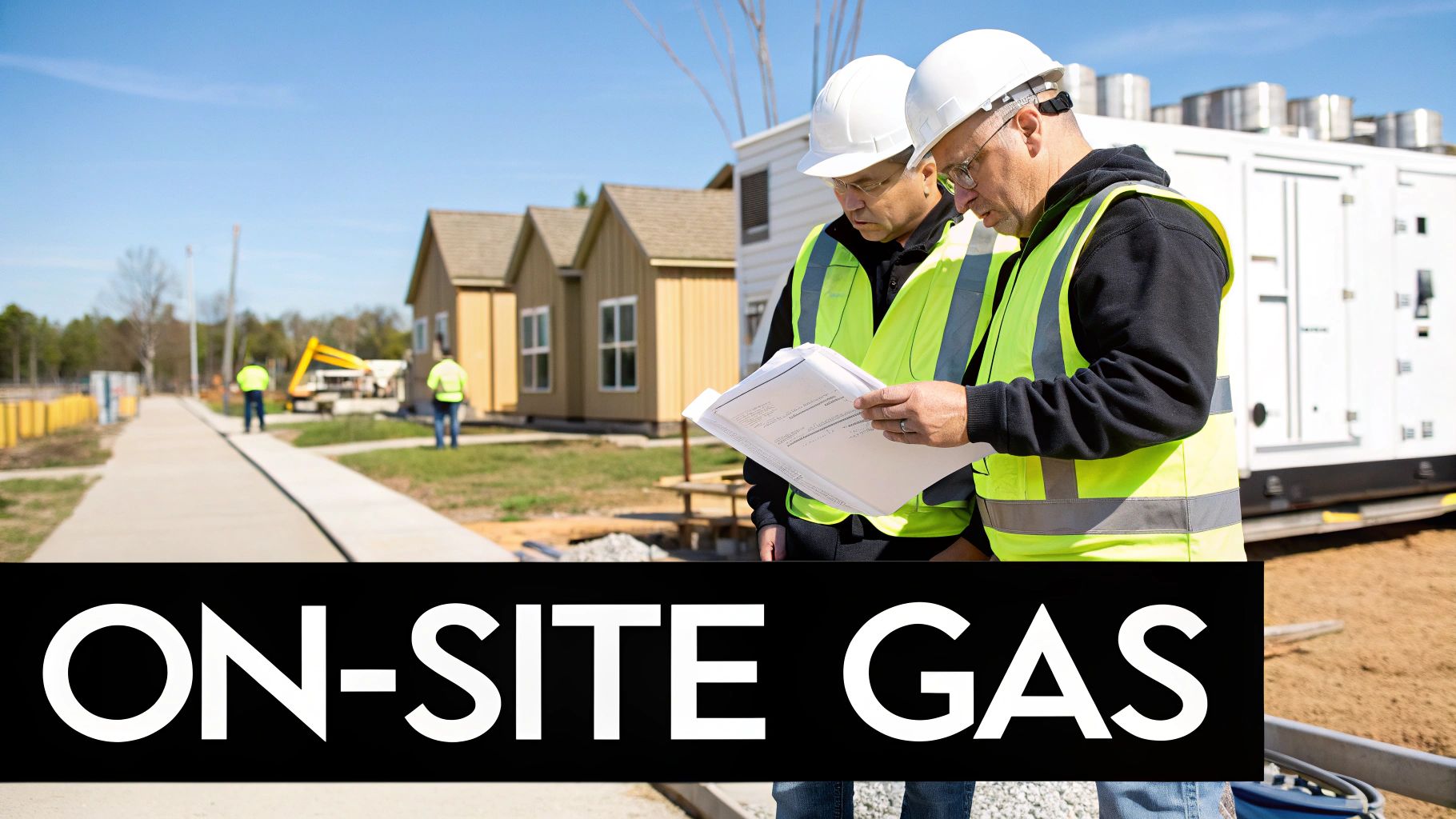
This is where a temporary energy partner like Blue Gas Express steps in. Instead of waiting around for the utility company to catch up, a mobile CNG solution can be brought directly to the job site, creating an instant, self-contained energy supply.
The Virtual Pipeline Solution
You can think of this setup as a "virtual pipeline." It completely bypasses the missing infrastructure, delivering a steady, reliable stream of natural gas right where you need it. It’s a smart logistical move that keeps the project moving forward, turning a potential disaster into a minor hurdle.
A mobile CNG unit can be up and running within hours, hooking directly into the development's newly installed gas plumbing. This gives you the fuel needed to:
- Commission HVAC Systems: Get those furnaces and water heaters fired up for final testing.
- Test Backup Generators: Confirm all power systems are ready for the new homeowners.
- Prevent Freezing: Protect pipes and the property itself during cold weather builds.
- Secure Occupancy Permits: Check off all the boxes and get families into their new homes on time.
For builders and developers, a temporary mobile gas supply isn't just a convenience; it's a strategic tool for risk management. It ensures that project timelines are met, financial penalties are avoided, and new homeowners receive the seamless experience they expect from day one.
The need for these mobile solutions is highlighted by the scarcity of permanent infrastructure. The United States only has around 700 public CNG stations, a tiny number compared to over 125,000 gasoline stations. This gap is precisely why construction firms face such long waits for permanent gas lines—a problem that mobile providers like Blue Gas Express are built to solve. You can get a better sense of the current state of CNG infrastructure on GasValuation.com.
From Construction Site to Industrial Applications
This "virtual pipeline" concept is useful well beyond residential construction. The same mobile CNG technology is a lifesaver across a whole range of commercial and industrial situations.
Just think about these common scenarios:
- Industrial Plant Maintenance: A factory needs to shut down its main gas line for repairs. Instead of halting production, a temporary CNG supply keeps the machinery running and prevents costly downtime.
- Emergency Response: After a storm or natural disaster damages utility lines, mobile CNG units can be deployed to power critical facilities like hospitals, command centers, or shelters.
- Agricultural Operations: Farms often have massive energy needs for things like grain drying or heating greenhouses, especially if they're far from a main gas line. Mobile CNG provides a clean, on-demand power source during peak seasons.
In every one of these cases, the mission is the same: deliver clean, reliable natural gas on a temporary basis to keep things running. It’s the perfect bridge to connect energy demand with supply, no matter where you are or what the circumstances are.
Common Questions About Home CNG Stations
It’s a big decision, so it's smart to have questions. A home CNG fueling station is a serious upgrade, and you need straight answers before you move forward. Let's tackle some of the most common things people ask when considering making the switch.
We'll clear up everything from how long it takes to fill up your car to what this means for your utility bills, safety rules, and even what to do if your permanent gas line isn't ready on time.
How Long Does It Take to Refuel My Car at Home?
Patience is key here. Most home systems are designed as “slow-fill” units, prioritizing convenience and overnight refueling. A full tank usually takes about 6-10 hours.
The idea is simple: you pull into your garage, plug in the nozzle, and wake up to a full tank. This avoids the need for the massive, loud, and pricey equipment you see at commercial “fast-fill” stations.
Will My Natural Gas Bill Skyrocket?
Your natural gas bill will definitely go up, but that’s only half the story. The real win is that your total energy spending will plummet.
Natural gas is consistently 40-50% cheaper than gasoline for the same amount of energy (measured in a gasoline gallon equivalent, or GGE). So while you're spending a bit more on your gas bill, you're saving a ton by skipping the gas station. It’s a net positive for your wallet every single month.
The trick is to stop looking at your gas bill in isolation and think about your total monthly energy cost. The extra money you spend on natural gas is dwarfed by what you save on gasoline.
Can I Just Install a Home CNG System Myself?
No, and this is non-negotiable. Installing a CNG system involves high-pressure gas lines and serious electrical work. It's a job exclusively for certified professionals.
A pro technician knows the specific safety codes, like NFPA 52, inside and out. Professional installation isn't just a suggestion—it's required to pass inspections, get permits, and ensure the system runs safely and reliably for years. Don't even think about making this a weekend DIY project.
What if the Gas Line to My New House Is Delayed?
This is a classic construction headache. You're building a new home, but the utility company is behind schedule on the permanent gas line. It can halt your entire project.
The solution is a temporary mobile gas provider. A company can bring a mobile CNG unit right to your property, creating an instant gas supply for your generators or HVAC systems. This lets you power through inspections and get your Certificate of Occupancy without sitting around waiting, which saves you from expensive delays.
When your project timeline is threatened by utility delays, you need a dependable partner to bridge the gap. Blue Gas Express delivers mobile CNG and LNG solutions directly to construction sites throughout the Southeast, keeping you powered and on schedule. Find out how we can help at https://bluegasexpress.com.