

A CNG home fill station is your own personal fuel pump, right in your garage. It takes the natural gas already running into your house and compresses it to fuel your natural gas vehicle (NGV). The concept is a lot like charging an electric car overnight—you just connect it when you get home, and it’s ready to go by morning. This slow-fill approach is what makes it so incredibly convenient for NGV owners.
How a CNG Home Fill Station Actually Works
Think of the natural gas line coming into your home. The pressure is really low, just enough to safely run your furnace or stove. But it’s nowhere near powerful enough to make a vehicle go. That's where the home fill station comes in. It acts like a powerful, multi-stage pump, taking that low-pressure gas and methodically pressurizing it into a usable vehicle fuel.
The whole process isn't instant like a public station. It’s designed to be a slow, steady, and safe overnight job, accomplished by three core components working together seamlessly.
The Three Key Components
Every home refueling station is built around three pieces of hardware that turn your utility gas into high-octane fuel for your car.
- The Compressor: This is the real workhorse. It pulls a small, continuous stream of gas from your home's supply line and squeezes it down over several hours. This is a serious compression job, taking the gas pressure from less than 1 psi (pounds per square inch) all the way up to 3,600 psi—the standard for filling an NGV tank.
- The Dryer: When you compress gas, any moisture in it turns into water, which can wreak havoc on the equipment and your vehicle's engine. The dryer acts as a filter, stripping out all that water vapor to make sure only clean, dry gas gets to your tank.
- The Dispensing Hose and Nozzle: This is the final piece of the puzzle. A heavy-duty, high-pressure hose connects the station to your vehicle. The nozzle is a smart piece of tech, designed to lock on securely and create a leak-proof seal before any gas starts flowing. It also shuts off automatically when the tank is full.
The Slow-Fill Advantage
Public stations use "fast-fill" systems to get you in and out quickly. A CNG home fill station, on the other hand, uses a "slow-fill" (or "time-fill") method. This is a much gentler approach that uses far less electricity and is perfect for a residential setup.
The big win here is convenience: you fuel up while you sleep. Hook up your car in the evening, and the system quietly works for 8-10 hours to top off the tank. You wake up every single day with a full tank, completely cutting out trips to the gas station.
This slower process also keeps the gas cool as it's compressed, which means you can get more fuel packed into the tank. While it's a different application, understanding the mechanics of something like a three-way control valve helps illustrate the kind of precise flow management that makes these complex systems work. Ultimately, a home station turns your garage into your own private, low-cost fueling depot.
Weighing the Real-World Pros and Cons
Deciding to put a personal CNG station at your home is a big deal, so it’s critical to look at the whole picture. A cng home fill station brings an incredible mix of convenience and fuel savings, but it's not without its trade-offs. Getting a clear-eyed view of both the good and the bad is the only way to make a smart choice that fits your driving needs, your budget, and your long-term plans.
So, how does it all work? It's actually pretty straightforward. This diagram shows how natural gas travels from your home's utility line, gets pressurized by the compressor, and then fills up your vehicle's tank.
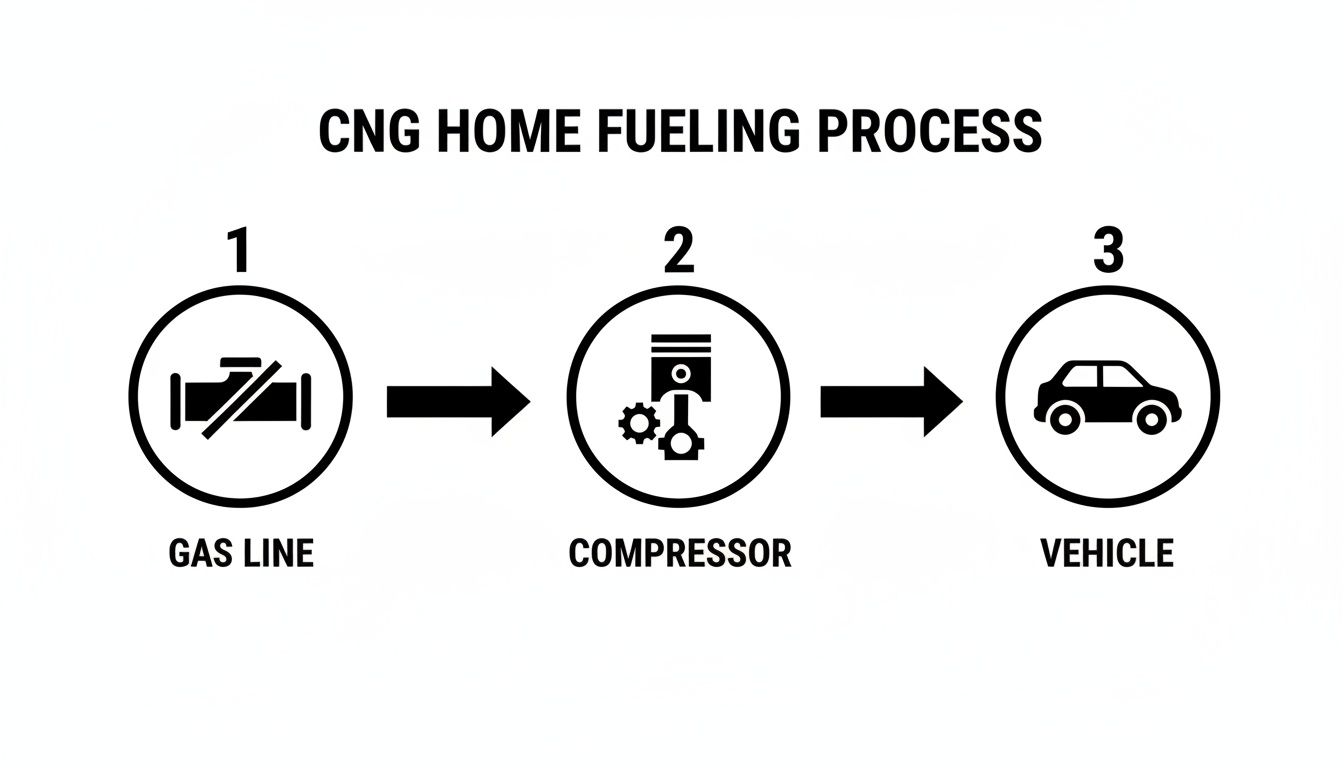
At its heart, the system is just a mini-refinery in your garage, turning low-pressure residential gas into a high-pressure vehicle fuel. Let’s break down what that really means for you day-to-day.
The Clear Advantages of Home Fueling
The number one reason people get excited about home CNG fueling is the potential for massive savings on fuel. Natural gas is almost always far cheaper than gasoline for the same amount of energy. To give you a real-world example, some fleet programs have reported paying as little as $1.10 per gallon equivalent for CNG, while regular gasoline was costing them $1.91. Those kinds of savings add up quickly for a daily driver.
Then there's the convenience. It’s hard to overstate how nice it is to never worry about stopping for gas again. You pull into your driveway, hook up the nozzle, and your car refuels overnight while you’re asleep. No more waiting in line, no more detours—just a full tank ready to go every single morning.
And of course, there’s the environmental benefit. Natural gas burns much cleaner than gasoline or diesel. It produces far fewer greenhouse gases like carbon dioxide and practically zero harmful particulate matter. Switching to CNG is a real, tangible step you can take to shrink your carbon footprint.
Understanding the Potential Drawbacks
The biggest barrier for most people is the upfront cost. The equipment and the required professional installation for a cng home fill station can easily run into thousands of dollars. It’s a serious initial investment. While you’ll save money on every fill-up, it can take years to break even, especially if you don't drive a lot of miles.
The other major factor to consider is the refueling time. This isn't like a five-minute stop at the pump. Home units are "slow-fill" systems by design. A complete fill can take anywhere from 6 to 12 hours, depending on your vehicle's tank size and the compressor's power. It's perfect for overnight fills but totally impractical if you need a quick top-up in the middle of the day.
Finally, these are complex machines that need regular care to run safely and efficiently. That means budgeting for things like filter changes, routine inspections, and the occasional repair. You’ll need to factor in these ongoing maintenance costs and make sure there’s a qualified technician nearby who knows how to service your specific model.
The decision to install a home CNG station really boils down to a simple trade-off: Are you willing to accept a higher upfront cost and slower refueling times in exchange for long-term savings and unparalleled daily convenience?
To make this crystal clear, let's lay everything out side-by-side.
Pros vs. Cons of Owning a CNG Home Fill Station
This table offers a direct comparison of the key benefits and drawbacks you can expect when you install and operate your own personal CNG refueling appliance.
| Factor | Advantages (Pros) | Disadvantages (Cons) |
|---|---|---|
| Fuel Cost | Significantly cheaper than gasoline, often saving 40% or more. | Savings are realized over the long term, not immediately. |
| Convenience | Wake up to a full tank every day; no more trips to the gas station. | Refueling takes 6-12 hours, making quick top-ups impossible. |
| Initial Investment | N/A | High upfront cost for equipment and professional installation. |
| Maintenance | N/A | Requires routine servicing, filter changes, and potential repairs. |
| Environmental | Lower emissions and a smaller carbon footprint compared to gasoline. | Still a fossil fuel, though a much cleaner one. |
Ultimately, looking at these points will help you decide if the long-term benefits of cheaper, cleaner fuel and at-home convenience are worth the initial investment and slower fill times.
Calculating the True Cost of Ownership
So, is a CNG home fill station actually a smart financial move? To figure that out, you have to look at the whole picture, not just the money you'll save at the pump. The real math involves adding up the initial purchase price, the cost of professional installation, and what you'll spend over the years to keep it running smoothly. Only then can you get a clear idea of when your investment truly starts paying you back.
This whole idea of small-scale home refueling is part of a much bigger shift. The global market for natural gas filling stations was already valued at around USD 2.22 billion in 2024, and it's only expected to climb as more CNG vehicles hit the streets. This isn't just a trend for homeowners; businesses are also jumping in to slash their fuel costs and emissions. You can dive deeper into the numbers in this detailed market analysis.
Breaking Down the Upfront Equipment Costs
Let's start with the biggest line item: the refueling appliance itself. You can expect to spend anywhere from $4,500 to over $10,000, and the price tag really depends on what you need.
So what's behind that big price swing? It all comes down to the power of the compressor inside the unit, which directly impacts how fast it can fill your tank. A smaller, less powerful unit will be on the lower end of that price range, but you'll need to be patient—it might take 10-12 hours to fill a tank from empty. On the other hand, if you opt for a more robust, higher-capacity model, you'll pay more upfront but could cut that fill time down to 6-8 hours. For someone with a large vehicle or a demanding schedule, that's a huge difference.
Factoring in Professional Installation Expenses
This is one job you absolutely cannot DIY. Getting your station installed requires licensed pros to make sure everything is safe, legal, and done right. Budget another $2,000 to $5,000 (or potentially more) for this part of the project.
Several things can affect that final installation bill:
- Gas Line Extension: A dedicated natural gas line has to be run from your home's main supply to wherever you're putting the station (usually the garage). The longer and more complicated that run is, the more it'll cost in labor and materials.
- Electrical Work: Most of these units need a 240-volt circuit—the same kind you'd use for an electric dryer. If you don't have one handy, you'll need an electrician to install a new line from your breaker panel.
- Permits and Inspections: Your city or county will require permits for the gas and electrical work. After the job is done, an inspector has to sign off on it. These fees are just part of the process.
Your total upfront investment—the cost of the unit plus installation—is the baseline for figuring out your long-term return. It's essential to get detailed, itemized quotes from a few certified installers to build an accurate budget.
Long-Term Operational and Maintenance Costs
Once you're up and running, the big one-time expenses are behind you. Now, your costs are all about the day-to-day operation and upkeep, which boils down to two things: electricity and maintenance.
The compressor uses electricity to pressurize the natural gas, so you'll see a slight bump in your monthly power bill. How much depends on the unit's efficiency and your local utility rates, but honestly, it’s usually a pretty small cost compared to what you're saving on gasoline.
Maintenance is the other key piece of the puzzle. Just like your car, a CNG home fill station is a complex piece of machinery that needs regular care. Plan on having a qualified technician service it once or twice a year. You'll also need to replace things like filters periodically. If you budget a few hundred dollars a year for this, you'll keep your system running safely and reliably for a long, long time.
When you add all these costs together—upfront and ongoing—you can finally calculate your true return on investment and see just how quickly those daily fuel savings will pay for the whole setup.
Navigating the Installation and Permit Process
Let’s be clear: installing a CNG home fill station isn't like setting up a new washing machine. It's a proper construction project that involves high-pressure gas lines and serious electrical work, so there’s absolutely no room for error when it comes to safety and following the rules. Getting from an empty space in your garage to a fully operational fueling station takes careful planning and working with the right pros.
The real work starts long before anyone picks up a wrench. First, you and your installer need to perform a thorough site assessment to pick the perfect spot. This is usually in a well-ventilated garage or a sheltered outdoor area, a safe distance from any potential ignition sources. You also need to think practically—can you easily access your home's natural gas line and a dedicated electrical circuit from there?
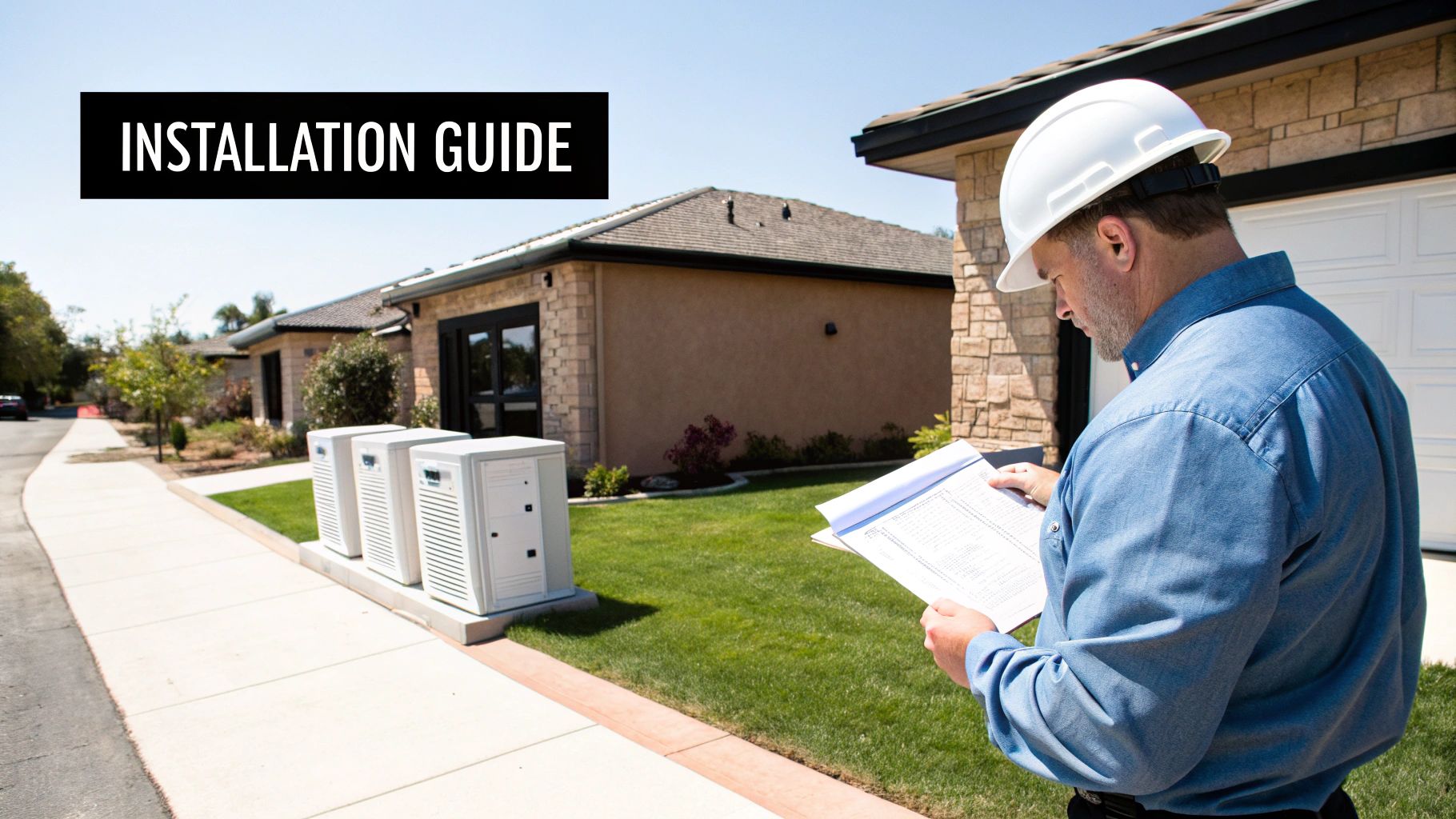
This planning stage is also where you double-check if your home's utilities can even handle the extra load. The compressor is a thirsty piece of equipment, typically demanding a 240-volt circuit. Your gas meter and the pipes feeding it also have to be big enough to supply the unit without starving your furnace or water heater.
Hiring the Right Professionals
This is one area where you simply cannot cut corners. Installing a CNG home fill station is a job strictly for certified professionals—technicians who are experts in both natural gas plumbing and electrical systems. Trying to DIY this is incredibly dangerous, and it will immediately void your warranty and land you in hot water with local building codes.
When you're looking for an installer, find someone with a proven track record working specifically with CNG refueling equipment. Ask for references, and make sure they are fully licensed and insured. A true pro will handle the entire technical side of the job, including:
- Running a new, dedicated natural gas line from your main supply to the compressor.
- Installing the necessary electrical circuit and connecting it all to your breaker panel.
- Mounting the compressor and the fueling hose securely, following the manufacturer’s instructions to the letter.
- Performing rigorous leak tests and system checks to make sure everything is 100% safe before it’s ever used.
Think of a qualified installer as your project manager. They ensure every part is installed correctly and safely, which is your best insurance against problems down the road and is absolutely essential for passing inspections.
The Maze of Permits and Building Codes
Before a single shovel hits the ground, you need to get familiar with your local regulations. Every town and county has its own rulebook, and you'll definitely need permits from your local building authority to get started. These permits will cover all the different parts of the project: gas, electrical, and the mechanical installation itself.
If you’re new to this kind of project, this guide to building on rural land in NSW gives a good sense of the due diligence required for any major property upgrade, even though it's for a different region. The principles of planning and approval are universal. Luckily, your certified installer should know the local requirements inside and out and can usually manage the entire application process for you.
Here’s what that process typically looks like:
- Submit Plans: Your installer draws up detailed plans for the installation and submits them to the local building department for review.
- Permit Issuance: Once the plans get the green light, the department issues the permits, and the work can officially begin.
- Inspections: An inspector will visit your property at key milestones—usually after the gas and electrical lines are in but before they’re hidden behind walls—to verify everything is up to code.
- Final Approval: After a final inspection of the complete, working system, the inspector gives their official sign-off, confirming your station is compliant and safe.
Following this structured process is the only way to guarantee your CNG home fill station is not just convenient, but completely safe for you and your family.
Beyond the Garage: Onsite CNG for Commercial Projects
While having your own CNG fill station at home is a game-changer for personal vehicles, the real power of onsite natural gas comes into play on a much larger scale. In the world of commercial and industrial work, having a reliable gas supply isn't just about convenience—it can be the single factor that keeps a project on schedule and saves a budget from falling apart. For these massive operations, temporary and mobile CNG solutions are nothing short of essential.
Think about a major construction project in the dead of winter. The permanent utility lines won't be live for weeks, but the crew needs powerful heaters to cure concrete and just to keep working in the freezing cold. If they have to wait on the utility company, they're looking at costly delays and blown deadlines. But what if you could bring the fuel source directly to the site? That's exactly what a temporary CNG setup does—it delivers an immediate, high-volume gas supply to power those industrial heaters and keep the entire project moving.
It's the same story when it comes to commissioning a new commercial building. Before the keys can be handed over, every gas-powered system, from the massive boilers in the basement to the commercial-grade kitchen equipment, has to be fired up, tested, and approved. A mobile CNG source gives contractors the freedom to run these tests on their own schedule, breaking free from the utility company's timeline.
Powering Through Project Gaps
This gap between needing natural gas and actually having a permanent supply line is where onsite solutions really prove their worth. Industrial plants, for instance, often have to deal with planned pipeline maintenance that could shut down operations for days. By bringing in a temporary CNG supply, they can bridge that gap and keep production humming along, potentially saving millions in lost revenue. It turns a potential crisis into a simple logistics problem.
Homebuilders run into this all the time, too. Imagine a brand-new housing development, totally finished, but the builder can't get a certificate of occupancy because the gas meters aren't active yet. It's a huge roadblock. With temporary CNG, they can fire up the furnaces and water heaters just long enough to pass inspection, allowing them to close sales and get homes on the market weeks, or even months, sooner.
These scenarios highlight a tough reality in the energy world. Sure, the public CNG refueling network in the United States has grown, but it's a drop in the bucket compared to gasoline's reach. As of 2023, there were just over 700 public CNG stations in the whole country. Compare that to more than 125,000 gasoline stations, and you see the problem: CNG users have access to less than 1% of the fueling locations available to everyone else. This scarcity is a massive headache for industries that need natural gas but can't afford to wait for a permanent hookup. You can read more about this growing need for natural gas station infrastructure in this 2026 forecast.
When a Permanent Station Isn't the Answer
The common thread here is that the need is temporary. The construction site eventually gets its permanent gas line. The factory's pipeline maintenance wraps up. The new home's utility meter is finally installed and spinning. In situations like these, building a permanent, fixed CNG station would be a colossal waste of money. The investment would be impossible to justify for a problem that only lasts a few weeks or months.
This is where you need a more agile, flexible approach. What these projects really need isn't to own fueling infrastructure. They need a service that can deliver natural gas on demand, exactly when and where they need it, and then get out of the way once the job is done.
The core challenge for commercial projects is logistical, not technological. They don't need to own a CNG station; they need reliable, temporary access to natural gas to avoid crippling operational delays.
This distinction is what opens the door for a completely different kind of solution. It perfectly sets the stage for mobile CNG services, which are designed from the ground up to fill these temporary supply gaps. Instead of a fixed asset, they offer a flexible, on-demand service that matches the short-term, high-stakes needs of commercial and industrial projects to a T.
Mobile CNG: The Flexible Fueling Alternative
So, what happens when your project grinds to a halt because the permanent natural gas line isn’t live yet? For construction sites, industrial facilities, and even new residential developments, waiting on the utility company can mean thousands in lost revenue and painful delays. This exact problem is where fixed infrastructure falls short and a more nimble solution like mobile CNG shines.
Instead of being tied to a permanent pipeline, mobile CNG brings the fuel directly to you. The whole system is built around self-contained trailers filled with compressed natural gas that can be driven to just about any location.
Think of it as a natural gas pipeline on wheels, ready to deliver an immediate and scalable fuel source right when and where you need it most.
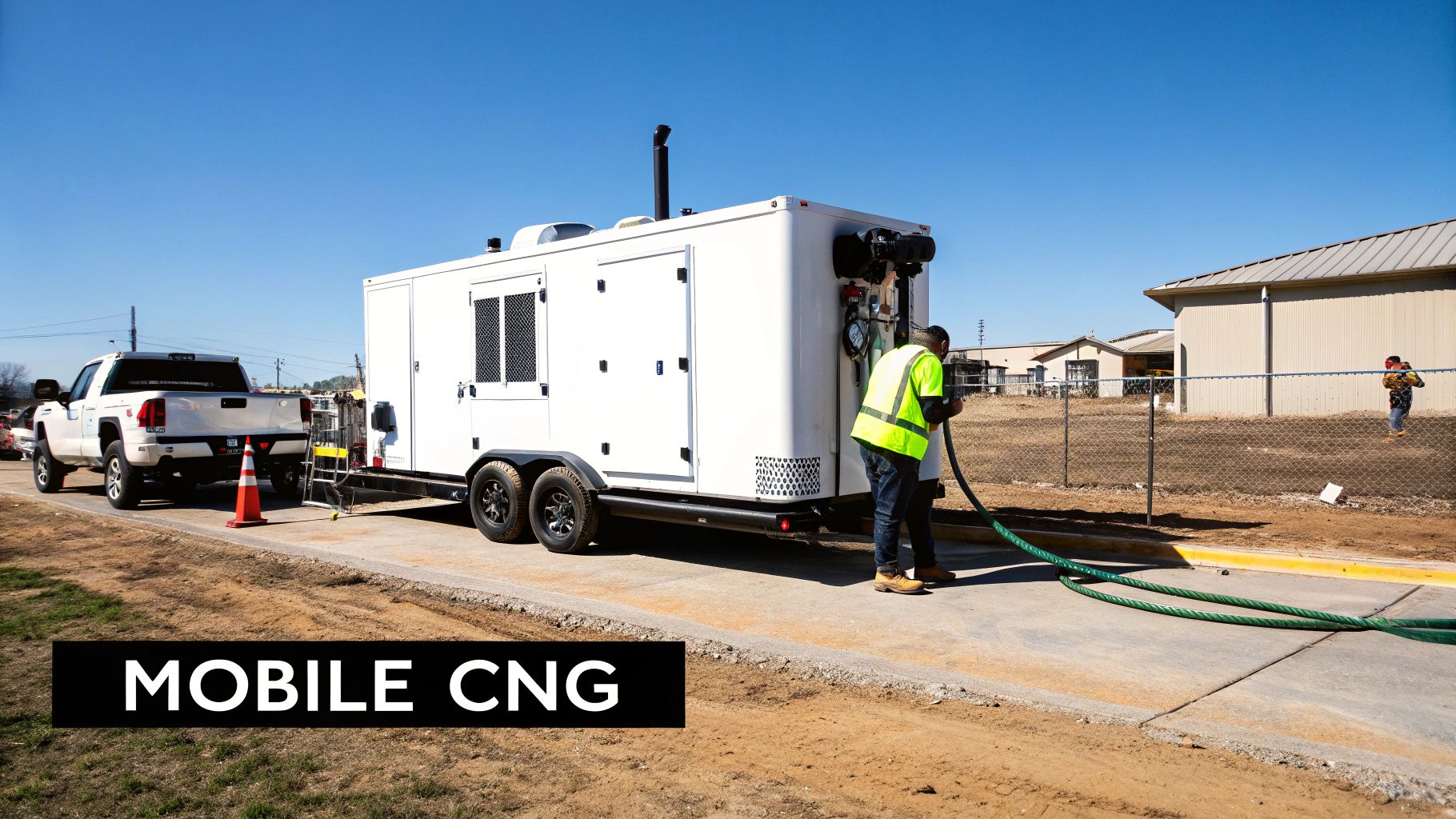
This approach is the ultimate problem-solver for temporary fuel needs. It turns what could be a project-killing disaster into a simple logistics task.
Solving Critical Onsite Challenges
The biggest win for mobile CNG is how fast it can be deployed. When a utility hookup is held up for weeks or months, a mobile unit can be on-site within hours, providing the gas needed to power essential equipment. This is a game-changer in a few key scenarios:
- Bridging Utility Delays: A construction crew can fire up temporary heaters to cure concrete in cold weather without blowing their schedule.
- Ensuring Operational Continuity: An industrial plant can keep the production lines moving during planned pipeline maintenance, avoiding a full-on shutdown.
- Fueling Off-Grid Equipment: It’s a reliable power source for generators and other machinery at remote job sites that are miles from the nearest utility line.
The real value of mobile CNG is that it separates your project timeline from the utility company's schedule. It gives you control by providing a dependable, temporary energy bridge to keep things productive.
The demand for this kind of flexibility is growing right alongside the broader natural gas market. The global compressed natural gas market was valued at USD 159.9 billion in 2023 and is expected to hit USD 344.6 billion by 2030. That growth highlights just how dependent we've become on natural gas, making any service interruption or delay a major problem—and fueling the need for reliable mobile alternatives. You can find more details on this expanding market on Fortune Business Insights.
Customizable and Professionally Managed
Beyond just showing up fast, mobile CNG services from specialists like Blue Gas Express are completely scalable. The volume of gas delivered can be tailored to the project's exact needs, whether you're powering a single home furnace for an inspection or an entire industrial complex.
Best of all, it's a fully managed service. Experts handle the transportation, setup, and safety monitoring, ensuring you have a seamless and safe supply of fuel. By delivering natural gas on demand, these mobile solutions help businesses dodge costly delays, protect their bottom line, and keep projects on track.
Got Questions? We've Got Answers
Stepping into the world of CNG fueling brings up a few practical questions. Let's tackle some of the most common ones we hear from people considering a home station or a mobile solution.
How Much Will a CNG Home Fill Station Bump Up My Utility Bills?
You'll definitely see an increase in your electric and natural gas bills, but don't let that scare you. The real story is in the net savings.
Think of it this way: your compressor runs on electricity, and the station itself uses natural gas from your utility line. Even with those added costs, the final price you pay per gasoline gallon equivalent (GGE) is almost always drastically lower than what you'd spend at a traditional gas station. You're paying pennies on the dollar for the convenience and the fuel itself.
Is it Actually Safe to Put a CNG Filling Station in My Garage?
Absolutely, as long as it’s done right. Safety is the number one design principle for these units.
Modern stations are loaded with safety features, like automatic shut-offs for leaks or pressure issues and built-in pressure relief devices. The key to true peace of mind is a professional, certified installation. Your installer will make sure everything is up to local fire and building codes, which usually have specific rules about ventilation and where the unit can be placed.
Choosing between a permanent station and a mobile service really comes down to your situation. One is a long-term asset for a consistent routine, while the other is a flexible fix for temporary roadblocks.
When Does it Make Sense to Get Mobile CNG Instead of a Permanent Station?
Mobile CNG is your go-to solution when your fuel needs are temporary, urgent, or not tied to a single spot.
Consider these scenarios:
- A construction site that's still waiting for the utility company to lay down a permanent gas line.
- An industrial plant that needs a backup fuel source during maintenance.
- Any remote job site that's completely off the grid.
A permanent cng home fill station, on the other hand, is a long-term investment. It’s perfect for fleet owners, businesses, or homeowners who have a consistent, daily refueling routine at the same location.
When you're facing a temporary or emergency natural gas shortage, a mobile service is the fastest, most efficient way to get back on track. Blue Gas Express specializes in getting CNG and LNG units to your site quickly, keeping your project moving forward without a hitch. Learn more about our mobile gas solutions.