

You're staring at an outage schedule that looked manageable three months ago. Now a crew gap, a late inspection finding, or a tooling problem has turned float into risk, and someone in the room asks who else can carry part of the scope without creating a new interface problem. That's usually when Master Lee Energy Services enters the conversation. The question isn't whether the name sounds familiar. It's whether the company fits the specific work, window, and controls your plant has to live with.
The Outage Window That Started the Search
The call rarely starts with a clean scope. It starts when your outage manager realizes the refueling floor, the heat exchanger crew, and the inspection team all need the same access window. One delayed lift pushes in-vessel work, which pushes fuel movement, which pushes everything your restart sequence depends on.
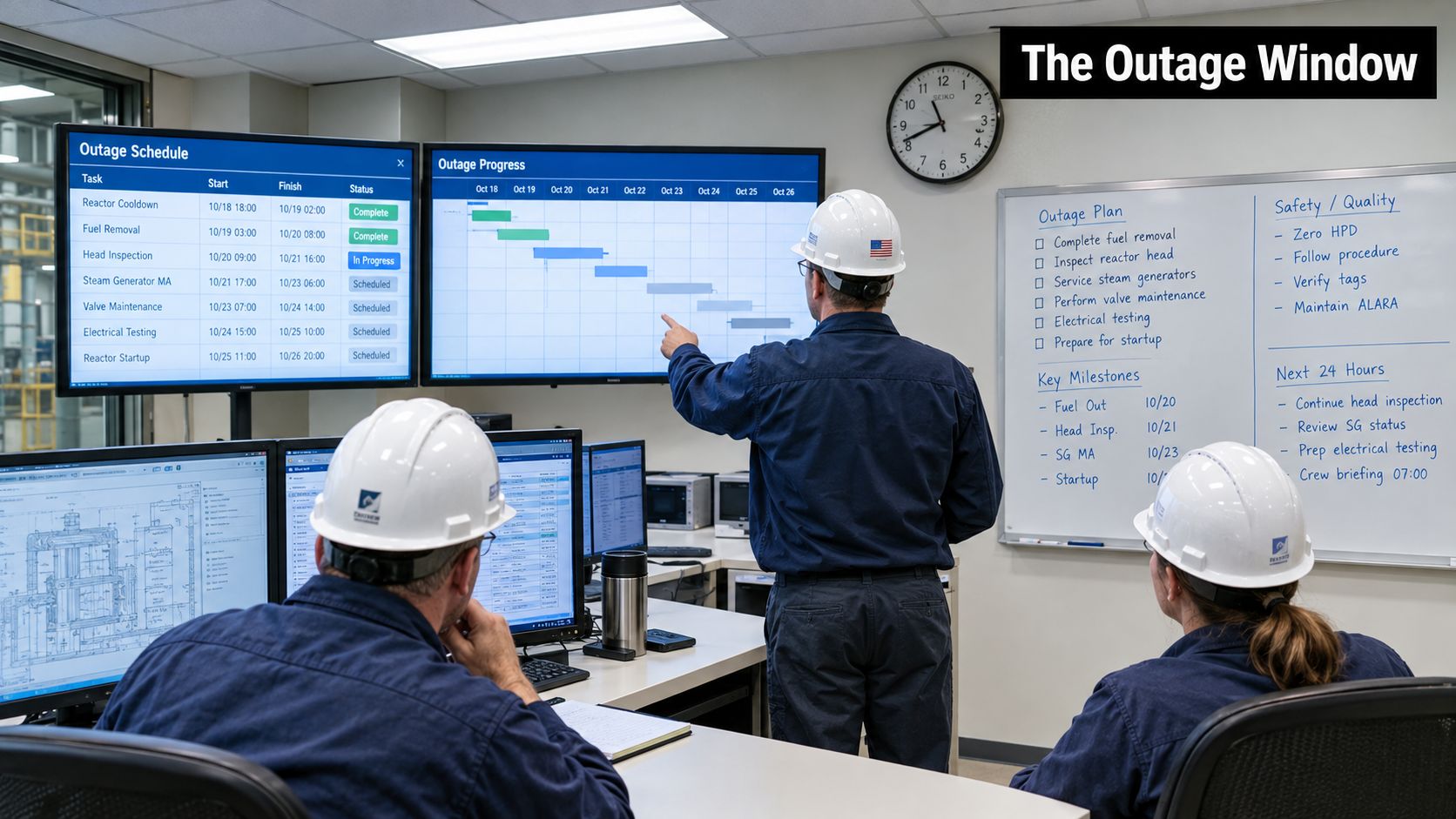
That's the moment a planner stops shopping for bodies and starts shopping for coordination. You don't need another contractor who can describe the work in a brochure. You need a crew that understands sequencing, hold points, foreign material exclusion, and what happens when a predecessor task slips by half a shift.
What Pushes a Name Onto the Bid List
Master-Lee tends to surface because refueling and turnaround work is its home territory, not a side line. For a nuclear site, that means reactor work, spent fuel pool activity, and the radiation protection discipline around both. For a fossil or industrial site, it means outage labor, mechanical maintenance, and inspection support under a compressed window.
Don't treat that as an automatic shortlist decision. Treat it as a prompt to ask harder questions. Which scope would Master-Lee own outright, which scope would it support, and where would your own staff or another contractor still hold the critical path?
Practical rule: Add a contractor to solve a defined interface or capacity problem, not to make an uncertain schedule feel better.
I've seen planners make the opposite mistake, too. They carve work into so many small packages that nobody owns the handoffs, then they spend the outage managing seams instead of progress. A larger integrated scope can reduce those seams, but only if you define deliverables, procedure ownership, and acceptance criteria before mobilization.
So frame your search correctly from the start. You're not buying a reputation. You're deciding whether Master Lee Energy Services can remove specific schedule risk from your plate while fitting your site's safety, quality, and access rules. If you can't name that risk in one sentence, you're not ready to write the request for proposal yet.
What Master Lee Energy Services Is and Where It Came From
Master Lee Energy Services was established in 1987 to serve the commercial nuclear power industry, with an early scope covering engineering, reactor services, decontamination, reactor coolant pump and motor work, nondestructive examination, and specialty tooling. That origin matters because nuclear work doesn't tolerate casual documentation or loose work control. A company formed in that environment learns early that procedures, qualifications, and traceability aren't paperwork after the job. They're part of the job.
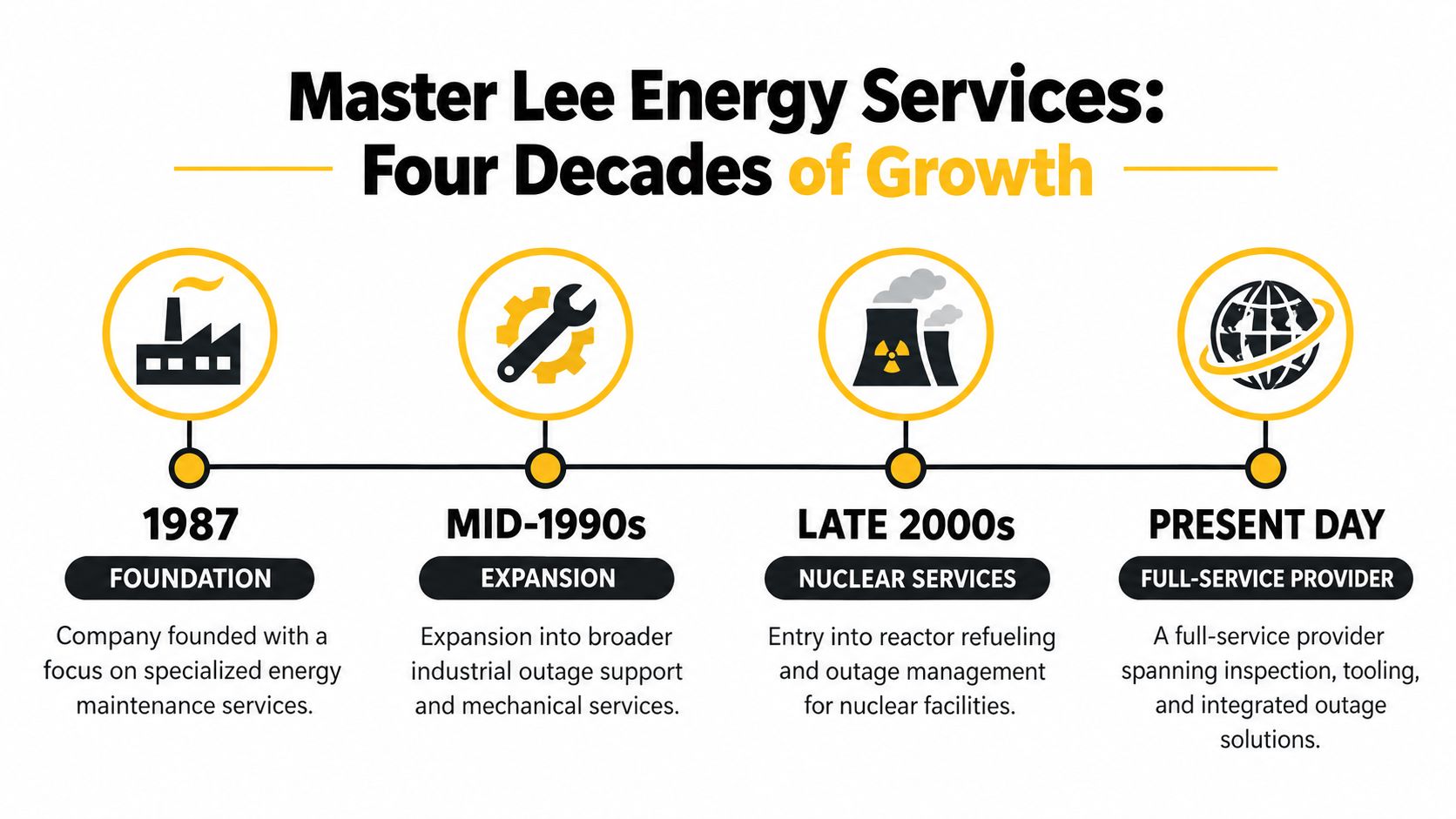
The company later expanded into fossil fuel generation, hydroelectric and cogeneration stations, petrochemical plants, petroleum refineries, industrial manufacturing, textile and paper mills, and pharmaceutical manufacturing. That expansion is useful context for buyers outside nuclear. It suggests the underlying offer isn't a single reactor task. It's outage execution, mechanical maintenance, inspection, and engineered tooling applied across high consequence facilities.
Why the Nuclear Roots Still Show
A contractor that starts in nuclear usually carries certain habits into adjacent work. Expect more emphasis on pre-job briefs, work packages, contamination or cleanliness controls, and formal closeout records. That can be a strength at a refinery or pharmaceutical plant, where permit discipline and inspection records also govern restart.
It can also create friction if your site expects a lighter touch. If your turnaround culture runs on informal direction from shift supervisors, a procedure heavy contractor may feel slow at first. Don't judge that in the abstract. Ask how the company adapts its controls to your site's existing quality program without dropping the controls that protect people and equipment.
There's another distinction worth stating plainly. Master-Lee's roots are in asset reliability and plant continuity, including outage and turnaround work, heat exchanger maintenance, industrial cleaning, rigging, component replacement, and decommissioning. It isn't built around delivering a commodity fuel to your fence line.
That distinction saves buyers time. If your problem is keeping a plant running through a temporary fuel interruption, you're solving a supply problem. If your problem is opening, inspecting, repairing, and closing critical equipment inside a fixed window, you're solving an outage problem, and that's the conversation Master-Lee belongs in.
The Refueling and Outage Track Record
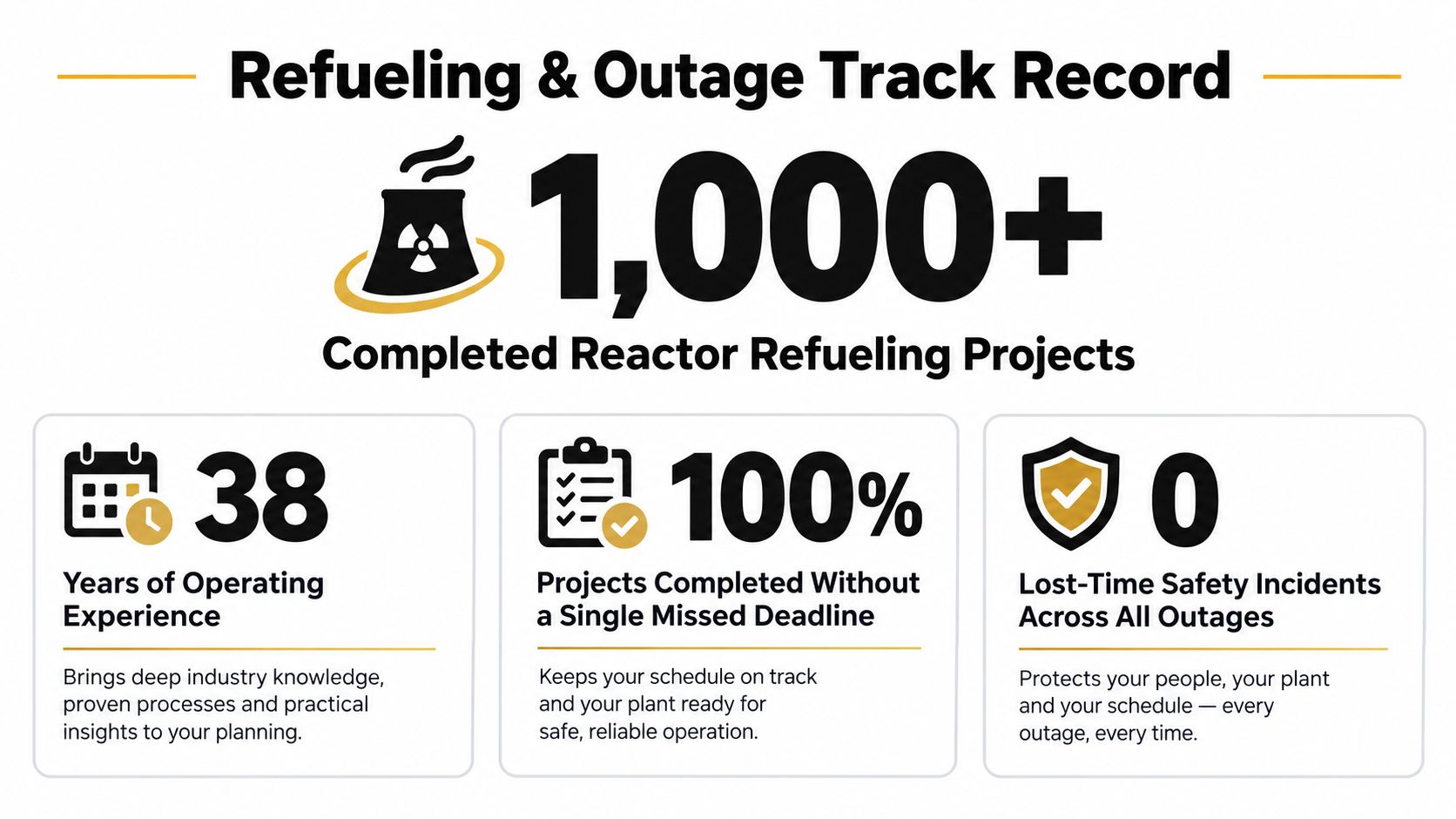
Headline numbers only help if you translate them into schedule confidence. Master-Lee reports more than 1,000 completed reactor refueling projects involving reactor disassembly and reassembly, in-vessel work, and spent fuel pool activities, and a 2003 multi-year teaming agreement with Westinghouse Electric Company covering refueling, reactor coolant pump, and motor services. For a planner, those two facts say different things. The project count speaks to repetition. The teaming agreement speaks to a major industry participant being willing to put the services in front of operators on commercial terms.
Repetition matters in refueling because the work is unforgiving. Crews coordinate lifts, underwater tooling, fuel handling equipment, radiation protection coverage, and containment access in a sequence that leaves little room for improvisation. A contractor that has run that sequence repeatedly should arrive with sharper crew readiness, better spare tooling habits, and a lessons learned library that reflects real problems, not generic risk registers.
What to Probe Behind the Record
Don't accept the milestone as proof that your outage will go well. Ask how much of that experience matches your reactor type, your fuel handling configuration, and the specific tasks you're assigning. Experience in one plant layout doesn't transfer automatically to another, especially where polar crane limits, cavity layout, or spent fuel pool congestion differ.
- Crew continuity: Ask who shows up, not just which resumes the company can submit during bidding.
- Tooling ownership: Confirm whether critical tools are owned, leased, or borrowed from another job that could slip.
- Lessons learned: Request examples tied to your scope, with the corrective action that followed.
- Interface history: Ask where the crew has worked alongside an original equipment manufacturer service arm or a separate inspection firm.
That last point is where the Westinghouse history is relevant. It doesn't mean Master-Lee replaces an equipment manufacturer. It means the company has operated in arrangements where operators could procure services through either party, which requires clear boundaries on products, personnel, and accountability.
Use the track record as an opening for diligence, not as a substitute for it. The strongest signal isn't that a contractor has done refueling work often. It's that the contractor can show you, task by task, how that repetition changes crew composition, contingency tooling, and recovery planning for your window.
Core Services a Buyer Can Request
Think of the catalog the way you'd build work packages, not the way a brochure lists capabilities. Master-Lee describes an integrated outage services model spanning reactor disassembly and reassembly, in-vessel work, spent fuel pool operations, heat exchanger maintenance, nondestructive examination, outage planning, rigging, mechanical maintenance, decontamination, and component replacement. Bundling inspection, mechanical work, engineered tooling, and field execution can reduce handoffs, but only if the bundle matches how your outage really flows.
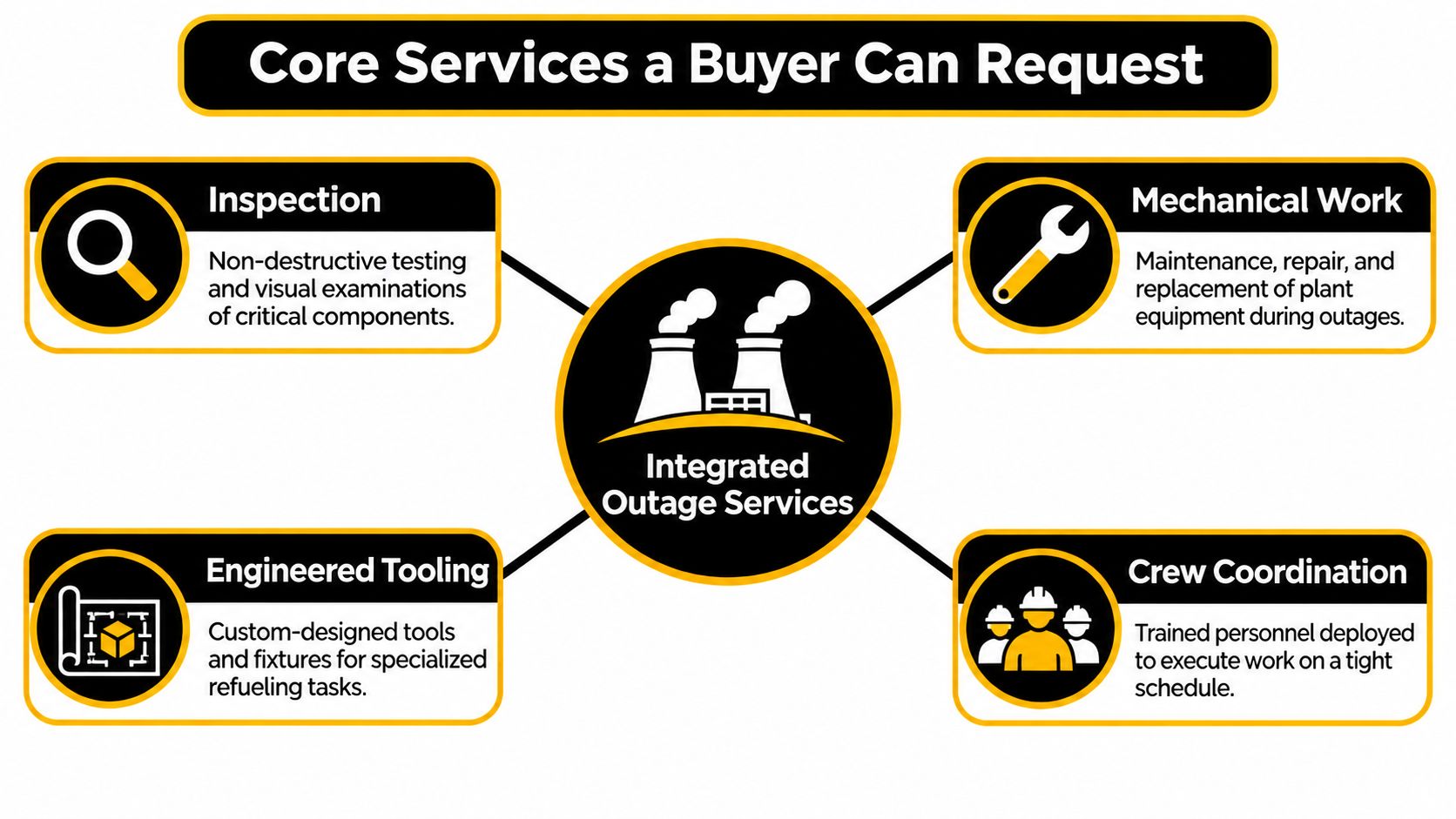
Start with outage planning and field execution. That's the spine. If Master-Lee helps plan the sequence, staff the crews, and execute the mechanical work, you gain tighter control over predecessors and successors. You also take on more dependency on one contractor, so define hold points and reporting cadence before you award the package.
Where Bundling Helps and Where It Does Not
Inspection and nondestructive examination pair naturally with mechanical work. When the same organization finds a defect and performs the repair or replacement, you avoid waiting for a second contractor to mobilize, re-brief, and gain access. The trade-off is independence. Some owners prefer a separate inspection firm for critical acceptance decisions, and that's a legitimate governance choice, not a lack of trust.
Heat exchanger maintenance, rigging, and component replacement are the kinds of scopes that look routine until access, lifting limits, or fouling conditions turn them critical. Ask early about engineered tooling and specialty fixtures. If a task needs a custom tool, early scoping determines whether that tool is a schedule asset or a late surprise.
Decontamination and decommissioning support sit at the specialty end. They demand early discussion of waste paths, controls, and acceptance criteria, and they don't compress well when scope discovery runs late. Don't drop them into a request for proposal as a line item and expect a meaningful price.
Write your request around outcomes and interfaces. State the equipment, the access constraints, the inspection records you expect at closeout, and who owns restart readiness. A buyer who scopes Master Lee Energy Services that way gets a bid you can compare, instead of a capability statement you have to interpret.
Industries and Facility Types Served
Scan this list against your own site profile first. If your facility type isn't here, that doesn't end the conversation, but it means you should press harder on analogous experience and the controls that transfer. If your facility is here, your next question is whether the specific scope and permit environment match.
Nuclear plants sit at the center, with radiological controls, fuel handling discipline, and formal work authorization shaping every task. Fossil, hydroelectric, and cogeneration stations share the outage pressure but differ on access, water management, and rotating equipment scope. Refineries and petrochemical plants add confined space, hot work, and process isolation concerns that change crew planning.
| Industry | Typical Service Scopes | Key Buyer Constraints |
|---|---|---|
| Commercial nuclear | Refueling, in-vessel work, spent fuel pool services, nondestructive examination | Radiological controls, procedure compliance, security clearance |
| Fossil, hydroelectric, and cogeneration | Outage mechanical work, heat exchanger maintenance, rigging, component replacement | Access windows, lifting limits, restart sequencing |
| Petrochemical and petroleum refining | Turnaround maintenance, inspection, industrial cleaning | Confined space permits, process isolation, contamination control |
| Industrial manufacturing, textile and paper mills | Mechanical maintenance, outage support, equipment replacement | Production restart pressure, equipment access, spare parts readiness |
| Pharmaceutical manufacturing | Maintenance and inspection support in controlled environments | Cleanliness expectations, documentation, change control |
Match the Constraint Not Just the Industry Label
Two plants in the same industry can present completely different risk. A refinery exchanger job with clear crane access is not the same as one requiring engineered rigging over live equipment. A paper mill outage with generous laydown space is not the same as a congested cogeneration station where every lift crosses another crew's work area.
The facility label gets a contractor into the conversation. Your access, permit, and documentation constraints decide whether it should stay there.
So describe your constraints in the scope, not just your industry. Name the permit types, the clearance or training requirements, the inspection record format, and the restart authority. That gives Master-Lee, or any bidder, a fair chance to staff correctly, and it protects you from a low bid built on assumptions your site can't accept.
How Master Lee Compares to Other Contractors and Service Providers
Place Master-Lee in the right comparison set before you compare price. Against a narrowly scoped mechanical contractor, Master-Lee's advantage is breadth. One organization can carry planning, tooling, inspection, and execution, which reduces the number of handoffs you manage. The risk is the mirror image. A broad contractor only helps if its supervision and crew depth match the bundle you're awarding, so don't buy breadth you can't verify.
Against an original equipment manufacturer service arm, the trade-off shifts. The manufacturer brings design authority and proprietary knowledge of its own equipment. An independent outage contractor brings field execution capacity and, in Master-Lee's case, experience working in teaming arrangements with a manufacturer. Many owners need both, with clear lines on who approves technical decisions and who turns the wrench.
Different Problems That Look Similar in Search Results
Independent inspection firms occupy a third lane. They sell examination, analysis, and acceptance confidence, not full outage execution. If your governing concern is independent verification, a specialist firm may be the right primary choice, with a mechanical contractor supporting repairs. If your concern is completing the whole work sequence inside the window, an integrated provider is the more natural fit.
Mobile natural gas providers appear in nearby searches for a different reason. They solve a temporary fuel supply problem, keeping a boiler, generator, or construction project running when permanent gas service is delayed or interrupted. Master-Lee solves an outage execution problem inside the plant. Confusing the two wastes a phone call at exactly the moment you don't have time to waste.
Automation adds one more adjacent decision. If your outage scope includes controls upgrades or systems integration, you'll evaluate local integrators for ROI on a separate track, because controls integration isn't the same scope as reactor services, mechanical maintenance, or inspection. Keep those procurements distinct, then coordinate their schedules.
The clean comparison is scope against scope. Ask each bidder what it owns, what it subcontracts, and what it won't do. A candid answer to that last question tells you more than a capability matrix where every box is checked.
Spent Fuel Pool and Underwater Tooling Capabilities
Spent fuel pool work is where abstract capability claims either become tangible or fall apart. Master-Lee reports handling more than 100,000 fuel assemblies across commercial nuclear and U.S. Department of Energy sites, and its Helios 75K AreaLite is rated for up to 78,000 lumens, 5,000 K color temperature, 152 lumens per watt, a 50,000 hour LED life, operation at 100 to 240 VAC, and water resistance to 2,500 psi. Those aren't vanity specifications. Underwater, visibility and tooling reliability decide whether fuel moves on schedule.
The scope around that work includes fuel handling, insert shuffles, irradiated fuel and component inspections, fuel cut-up and repair, and dry fuel storage support. It also includes debris retrieval, underwater vacuuming, underwater camera and video operations, and underwater cutting and packaging. Each task sounds discrete on paper. In the pool, they're linked, because debris, poor visibility, or a failed tool can stop the sequence for everyone.
What Good Tooling Actually Buys You
Take lighting as the concrete example. Higher output with neutral white color improves contrast for camera operators and inspectors reading component condition through water. Pressure resistance supports deployment where a lesser fixture becomes a retrieval problem instead of a tool. You're not buying lumens. You're buying fewer ambiguous inspections, fewer repeat looks, and fewer pauses while a crew troubleshoots equipment that should have been invisible infrastructure.
Foreign material exclusion discipline matters just as much. Debris retrieval and underwater vacuuming aren't housekeeping. Loose material in the pool can delay fuel movement, complicate inspections, and force additional handling that nobody budgeted time for. A contractor fluent in contamination management and traceable inspection workflows reduces that unplanned work.
When you scope this work, ask about backup cameras, backup lighting, cutting tool contingencies, and how inspection records tie to specific assemblies and components. Ask who decides that a component is acceptable, repairable, or ready for dry storage support. The answers reveal whether you're hiring experienced pool operations or a crew that owns underwater equipment and hopes the schedule cooperates.
Evaluating Fit and Next Steps for Procurement
Convert interest into diligence with a short, disciplined sequence. Start by confirming scope alignment in writing, equipment by equipment, so there's no gap between what you think you're buying and what the bid includes. Then confirm site access, security clearance, training, and procedure requirements, because a qualified crew that can't badge in on day one isn't qualified for your outage.
Request a pre-bid meeting at the work location whenever the scope involves access, rigging, or underwater tooling. Walk the lift paths, the laydown areas, and the hold points together. You'll learn more from the questions a contractor asks on that walk than from any proposal narrative.
A Short Procurement Checklist
- Crew resumes: Ask for named leads and their roles on comparable jobs, plus who replaces them if they're unavailable.
- Lessons learned summaries: Request findings tied to scopes like yours, with corrective actions you can verify.
- Tooling and procedure ownership: Confirm who owns critical tools, who maintains them, and whose procedures govern the work.
- Closeout records: Define inspection documentation and acceptance sign-off before mobilization, not at demobilization.
Separate the planned path from the emergency path. A planned outage gives you time for competitive bids, walkdowns, and tooling review. An unplanned finding mid-outage demands a faster question set, focused on available crew, available tooling, and the smallest scope that restores the critical path safely. Decide in advance who at your plant can authorize that faster route.
Before you sign, be ready to answer three questions. What specific schedule risk is Master Lee Energy Services removing, which interfaces does your own team still own, and how will you know at closeout that the work is complete and documented? If those answers are clear, you've done the diligence that turns a familiar name into a defensible procurement decision.
If your plant or project faces the other side of an outage, a temporary loss or delay of natural gas service while permanent supply is installed or repaired, Blue Gas Express provides mobile compressed and liquefied natural gas delivery to keep boilers, generators, and construction work running. Visit the site to discuss deployment timing, capacity, and whether a mobile gas unit fits your interruption window.