

So, you’re thinking about building a new home? One of the first questions on everyone's mind is, "How long is this actually going to take?" On average, you can expect the new home construction timeline to be somewhere between 7 and 12 months from the day your permits are approved to the day you get the keys.
Of course, that's just a ballpark. If you're planning a sprawling custom home with all the bells and whistles, the schedule can easily stretch well beyond a year.
Breaking Down the Build: From Blueprint to Front Door
Think of the construction process like putting together a giant, complex puzzle. You can't just start anywhere; there's a specific order to things. You have to build the border (the foundation) before you can fill in the middle (the framing and interiors). The total time it takes depends on the puzzle's size (your home's complexity), how quickly you can find the pieces (supply chain), and whether you lose a piece under the couch (unexpected delays).
This overview gives you a bird's-eye view of the entire journey, highlighting the major milestones and where things can sometimes get stuck.
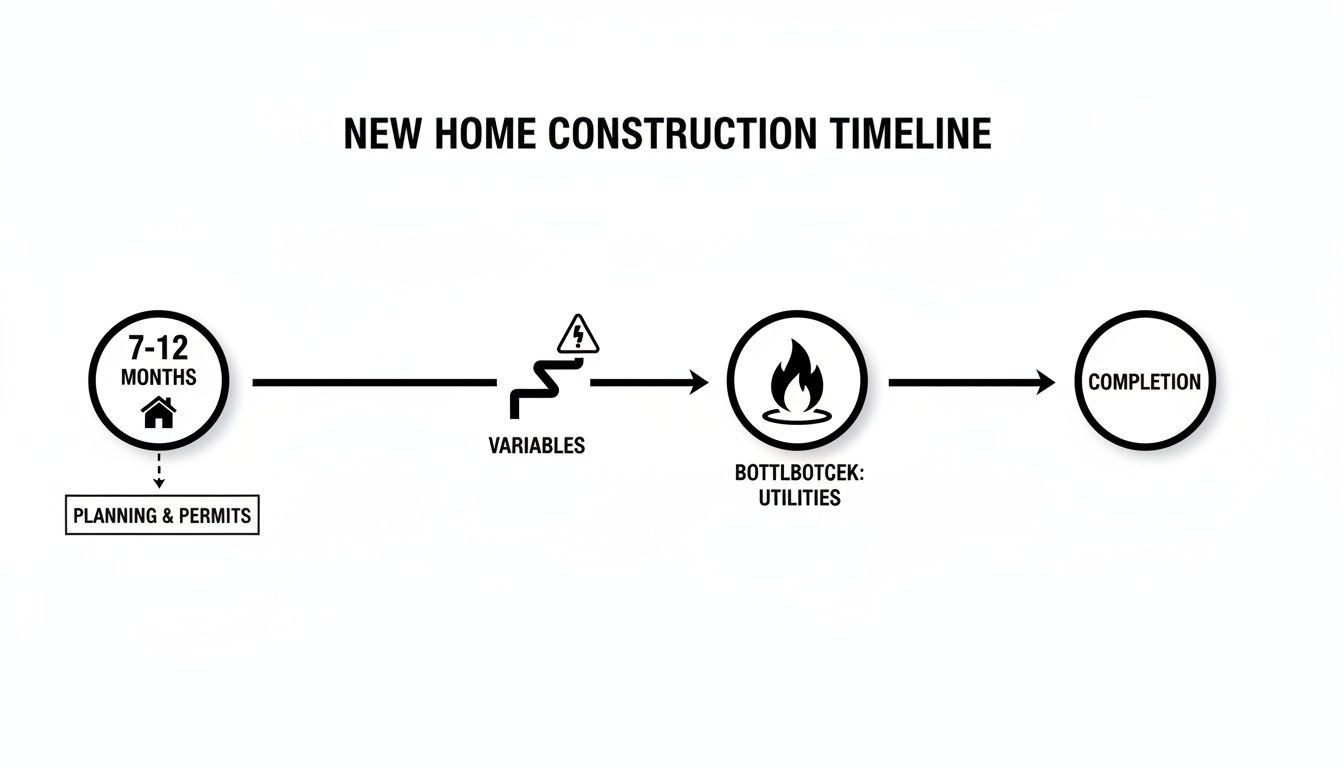
As you can see, the actual construction follows a fairly predictable path. It's the variables and bottlenecks that really dictate your move-in date.
To give you a clearer picture, here’s a quick summary of the main stages for a standard single-family home build.
New Home Construction Timeline At a Glance
| Construction Phase | Average Duration | Key Activities |
|---|---|---|
| Pre-Construction | 1-4 Months | Finalizing plans, securing financing, obtaining permits. |
| Site Prep & Foundation | 2-4 Weeks | Clearing the lot, excavation, pouring the foundation. |
| Framing & Rough-In | 1-2 Months | Building the structural shell, installing plumbing, electrical, HVAC. |
| Exterior & Interior Finishes | 2-4 Months | Siding, roofing, drywall, flooring, painting, fixtures. |
| Final Details & Inspection | 1-2 Months | Landscaping, utility hookups, final inspections, punch list. |
While this table provides a great high-level overview, remember that each phase is interconnected.
Understanding the Critical Path
In construction, we talk a lot about the critical path. This is simply the sequence of tasks that absolutely must be done in order for the project to move forward. If a task on this path hits a snag, it creates a domino effect, pushing back everything that comes after it.
It’s just like baking a cake. You can't frost it until it’s baked, and you can’t bake it until you’ve mixed the batter. Each step is dependent on the one before. For a deeper dive into these stages, this guide explains your building a house timeline in fantastic detail.
What Can Slow Down Your Home Build?
Several factors can throw a wrench in the works. Knowing what they are ahead of time helps you set realistic expectations and plan accordingly.
Design Complexity: A simple, stock floor plan is always going to be quicker to build than a one-of-a-kind custom home. Unique architectural elements and specialty materials often require longer lead times and more skilled labor.
Permitting and Inspections: This is a big one. The time it takes for your local building department to approve permits and schedule inspections can vary wildly. A backed-up office can leave your project in limbo for weeks or even months before you can even break ground.
Utility Connections: One of the most common and frustrating delays happens right near the finish line: waiting for permanent utilities. If the natural gas line isn't connected on time, you can't fire up the furnace or water heater. This can stop critical interior work in its tracks and jeopardize your final Certificate of Occupancy.
A well-managed timeline isn't about hoping delays won't happen—they often do. It's about seeing potential chokepoints, like that final utility connection, and having a plan B ready to go so the whole project doesn't grind to a halt.
This is the key difference between a smooth build and a stressful one. In the next sections, we'll get into the weeds on how to tackle these challenges, especially those pesky utility delays that can pop up when you least expect them.
The Pre-Construction Planning Phase
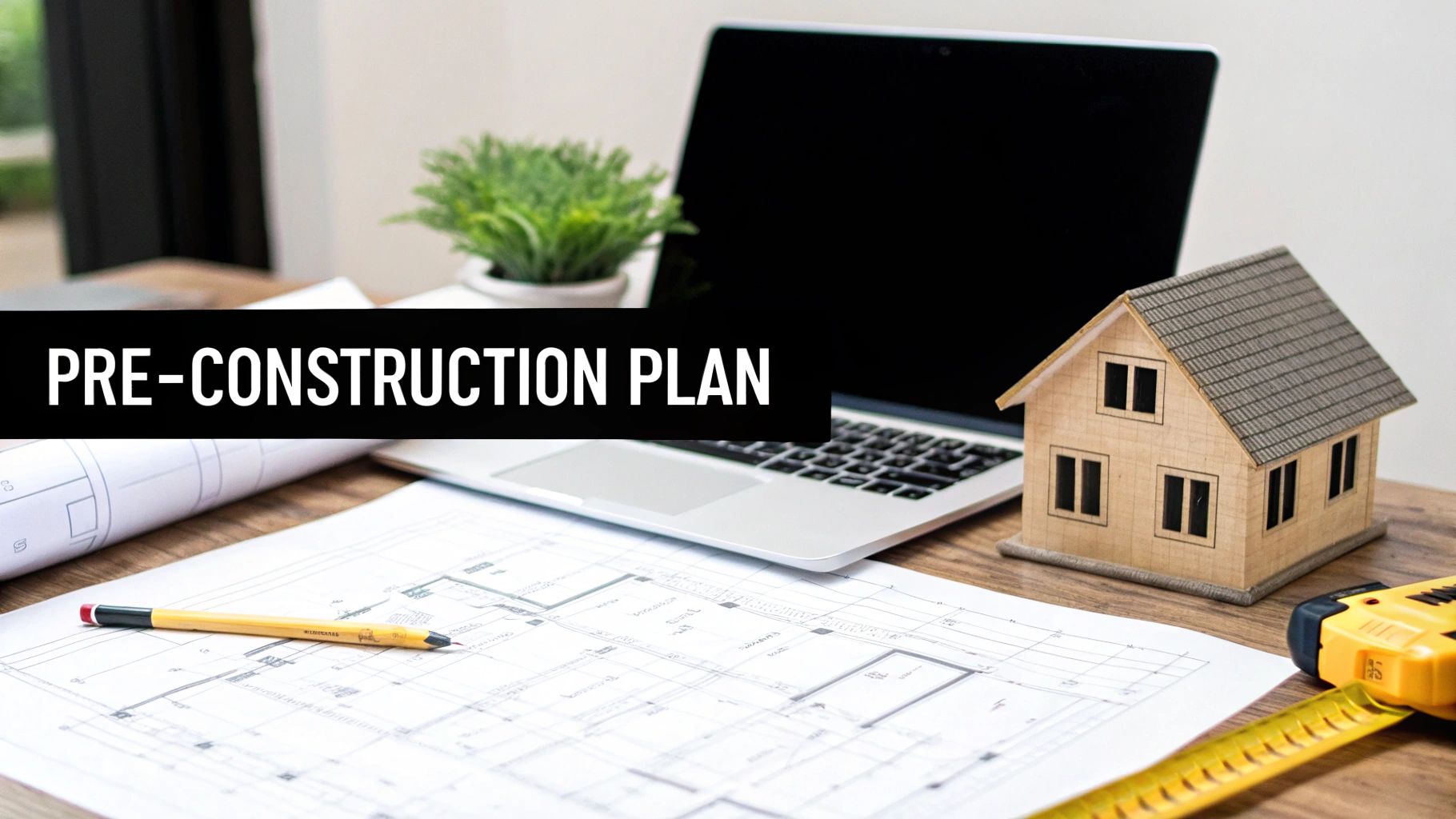
Before the first shovel ever hits the dirt, the most important work on your new home construction timeline is already happening. This is the pre-construction phase, a time dedicated to intense planning that lays the groundwork for everything else. Think of it like a chef prepping for a five-course meal—every ingredient is measured, every tool is in place, and the entire kitchen is organized before the cooking even starts.
This is where a smooth, predictable timeline is either made or broken. Rushing decisions or cutting corners here is like building on a shaky foundation; you’re practically inviting expensive problems and frustrating delays later on. According to the National Association of Home Builders, you can expect this phase to last anywhere from 1 to 4 months, all depending on how complex your project is.
Finalizing Your Architectural Design
First things first, you need to turn your dream into a detailed blueprint. This means sitting down with architects and designers to hammer out every single aspect of your home's layout, from the number of bathrooms down to where you want the light switches. The more decisive you are now, the smoother things will go.
Any changes made after construction begins are called "change orders," and they can create a massive ripple effect, throwing both the schedule and budget off track. Nailing down every design choice upfront is the key to a drama-free build.
Every hour spent in detailed planning during pre-construction can save days of rework and weeks of delays once the build begins. This is the point of maximum leverage over your project's timeline and budget.
Navigating Financing and Land Acquisition
With a solid plan in hand, you’re ready to tackle two major hurdles: securing the money and prepping the land. Getting pre-approved for a construction loan isn't just a suggestion—it's a critical step that locks in your budget and tells the builder you're serious.
At the same time, your lot needs to be prepared. This is more than just owning a piece of dirt; it involves a few key steps:
- Land Surveying: Officially marking your property lines.
- Soil Testing: Making sure the ground can actually support the weight of your home's foundation.
- Utility Assessment: Confirming you have access to water, sewer, and power.
These tasks are vital for creating an accurate site plan, which is a must-have for the next big milestone.
Securing Essential Building Permits
Here’s where things can get a little unpredictable. Your finalized blueprints have to be submitted to the local building department for their stamp of approval. They'll review everything to make sure your plans meet all local zoning laws, building codes, and safety rules.
The time it takes to get a permit can vary wildly. In some towns, it might take a few weeks; in others, it could be several months. A backed-up permitting office or a request for plan revisions can stop your new home construction timeline in its tracks before you've even started.
It's interesting to see how new building methods are tackling these timeline challenges head-on. The global modular and prefabricated construction market, valued at $173.5 billion in 2025, is expected to soar past $300 billion by 2035. This boom is fueled by offsite construction that can cut new home timelines by up to 50%. A typical 10-12 month custom build can be shrunk to just 4-6 months for a modular home. You can read more about these major construction shifts over on Quickbase.com.
Once those permits are officially in hand, your builder can finally schedule the groundbreaking and start turning your vision into a reality.
From Groundbreaking to Structural Framing
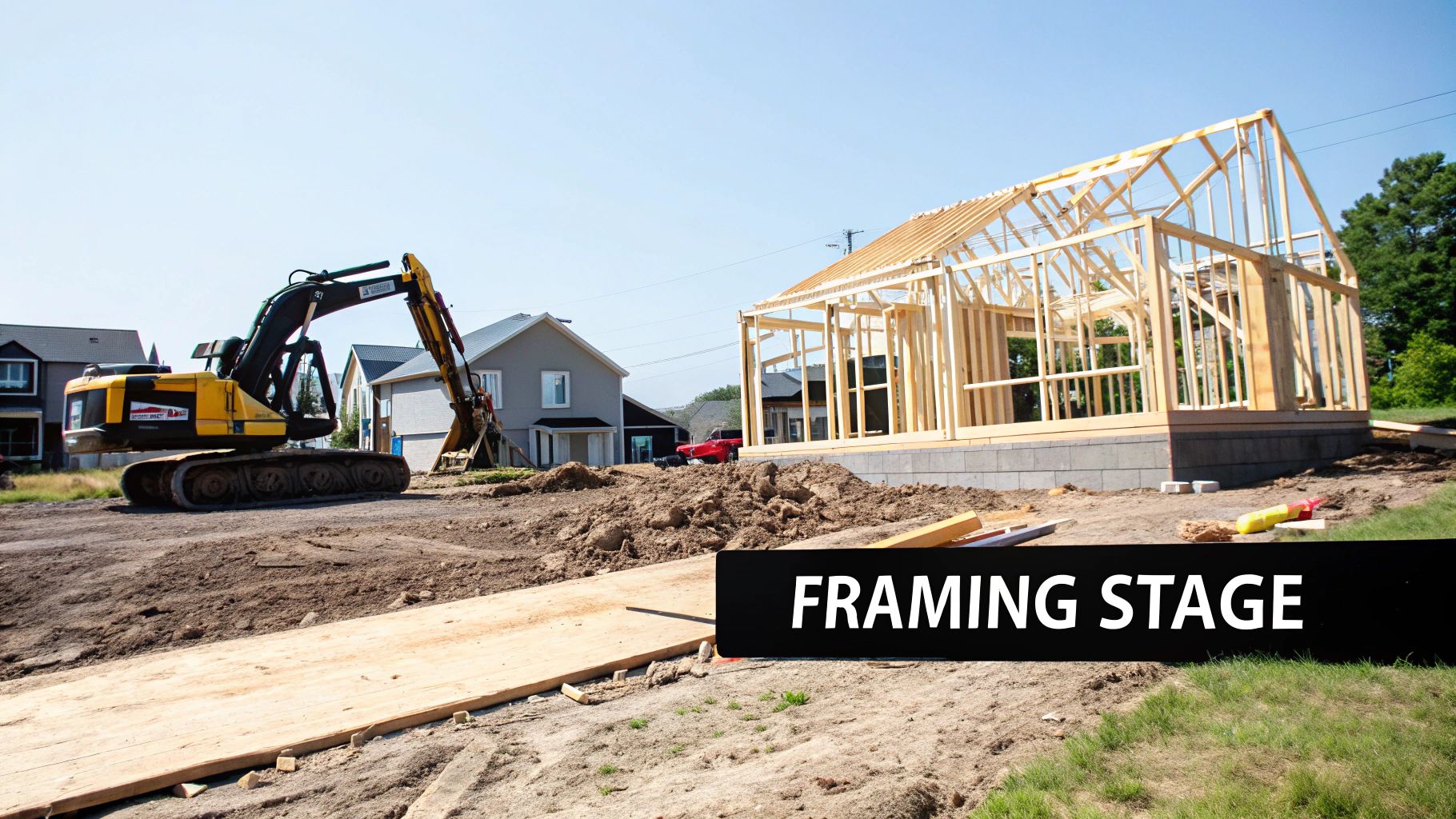
With the permits in hand and the plans locked in, your new home construction timeline finally leaves the drawing board and hits the dirt. This is the moment your vision starts to become a reality, as an empty lot transforms into a buzzing construction site.
The heavy machinery rolls in, and the real work kicks off. It’s an incredibly exciting time, but it's also where the project is most vulnerable to on-site surprises. Expect this whole phase to take anywhere from three to six weeks, though that can change based on how complex your site and foundation are.
Site Preparation: The First Steps
Before a single drop of concrete is poured, the land itself needs to be shaped and prepped. This critical first step involves clearing the lot of any trees, rocks, or old debris. Once the slate is clean, heavy equipment gets to work grading the land, ensuring water will drain away from your future home and creating a perfectly level pad for the foundation.
This is also when crews dig the trenches for your underground utilities. Water lines, sewer pipes, and electrical conduits are all laid in place, ready to be connected later. Hitting unexpected rock or finding unstable soil during this process is a classic source of early delays and budget adjustments.
Pouring the Foundation
Next up is the foundation—the literal bedrock your entire home will rest on. This is a painstaking process where accuracy is everything. Even tiny mistakes here can ripple into major structural problems down the road. Depending on your climate and home design, you'll likely have one of three common types.
- Slab-on-Grade: A single, thick layer of concrete poured directly on the ground. It's the fastest and most common type in warmer regions without basements.
- Basement: A full-height foundation that creates a whole new level of living space below ground, requiring serious excavation and a lot more concrete.
- Crawl Space: A foundation that elevates the house a few feet off the ground, leaving a short, accessible space underneath for plumbing and wiring.
After the footings are dug and forms are built, the concrete trucks arrive. The concrete then needs to cure, which is a chemical hardening process that absolutely cannot be rushed. Curing is crucial for strength and is heavily dependent on weather, making it a major factor in scheduling.
This stage is a race against the elements. A sudden downpour can flood an excavated foundation pit, and freezing temperatures can ruin a fresh concrete pour. Experienced builders watch the weather forecast like hawks to schedule this work during clear, favorable conditions.
Raising the Structural Frame
Once the foundation is fully cured and passes its first big inspection, the framers get to work. This is easily the most dramatic and satisfying part of the build. In just a couple of weeks, the home’s skeleton—the walls, floors, and roof system—shoots up from the foundation. For the first time, you can actually walk through the rooms and get a real feel for the layout.
The main goal here is to get the house "in the dry" as fast as possible. This means finishing the exterior sheathing, getting the roof on, and installing the windows and doors. Once you have a weatherproof shell, the interior trades can start their work without being held up by rain or snow.
Hitting this milestone is a huge turning point in the new home construction timeline. Getting the frame up and the house dried in sets a positive rhythm for everyone who follows, from the plumbers and electricians to the drywallers and painters. It marks the official transition from the raw, heavy-duty phase to the detailed finish work ahead.
Installing the Home's Core Systems
Once the frame is up and the house is "dried in"—meaning the roof, sheathing, and windows are installed—the project takes a sharp turn inward. What was just a wooden skeleton is about to get its vital organs. This stage is known as the "rough-in," and it’s where all the crucial systems get installed within the still-open walls.
Think of it as putting in the home’s nervous system, circulatory system, and respiratory system all at once. It's a carefully choreographed dance between plumbers, electricians, and HVAC technicians, who weave miles of pipes, wires, and ductwork through the studs and joists. This is where a builder's meticulous planning really shines, preventing scheduling nightmares and making sure everything fits together perfectly before the walls are sealed up.
The MEP Rough-In: Mechanical, Electrical, and Plumbing
You'll hear builders and contractors refer to this phase as "MEP," which is simply shorthand for Mechanical, Electrical, and Plumbing. It's a whirlwind of activity that starts bringing the house to life from the inside out.
- Plumbing: This is when all the supply and drain lines for sinks, showers, and toilets are installed. Plumbers also run gas lines for appliances like furnaces, water heaters, or ranges.
- HVAC: The heating, ventilation, and air conditioning crew puts in the furnace and A/C units, then runs all the ductwork that will eventually deliver warm and cool air throughout the house.
- Electrical: Electricians pull wires from the future breaker panel location to every single switch, outlet, and light fixture marked on the blueprints.
This organized chaos has to be finished before any insulation or drywall goes up. Each trade's work often depends on the others, so clear communication and tight coordination are non-negotiable if you want to avoid costly rework and keep the project on track.
The All-Important Rough-In Inspections
After every last pipe, duct, and wire is in place, everything grinds to a halt for a series of incredibly important inspections. A city or county inspector comes to the site and goes over the work of each trade with a fine-tooth comb, ensuring everything meets current building codes and safety standards.
This inspection is a major gateway in the construction timeline. If you fail, it means rework and delays. Passing the rough-in inspection is the green light to finally close up the walls and move on to insulation and drywall.
You really can't overstate how critical this checkpoint is. A failed inspection can easily add days, or even weeks, to the schedule. Trades have to be called back to fix the issues, and then you have to wait for another inspection. A seasoned builder knows exactly what the inspectors are looking for and makes sure the work is done right the first time to maintain momentum.
Navigating Delays During System Installation
While managing the trades is a huge part of it, this phase is also vulnerable to outside forces. According to Associated Builders and Contractors, U.S. construction backlogs hovered around 8.4 to 8.5 months in late 2025—a stark reminder of the pressures on the industry. In this kind of environment, it's not uncommon for delays in permitting, utility hookups, or even power capacity constraints to stretch a project timeline by 10-20%. The 2026 construction market outlook gives a great overview of how these external factors are impacting schedules.
For example, if there's a delay getting temporary power to the site, the electricians can't get as much done. If the gas utility is backed up, plumbers can't pressure-test their lines. These dependencies show just how much the internal rough-in work relies on external coordination. Once the home’s core systems are successfully installed and inspected, it marks a huge milestone. The path is now clear for the really exciting part: turning this structure into something that truly looks and feels like a home.
Bringing Your Home to Life with Finishes and Fixtures
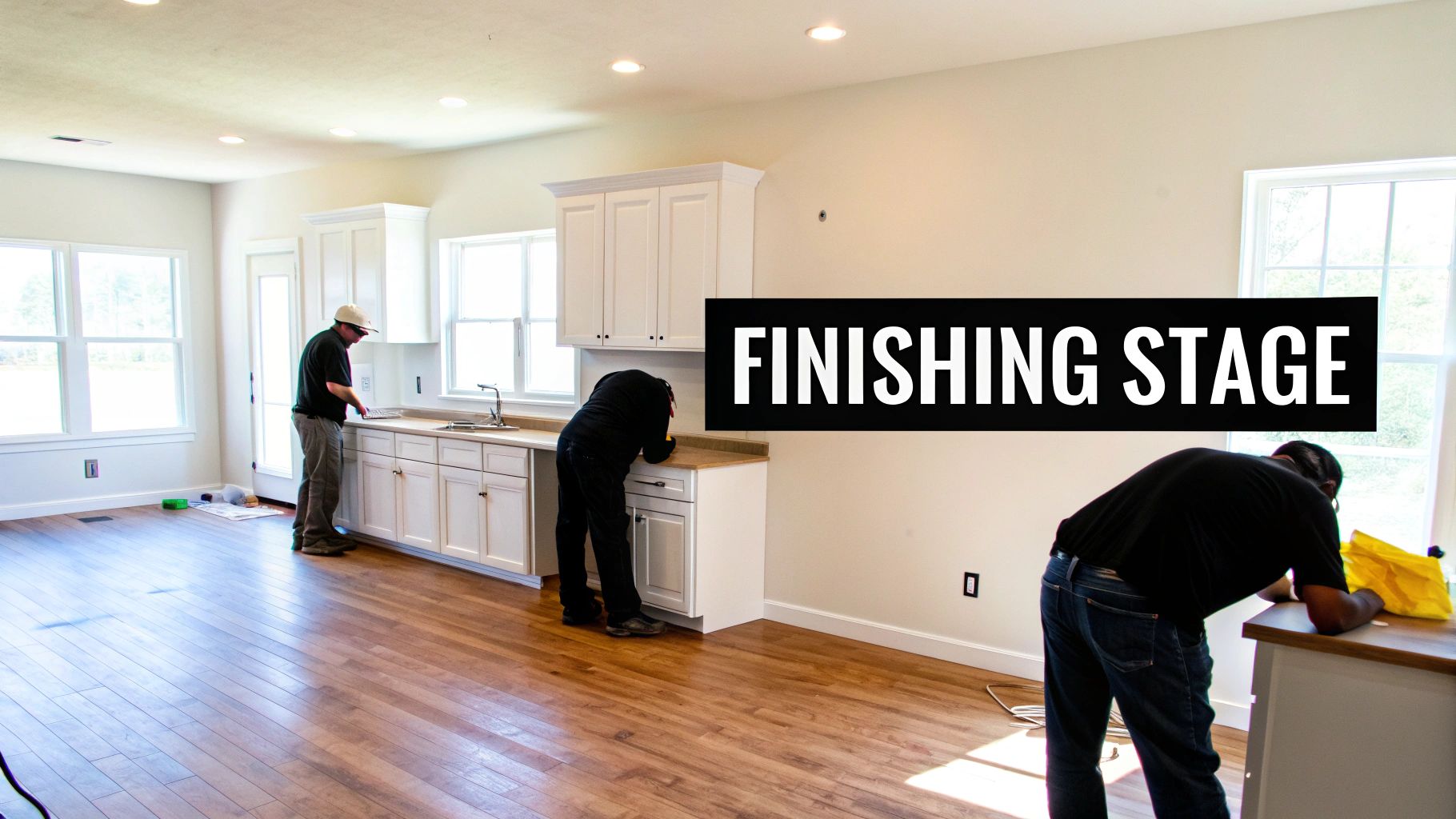
Once the rough-in inspections are signed off, the new home construction timeline shifts into its most satisfying gear. This is the part everyone loves. The chaotic jumble of wires and pipes disappears behind fresh walls, and what was once a raw skeleton finally starts to feel like a home.
This finishing stage is all about layering in the character and style you've been dreaming about. Don't be fooled by the fast-changing visuals, though; this is a marathon, not a sprint. You can expect this phase to take anywhere from two to four months as a carefully orchestrated sequence of skilled tradespeople come through to do their work.
From Drywall to Detailed Trim Work
The transformation kicks off with drywall. Crews hang, tape, and mud massive sheets of gypsum board to create the smooth, seamless surfaces for your walls and ceilings. It’s a messy, multi-day job that simply can’t be rushed—each layer of joint compound has to cure properly before the next one goes on.
After the dust settles and the first coats of primer and paint go up, the house truly begins to shine. This is when all those design choices you agonized over start to pay off.
- Flooring Installation: Whether it's the warm glow of hardwood, the cool feel of tile, or the softness of carpet, the floors go in and immediately define the atmosphere of each room.
- Cabinetry and Countertops: Kitchen and bathroom cabinets are meticulously set in place, soon followed by the heavy lifting and precise fitting of your countertops.
- Trim and Millwork: Baseboards, window casings, and interior doors add those crisp, architectural lines that give a home its polished, finished look.
Each step builds on the last, systematically turning a construction site into a real living space. But just as all this exciting progress is happening, a potential show-stopper is looming in the background.
The Critical Utility Connection Bottleneck
As the interior gets its final touches, it's time to connect the permanent utilities and fire everything up. And this, right here, is where one of the most common and maddening delays in the entire new home construction timeline pops up: waiting on the local utility company to hook up the permanent natural gas line.
This isn't just a small hiccup; it's a massive roadblock. Without natural gas, your builder can't test the furnace, the water heater, or other essential appliances. This single dependency can halt a dozen other finishing tasks right in their tracks.
The Certificate of Occupancy (CO) is the final gatekeeper to moving into your new home. It cannot be issued until inspectors verify that all life-safety systems, including the HVAC and hot water, are fully operational. A delayed gas line means a delayed CO, period.
This common bottleneck can leave a nearly finished home sitting dark and empty for weeks, frustrating new owners and costing builders a fortune in carrying costs. Even things like letting certain types of flooring acclimate properly require a climate-controlled interior, which is impossible without a working furnace.
Keeping the Timeline Moving with Temporary Solutions
So, how do smart builders get around this costly standstill? They create a workaround. While they're stuck in the queue for the utility provider, they can bring a temporary mobile natural gas solution, like a compressed natural gas (CNG) unit, right to the site.
This simple move allows the builder to commission the HVAC system, test the appliances, and get through those critical final inspections without waiting on anyone else's schedule. It effectively decouples the project's internal progress from the utility's external backlog.
Work continues, the final punch list gets checked off, and the path to closing stays open. It’s a game-changing strategy for keeping momentum right at the finish line, especially in fast-growing areas where utility companies are swamped. While the national average for finishing a single-family home is around 6-8 months, these regional bottlenecks can easily stretch that timeline to 9-12 months. You can see more data on housing completions from the U.S. Census Bureau.
By making sure the home has the energy it needs, exactly when it needs it, builders can turn a potential month-long delay into a simple logistical step—and keep your dream home right on schedule.
Navigating the Final Walkthrough and Closing
You've made it to the home stretch. This is where all the planning and hard work pays off, transforming a busy construction site into your actual home. This final leg of the journey, usually lasting about one to two weeks, is all about tying up loose ends and making sure everything is perfect before you get the keys.
Clearing the Final Hurdles
Before you can even think about moving in, the local building inspector has to give their official blessing. They'll come out to the property for a final inspection, meticulously checking that the electrical, plumbing, structural work, and everything in between is up to code.
This isn't just a formality. Passing this inspection is the only way to get the crucial Certificate of Occupancy (CO), which legally declares the home safe to live in.
The Homeowner's Final Walkthrough
Once the builder has the CO, it's your turn. You'll join them for a final walkthrough, which is your opportunity to scrutinize every inch of your new home. This is when you create what's known in the industry as a "punch list."
A punch list is just a simple, detailed list of anything and everything that needs a final tweak or correction. Think of it as your last chance for quality control.
You might spot things like:
- A few scuffs on the wall that need a paint touch-up
- A cabinet door that doesn't close quite right
- A tiny scratch on a new countertop
- A light switch that doesn't work
Take your time during this walkthrough. This is your last real chance to point out any imperfections while the builder is still on the job and responsible for fixing them. Open every door, test every faucet, and flip every switch. Don't be afraid to be picky!
Your builder will then work through this list to get everything just right.
Closing the Deal and Getting Your Keys
After you've signed off on the punch list, you're cleared for closing. This is the legal and financial finish line where you sign the final documents, money changes hands, and the property officially becomes yours. And then comes the moment you've been waiting for: getting the keys to your brand-new home.
The closing is the very last step. Understanding new options like the significance of e-closing can give you a better idea of how this final, critical phase works. A project that avoids last-minute utility hookup disasters or failed inspections is one that leads to a smooth, on-time closing, ensuring there are no delays in handing over those keys.
Common Questions About the Home Construction Timeline
Building a new home is a marathon, not a sprint, and it's natural to have questions along the way. Getting your head around the timeline can make the whole process feel less overwhelming. Let's tackle some of the most frequent questions I hear from homeowners.
What Is the Biggest Cause of Construction Delays?
You might think bad weather is the biggest troublemaker, and it certainly can throw a wrench in the works early on. But in my experience, one of the most frustrating delays pops up right when you can see the finish line: waiting for permanent utility hookups.
It’s surprisingly common for a local natural gas provider to have a backlog. This can bring everything to a grinding halt—you can't commission the HVAC system, test the water heater, or get those final inspections signed off. I've seen this one issue single-handedly push a move-in date back by weeks, even when the house itself is completely finished.
How Much of a Time Buffer Should I Plan For?
Hope for the best, but plan for reality. A smart move is to build a time buffer of 15-20% on top of whatever your builder estimates.
So, if you're told it's a 10-month build, you should mentally (and logistically) prepare for it to take closer to 11.5 or 12 months. This cushion gives you breathing room for the inevitable hiccups, like a key material being on backorder or a subcontractor's schedule getting jammed up, without derailing your life.
A contingency plan isn't about expecting the worst; it's about being prepared for the realities of a complex project. This buffer is your best defense against the stress of unforeseen delays.
Can I Make Design Changes During Construction?
You can, but be prepared for the consequences. Any change made after the shovels hit the ground is called a "change order," and it will almost certainly cost you both time and money.
Even something that seems small can have a big ripple effect. It might mean architects have to revise plans, new materials need to be ordered (and waited for), and labor has to be completely rescheduled. To keep your budget and your new home construction timeline intact, your best bet is to lock in every single design decision before construction ever begins.
Are you a builder staring down a utility connection delay on your project? Don't let a stalled natural gas line derail your timeline. Blue Gas Express provides temporary mobile CNG and LNG solutions to keep your project powered and on schedule. Learn how we can bridge the gap and get you to closing faster at https://bluegasexpress.com.