

What happens when your project needs the clean, efficient power of natural gas, but there’s not a pipeline for miles? This is a common roadblock for industries pushing boundaries, from remote construction sites to sprawling new housing developments. The answer isn't to switch to dirtier, less efficient fuels—it's to bring the pipeline to you.
That’s the whole idea behind mobile natural gas solutions. Think of it as a "virtual pipeline" on wheels, a way to transport and deliver natural gas anywhere it's needed, ensuring a reliable, temporary energy supply without being tied to the grid.
Powering Progress Beyond the Pipeline
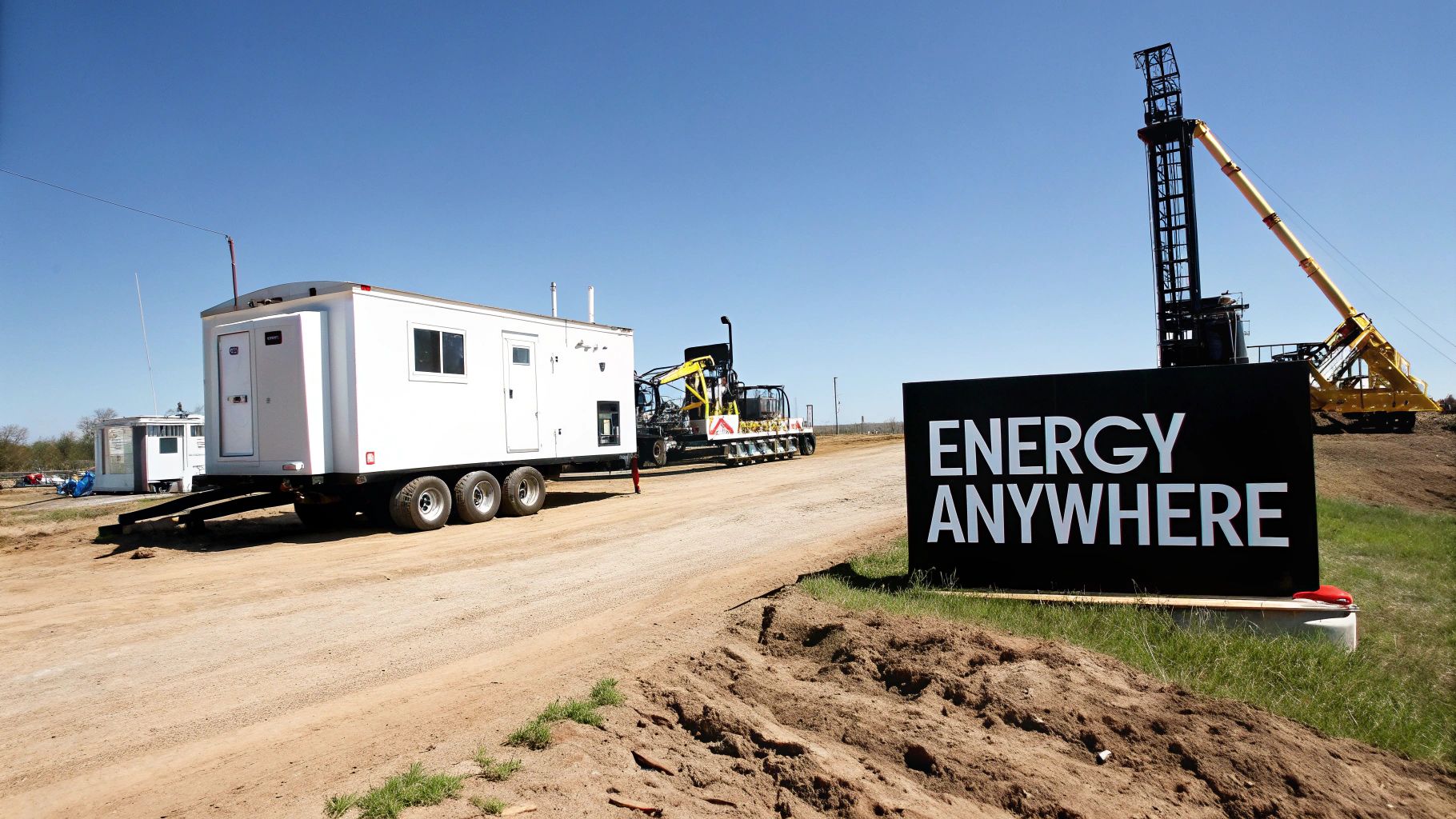
For a huge number of operations vital to our economy, being "off the grid" is just a fact of life. But being far from a pipeline doesn't have to mean compromising on energy.
Mobile natural gas bridges that gap. It delivers consistent, powerful energy to sites that would otherwise be stuck with costly delays or forced to depend on less practical fuels like diesel or propane.
Who Needs Mobile Energy?
The applications are incredibly diverse, often serving as the primary power source where traditional utilities can't reach. Some of the most common users include:
- Remote Construction Sites: Keeping heavy machinery, on-site heating, and ground-thawing equipment running smoothly, no matter how far out the job is.
- Industrial Plants: Serving as a crucial backup to keep production lines moving during planned pipeline maintenance or unexpected supply interruptions.
- New Residential Developments: Firing up the heat and power in new homes months before permanent utility connections are finalized, helping builders get occupancy permits and close sales faster.
A reliable power grid requires more than just generation; it demands flexible delivery. Mobile natural gas acts as a crucial link, ensuring energy continuity where permanent infrastructure is delayed or unavailable.
The Technology Behind the Solution
So, how does it all work? Throughout this guide, we’ll dive into the two core technologies that make this possible: Compressed Natural Gas (CNG) and Liquefied Natural Gas (LNG).
We'll break down the key differences and explain how each one is suited for specific logistical challenges. You'll get a clear picture of how a provider like Blue Gas Express handles the entire process—from compressing or liquefying the gas to delivering it right to your site. It’s a complex operation made simple and dependable, giving you a steady energy supply, wherever you are.
CNG vs. LNG: The Two Flavors of Mobile Natural Gas
To get a handle on how natural gas can show up on your doorstep, you first need to know the two main ways it's packaged for the road: Compressed Natural Gas (CNG) and Liquefied Natural Gas (LNG). They’re both the same product at their core, but the way they are stored and transported gives each one a unique set of strengths. Picking the right one is the first, and most important, step in setting up a mobile gas solution that actually works for you.
Think of CNG like the air in a scuba tank. We take natural gas and pressurize it to a whopping 3,600 pounds per square inch (psi), cramming a huge amount of energy into rugged steel or composite cylinders. This high-pressure approach means the gas is pretty much ready to use the moment it arrives on-site.
LNG, on the other hand, is more like a high-tech thermos. To create it, natural gas is chilled to an incredibly cold -260°F (-162°C), which turns it from a gas into a liquid. This liquefaction process makes it astonishingly dense, letting us pack a massive amount of energy into a surprisingly small, insulated tank.
So, When Do You Use Which?
The decision to go with CNG or LNG usually boils down to three key questions: how much gas do you need, how far does it have to travel, and for how long? Each one shines in different scenarios.
- CNG is your best bet for shorter-term projects or when your daily gas needs aren't massive. Because it's stored under pressure, the setup is straightforward. It’s perfect for jobs that need a flexible, quick-start supply without the extra equipment needed for cryogenic liquids.
- LNG is the heavyweight champion for large-scale, long-haul projects. It’s 600 times denser than natural gas in its gaseous state, meaning a single tanker of LNG can deliver way more energy than a CNG trailer. This makes it the clear winner for powering industrial plants, large construction sites, or even entire communities cut off from a pipeline.
The real trick is matching the gas to the job. By understanding these fundamentals, you can pick a solution that fits your operation like a glove, ensuring you’re not paying for capacity or complexity you simply don't need.
The physical state also changes how the gas is managed on-site. CNG rolls up in high-pressure tube trailers, and all you really need is a regulator to step down the pressure before it’s ready to use. LNG is a bit more involved; it arrives in specialized cryogenic tankers and requires a regasification unit to safely and slowly warm the liquid back into a gas before it can be fed into your system.
CNG vs. LNG At a Glance
Sometimes a simple side-by-side look makes all the difference. Here’s a quick breakdown to help you see the practical differences between CNG and LNG in the field.
| Characteristic | Compressed Natural Gas (CNG) | Liquefied Natural Gas (LNG) |
|---|---|---|
| Storage Method | Stored under high pressure in cylinders. | Stored as a cryogenic liquid at -260°F. |
| Energy Density | Lower energy density by volume. | Extremely high energy density by volume. |
| Best Use Case | Shorter projects, lower gas demand. | Long-term projects, high gas demand. |
| Transport | High-pressure tube trailers. | Insulated, cryogenic tanker trucks. |
| On-Site Setup | Simpler; requires pressure regulation. | More complex; needs a regasification unit. |
As you can see, there's no single "best" option—just the right option for a specific set of circumstances. Your project's scale, duration, and daily consumption will point you toward the most efficient and cost-effective choice.
How a Virtual Pipeline Delivers Energy to Your Site
So, how exactly does natural gas get from a permanent pipeline to a remote job site with no physical connection? The answer is a surprisingly elegant and well-oiled logistical process we call a virtual pipeline. It’s a mobile energy network designed to make sure that whether you need CNG or LNG, the fuel shows up safely and is ready to go when you are.
The whole journey begins at a permanent natural gas pipeline or a processing facility. Here, raw gas is tapped and then prepped for its mobile form. It's at this point the gas goes down one of two paths, depending on what a project calls for. For CNG, the gas is squeezed under high pressure. For LNG, it’s super-cooled until it becomes a dense liquid. This first step is all about packing as much energy as possible into each truckload.
This infographic breaks down the core steps of sourcing, preparing, and moving these vital natural gas solutions.
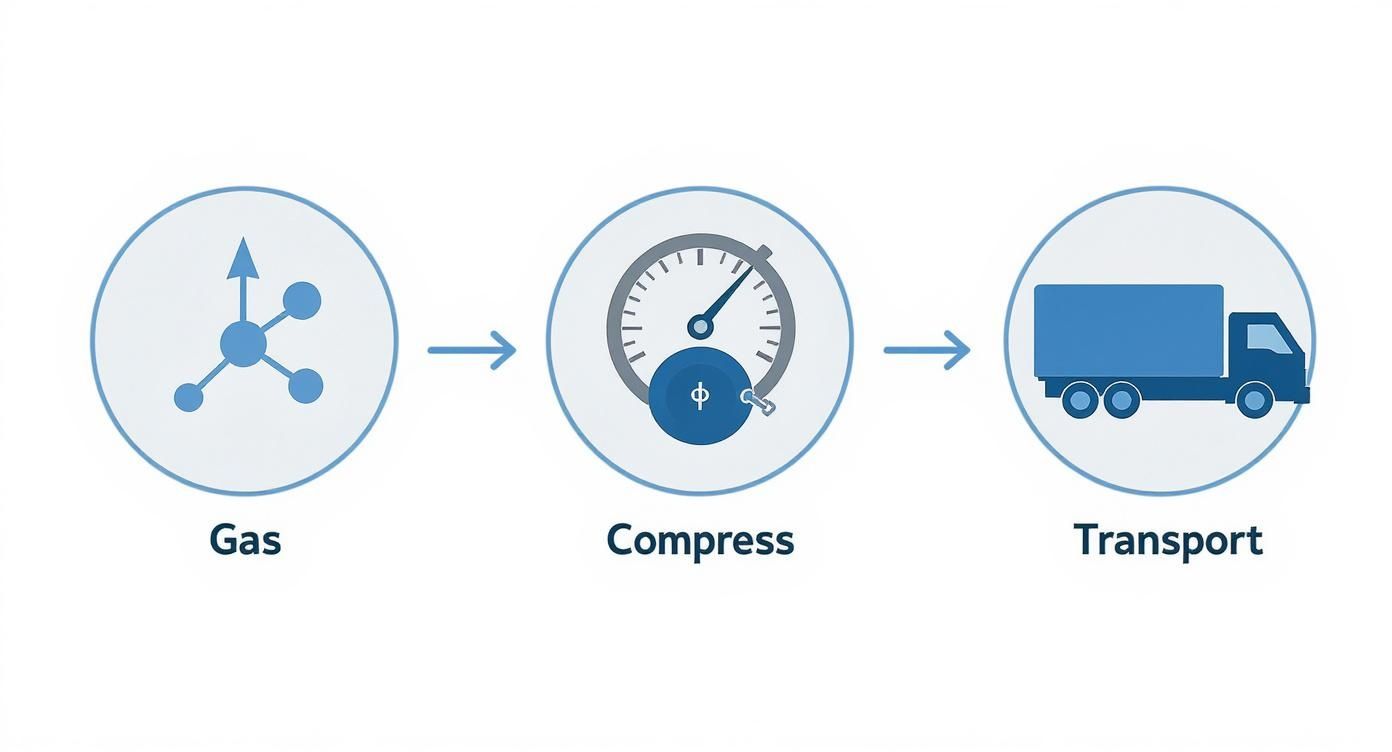
As you can see, the key is converting the gas into a dense, portable state—that’s what makes the entire virtual pipeline concept work.
The Journey to Your Location
Once the gas is processed, it’s loaded onto specialized trucks built for safety and efficiency. This is where the equipment really differs based on the type of gas.
- CNG Transport: The gas is moved in high-pressure tube trailers, which are basically a bundle of heavy-duty, reinforced cylinders. These trailers are engineered to handle pressures up to 3,600 psi and are perfect for delivering gas that's already in a ready-to-use state.
- LNG Transport: For LNG, we use cryogenic tanker trucks. Think of them as giant thermoses on wheels, using incredibly effective insulation to keep the liquid at a frigid -260°F during the trip.
This critical transportation leg is managed by experts like Blue Gas Express, who take care of everything from scheduling and logistics to route planning. It's their job to guarantee a timely and secure delivery, every single time.
The virtual pipeline isn’t just about trucks and tanks; it’s a fully managed supply chain. The goal is to create an experience so seamless that it feels like you're connected directly to a utility main.
Arrival and On-Site Deployment
When the truck pulls up to your site, the final stage begins. The entire setup is designed to integrate quickly and efficiently with your existing systems.
For CNG, the delivery is pretty straightforward. The trailer hooks up to a pressure-regulating unit, which safely "steps down" the gas pressure to the exact level your equipment needs to run.
LNG is a bit different; it requires a mobile regasification unit. This specialized equipment carefully warms the intensely cold liquid, turning it back into a gas at the precise pressure and flow rate your operation demands. From the source to your site, the virtual pipeline delivers a complete, utility-grade energy solution, no matter where you need it.
Mobile Natural Gas in Action Across Industries
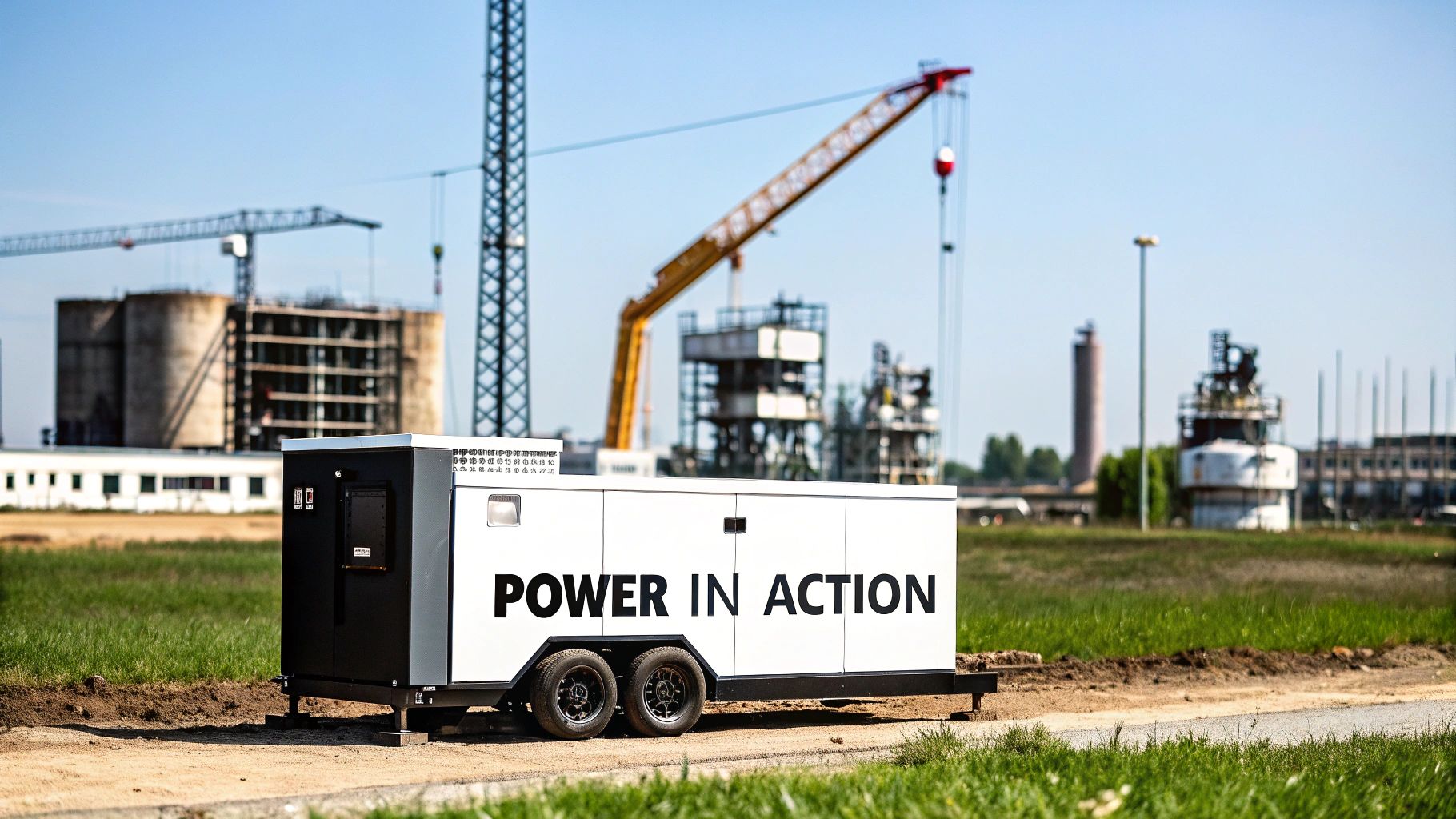
It’s one thing to understand the technology behind mobile natural gas, but it's another to see it solving real-world problems. This is where the concept of a "virtual pipeline" really comes to life. It’s not just a clever term; it’s a practical solution that keeps projects on track and businesses humming across some seriously demanding sectors.
For any project manager, mobile gas becomes the MVP when a permanent pipeline is delayed or just not there. It delivers the power needed to run heavy machinery, cure concrete, or provide essential heat far from any utility grid. What could have been a logistical nightmare quickly becomes just another box to check.
Powering Construction and Development
Picture this: a new housing development is ready, but the utility company says the gas main won't be connected for another six months. Without heat, the builder can't get occupancy permits, and the entire project stalls. This is the exact kind of headache a mobile energy partner like Blue Gas Express is built to solve.
By bringing in a temporary CNG or LNG setup, developers can immediately get to work.
- Fire up heating systems to get those all-important inspections passed.
- Stop pipes from freezing when the temperature drops during construction.
- Keep the project timeline moving and get homes on the market without delay.
Suddenly, a costly roadblock becomes a smooth, planned transition, keeping revenue flowing right on schedule.
This need for flexible energy is a big deal. The U.S. is hitting record levels of natural gas consumption, expected to average around 91.4 billion cubic feet per day (Bcf/d). A huge part of that is driven by homes and businesses needing heat—after all, 45% of U.S. homes depend on natural gas. You can dig into these trends over at Utility Dive.
Ensuring Industrial Continuity
In an industrial setting, a gas supply interruption isn't an inconvenience—it can mean millions in lost production. Whether it's planned pipeline maintenance or a sudden outage, the operational risk is massive. This is where mobile natural gas solutions act as a critical safety net.
A savvy plant operator can simply schedule a temporary LNG delivery to cover a planned pipeline shutdown. The facility keeps running at full tilt without missing a beat. What could have been a crisis is reduced to a minor logistical task.
The real power of mobile gas lies in its ability to de-risk your operations. It’s an on-demand energy bridge that insulates your deadlines, production goals, and bottom line from events you can't control.
Versatility in Commercial and Agricultural Use
The uses for mobile gas don't stop with construction sites and factories. It's a remarkably adaptable tool for a whole host of other commercial needs.
- Agriculture: Firing up grain dryers in remote farming areas during harvest, especially where the local electrical grid can't handle the load.
- Event Venues: Supplying clean energy for temporary kitchens, massive tents, and heating systems at outdoor festivals or big corporate events.
- Emergency Response: Fueling generators and mobile command centers in disaster zones long before permanent utilities are back online.
In every one of these scenarios, the core value is the same: getting clean, reliable, and affordable energy exactly when and where it's needed. This kind of flexibility is what makes mobile natural gas such an essential resource for keeping modern business moving forward.
The Strategic Advantages of Mobile Gas Solutions
So, why are more and more project managers ditching traditional fuels like diesel and propane for mobile natural gas? It boils down to a powerful mix of operational freedom, serious cost savings, and environmental responsibility that fixed pipelines just can't offer. For any project operating off the grid, these advantages are too compelling to ignore.
The biggest win is energy independence. Mobile gas frees your operation from the constraints of permanent infrastructure. You're no longer waiting on pipeline construction crews or worrying about grid failures, which means your project stays on schedule and completely under your control.
This kind of flexibility is becoming essential as global energy demands grow. Just recently, worldwide natural gas demand hit a record 4,122 billion cubic meters—a 1.9% jump from the previous year. It shows just how vital a responsive energy source like natural gas has become. You can dig deeper into these trends in the 2025 Global Gas Report.
Significant Cost and Environmental Gains
For projects that burn through a lot of fuel, the numbers don't lie. Natural gas is often dramatically cheaper than diesel or propane, which translates directly into lower daily operating costs. On long-term jobs, that cost efficiency lets you put your budget to work where it really matters.
But it’s not just about the money. Mobile natural gas also has a clear environmental advantage. It's a much cleaner-burning fuel, meaning your project can hit its targets while shrinking its carbon footprint. That commitment to sustainability isn't just a nice-to-have anymore; it's a core part of corporate reputation and meeting regulatory standards.
Choosing mobile gas is a strategic decision that delivers value on multiple fronts. It provides the reliability of a utility connection with the flexibility to operate anywhere, optimizing both your budget and your environmental impact.
Ultimate Flexibility and Scalability
Perhaps the most powerful benefit is just how adaptable it is. Mobile natural gas solutions mean you don't have to sink huge amounts of cash into permanent infrastructure for a temporary need. That agility is a true game-changer.
This flexibility lets you:
- Scale Up: Quickly ramp up your energy supply to meet a spike in demand during a critical project phase.
- Scale Down: Dial back your supply during slower periods, so you’re only ever paying for the energy you actually use.
- Adapt on Demand: Respond in a heartbeat to unexpected challenges or opportunities without being tied down by a rigid energy contract.
This on-demand model, offered by experts like Blue Gas Express, takes a complex energy problem and turns it into a simple, reliable service that’s built around your specific operational needs.
Choosing the Right Mobile Energy Partner
Bringing a virtual pipeline to your site isn't like ordering a standard piece of equipment; it's about starting a relationship. Honestly, picking the right provider for your mobile natural gas solutions is the most critical decision you'll make in this process. It affects everything—your schedule, your budget, and most importantly, the safety of your crew.
A great partner doesn't just drop off fuel. They become a genuine part of your operations team.
Think of them as an energy consultant. They should be the ones digging into the details of your project—its scope, how long it'll run, and your daily gas needs—to figure out if CNG or LNG makes the most sense. This is what separates a true partner from a simple rental company. You get a solution designed for your job, not a generic, one-size-fits-all setup that might fall short.
What to Look For in a Provider
When you're evaluating potential partners, put their safety record and logistics experience at the very top of your list. Don't be shy about asking for proof. Request case studies or client references that show they can handle tricky deployments, especially when the clock is ticking.
Also, take a hard look at their gear. The quality of their transport trailers and on-site regasification units says a lot. Well-maintained, top-tier equipment is a non-negotiable.
You really see what a mobile energy partner is made of when something unexpected happens. The best ones have a team on call 24/7, ready to troubleshoot any problem to keep your gas flowing without a hitch.
This kind of reliability is essential, especially now. The natural gas market is always in motion. Global LNG trade just hit a record 555 bcm, which shows just how vital this fuel has become on a worldwide scale. You can get a deeper dive into these trends in this recent industry report. Having a partner who understands these market shifts is a massive advantage.
In the end, you need someone who can take a complicated energy problem and turn it into a simple, reliable utility you don't have to worry about. Companies like Blue Gas Express are built for this. They have the expertise to handle every single detail, from the first site visit to the final pack-up, letting you concentrate on what you do best: running your project.
Got Questions? Here’s What Project Managers Usually Ask
Even when the benefits are clear, it's natural to have a few questions before bringing a "virtual pipeline" to your job site. Let's walk through some of the most common things project managers want to know. The idea here is to pull back the curtain and show just how practical and straightforward this process really is.
One of the first things that comes to mind is safety, and rightly so. Rest assured, mobile gas providers operate under the same strict safety standards as your local utility company. The specialized transport vehicles, whether they're high-pressure CNG trailers or super-cooled LNG tankers, are built like fortresses with layers of safety features.
On your site, everything is managed by certified technicians who handle the entire process. They’re on the ground overseeing the connection, monitoring the system, and making sure every single detail complies with federal and local safety codes.
How Fast Can We Get Gas Flowing?
This is a big one. When you need energy, you often need it yesterday. Project delays are expensive, and waiting isn't an option.
In many cases, a leading mobile gas provider can have a complete system hooked up and operational within just a few hours of your call. That kind of rapid response is a game-changer, especially for emergencies or when a project timeline gets unexpectedly moved up.
The real magic of mobile energy is its speed. It’s not just a stand-in for a pipeline; it’s a strategic advantage that keeps your project moving forward and helps you sidestep logistical headaches that could otherwise shut you down for weeks.
What Happens When the Permanent Pipeline Is Ready?
Finally, people always ask about the handoff. Is switching from the temporary supply to the permanent one a major hassle? Not at all. The entire process is designed to be completely seamless.
- Coordinated Switch: Your mobile gas partner works hand-in-glove with the local utility to plan the transition down to the minute.
- No Interruption: The switch is timed perfectly to ensure you experience zero downtime. Your operations keep running without a single hiccup.
- Clean Exit: As soon as the permanent line is live, the temporary setup is demobilized and removed from your site quickly and safely.
Think of it as a simple bridge to permanent service, not a complicated detour. Using a temporary natural gas solution is designed to be an easy, stress-free part of your project plan.
Ready to power your project without waiting for a pipeline? The experts at Blue Gas Express can design a custom mobile energy solution to meet your exact needs. Learn how we deliver reliable natural gas on your schedule.