

When the pipeline goes down, your business doesn't have to. Think of on-demand natural gas deliveries as a virtual pipeline—a critical energy lifeline that shows up on wheels right when you need it most. Using Compressed Natural Gas (CNG) or Liquefied Natural Gas (LNG), this mobile solution keeps the lights on and the machinery running, whether you're facing a sudden interruption or powering a site far off the grid.
The Modern Lifeline of On-Demand Energy
For a lot of businesses, a pipeline interruption isn't just a small hiccup. It's a full-blown crisis, bringing production to a screeching halt and racking up thousands in losses every single hour. This is precisely where modern, mobile natural gas deliveries come in, acting as an immediate energy bridge.
Picture a large manufacturing plant suddenly cut off from its gas supply because of an unexpected pipeline repair. Instead of shutting down the entire assembly line and sending everyone home, a set of specialized trailers pulls up. These units are designed to hook directly into the facility’s gas system, getting things back up and running in no time.
This isn't just a backup plan; it’s a smart strategy for ensuring operational certainty. It guarantees that energy is always on tap, no matter what’s happening with the grid.
Why On-Demand Deliveries Matter More Than Ever
The world's appetite for reliable energy is growing, and fast. Global natural gas demand recently jumped by 78 billion cubic meters (bcm), marking a 1.9% increase and pushing the total to 4,122 bcm. This surge, detailed in the Global Gas Report 2025, is driven by economic growth and puts a real strain on our existing infrastructure.
This deep reliance on a steady energy supply means any disruption hits hard and costs dearly. Mobile natural gas deliveries are the answer to this vulnerability, offering practical solutions for real-world problems.
- Business Continuity: They keep your operations humming during both planned maintenance and surprise pipeline outages.
- Remote Power Solutions: Need to power a construction site, an agricultural operation, or an industrial park that’s miles from the nearest gas line? This is how it's done.
- Supplemental Fuel: These services also help facilities get through peak demand periods without getting slapped with huge overage fees from the utility company.
This guide will walk you through the technology, logistics, and crucial safety protocols that make these natural gas deliveries work. We’ll show you exactly how providers like Blue Gas Express deliver energy certainty when the grid simply can't.
The Technology Powering Virtual Pipelines
So, how do you take the massive volume of energy flowing through a pipeline and fit it onto the back of a truck? It comes down to two remarkably effective ways of shrinking natural gas, turning a vast amount of vapor into a dense, portable fuel. This is the real magic behind mobile natural gas deliveries.
The two go-to methods are creating Compressed Natural Gas (CNG) and Liquefied Natural Gas (LNG). Here’s a simple way to picture the difference: CNG is like packing an enormous amount of air into a scuba tank. LNG, on the other hand, is like shrinking a giant, fluffy cloud into a single drop of water. Both get the job done, but they work in completely different ways.
This infographic breaks down the storage conditions and how much energy you can expect from a single trailer of CNG versus LNG.
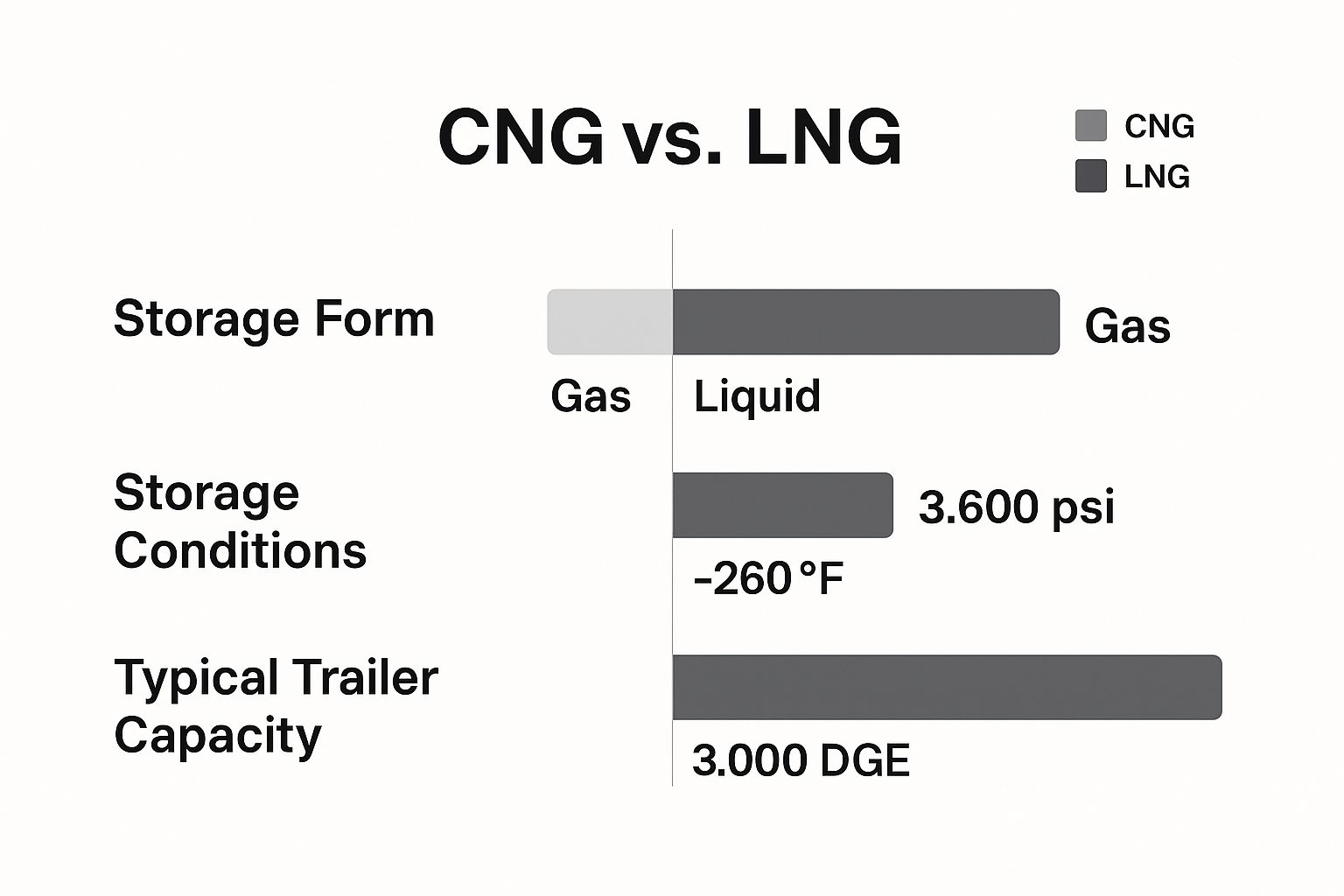
As you can see, LNG trailers pack a much bigger punch. Because liquefaction makes the gas so much denser, a single truck can carry far more energy.
Compressing Gas for Delivery
To make CNG, we take natural gas straight from the pipeline and put it under serious pressure—we're talking around 3,600 pounds per square inch (psi). This process basically crams the gas molecules together, reducing the space they take up by about 100 times.
This highly compressed gas is then loaded into what we call "tube trailers." These aren’t your average tanks; they're made up of a series of super-strong steel or composite cylinders built to handle the immense pressure safely. When we get to your site, we carefully regulate that pressure back down to what your equipment needs, giving you a steady, uninterrupted energy flow.
Liquefying Gas Through Super-Chilling
Creating LNG is a whole different ballgame. Instead of pressure, we use extreme cold. The natural gas is chilled all the way down to a mind-boggling -260°F (-162°C). At that temperature, it condenses into a clear, non-toxic liquid, shrinking its volume by an incredible 600 times.
This massive reduction in volume is what makes LNG so powerful. One cryogenic tanker—essentially a giant thermos on wheels—can deliver significantly more energy than a CNG trailer. This makes it the perfect solution for large-scale projects or facilities with high, continuous energy demands.
Once the LNG arrives, it’s run through an on-site vaporization unit. This equipment gently warms the liquid, converting it back into gas at the exact pressure and flow rate your operation requires. The entire setup is monitored 24/7 to guarantee a rock-solid supply. Modern logistics, including advanced tools for Field Service Automation, are crucial for managing these complex, on-the-go energy systems with pinpoint accuracy.
Choosing between CNG and LNG really comes down to what you need—how much gas you'll use and for how long. Below is a quick comparison to help you see the key differences at a glance.
Comparing CNG and LNG for Temporary Deliveries
| Attribute | Compressed Natural Gas (CNG) | Liquefied Natural Gas (LNG) |
|---|---|---|
| Primary Method | High-pressure compression (~3,600 psi) | Extreme cooling (-260°F / -162°C) |
| Volume Reduction | ~100x smaller than its gaseous state | ~600x smaller than its gaseous state |
| Energy Density | Lower | Much higher |
| Transport Vehicle | Pressurized tube trailers | Insulated cryogenic tankers |
| On-Site Equipment | Pressure reduction unit | Vaporization unit to warm liquid to gas |
| Best For | Lower volume, shorter-term needs | High volume, long-term, or continuous needs |
Ultimately, both CNG and LNG are proven technologies that make the "virtual pipeline" a reality. This flexibility is key, ensuring that no matter the situation, you have a reliable source of natural gas ready to go.
When Mobile Natural Gas Is the Answer
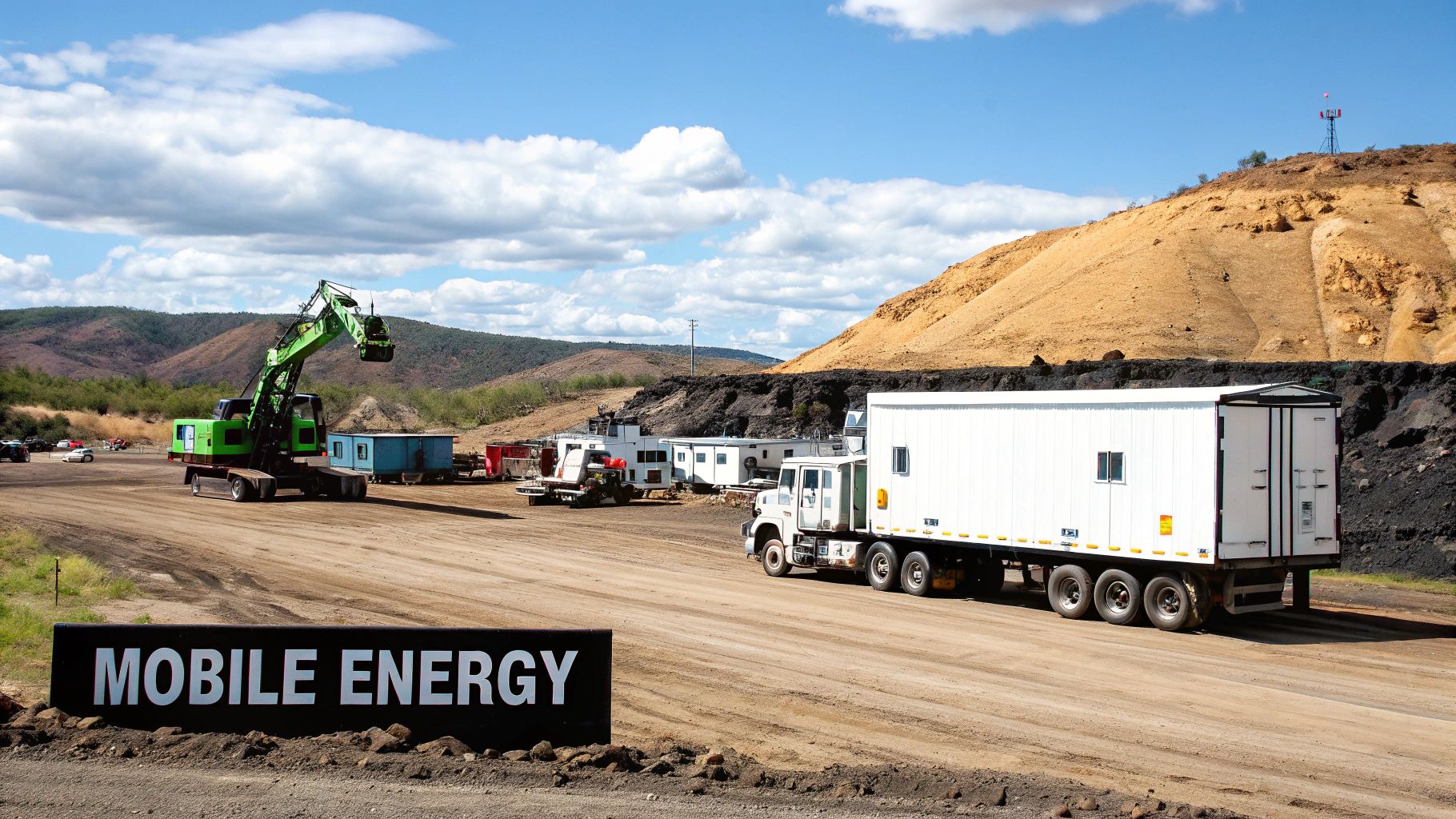
It’s one thing to understand the technology behind mobile natural gas, but it’s another thing entirely to see it solve urgent, real-world problems. This isn't just about convenience; it's a mission-critical service that keeps the lights on and the machines running when a fixed pipeline just isn't an option.
Mobile natural gas deliveries are designed to tackle very specific—and often very expensive—challenges. From sudden emergencies to smart financial planning, a virtual pipeline gives modern businesses the agility they need to stay productive, no matter what’s happening on the ground.
Bridging Pipeline Interruptions
The most common reason our phones ring is a pipeline supply disruption. These can happen for all sorts of reasons, from an unexpected outage caused by third-party damage to planned maintenance that requires the main gas line to be temporarily shut down.
For a hospital, a gas interruption is a full-blown crisis. It can compromise heating, sterilization equipment, and even backup power systems. Instead of shutting down and risking patient safety, mobile CNG or LNG units can be deployed within hours. They connect directly to the facility’s existing infrastructure, ensuring care continues without a single hitch.
A mobile energy solution transforms a potential disaster into a manageable, planned event. It’s the ultimate insurance policy against operational downtime, protecting both revenue and reputation.
Managing Peak Demand Costs
Many large industrial users get hit with steep penalties from utility companies if their natural gas consumption spikes above a contracted amount, especially during something like a winter cold snap. Peak shaving is the practice of supplementing the main pipeline supply with mobile natural gas to avoid these expensive overage charges.
By bringing in temporary natural gas deliveries during those peak hours, a manufacturing plant can keep production at full tilt without getting slapped with punitive fees. It’s a proactive approach that turns an energy headache into a smart financial strategy, directly boosting the bottom line.
Powering Off-Grid and Remote Sites
What do you do when you need industrial-scale power somewhere the pipeline network simply doesn't exist? This is a common problem for a surprising number of operations.
- Remote Construction Projects: They need to power heavy equipment and temporary facilities for large-scale builds.
- Mining and Extraction Operations: These sites often need to fuel heavy machinery and processing plants located miles from any established infrastructure.
- Agricultural Needs: A perfect example is supplying the immense energy needed for grain drying during the peak of harvest season.
Transitional Energy for New Developments
Finally, a virtual pipeline is the perfect stopgap energy source. Imagine a new industrial park or housing development is finished long before the permanent gas utility lines are installed and activated.
Mobile deliveries can provide all the necessary energy to bridge that gap. This allows businesses to open their doors and residents to move in on time, preventing costly delays while everyone waits for the permanent infrastructure to catch up.
From Your First Call to Full Gas Flow: A Step-by-Step Breakdown
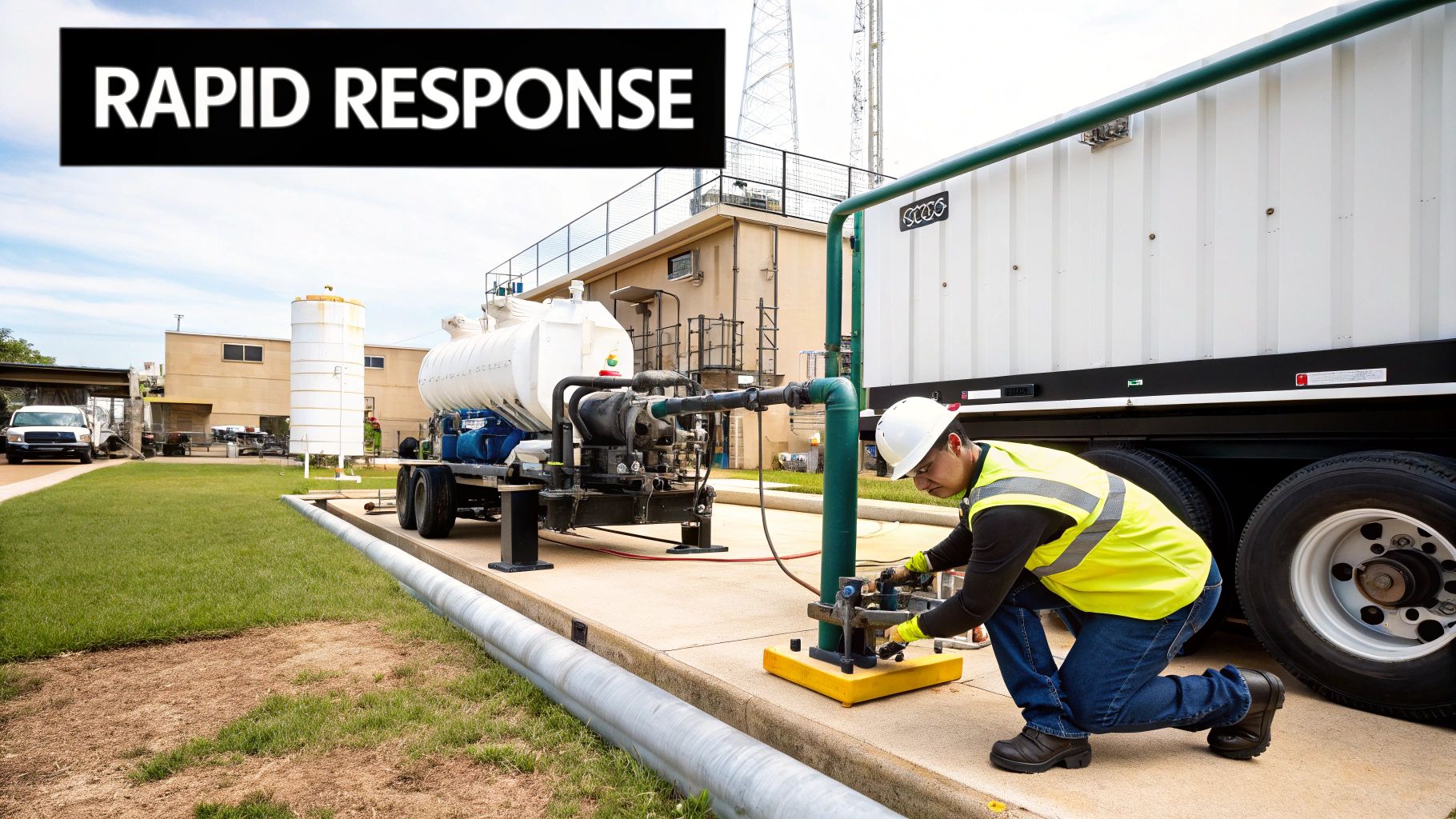
So, how does temporary natural gas actually get to your facility? It might seem complicated, but for a seasoned provider, it's a finely tuned process. We turn what looks like a massive logistical puzzle into a smooth, straightforward experience for you. From the moment you pick up the phone to the second gas is flowing, every step is carefully managed.
The entire operation hinges on expert project management and clear, constant communication. It’s not just about dropping off fuel; it’s about delivering a complete energy solution so you can get back to business without missing a beat.
Let's walk through the key phases of a typical mobile gas delivery.
Step 1: The Initial Engineering Assessment
Everything starts with a detailed engineering assessment. Before a single truck rolls, a team of experts works with you to figure out exactly what you need. This isn't a one-size-fits-all solution; it's a critical first step to make sure the setup is perfectly sized for your operation.
We'll nail down your required flow rate, pressure, and how much gas you’ll use. This data helps us decide if CNG or LNG is the right fit and tells us precisely what equipment to bring. Think of it as creating a custom energy blueprint just for you.
Step 2: Kicking Mobilization into High Gear
Once we have a solid plan, our logistics team springs into action. This is where a provider’s readiness really makes a difference. The right assets are mobilized immediately, including:
- CNG Tube Trailers or LNG Cryogenic Tankers: These specialized vehicles are the workhorses, carrying the natural gas directly to your site.
- Vaporization and Regulation Skids: This is the heart of the on-site operation. These units safely convert the compressed or liquid gas back into a usable form at the exact pressure your system needs.
- Hoses, Fittings, and Safety Gear: Every piece of supporting equipment is dispatched to ensure a secure, compliant, and totally safe connection.
Step 3: Professional On-Site Setup
When the equipment arrives, our certified technicians get to work with two priorities in mind: speed and safety. They strategically position the trailers and skids, connect the system to your facility’s intake, and run through a battery of rigorous safety checks.
The installation is meticulous. It involves leak detection, pressure tests, and system purges to guarantee a flawless link. No gas starts flowing until we’ve verified that every single component meets—or exceeds—strict industry standards.
The reliability of natural gas deliveries is backed by an incredibly robust domestic supply chain. In fact, the United States recently set new records for daily and monthly natural gas production, with output jumping by 4% year-over-year. This growth is a testament to new extraction technologies and a solid LNG infrastructure. You can learn more about these U.S. natural gas market trends.
Step 4: 24/7 Monitoring and Seamless Refills
Our job isn’t done once the gas is on. The entire system is monitored remotely, 24/7. Our technicians keep a close eye on pressure, flow rates, and tank levels in real time to ensure you have a completely uninterrupted supply.
This constant oversight means we can anticipate your needs before they become problems. When a trailer starts running low, a new one is already on its way. The swap is handled so seamlessly you won't even notice—no disruption to your operations, period.
Step 5: Clean and Complete Demobilization
Finally, when your main pipeline supply is back online or the project wraps up, we manage the entire takedown. Our team safely disconnects the equipment, purges the lines, and removes everything from your property.
We leave your site exactly as we found it. This final step ensures the entire process, from start to finish, is clean, efficient, and hassle-free for you.
Upholding Rigorous Safety Standards
When we talk about mobile natural gas deliveries, safety isn't just a box to tick—it's the bedrock of the entire operation. Handling and transporting natural gas, whether compressed or liquefied, demands an absolute commitment to stringent protocols. It's about more than just fuel; it's about delivering peace of mind.
This safety-first mindset starts well before a single truck arrives on your property. The process always begins with a thorough site assessment to map out potential hazards and define a secure operational zone. From that point on, every action is guided by the strict standards set by bodies like the Department of Transportation (DOT) and the National Fire Protection Association (NFPA).
Core Pillars of On-Site Safety
Our whole delivery process is built on a foundation of proven safety measures. You have to remember, the technicians aren't just drivers. They're highly trained specialists who hold mandatory certifications for handling hazardous materials, which is crucial for managing on-site procedures with precision.
Some protocols are simply non-negotiable:
- Secure Exclusion Zones: We always establish a clearly marked perimeter around our equipment. This keeps unauthorized people out and maintains a safe working area for everyone.
- Proper Grounding and Bonding: This is a critical electrical procedure to prevent static discharge. It’s one of the most important steps to eliminate potential ignition sources while transferring fuel.
- Continuous Atmospheric Monitoring: Our teams use calibrated sensors to constantly check the air for any signs of a gas leak, catching potential issues long before they become a risk.
These steps are implemented at every single job, no matter how big or small. There are no shortcuts.
Redundancy and Emergency Readiness
To guarantee an uninterrupted energy supply and manage any potential risks, modern systems are built with multiple safeguards. This approach is a lot like applying network redundancy principles to a physical system, creating backup pathways to prevent downtime and keep things running smoothly.
Of course, you always have to be prepared. A robust emergency response plan is always in place, and every team is fully trained and equipped to handle any unexpected event quickly and effectively.
A provider's safety record is the ultimate measure of their competence. It reflects their investment in training, equipment, and a deeply ingrained safety culture that protects your people, property, and operations.
This commitment to safety also brings stability to an otherwise volatile global gas market, where things like geopolitical risk and infrastructure issues can create chaos. A solid safety focus ensures your operations stay stable, even when the market isn't. Ultimately, choosing a partner means choosing a team that has truly mastered these safety challenges.
Choosing the Right Partner for Your Energy Needs
When you're looking for a temporary natural gas provider, you're doing more than just buying fuel. You're making a crucial decision to protect your operations. If a pipeline goes down or a new site is too far from the grid, what you're really purchasing is certainty.
The best partner acts like a part of your own team, ready to spring into action the moment you need them. It's about finding someone who can deliver a complete, seamless solution that's built specifically for your situation, combining quick response times with smart engineering to solve tough energy problems.
A reliable energy partner doesn't just react to problems—they anticipate them. They handle every single detail of logistics and offer constant support, making sure your operations are safe from any disruption.
So, before you sign any contracts, take a close look at what a provider really brings to the table.
What to Look for in a Provider
- Speed: How fast can they get a truck on the road and gas flowing to your site? In an outage, every minute counts.
- Custom Solutions: Do they take the time to understand your specific pressure and flow requirements, or are they just selling a generic package?
- Safety First: A top-tier provider will have a perfect safety record. It’s the clearest sign of their commitment and professionalism.
- 24/7 Support: Problems don't stick to a 9-to-5 schedule. You need a team that's always on, monitoring your supply and ready to help.
Finding a partner who excels in these areas, like Blue Gas Express, is the key to ensuring you have the energy you need, exactly when you need it.
Got Questions? We've Got Answers.
When you're exploring the world of mobile natural gas deliveries, a few questions always come up. Let's walk through the most common ones to give you a clear picture of how this service really works.
How Fast Can You Get Us Back Online?
In a true emergency, like a pipeline failure, a dedicated team can usually get a temporary system up and running within 24 to 48 hours.
Of course, this speed depends on a few things: your location, how easy it is to get to your site, and the specific energy demands of your facility. It's a highly coordinated sprint to get the equipment there, run a quick safety check, and seamlessly connect the new supply to your system.
Is This Mobile Gas the Same as Our Usual Pipeline Gas?
Yes, absolutely. The natural gas molecule is identical. The only thing that changes is how we transport it.
To get the most energy into a single trailer, we either compress it (CNG) or chill it into a liquid (LNG). Once we're at your facility, specialized equipment on-site turns it right back into a gas at the exact pressure you need. From your equipment's perspective, it’s completely indistinguishable from the gas you get from the pipeline every day.
Is a Temporary Natural Gas Service Actually Worth the Cost?
The better question is, what's the cost of not having it? When you measure the price of a temporary supply against the catastrophic expense of a full operational shutdown, the value becomes crystal clear.
Think about it: lost production, a workforce with nothing to do, and potential penalties for missing deadlines. Those costs can dwarf the investment in a temporary energy solution. For planned projects, like managing peak demand, it can even save you a significant amount of money by helping you avoid those punishing high-demand charges from the utility.
The real value isn't just in the fuel itself but in the operational certainty it provides. Investing in a temporary supply is an investment in keeping your business running smoothly, no matter what happens to the grid.
What Kind of Businesses Actually Use This Service?
You'd be surprised by the wide range of industries that depend on mobile natural gas deliveries to guarantee 100% uptime and solve some really unique energy puzzles.
- Industrial Powerhouses: Think manufacturing plants, food processing facilities, and power stations where natural gas is the lifeblood of their operation.
- Critical Facilities: Hospitals and data centers come to mind, where even a second of downtime is simply not an option.
- Off-Grid Operations: We see this a lot with construction sites, mining operations, and even agricultural businesses (like for grain drying) that are too far from a pipeline.
- The Utility Companies Themselves: That's right. Gas utilities often bring in mobile services to keep their own customers supplied during planned maintenance or emergency repairs on their lines.
When an energy interruption isn't an option, you need a partner who can deliver. Blue Gas Express provides rapid, reliable, and safe mobile natural gas solutions to keep your operations powered. Contact us today to ensure your energy certainty.