

What happens when you need natural gas but there's no pipeline in sight? For a long time, the answer was complicated and expensive. But today, there's a practical solution: a "virtual pipeline."
Mobile natural gas is exactly what it sounds like—a way to truck Compressed Natural Gas (CNG) or Liquefied Natural Gas (LNG) directly to your site. It’s a game-changer for everything from remote industrial operations to communities that need a temporary energy supply, ensuring a reliable power source where permanent infrastructure just isn't an option.
Unlocking Energy Anywhere
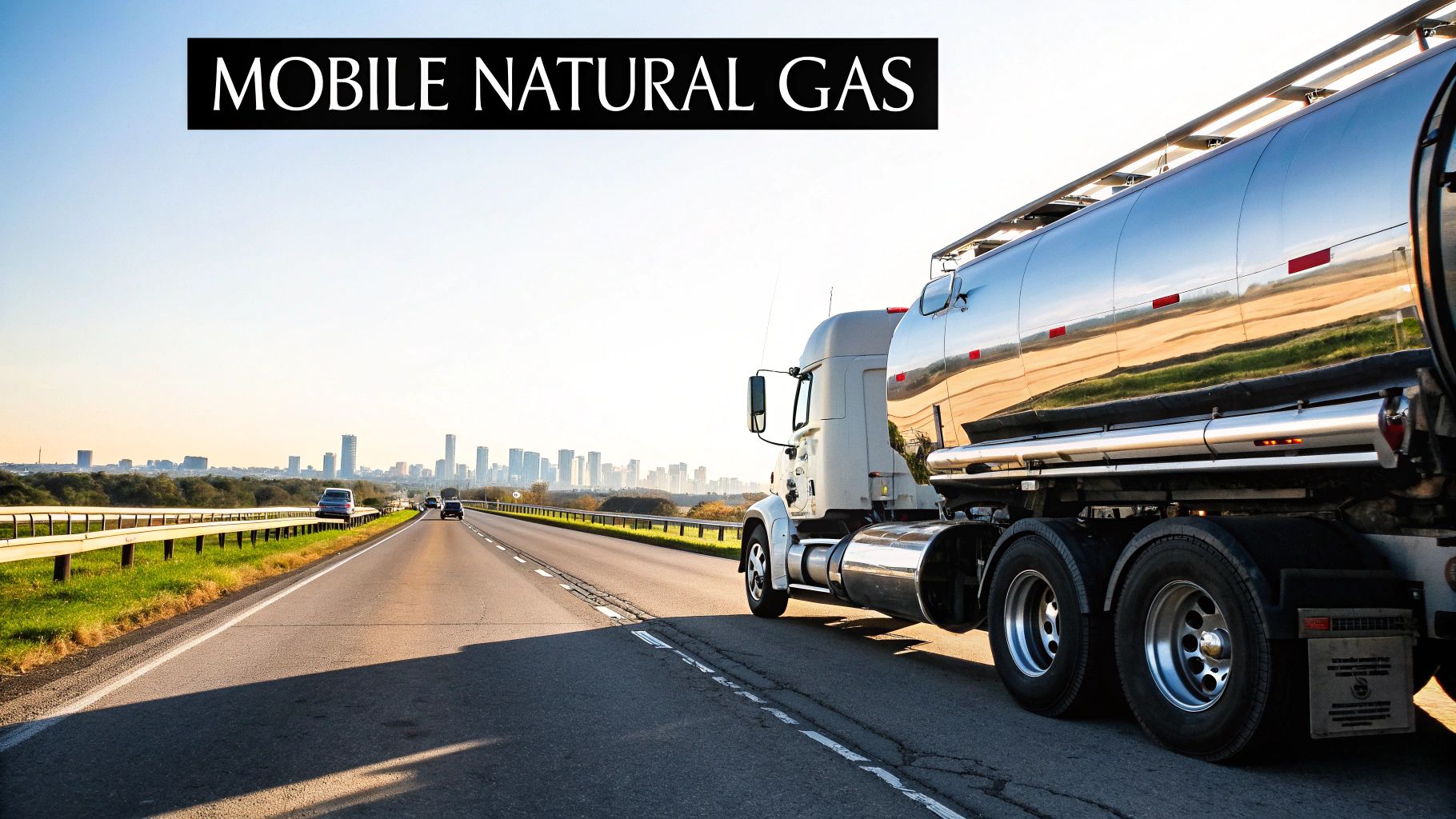
Think of it like getting internet from a mobile hotspot. You don't need a physical fiber optic cable running to your location; the hotspot brings the connection directly to you. Mobile natural gas works on the same principle, bridging the energy gap for construction projects, industrial facilities, or new housing developments that are still waiting on a utility hookup.
This approach completely sidesteps the time and expense of laying permanent pipelines. Instead of a months- or even years-long construction project, a specialized truck can be on-site, delivering the energy you need, sometimes in a matter of hours. That kind of speed is invaluable for projects with tight timelines.
The Core Concept: A Virtual Pipeline
At its core, a "virtual pipeline" is simply a logistics chain that moves natural gas without relying on a physical pipe. While the concept is straightforward, the technology behind it is quite sophisticated. The process starts by tapping into a primary pipeline and preparing the gas for transport in one of two forms:
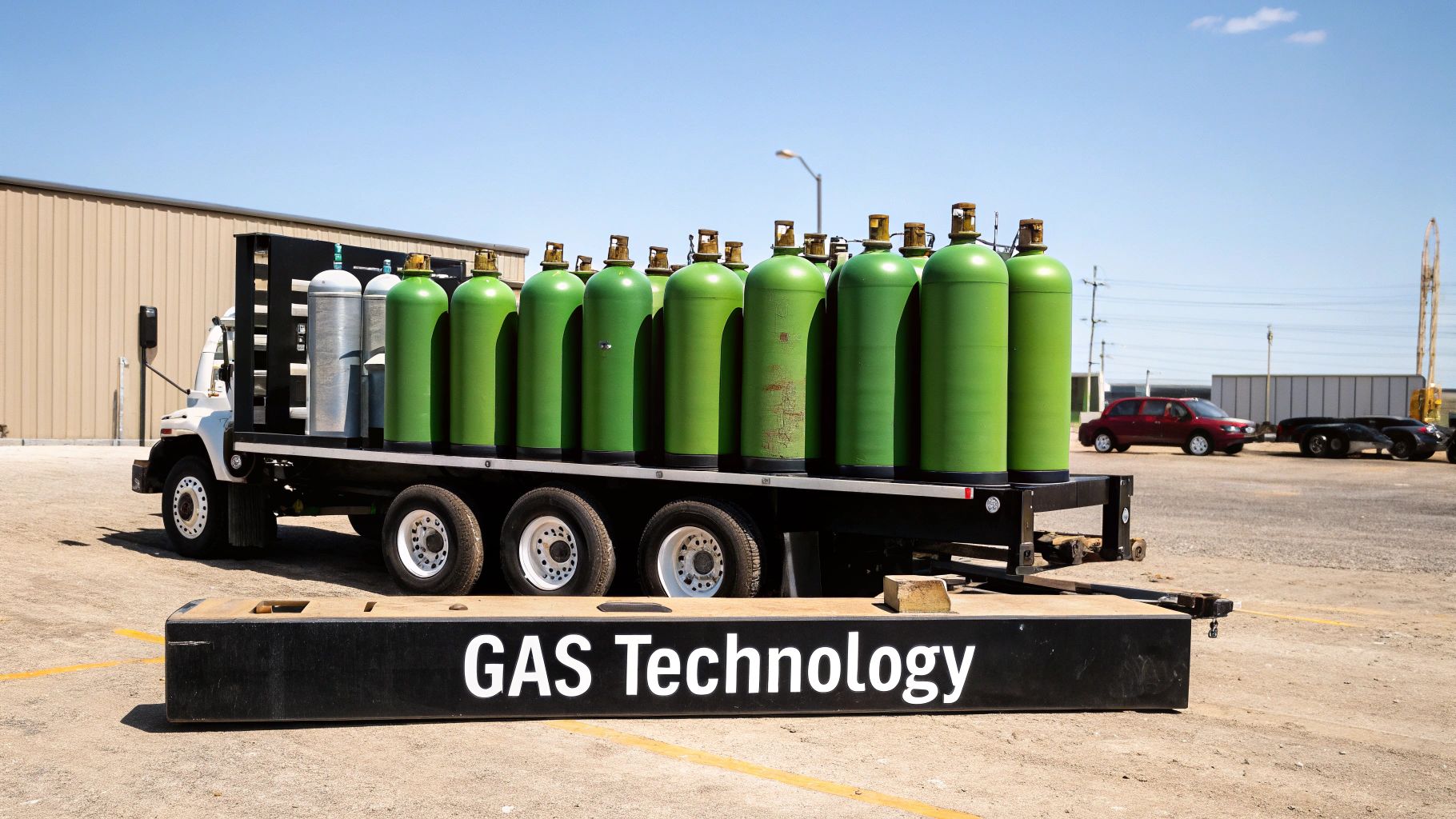
- Compressed Natural Gas (CNG): The gas is pressurized until it takes up less than 1% of its original volume. It's then loaded into incredibly strong cylinders mounted on a truck.
- Liquefied Natural Gas (LNG): For this method, the gas is super-cooled to about -260°F (-162°C). This transforms it into a very dense liquid that takes up 600 times less space than its gaseous state.
When the truck arrives at its destination, specialized equipment on-site—like pressure regulators for CNG or regasification units for LNG—converts the fuel back into a usable gas, ready to power whatever you need.
This mobile approach is far more than just a temporary patch. It's a strategic energy management tool. It allows businesses to thrive in remote areas, helps utilities keep the lights on during maintenance, and offers a cleaner alternative to diesel or propane for temporary power.
Powering Progress Beyond the Grid
The real-world uses for mobile natural gas are incredibly varied. Imagine a new housing development that's finished but can't get an occupancy permit until the utility pipeline is connected. Mobile gas can bridge that gap. Or consider an industrial plant that needs to shut down for pipeline repairs—a temporary supply can prevent a costly interruption to operations.
This inherent flexibility is what makes mobile natural gas such a critical piece of modern energy infrastructure. It delivers the speed, scalability, and reliability needed to push projects forward, free from the constraints of the traditional grid.
The Technology Behind a Virtual Pipeline
So, how does natural gas get from a major pipeline to your facility without any pipes? It’s not magic—it's what we in the industry call a "virtual pipeline." Think of it as a highly coordinated, road-based energy delivery system. The whole operation is built on a simple but powerful idea: make natural gas dense and portable, truck it to where it's needed, and then turn it back into usable energy.
The first step is all about transformation. At a special facility connected to a main transmission pipeline, the gas is either compressed or turned into a liquid. The choice between the two really depends on how much energy you need and how far it has to travel.
From Pipeline to Portable Fuel
The key to making this work is shrinking the volume of the gas. A lot. It's like packing for a trip—you might stuff a big, puffy jacket into a small compression sack. We do something similar with natural gas, just on a much more powerful scale.
There are two ways to get this done:
- Compression Stations: This is how we make Compressed Natural Gas (CNG). Huge compressors squeeze the gas to an incredible 3,000 to 3,600 psi. This intense pressure packs the gas molecules tightly together, reducing its volume to less than 1% of what it was.
- Liquefaction Plants: To create Liquefied Natural Gas (LNG), we take a different approach. The gas is super-cooled down to about -260°F (-162°C). At that temperature, it becomes a liquid that’s 600 times denser than its original gaseous form. This incredible density makes LNG perfect for moving massive amounts of energy.
After the gas is either compressed or liquefied, it’s loaded onto highly specialized trucks built for the job.
Specialized Transport and On-Site Equipment
Next up is the actual journey. CNG travels in what are known as tube trailers. Picture a set of massive, high-strength steel or carbon fiber cylinders all bundled together on a truck bed. For LNG, the transport is even more specialized. It requires cryogenic tankers—essentially giant, rolling thermos bottles engineered to maintain those ultra-cold temperatures and keep the gas liquid for the entire trip.
When the truck arrives at your location, the final pieces of the puzzle fall into place. It’s not a simple drop-off; we bring in specific equipment to connect the virtual pipeline to your operations for a seamless energy supply.
The on-site hardware is different depending on whether you're getting CNG or LNG. For a CNG delivery, we set up a pressure regulating unit. This piece of equipment safely dials down the high pressure from the tube trailer to the precise level your systems require. If you're using LNG, we install a regasification unit. This system carefully warms the liquid, converting it back into a gas that flows right into your facility's infrastructure.
All together, this technology creates a dependable, self-contained energy source, ready to go wherever you need it.
How Mobile Natural Gas Solves Real Problems
The true worth of mobile natural gas really shines when you see it solve urgent, real-world energy problems. It's not just a backup plan; it's a nimble solution that keeps the lights on and projects moving when the permanent energy infrastructure can't.
Think about a big manufacturing plant humming along during a critical production run. Out of nowhere, they get a notice: an unplanned pipeline shutdown for emergency repairs. In the old days, that meant everything grinds to a halt, costing a fortune in lost productivity. Now, a mobile gas unit can be on-site quickly, feeding an uninterrupted flow of energy and completely avoiding a costly shutdown.
This "virtual pipeline" is a lifeline. For companies like Blue Gas Express, being able to deploy rapidly is what solves these time-sensitive problems for their clients.
Keeping the Power On During Outages
Pipeline integrity digs, hydrotesting, and routine maintenance are all essential, but they are also disruptive. These planned jobs often mean taking a whole section of pipeline offline for days, sometimes weeks. For any business that depends on a steady supply of natural gas, that kind of downtime just isn't an option.
This is where mobile natural gas provides a perfect workaround. Before the main pipeline is shut down, a temporary mobile gas solution is hooked up directly to the facility. This bridge supply makes sure everything from industrial furnaces to commercial heating systems keeps running without a hiccup.
By bringing in a mobile solution ahead of time, utilities and their customers turn a potential crisis into a planned, zero-downtime event. It’s a smart, strategic way to keep operations stable.
Energizing Off-Grid and Remote Operations
But what about places where pipelines don't even exist? Many crucial operations—think remote mining sites, large agricultural facilities, or asphalt plants—are often located miles from any established energy grid. For them, mobile natural gas isn't a temporary fix; it becomes their primary fuel source.
By trucking in CNG or LNG, these off-grid sites get access to a cleaner and often cheaper fuel than diesel or propane. This ability opens up economic possibilities in areas that were once considered too remote or expensive to power effectively.
Managing Peak Demand Strategically
Utilities are always wrestling with "peak shaving"—that is, managing the sudden, short-term spikes in energy demand that happen during a bitter cold snap. Building out permanent infrastructure just to handle demand that only happens a few days a year is wildly expensive and inefficient.
Mobile natural gas offers a much smarter way to handle this. Utilities can strategically place mobile units to inject extra gas into the system exactly when and where it's needed most. This flexible approach helps maintain stable pressure and meet customer demand without locking up billions in massive capital projects.
This move toward flexible delivery is a growing trend worldwide. In fact, the LNG trade recently covered nearly 15% of global natural gas demand. Projections show its share will likely climb past 20% by mid-century as our energy needs keep growing. You can dive deeper into this global energy shift on corporate.exxonmobil.com.
Comparing CNG and LNG Delivery
When we talk about mobile natural gas, it’s not a one-size-fits-all solution. The two main players are Compressed Natural Gas (CNG) and Liquefied Natural Gas (LNG), and picking the right one is crucial for your project's success. Your decision really boils down to your specific energy needs, the project's location, and how long you'll need the supply.
Let's use a simple analogy. Think of CNG as a fleet of delivery vans. They’re perfect for making frequent, smaller deliveries across town. Now, think of LNG as a massive freight train. It’s built to haul an incredible amount of cargo over very long distances in a single trip.
This isn’t just a cute comparison—it gets to the heart of the trade-off. CNG is often easier to manage for smaller jobs, but LNG delivers a much bigger energy payload every time a truck shows up.
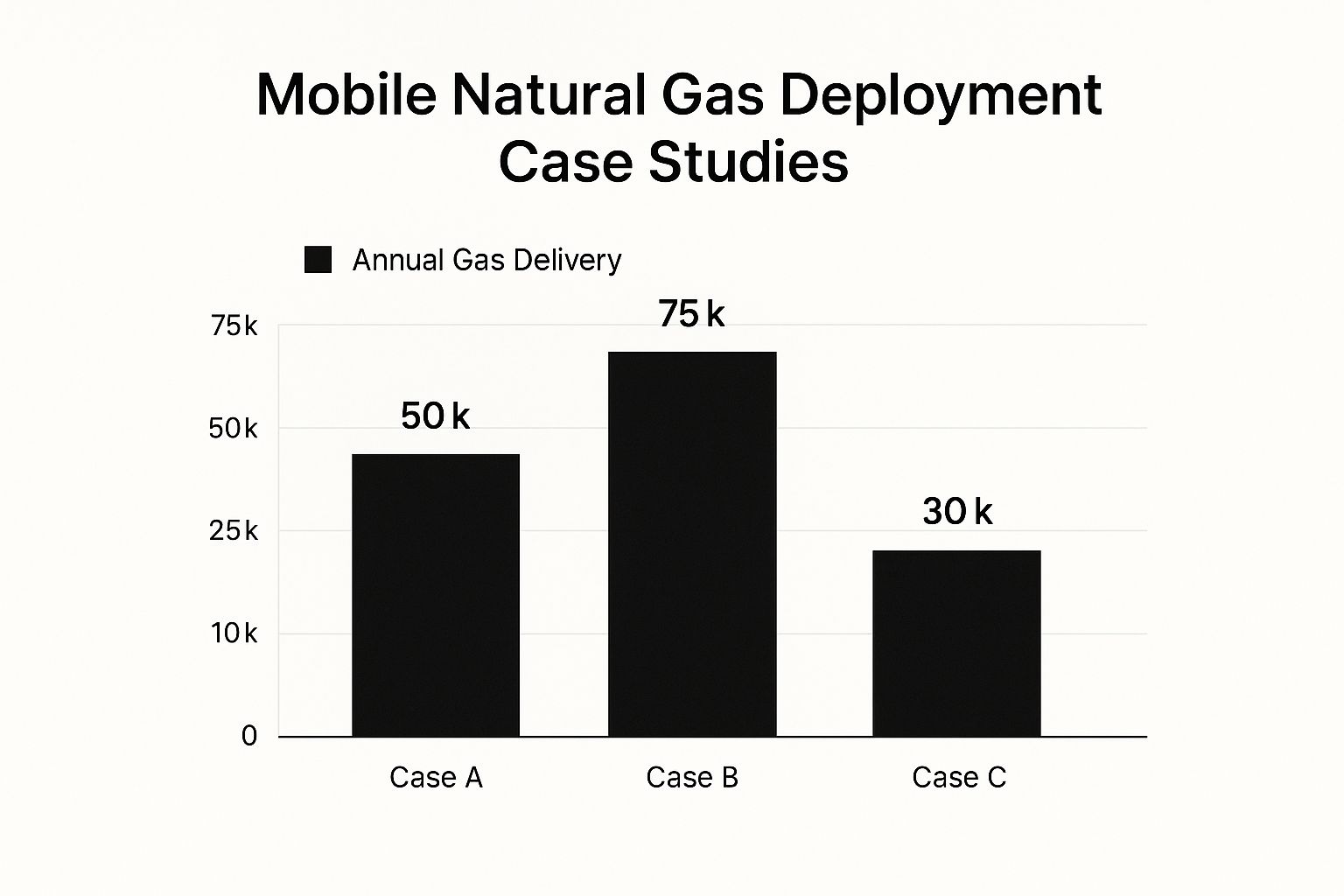
As you can see from real-world project data, high-demand scenarios like Case B are a natural fit for LNG’s high-volume capacity, while smaller projects are handled perfectly well by CNG.
CNG vs LNG Mobile Solutions A Comparison
To help you see the differences more clearly, let's break down the key characteristics of each mobile fuel source. The table below outlines how CNG and LNG stack up against each other in practical terms.
| Feature | Compressed Natural Gas (CNG) | Liquefied Natural Gas (LNG) |
|---|---|---|
| State | Gaseous, stored under high pressure. | Liquid, stored at a frigid -260°F (-162°C). |
| Energy Density | Lower. It takes up much more space for the same amount of energy. | Extremely high. Volume is reduced by 600 times. |
| On-Site Footprint | Larger. Often requires multiple tube trailers that are swapped out. | Smaller. Gas is stored in a compact on-site cryogenic tank. |
| Logistics | Best for shorter distances and lower volumes. More truck trips needed. | Ideal for long-haul and high volumes. Fewer deliveries are required. |
| Best For | Shorter projects, lower daily gas needs, and emergency utility support. | Large industrial operations, remote power plants, and long-term pipeline outages. |
Ultimately, understanding these trade-offs is what leads to an efficient and cost-effective mobile gas strategy.
Key Differences in Mobile Gas Solutions
The core difference really comes down to energy density. Because LNG is cryogenically cooled to -260°F (-162°C), its volume shrinks by a factor of 600. This incredible density means a single LNG tanker can haul far more energy than a CNG truck, which is just carrying pressurized gas.
This single fact has a ripple effect on everything from logistics to your on-site setup.
- Transportation Efficiency: With LNG, you simply need fewer trucks on the road to deliver the same amount of energy. For a large industrial site or a project running for months, this means significantly lower transportation costs and a reduced carbon footprint from all that vehicle traffic.
- On-Site Footprint: A CNG setup often requires a bigger staging area to hold multiple tube trailers at once, which need to be swapped out as they’re depleted. LNG, by contrast, uses a single, compact cryogenic storage tank that a tanker periodically refills, much like a propane tank at a rural home.
- Ideal Use Cases: This brings us back to finding the right tool for the job. CNG shines on smaller-scale projects, jobs with lower daily gas requirements, or for short-term needs. LNG is the undisputed champ for powering massive industrial facilities, remote power generation, and helping utilities navigate peak demand seasons where a high, steady volume is non-negotiable.
The question isn't about which one is "better." It's about which one is better for you. When you match the delivery method to your operational needs, you get the most efficient, reliable, and affordable outcome.
The Strategic Benefits of Going Mobile
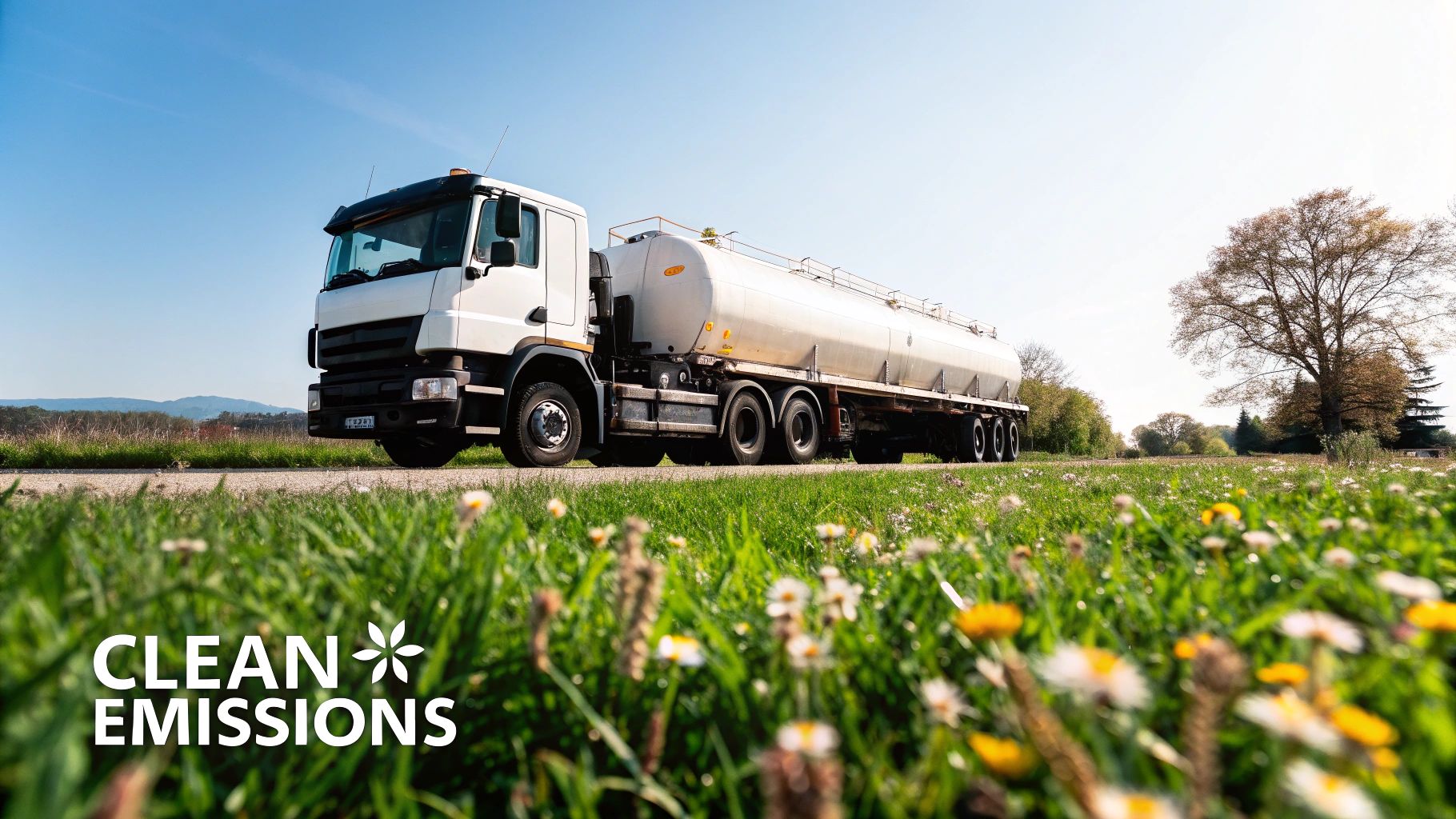
So, why would a business opt for a mobile energy solution instead of just waiting for a traditional pipeline to be built? It really boils down to a powerful mix of speed, flexibility, and straightforward financial sense.
The most immediate and compelling advantage is rapid deployment. Think about what it takes to build permanent pipeline infrastructure. We're talking about a marathon of permits, land rights negotiations, and heavy construction that can easily stretch out for years.
In stark contrast, a mobile natural gas solution from a provider like Blue Gas Express can be up and running in a matter of weeks, sometimes even days. This kind of speed is a total game-changer for construction projects stuck waiting on occupancy permits or for any industry that needs to bring a new site online fast. It flips the script, turning energy from a long-term infrastructure headache into a responsive, on-demand service.
Unmatched Scalability and Financial Agility
Beyond just speed, mobile natural gas offers incredible scalability. Your energy needs aren't set in stone; they change with production cycles, seasonal demands, and different project phases. A mobile setup gives you the freedom to adjust your energy supply on the fly, ramping up during peak times and scaling back during lulls without being locked into a fixed capacity.
This agility is huge. It means you avoid sinking massive amounts of capital into permanent infrastructure that might only be fully utilized for a small part of the year. Instead of tying up funds in a pipeline, you can put that money toward growing your core business.
A mobile solution effectively shifts energy from a capital expenditure (CapEx) to an operating expenditure (OpEx). This provides greater financial control and allows you to align energy costs directly with operational output.
This financial upside gets even better when you consider the access to more stable fuel prices. The growing market for mobile natural gas is making a real impact on pricing. For example, recent U.S. natural gas production hit record highs, with dry gas output averaging 106.4 billion cubic feet per day, while Henry Hub futures hovered around $4.10 per MMBtu. This strong supply creates a more predictable cost structure than you'd find in the often-volatile diesel or propane markets. You can dig into more of this data on aga.org.
Enhancing Your Energy Security
Finally, bringing in a mobile supply significantly boosts your energy security. While pipeline networks are generally reliable, they aren’t immune to problems. Disruptions can and do happen, whether from third-party damage, extreme weather, or planned maintenance. Any one of these events can shut your operations down in an instant, and that gets expensive fast.
Having a mobile natural gas provider on standby is like having a powerful insurance policy. It gives you a reliable backup that can be deployed quickly to fill any gaps in your main supply, guaranteeing you can keep running without a hitch. This kind of resilience protects your revenue, keeps your production schedules on track, and makes your entire business stronger against unexpected interruptions. It’s simply a smart, proactive way to maintain business continuity.
How to Choose the Right Mobile Gas Provider
Picking a mobile natural gas provider isn't just another line item on a procurement list. You're selecting an energy partner, and the stakes are high—your operational continuity hangs in the balance. The right choice is based on a deep-dive evaluation, starting with the one thing you can't compromise on: their safety record.
Safety is the absolute bedrock of any reliable energy service. Don't be shy about asking for the hard numbers. Request their safety statistics and ask about their history with regulatory bodies. A partner who is proud of their safety culture will be an open book, ready to walk you through their protocols. This goes far beyond just checking a box; it's about protecting your people and your site.
Assessing Reliability and Technical Skill
Once you've established a baseline of safety, the next hurdle is reliability. Can they actually deliver, day in and day out, without a hitch? A provider's dependability is a direct result of their supply chain's strength and the condition of their equipment. You want a partner with a robust supply network, not one who is dangerously reliant on a single source and vulnerable to disruptions.
When you're vetting a potential mobile natural gas provider, get specific with your questions. Here’s what you need to dig into:
- Supply Chain: "Where do you source your gas? Do you have multiple supply points to protect us if one region experiences a shortage?"
- Fleet Condition: "Tell me about your fleet. What’s the average age of your tube trailers and cryogenic tankers, and what does your maintenance schedule look like?"
- Technical Expertise: "Who are the technicians you'll have on my site? What's their background and experience level with this kind of equipment?"
A truly great provider feels like an extension of your own team. Their experts shouldn't just be there to react to problems—they should integrate with your operations and offer solutions before you even know you need them.
Evaluating Contracts and Service Guarantees
Finally, it all comes down to the contract. The agreement should be crystal clear, fair, and leave no room for ambiguity. If you're seeing vague language or the potential for hidden fees, consider that a major red flag.
Look for a provider that offers straightforward pricing and spells out their service level agreements (SLAs). These should include guaranteed response times and detailed contingency plans for when things go wrong. A solid contract is designed to protect everyone and sets clear expectations from the start. Taking the time to do this homework ensures you end up with a competent, trustworthy partner who can keep your energy flowing securely.
Your Mobile Gas Questions Answered
Switching to a new energy source always comes with a few questions. When it comes to something as important as your fuel supply, you need straight answers about safety, speed, and environmental impact before making a decision. Let's tackle some of the most common ones.
First up: safety. It's the number one concern, and rightly so. The good news is that mobile natural gas has an excellent safety record, thanks to decades of refinement and strict regulations. Reputable providers use highly specialized equipment—like cryogenic tanks for LNG and reinforced high-pressure cylinders for CNG—and adhere to rigorous federal and local safety protocols. When handled by experts, it's a very safe technology.
Speed and Environmental Impact
"How fast can we get this set up?" That's usually the next question. This is where mobile gas really shines. Building a permanent pipeline is a massive undertaking that can drag on for years. In contrast, a mobile solution can be delivered, connected, and fully operational in a matter of weeks, which is a game-changer for projects with tight deadlines.
But is it a greener choice? Compared to traditional off-grid fuels like diesel or propane, absolutely. Natural gas burns much cleaner, producing fewer emissions of CO2, nitrogen oxides, and particulate matter. It acts as a perfect "bridge fuel," helping industries move away from dirtier energy sources while they plan for a longer-term transition.
The role of mobile gas is becoming more critical worldwide. For instance, recent spikes in demand, like Europe's 6.5% increase in consumption for electricity generation, show how natural gas is essential for balancing a grid that relies on intermittent renewables. You can dive deeper into these trends in the IEA's global gas market report.
Facing a pipeline delay or need a reliable temporary energy source? Blue Gas Express delivers fast, safe, and scalable mobile natural gas solutions to keep your project on track. Get your project powered today.