

Imagine trying to add a new on-ramp to a major highway without ever stopping the flow of traffic. That’s the core idea behind a hot tap gas line procedure. It’s a highly specialized technique for branching into an existing pipeline while it’s still live and under full pressure.
Essentially, it's precision surgery on an active energy artery. This process completely sidesteps the need for a costly and disruptive shutdown, guaranteeing that the natural gas keeps flowing to homes and businesses without interruption.
What is a Hot Tap, Really?
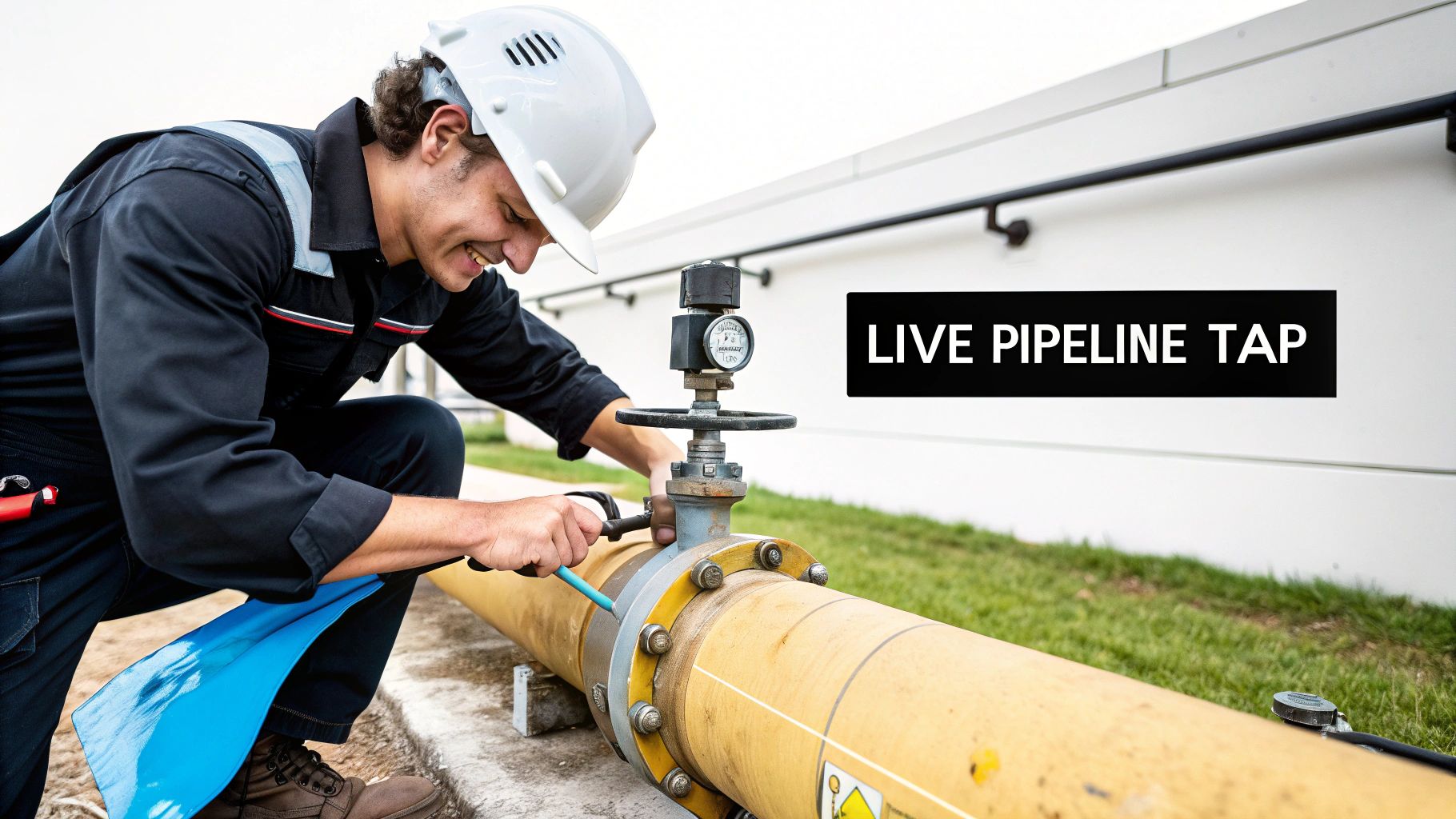
Think about your city's main water supply. In the past, if a new neighborhood needed to be connected, the utility would have to shut off the water for thousands of people, sometimes for days. A hot tap is the modern equivalent of adding that connection without a single person noticing their water pressure drop.
We apply that same ingenious principle to natural gas pipelines, where the stakes are significantly higher. This is a feat of engineering that allows technicians to add new branch lines, install critical valves, or insert inspection equipment onto a pipe that’s fully operational. It’s a safe, meticulously controlled method that has become absolutely essential for modern pipeline maintenance and expansion.
Pipeline Keyhole Surgery
The best way to picture a hot tap is to think of it as keyhole surgery for pipelines. Instead of a massive, invasive operation that requires a complete system shutdown, hot tapping is minimally intrusive.
A specialized machine drills into the pipe through a tightly sealed fitting and valve assembly. Once the cut is complete, it cleverly retrieves the piece of pipe it just cut out (called a "coupon"), all without a single wisp of pressurized gas escaping into the atmosphere.
This is a world away from the old way of doing things. A traditional tie-in was a huge undertaking that required:
- Depressurizing: Safely venting massive amounts of natural gas from a section of the pipeline.
- Purging: Flushing the line with an inert gas to remove any flammable leftovers.
- Cutting and Welding: Making the physical connection on a dead, non-pressurized pipe.
- Repressurizing: Slowly bringing the pipeline back up to pressure and restoring service.
Every one of those steps meant downtime, lost revenue, and a significant environmental footprint from the vented methane.
Why Does This Matter So Much?
The hot tap method solves all of those problems at once. By keeping the pipeline running, it offers incredible value to utility companies, industrial plants, and the customers who rely on them. Service interruptions become a thing of the past, which is absolutely critical for facilities like hospitals, power plants, and manufacturers that need a constant, reliable gas supply.
A hot tap isn't just a technical maneuver; it's a strategic business decision. It eliminates the economic losses associated with production downtime and avoids the environmental consequences of venting greenhouse gases.
This makes the hot tap procedure more than just a convenience. It's a vital tool for achieving both economic efficiency and corporate responsibility—a smarter, safer, and more sustainable way to manage our critical energy infrastructure.
The Evolution of Hot Tapping Technology
The slick, precise hot tapping procedures we rely on today didn't just appear out of thin air. They were forged from necessity, honed by a relentless drive for better safety, more efficiency, and a lighter environmental touch. The earliest attempts at branching into live pipelines were, to put it mildly, high-risk affairs that relied more on guts than on solid engineering.
Over the years, those crude methods were refined into a calculated, methodical process. The story of hot tapping really mirrors the broader story of industrial progress—a tale of small, steady improvements in materials and machinery that eventually added up to something truly transformative for the energy industry.
From Risky Concept to Reliable Practice
At first, the very idea of cutting into a pressurized gas pipeline sounded like a disaster waiting to happen. The standard, accepted way to do things was the cold connection, which meant shutting everything down. It was a massive, costly headache, but as the world's appetite for uninterrupted energy grew, the financial and operational pain of these shutdowns became too great to ignore.
That pressure lit a fire under innovators, all chasing one goal: find a way to tap into a live line without stopping the flow. A few key breakthroughs started turning this risky concept into a safe, repeatable reality.
- Better Materials: The development of stronger steel alloys for both the pipelines and the hot tapping fittings was a huge step forward. These new materials could handle the incredible pressures and heat of welding and cutting, giving crews a much wider safety margin.
- Smarter Welding: Welding on a live, in-service pipeline is a specialized skill. New techniques and filler materials were perfected to create rock-solid, permanent seals that could be trusted under intense pressure, protecting the integrity of the main pipe.
- Precision Machinery: Early hot tapping machines were often clunky, manually operated contraptions. Today's machines are hydraulic or pneumatic powerhouses, built with incredible precision. They feature pressure-balanced systems, automatic feeds, and specialized cutters designed to deliver a clean, controlled cut, every single time.
These individual improvements built on each other over the decades, taking hot tapping from a niche, high-stakes gamble to a standard, reliable tool in the industry's playbook.
The Economic and Environmental Drivers
While technology provided the "how," powerful economic and environmental forces supplied the "why." The business case for hot tapping quickly became impossible to argue with as operators tallied up the astronomical costs of downtime. Shutting down just one pipeline could bring production to a grinding halt, snarl supply chains, and rack up millions in lost revenue.
The difference between the old way and the new way is night and day. In the past, adding a new connection meant taking a pipeline offline and depressurizing the whole system. This wasn't just a logistical nightmare; it came with its own set of risks and costs. In a striking example of this shift, TransCanada reported it dodged over one million Canadian dollars in gross revenue losses by using hot taps during pipeline expansions. You can explore more on how hot tapping expands gas pipeline capabilities to see the full impact.
The rise of hot tapping wasn't just about doing things better; it was about doing things smarter. It shifted the industry mindset from accepting downtime as a necessary evil to eliminating it as an unnecessary expense.
On top of the economic pressure, a growing sense of environmental responsibility added a new layer of urgency. The old-school method of depressurizing a line involved venting—releasing huge volumes of natural gas, a potent greenhouse gas, straight into the atmosphere. As regulations got stricter and corporate sustainability became a bigger priority, the green benefits of hot tapping became just as compelling as the financial ones.
By keeping all that methane safely in the pipe, hot tapping fits perfectly with modern environmental goals. It allows companies to grow and maintain their infrastructure while seriously slashing their carbon footprint. It’s a rare win-win, turning an operational necessity into an environmental victory and cementing its place as an essential practice in the modern energy world.
Executing a Flawless Hot Tap Gas Line Connection
Connecting to a live, pressurized gas line sounds like an impossible task, but the hot tapping process makes it a routine, highly controlled procedure. Think of it less like construction and more like surgery. Every step is meticulously planned and executed with precision to ensure the pipeline's integrity and the safety of everyone involved, all while the gas continues to flow.
Let's walk through the process, stage by stage, to see how this engineering marvel is accomplished.
This infographic gives a great visual of how far the technology has come, moving from older, more hazardous methods to the safe, engineered procedures used today.
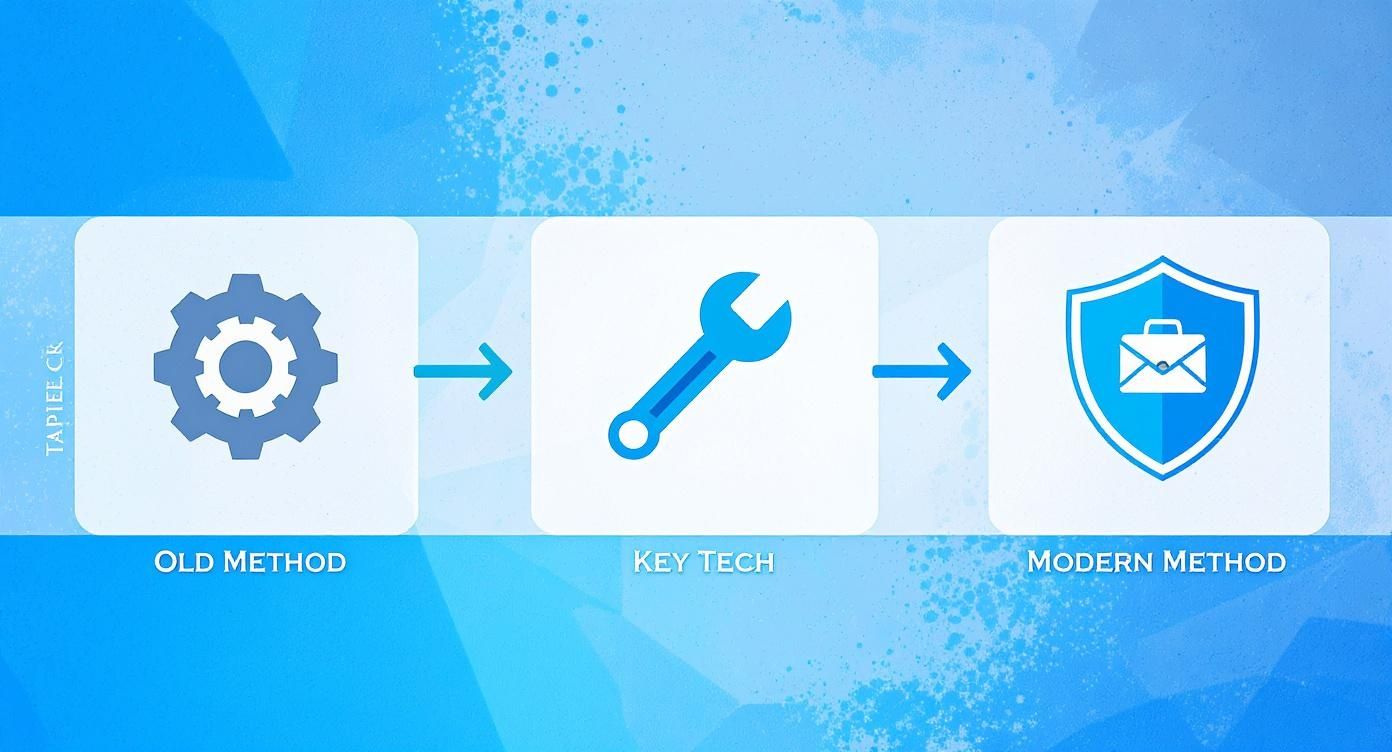
You can see how better materials, specialized machinery, and a relentless focus on safety have completely reshaped how we approach pipeline modifications.
To truly understand how a hot tap works, it's best to break it down into its core stages. The table below outlines the key phases of the procedure, from initial prep work to the final connection.
| Key Stages of a Hot Tap Gas Line Procedure |
| :— | :— | :— |
| Stage | Primary Objective | Key Actions |
| 1. Site Preparation | To ensure the pipe is suitable and the area is safe for work. | Conduct non-destructive testing (NDT), clean the pipe surface, and mark the exact tap location. |
| 2. Fitting & Valve Installation | To create a permanent, pressure-containing base for the new connection. | Weld a specialized fitting to the pipe and bolt a full-bore valve onto the fitting. |
| 3. Pressure Testing | To verify the integrity of the new assembly before cutting the pipe. | Pressurize the space between the pipe and the closed valve to confirm all welds and seals are leak-proof. |
| 4. Mounting the Tapping Machine | To attach the cutting equipment and create a sealed extension of the pipeline. | Bolt the hot tapping machine onto the valve and open the valve to equalize pressure. |
| 5. The Cut & Coupon Retrieval | To safely penetrate the pipe wall and establish the new flow path. | Advance the cutter, make the cut, retract the cutter with the pipe piece (coupon), and close the valve. |
Each step is a critical building block, ensuring the entire operation is completed without incident and without disrupting service.
H3: Stage 1 Comprehensive Site Preparation
Long before a welder strikes an arc, a tremendous amount of work goes into preparing the site. This phase is all about due diligence. You can't just start working on a live pipeline; you need to know exactly what you're dealing with.
Crews start by performing non-destructive testing (NDT) to confirm the pipe’s material, its wall thickness, and its overall health. This isn't optional—it's essential for confirming the pipe can handle the heat from welding and the stress of the tap. Once confirmed, they mark the precise spot for the new connection and clean the pipe surface down to the bare metal for a perfect weld.
H3: Stage 2 Fitting and Valve Assembly Installation
With the prep work done, the physical work begins. The first major step is welding a specialized fitting directly onto the live pipeline. This fitting, often a full-encirclement split tee, becomes the permanent foundation for the new branch line.
This isn't a job for just any welder. It requires highly skilled professionals who follow strict codes to lay down a perfect, full-penetration weld. Once the fitting is in place, a heavy-duty, full-bore valve is bolted onto it. This valve is the gatekeeper for the entire operation, creating a sealed chamber for the tapping machine to work through.
The quality of the weld and the integrity of the valve assembly are the bedrock of the entire hot tap. These components form the pressure-containing boundary that ensures not a single molecule of gas can escape during the procedure.
H3: Stage 3 Rigorous Pressure Testing
The valve is on, but nobody is cutting anything yet. First, the entire assembly has to pass a crucial safety check: the pressure test. This step is designed to find any potential flaw in the welds or gaskets before the pipe wall is breached.
Technicians isolate the small space between the pipe's outer wall and the closed gate valve. They then pressurize this section with an inert gas or water to a level significantly higher than the pipeline's normal operating pressure. If there’s even a microscopic leak, it will be found and fixed now, when the stakes are low.
H3: Stage 4 Mounting the Hot Tapping Machine
Once the assembly is proven to be 100% leak-free, it's time to bring in the main piece of equipment: the hot tapping machine. This is essentially a powerful, high-pressure drill designed to work on a live line. It consists of a boring bar, a pilot drill, and a specialized hole saw, all housed within a body that can handle the full pressure of the pipeline.
The machine is bolted securely to the valve, creating a sealed, continuous chamber. With everything in place, the operator opens the main valve. The gas pressure now fills the tapping machine, equalizing it with the pipeline itself.
H3: Stage 5 Performing the Cut and Coupon Retrieval
This is the moment of truth. The operator fires up the hot tapping machine, and the cutter slowly advances until it makes contact with the pipe. A special pilot drill at the center of the cutter engages first, securing the piece of pipe being cut out—called the coupon—so it can’t fall into the pipeline and cause problems downstream.
The main cutter then cleanly slices through the pipe wall. As soon as the cut is complete, the operator retracts the boring bar, pulling the cutter and the captured coupon back through the valve. The operator then closes the full-bore valve, once again isolating the pipeline from the outside world.
The hot tapping machine can now be safely depressurized and removed. The new branch connection is officially complete and live, ready to be tied into the new system—all without ever shutting down the gas supply.
Safety Protocols for High-Pressure Operations
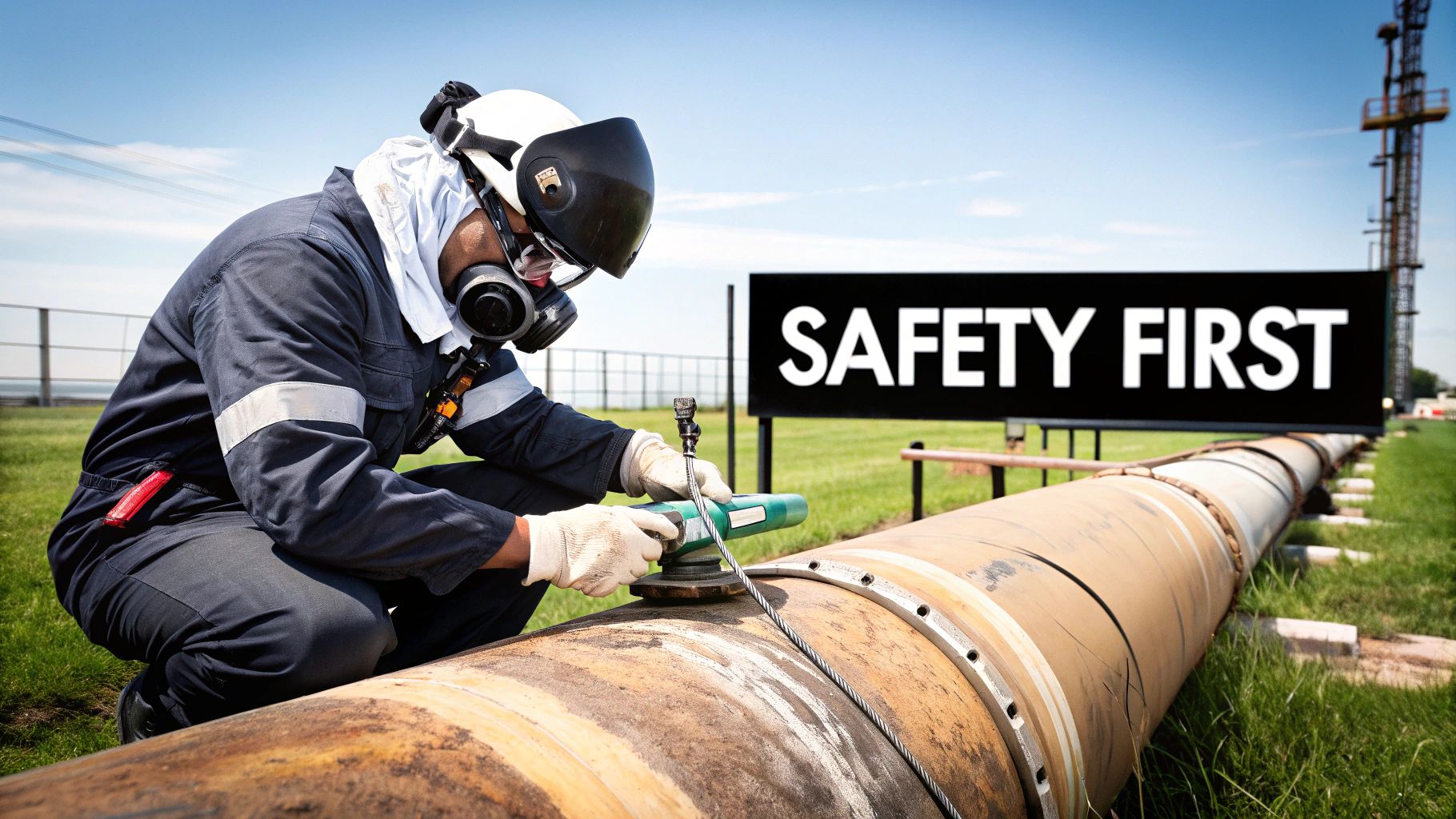
When you're working on a live, pressurized hot tap gas line, safety isn't just a priority—it's the entire foundation of the job. This is a field with zero room for error. There are no second chances.
Every single action, from start to finish, is dictated by strict protocols and standards from bodies like the American Petroleum Institute (API) and the American Society of Mechanical Engineers (ASME). These aren't just suggestions; they are the non-negotiable rules of engagement that turn a high-stakes task into a controlled, predictable engineering procedure.
It’s this absolute commitment to safety that transforms what sounds like a hazardous job into a reliable, routine process that keeps our energy infrastructure running.
Pre-Operation Due Diligence
The first and most important line of defense is exhaustive preparation. Long before any equipment arrives on-site, a team conducts a deep dive into the pipeline’s history and current condition. Think of it like a surgeon reviewing a patient's complete medical history before ever stepping into the operating room.
This crucial phase involves several critical checks to make sure the pipeline is even a candidate for the procedure. Skipping these steps would be like building a house on a foundation of sand.
Safety in hot tapping is all about eliminating variables. Meticulous planning, material verification, and weld integrity checks aren't just best practices—they are the very things that make the procedure possible.
Here’s what that initial verification looks like:
- Metallurgical Analysis: Crews confirm the exact material and grade of the pipe. This tells them precisely which welding procedures to use and guarantees the pipe can handle the heat without losing its structural integrity.
- Ultrasonic Thickness Testing: Using specialized equipment, technicians measure the pipe’s wall thickness at and around the target location. This confirms there’s enough solid material to support the new connection and that corrosion hasn’t created any weak spots.
- Flow and Pressure Confirmation: The team verifies the exact operating pressure, temperature, and flow rate of the gas inside the line. This data is absolutely essential for choosing the right equipment and calculating all the engineering tolerances.
The Human Element: Certified Technicians
While the right technology and procedures are vital, the single most critical safety factor in any hot tap gas line operation is the human doing the work. This job is exclusively performed by highly trained, certified technicians who have a profound understanding of the mechanics, physics, and risks involved.
These professionals don’t just take a class once; they go through continuous training and recertification to stay sharp on the latest techniques and safety standards. Their expertise is the glue that holds all the protocols together, allowing them to interpret complex data, make critical judgments on the fly, and execute every step with methodical precision.
An experienced crew knows that a successful hot tap isn’t about speed. It’s about being deliberate.
Non-Destructive Testing and Weld Validation
Once the new fitting is welded onto the pipeline, it’s there for good. That means the quality of that weld is everything. To confirm its integrity without causing any damage, technicians use a range of Non-Destructive Testing (NDT) methods.
These tests are like giving the weld an X-ray, allowing the team to see its internal structure and ensure it’s free of any hidden flaws.
Common NDT methods for hot tapping include:
- Magnetic Particle Inspection (MPI): This finds tiny surface and near-surface cracks in iron-based metals.
- Dye Penetrant Testing (DPT): A liquid dye is used to locate surface-breaking defects that might be invisible to the naked eye.
- Ultrasonic Testing (UT): High-frequency sound waves are sent through the weld to detect internal defects and verify its thickness.
Only after a weld passes this battery of tests can the operation move on to the pressure testing phase. This multi-layered verification process ensures that every new connection is as strong—or stronger—than the original pipe, giving operators total confidence in the long-term safety of their infrastructure.
When Hot Tapping Isn't an Option: Keeping the Gas Flowing with Mobile CNG
Hot tapping is a brilliant piece of engineering, letting crews add a new connection to a live pipeline without missing a beat. But it's not a silver bullet for every situation. What happens when a section of the pipeline needs to be taken down completely for a major repair, a full replacement, or an in-depth integrity check?
In those cases, the core mission is exactly the same: guarantee uninterrupted service for every customer downstream. This is where mobile natural gas solutions come into play, working hand-in-glove with traditional pipeline maintenance to create a temporary bridge and prevent any service disruption.
It's like setting up a smart detour for a major highway closure. While the main road is shut down for construction, a temporary route keeps traffic moving smoothly. Mobile Compressed Natural Gas (CNG) and Liquefied Natural Gas (LNG) solutions are that essential detour for the energy world.
The Virtual Pipeline: A Bypass for Your Pipeline
When a segment of pipe has to be isolated, a temporary gas supply is brought in on wheels. This "virtual pipeline" bypasses the section that's out of commission, making sure that homes, hospitals, and businesses never even know there’s a project underway. It's a seamless and highly coordinated operation.
This strategy is a lifesaver in a few key scenarios:
- Complex Pipeline Repairs: For anything more involved than a simple tie-in, like cutting out a damaged section or performing deep integrity work, isolating the line is non-negotiable.
- Major System Upgrades: When you're overhauling critical components like large valve stations or regulator facilities, a full shutdown of that segment is often the only safe way to do it.
- Emergency Response: If a pipeline fails unexpectedly, mobile gas can be deployed in a hurry to get service back up for affected communities while crews work on the permanent fix.
By setting up this temporary supply bridge, companies like Blue Gas Express ensure that even the most complex maintenance jobs have zero impact on the customer. It turns a potential crisis into a quiet, behind-the-scenes event.
How Mobile CNG Fills the Gap
Bringing in mobile gas isn't as simple as just parking a truck. It's a carefully planned process. Before the main pipeline is ever shut down, a mobile regasification unit is positioned downstream from the work zone and connected directly to the local distribution system.
Trailers filled with CNG or LNG are then brought to the site, creating a steady, reliable flow of natural gas. This mobile supply is managed with incredible precision, matching the exact pressure and flow rates of the system it's feeding. For the duration of the project, it effectively becomes the pipeline.
This gives operators a powerful one-two punch. It handles the big jobs where hot tapping isn't feasible, and it provides an indispensable safety net for emergencies. Together, hot tapping and mobile CNG create the complete toolkit for modern pipeline management, allowing operators to tackle any challenge while delivering on their promise of 100% service reliability.
Why Hot Tapping Makes Good Business Sense
Hot tapping isn't just a clever piece of engineering; it's a strategic move that delivers real, tangible benefits to your bottom line and your company's sustainability efforts. When you get down to it, this isn't just about connecting a new pipe. It's about finding a smarter, more responsible way to manage the energy infrastructure that powers our world.
Think about the biggest cost associated with traditional pipeline work: shutdowns. For any industry relying on a constant flow of natural gas, downtime means production grinds to a halt and revenue disappears. Hot tapping completely sidesteps this problem, keeping the gas—and the business—running without a single interruption.
Boosting Your Bottom Line
The financial upside goes well beyond just keeping the lights on. The old way of making a connection, a "cold" tie-in, is a long, expensive headache. You have to depressurize the line, purge all the gas out, do the work, and then go through the whole process of repressurizing a huge section of pipeline. Every single one of those steps costs money in labor, equipment, and wasted product.
A hot tap operation cuts right through that complexity. It’s a surgical, highly efficient procedure that gets done with a smaller crew in less time.
When you stack the two methods side-by-side, the savings become obvious:
- No More Shutdown Costs: You avoid halting production or scrambling to reroute supply. Depending on the pipeline's volume, this alone can save a company anywhere from hundreds of thousands to millions of dollars.
- Fewer Labor Hours: The work is faster and needs fewer people on site compared to a full-blown shutdown and purge.
- Zero Product Loss: All that gas you would have vented or flared stays in the pipe, ready to be sold. It turns a total loss into pure inventory.
A Huge Step Forward for the Environment
Maybe the strongest case for hot tapping is its positive impact on the environment. In the old days, connecting to a gas line meant releasing enormous amounts of natural gas—mostly methane—straight into the air. With methane being such a potent greenhouse gas, cutting these emissions is a massive priority for everyone, from regulators to forward-thinking companies.
The hot tap gas line process stops that release cold. Because the system stays sealed and under pressure, practically no gas gets out. This simple fact makes hot tapping an indispensable tool for any organization serious about shrinking its carbon footprint and meeting tough environmental targets.
Opting for a hot tap is a direct investment in sustainability. It turns what was once a routine maintenance chore into a powerful action that cuts greenhouse gas emissions and protects our natural resources.
The numbers back this up. The U.S. Environmental Protection Agency (EPA) did the math, and the savings are staggering. Their research showed that by avoiding shutdowns, hot tapping conserves incredible volumes of natural gas. For instance, just one tap into a 10-inch pipeline at 1,000 psi could prevent over 14,700 thousand cubic feet (Mcf) of gas from being vented. You can dive into the specifics by reading the EPA's detailed findings on natural gas savings.
At the end of the day, hot tapping changes the whole conversation around pipeline work. It’s no longer just a necessary operational task; it’s a strategic choice that pays you back twice: once in major cost savings and again in a much stronger environmental record.
Common Questions About Hot Tapping
Even after seeing the process laid out, the idea of drilling into a live, pressurized gas line can be a little unsettling. It's a high-stakes job, and it's only natural for managers and operators to have a few questions before signing off.
Let's clear up some of the most common concerns to build confidence in what is a remarkably safe, controlled, and effective engineering solution.
Is Hot Tapping a Gas Line Actually Safe?
The short answer is yes, absolutely. When done by the book, it’s an incredibly safe procedure. The safety of a hot tap gas line operation isn't left to chance; it's the result of meticulous engineering, strict adherence to industry standards from bodies like API and ASME, and the skill of highly trained technicians.
Every single step is designed to eliminate risk. The process is layered with safety checks, from metallurgical analysis and non-destructive weld testing beforehand to the use of pressure-balanced equipment during the cut. This creates a completely sealed, controlled environment from start to finish, so not a wisp of gas escapes and the pipeline's integrity is never compromised.
At the end of the day, the most critical safety factor is the human one. A successful hot tap hinges on the expertise of certified professionals who know how to manage every variable of a high-pressure operation with precision.
What Are the Main Limitations of Hot Tapping?
As useful as it is, hot tapping isn't a silver bullet for every situation. There are certain conditions where it’s simply not the right—or safe—choice.
- Pipe Condition: The pipe itself has to be in good shape. If there's severe corrosion, internal damage, or signs of lamination, that section of the line is a no-go.
- Product Incompatibility: You can't hot tap lines carrying anything that might become unstable or hazardous when exposed to the heat from welding, like pure oxygen or certain volatile chemicals.
- Flow and Pressure: There are physical limits. Extremely high flow rates can cause vibrations that make a clean cut impossible, and some ultra-high-pressure systems may be beyond what standard hot tapping equipment can handle.
How Do You Know If a Pipe Is Suitable for a Hot Tap?
Figuring out if a pipe is a good candidate is the crucial first step, and it's all about data, not guesswork. This isn't a judgment call; it's a scientific analysis.
Technicians run a series of tests to get the all-clear:
- Material Verification: Using a technique called Positive Material Identification (PMI), they confirm the exact alloy and grade of the pipe.
- Wall Thickness Measurement: Ultrasonic testing (UT) measures the pipe wall's thickness down to the millimeter, making sure it’s strong enough to handle the new connection.
- Integrity Inspection: The entire area is scanned for hidden defects, corrosion, or any other issues that could weaken the weld or the cut.
A pipe only gets cleared for a hot tap after it passes every single one of these checks without any red flags. This upfront diligence is what guarantees a safe and successful outcome.
When maintenance requires a full pipeline shutdown or a temporary bypass, Blue Gas Express provides the essential mobile CNG and LNG solutions to ensure your service remains uninterrupted. Learn how our virtual pipeline services can support your next project.