

Ever wished you could have an energy pipeline delivered right to your doorstep, no digging required? That’s pretty much the magic of compressed natural gas delivery. It’s a clever way to get clean-burning natural gas to locations that are miles away from any physical pipeline network, all by truck.
The Virtual Pipeline Explained
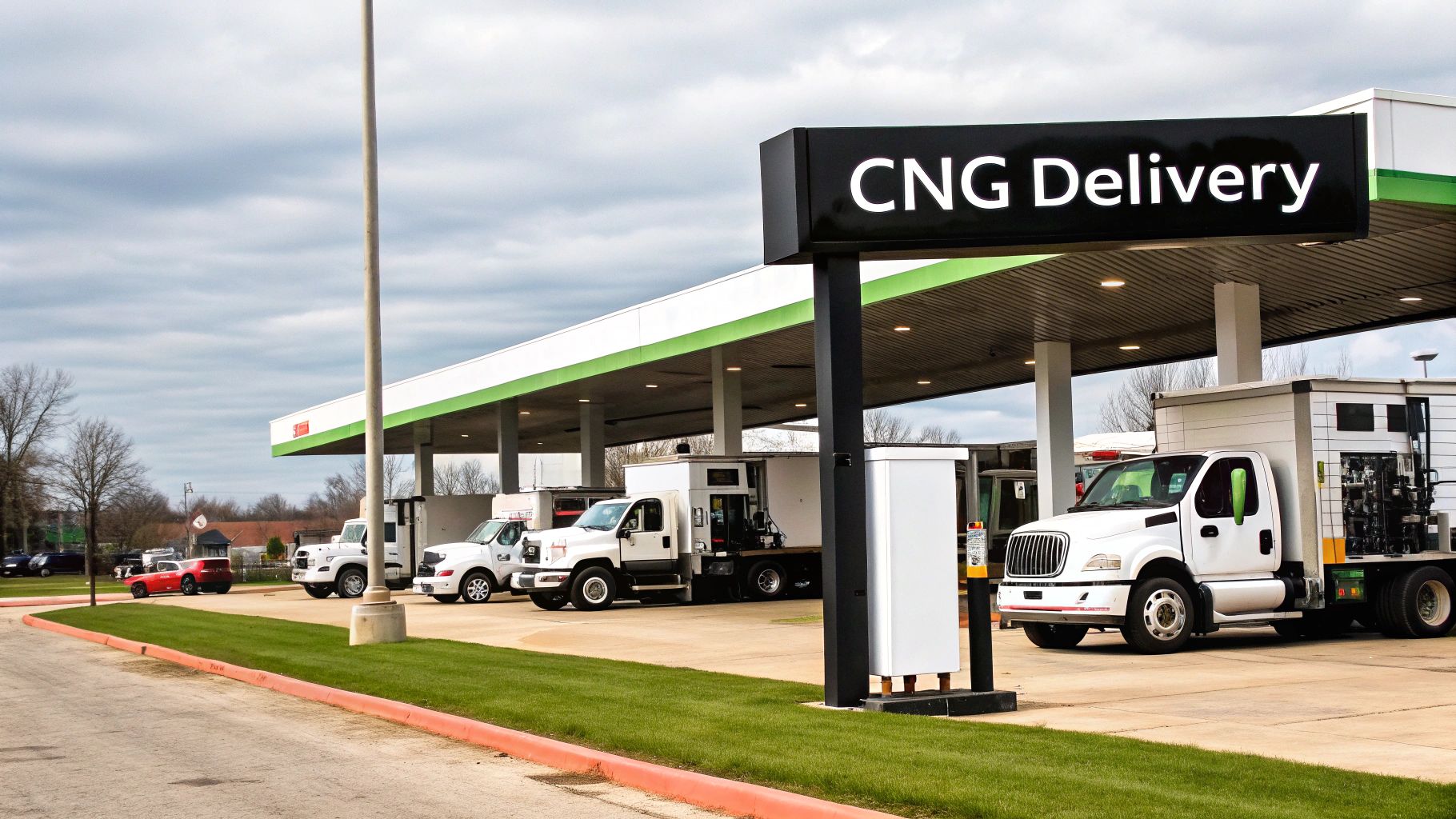
We often call this system a "virtual pipeline." It's a fitting name because it bypasses the need for a fixed, underground grid. Instead, specialized trucks create a flexible, mobile energy supply chain that can go almost anywhere. This opens up the advantages of natural gas to businesses and towns that would otherwise be stuck with more expensive or less environmentally friendly fuels like propane or diesel.
So, how does it work? The science is elegant in its simplicity. We take natural gas and put it under immense pressure—around 3,600 psi—which shrinks its volume down to less than 1% of its original size. This super-concentrated gas is then loaded into rugged, specialized trailers for the journey. When it arrives, we safely decompress the gas and feed it right into the customer's equipment at the exact pressure they need.
Three Pillars of CNG Delivery
The whole operation stands on three core components that have to work together seamlessly. Think of them as the essential links in a chain that brings energy from the source straight to you.
- Compression Stations: This is where it all begins. These facilities are strategically placed near major natural gas pipelines. They pull gas from the main grid and use powerful compressors to get it to the right pressure for transport.
- Mobile Storage Modules: These are the workhorses of the virtual pipeline. They're essentially high-tech, reinforced containers mounted on trailers, built to hold the highly compressed gas securely and safely during its trip.
- Decompression Stations: Once our truck arrives at your site, this is the final piece of the puzzle. A specialized unit, often called a "pressure-reducing skid," is used to carefully bring the gas pressure back down to a usable level for your furnaces, generators, or industrial machinery.
By linking these three elements, a compressed natural gas delivery service builds an energy bridge on demand. It's the perfect solution for pipeline outages, permanent off-grid facilities, or temporary projects where a reliable energy source is non-negotiable.
Ultimately, this system is far more than just a logistical fix; it's a strategic energy asset. Whether you're an industrial plant needing a steady heat source, a construction site that needs temporary power, or a fleet manager looking to cut emissions, CNG delivery is a clean, affordable, and incredibly flexible alternative.
The 5-Step Journey of Natural Gas from Source to Site
So, how does natural gas actually get from a major pipeline to a job site miles away, without any physical pipes connecting the two? It’s a fascinating process—a kind of "virtual pipeline"—that involves some serious engineering and logistics. It’s less like a straight line and more like a carefully choreographed dance.
Let's walk through the entire journey, step by step. We'll follow the gas from the moment it’s tapped from the grid until it’s powering equipment at a remote factory or construction site. You’ll see how we take this abundant, low-pressure resource and turn it into a dense, mobile, and incredibly useful form of energy.
Stage 1: Tapping into the Grid
Everything starts at a primary natural gas pipeline—one of the major energy arteries crisscrossing the country. At a designated "interconnect" facility, we tap into this massive supply. The gas here is at a relatively low pressure, just waiting to begin its transformation.
This first step is foundational. The quality and flow of the gas sourced here dictate the efficiency of the entire virtual pipeline system. Think of it as drawing water from a major river to fill up our tankers.
Stage 2: The Big Squeeze—Compression
Next, the gas is moved into a high-powered compressor station. This is where the magic really happens. A series of powerful engines work to pressurize the natural gas up to around 3,600 pounds per square inch (psi).
To give you a sense of that force, it’s more than 100 times the pressure in your car’s tires. This extreme compression shrinks the gas’s volume to less than 1% of what it was, effectively packing a massive amount of energy into a surprisingly small, transportable space.
This handy infographic breaks down how the key stages of compressed natural gas delivery work together, from compression all the way to the end user.

As you can see, it’s a system designed for efficiency—from the high pressures that make transport viable to the quick turnaround times that keep operations running smoothly.
Stage 3: Hitting the Road
Once compressed, the CNG is loaded into highly specialized mobile storage units. You might hear them called "tube trailers" or "cascades." These aren’t just any old tanks; they’re robust, high-strength containers built to safely manage the immense pressure inside. The loading is a precise, carefully monitored process to ensure every trailer is filled safely and completely.
Then, the journey begins. Logistics experts map out the safest, most direct routes. Each truck is equipped with real-time tracking, so we always know exactly where the energy is and when it will arrive. It’s all about predictable, reliable delivery you can count on.
At its heart, the virtual pipeline is about making energy mobile. It’s an on-demand supply chain that can be set up anywhere, whether it’s for a temporary project or a permanent facility that’s just off the grid.
Stage 4: Decompression at Your Site
When the truck arrives at your location, the tube trailer is connected to a piece of equipment called a pressure reduction unit (PRU). This is the final, crucial link that makes the gas usable.
The PRU’s job is to do the exact opposite of the compressor: it carefully steps the gas pressure down from 3,600 psi to whatever level your equipment needs to run. The whole process is designed to be completely seamless. For the end user, it feels exactly like being connected to a traditional pipeline, delivering a steady, uninterrupted flow of fuel. This is the core of what a service like Blue Gas Express provides—we bring the pipeline directly to your doorstep.
To wrap things up, let’s quickly recap the entire process with a simple table that lays out each distinct stage.
The 5 Key Stages of CNG Delivery
This table summarizes the core actions and key technologies that make the virtual pipeline possible, from the initial sourcing all the way to final delivery and use.
| Stage | Core Action | Key Technology Involved |
|---|---|---|
| 1. Sourcing | Drawing natural gas from a primary interstate pipeline. | Interconnect Station, Metering Systems |
| 2. Compression | Increasing gas pressure to around 3,600 psi to reduce its volume. | High-Powered Gas Compressors |
| 3. Transport | Loading CNG into mobile units and delivering it via truck. | Tube Trailers (Cascades), GPS Tracking |
| 4. Decompression | Reducing the gas pressure back to a usable level on-site. | Pressure Reduction Unit (PRU) |
| 5. Integration | Feeding the gas directly into the customer’s equipment. | Regulators, On-Site Piping |
From start to finish, the process is a perfect blend of robust infrastructure and smart logistics, all designed to deliver energy where it’s needed most.
The Economic and Environmental Benefits of CNG

More and more businesses are turning to compressed natural gas, and it's not just about finding another energy source—it's a strategic move. The reasons why are pretty compelling, impacting everything from the company's bottom line to its sustainability reports. The advantages really boil down to three big wins: powerful economic savings, a much lighter environmental footprint, and incredible operational flexibility.
A Clear Win for Your Budget
Let's start with the most obvious benefit: the cost savings. When you stack natural gas up against traditional fuels like diesel, propane, or fuel oil, it’s often significantly cheaper. We’re not talking about pennies here. For businesses that use a lot of energy, like manufacturing plants or large commercial buildings, the savings can be massive.
On top of that, natural gas prices have a history of being much more stable than oil-based fuels. This kind of predictability is a game-changer for budgeting, helping companies avoid the wild price swings that can throw financial plans completely off track.
A Greener Footprint
Beyond the financial perks, the environmental argument for CNG is just as strong. Simply put, natural gas is the cleanest-burning fossil fuel available, so making the switch has an immediate and positive impact on the environment.
Companies that move to CNG see a dramatic drop in harmful emissions. Specifically, it produces far lower levels of:
- Carbon Dioxide (CO2): The main greenhouse gas driving climate change.
- Nitrogen Oxides (NOx): A major cause of smog and acid rain.
- Particulate Matter: The fine, sooty particles that can cause serious respiratory problems.
For any organization trying to hit sustainability targets or navigate tightening environmental rules, using a compressed natural gas delivery service is one of the most practical and effective steps you can take.
Unlocking Operational Freedom
The day-to-day operational benefits of a virtual pipeline system are just as crucial. For any facility that isn’t connected to a physical pipeline, CNG delivery offers true energy independence. A factory in a remote area, for example, is no longer stuck with expensive propane deliveries or noisy, disruptive diesel generators.
This flexibility also becomes a lifesaver during emergencies. If a primary gas line goes down for maintenance or an unexpected outage occurs, mobile CNG trailers can be brought in quickly to keep the lights on and the machinery running without a hitch.
The momentum behind CNG is clear in the market data. The U.S. CNG market was valued at around USD 13.43 billion recently and is projected to nearly double to USD 26.62 billion by 2030. This kind of growth shows a serious and growing investment in the infrastructure needed to support natural gas as a cleaner fuel alternative. You can dig into the numbers in this comprehensive report.
When you add it all up, the value is undeniable. Businesses get a more affordable, cleaner, and incredibly reliable source of energy delivered right where they need it, solving tough logistical problems and boosting their environmental credentials all at once.
Where CNG Delivery Makes a Real-World Difference
The real power of a virtual pipeline isn't just theory—it's about solving urgent, practical problems for businesses on the ground. This isn't some niche technology. Compressed natural gas delivery is already a workhorse solution, keeping everything from manufacturing plants to city buses running. Its ability to bring energy anywhere, on demand, makes it indispensable.
Take industrial facilities, for example. If you run an asphalt plant or a factory far from the nearest physical pipeline, you need a constant, high-volume heat source. Trying to get by on expensive alternatives like propane or diesel can eat your budget alive. A virtual pipeline changes the game, giving you a steady, affordable supply of natural gas, almost like you were hooked directly into the main grid.
Fueling Cleaner, Smarter Transportation
The transportation sector is another place where CNG delivery is making huge waves. More and more organizations are switching their fleets over to cleaner-burning natural gas to hit sustainability targets and slash their fuel bills.
We're seeing this shift happen everywhere, especially with:
- Public Transit Buses: Cities are embracing CNG-powered buses to clean up urban air quality and bring down their operating costs.
- Waste Management Trucks: Garbage trucks run predictable routes and always return to the same depot, making them perfect for a dedicated CNG fueling setup.
- Long-Haul Logistics: For trucking companies, CNG offers a clear path to lower fuel expenses and a smaller carbon footprint across their entire fleet.
By setting up their own on-site CNG fueling stations—kept full by mobile deliveries—these fleets can refuel quickly and reliably. They don't have to worry about finding a public station. It creates a self-sufficient system that’s good for the bottom line and even better for the environment.
A critical application that often flies under the radar is in agriculture. Natural gas is the primary ingredient needed to produce ammonia, which is essential for making fertilizer. A dependable CNG supply ensures this vital link in our food chain never breaks, even in the most remote farming communities.
A Lifeline for Backup and Temporary Energy
Beyond being a permanent solution, the sheer flexibility of compressed natural gas delivery really shines when things go wrong or when you just need power for a short time. It’s the ultimate energy bridge, keeping the lights on when the main systems are down.
Imagine a gas utility has to do scheduled maintenance on a section of pipeline. In the old days, that meant cutting off service to hundreds of homes and businesses. Not anymore. Now, they can roll in a mobile CNG system and inject gas right back into the line, just past the work area. For customers, it’s seamless—their service never skips a beat.
This same idea works for all kinds of temporary needs. A large construction site needs a ton of energy for heat and equipment long before the permanent utilities are hooked up. A mobile CNG unit can be brought in to power the whole operation and then removed when the job is done. It's also a game-changer in disaster relief, where CNG can quickly provide a reliable energy source for temporary shelters, field hospitals, and command posts when power is needed most.
Why CNG is a Growing Part of the Global Energy Mix

The rise of compressed natural gas delivery isn't just a coincidence. It's a direct answer to a global push for cleaner, more dependable energy sources. As everyone from national governments to local businesses gets serious about hitting sustainability targets, the hunt is on for fuels that do less harm.
CNG slots into that picture perfectly. It gives companies a real-world way to slash their carbon footprint without having to overhaul their entire operation.
This shift has created some serious economic momentum. The worldwide market for compressed natural gas delivery was valued at around USD 187.95 billion recently and is on track to hit USD 333.94 billion by 2029. That kind of growth tells you just how much industries are counting on CNG to power the future. You can dig deeper into the expanding CNG market on ResearchAndMarkets.com.
Innovation Is Fueling Adoption
It’s not just about meeting regulations, though. Constant improvements in technology are making CNG a tougher competitor against traditional fuels every single day. The industry is anything but static. Engineers are continually refining the core tech behind the virtual pipeline, making the whole process more efficient and affordable.
We’re seeing big leaps in a few key areas:
- Compression Technology: Modern compressors are squeezing gas with less energy, which directly cuts down on operational costs.
- Storage Solutions: New materials for mobile storage tanks are both lighter and stronger. This means trucks can haul more gas on every trip, making the logistics much smarter.
- Engine Performance: The latest natural gas engines, whether in a truck or powering industrial gear, are more powerful and reliable than ever before.
This cycle of improvement is what really matters. Every time the technology gets better, compressed natural gas delivery becomes a more compelling alternative to diesel or propane, cementing its role in our modern energy mix.
At the end of the day, CNG has graduated from being a niche fuel for specific situations. It's now a mainstream player in the global energy transition, offering a proven, reliable, and economically sound way to power businesses into the future.
Finding the Right CNG Delivery Partner
Choosing a company to deliver your compressed natural gas isn't just about picking a vendor—it’s about finding a true partner for your energy needs. Think of them as an extension of your own team, someone you can rely on to keep the fuel flowing smoothly, safely, and without a hitch.
The whole process starts with a simple energy assessment. A good partner will dive deep into your operations to see if CNG is a fit and, more importantly, to show you exactly how much you can expect to save.
From there, it becomes a collaboration. You'll review a clear proposal, work together on the engineering for any on-site equipment (like a decompression skid), and map out a delivery schedule that works for you. The best companies handle all the heavy lifting, making the switch feel surprisingly simple.
What to Look for in a Great Provider
Let's be honest: not all CNG delivery services are built the same. Your operations depend on their reliability, so you need to do your homework. A stellar safety record, a rock-solid supply chain, and genuine technical know-how are the absolute essentials. Don't compromise on these.
It’s also worth remembering that global energy markets can be unpredictable. Natural gas production is always shifting, especially in major regions like North America and the Middle East, which can affect both availability and cost. A smart partner keeps a close eye on these trends and has a flexible compressed natural gas delivery system designed to protect you from market swings. You can get a better sense of these dynamics by exploring the latest global gas market trends on IEA.org.
A truly great partner doesn’t just deliver gas; they deliver peace of mind. Their expertise ensures that your energy supply is one part of your business you never have to worry about.
To help you find that peace of mind, here’s a checklist of questions you should ask any potential provider before you even think about signing a contract.
Questions to Ask Your Potential CNG Partner
- Safety and Compliance: Can you walk me through your safety protocols for both transport and on-site handling?
- Supply Reliability: What’s your backup plan? How do you guarantee we’ll have gas during peak demand or if a piece of equipment goes down?
- Technical Support: What kind of technical support and training can we expect from your team, both during setup and long-term?
- Experience and Case Studies: Do you have experience with businesses like ours? Can you share a few examples or case studies?
- Emergency Response: If something goes wrong in the middle of the night, what’s your emergency response plan?
Have Questions About CNG Delivery? We Have Answers.
Thinking about switching to compressed natural gas? You're not alone. We get a lot of questions from businesses weighing their options, so we’ve put together some straight answers to the most common ones.
How Safe Is Compressed Natural Gas?
Safety is, without a doubt, the number one priority in compressed natural gas delivery. This isn't the Wild West; the entire operation, from compression to delivery, is tightly managed by strict federal and local regulations.
The mobile storage tanks themselves are engineering marvels, built from high-strength steel or advanced composite materials. They go through intense testing to ensure they can handle extreme pressure and impacts. Plus, natural gas itself has a few built-in safety features: it has a narrow flammability range and is lighter than air, so if a leak ever did happen, the gas would rise and dissipate quickly, significantly lowering the risk of ignition.
What Kind of On-Site Setup Do I Need?
Getting set up is a lot more straightforward than most people imagine. All you really need is a small, designated spot for the mobile storage trailer to park and a piece of equipment called a pressure reduction unit (PRU).
This PRU is a compact, skid-mounted system that acts as the "handshake" between our trailer and your facility's existing gas pipes. A good provider will handle the entire installation, making sure everything connects flawlessly to your equipment with barely any interruption to your daily work.
Think of it as a "plug-and-play" energy solution. The on-site setup is designed for a tiny footprint and quick deployment, bringing the pipeline right to your doorstep without the headache of major construction.
Ready to see how a virtual pipeline can power your project without delays? The team at Blue Gas Express is ready to design a reliable, temporary natural gas solution for your site. Learn more and get a quote at https://bluegasexpress.com.