

The Natural Gas Pipeline Company of America (NGPL) operates one of the biggest interstate natural gas pipeline systems in the country. It’s best to think of it as a massive energy highway, channeling huge volumes of natural gas from the production fields in the South all the way to major markets across the Midwest, including the high-demand Chicago metro area.
This network is absolutely essential for heating homes, firing up industrial plants, and keeping the nation’s energy grid stable.
The Backbone of America's Gas Supply
At its core, the Natural Gas Pipeline Company of America is more than just a company—it’s a fundamental part of the country's energy circulatory system. With a sprawling network of roughly 9,100 miles of pipeline, NGPL creates a direct link between the rich natural gas basins in Texas and the Gulf of Mexico and the population centers that desperately need it.
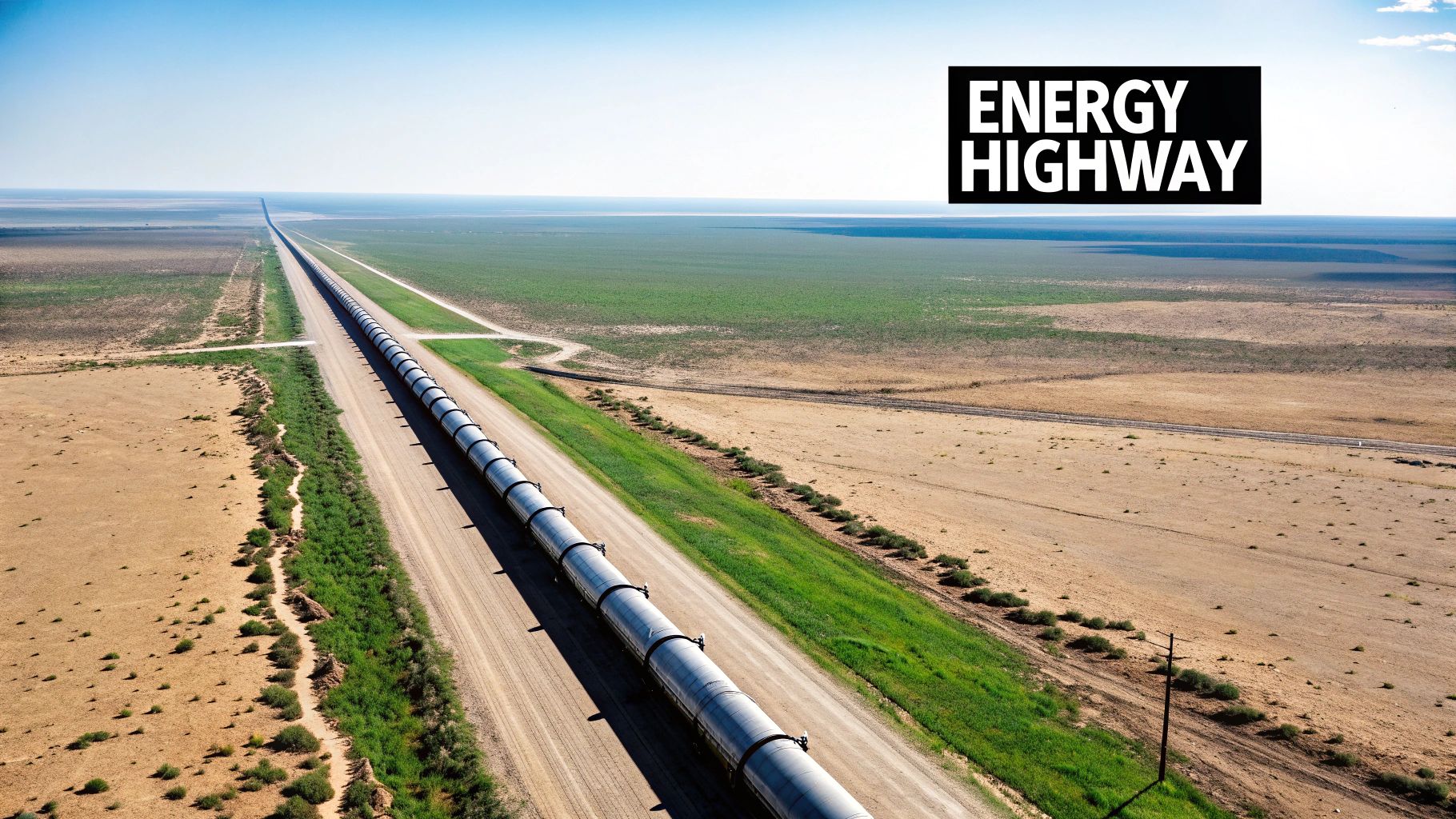
This strategic positioning makes it an indispensable player in the energy reliability game. It's not just a passive tube in the ground; it's a dynamic system, carefully managed to handle the daily and seasonal swings in energy demand.
To give you a clearer picture of NGPL's scale and capabilities, here’s a quick summary of their key operational metrics.
NGPL At a Glance
| Attribute | Details |
|---|---|
| Pipeline Network Length | Approx. 9,100 miles |
| Active Storage Capacity | 288 billion cubic feet (Bcf) |
| Working Gas Capacity | 259 Bcf |
| Peak Day Delivery Capacity | 6.5 Bcf |
| Primary Service Area | Midwest U.S., including Chicago |
| Supply Basins | Permian Basin (TX/NM), Anadarko Basin (OK/TX), Arkoma Basin (OK/AR), East Texas Basin, Gulf Coast Basins |
This table underscores just how significant NGPL's infrastructure is. Its vast storage capacity and daily delivery power are what make it a cornerstone of the national energy grid.
Connecting Supply with Demand
NGPL’s core mission is pretty straightforward: provide safe, reliable, and efficient transportation and storage of natural gas. They do this for a wide range of customers, each with different needs.
- Local Distribution Companies (LDCs): These are the local utilities that bring gas right to your home or office.
- Industrial End-Users: Think large factories and manufacturing plants that depend on a steady stream of natural gas to run their equipment.
- Electric Power Generators: Power plants increasingly use natural gas to generate the electricity we all use.
- Natural Gas Producers: These are the companies pulling the gas out of the ground who need a way to get their product to market.
NGPL's infrastructure isn't just about moving gas from point A to point B. It's about providing the stability and storage that allows communities and industries to keep running without a hitch, especially during peak demand like a brutal winter cold snap.
The Story of an American Energy Pioneer
To really get a feel for the Natural Gas Pipeline Company of America, you have to go back to the very beginning. This company wasn't just another business venture; it was born from a vision so bold it completely redrew the map of American energy. Its history is a testament to incredible engineering and gritty determination, setting the stage for the natural gas grid we all depend on today.
Think back to the early 20th century. Moving natural gas across the country wasn't just difficult—it was practically science fiction. The technology was in its infancy, and the idea of a high-pressure energy artery stretching across multiple states felt impossible to most. But a handful of visionaries saw a different future, one where they could connect vast, untapped gas fields with the booming industrial cities that needed the fuel.
That vision took shape with a project that can only be described as historic. The company, then operating as Continental Construction Corporation, took on the colossal task of building the first-ever 1,000-mile high-pressure interstate natural gas pipeline. This was more than just laying pipe; it was a technological gamble that redefined what was achievable in energy transport.
A Feat of Modern Engineering
Pulling this off required a masterclass in innovation. The team had to pioneer new techniques and use materials that had never been tested on such an enormous scale. Two breakthroughs, in particular, made it all possible:
- Thin-Walled, Electrically Welded Pipe: This new kind of pipe was a game-changer. It was strong enough to contain the immense pressure but light enough to be manufactured and hauled across the country efficiently.
- On-Line Compressor Stations: Imagine these as powerful hearts, placed strategically along the pipeline. Their job was to keep the pressure up and the gas moving smoothly over its thousand-mile trek.
These two innovations were the one-two punch that created a reliable and efficient system for long-haul gas delivery. It literally became the blueprint for the entire industry, forming the backbone of the nation's energy infrastructure for decades to come.
The completion of this pipeline was far more than a construction milestone. It marked the birth of our interconnected natural gas grid, proving that energy could be moved safely and reliably from remote supply basins to the urban centers powering the American economy.
The hammers stopped swinging on August 29, 1931, when a massive 24-inch line stretching from the Texas Panhandle to the industrial heart of Chicago was finished. Gas started flowing just days later, forever connecting the energy-rich south with the hungry northern markets. This pioneering effort, bankrolled by industry giants like Standard Oil of New Jersey, cemented the Natural Gas Pipeline Company of America as a true leader in the energy world. You can explore more details on this historic pipeline project that laid the foundation for modern gas transmission.
This incredible achievement wasn't just about infrastructure; it was about forging connections and creating a whole new way of thinking about energy distribution. The legacy of that single project echoes in the vast, complex web of pipelines crisscrossing the country today—all direct descendants of that first, audacious vision.
A Look Inside NGPL’s Massive Pipeline Network
That initial 1,000-mile pipeline back in 1931 was a monumental achievement, but it was just the first step. Today, what started as a single artery has grown into a complex, sprawling circulatory system for America’s energy. The Natural Gas Pipeline Company of America now operates one of the largest interstate natural gas transmission networks in the entire country, a true lifeline connecting production fields with millions of homes and businesses.
At its core, NGPL's system is a marvel of strategic engineering. It taps directly into the country's most prolific natural gas fields, originating in the energy-rich Permian and Gulf Coast basins. From there, the network snakes northward, forging a critical energy corridor straight to the major industrial and residential hubs of the Midwest.
This visualization shows the path of that historic first pipeline, a route that laid the foundation for the entire network by linking the vast supply in Texas to the booming demand hub of Chicago.
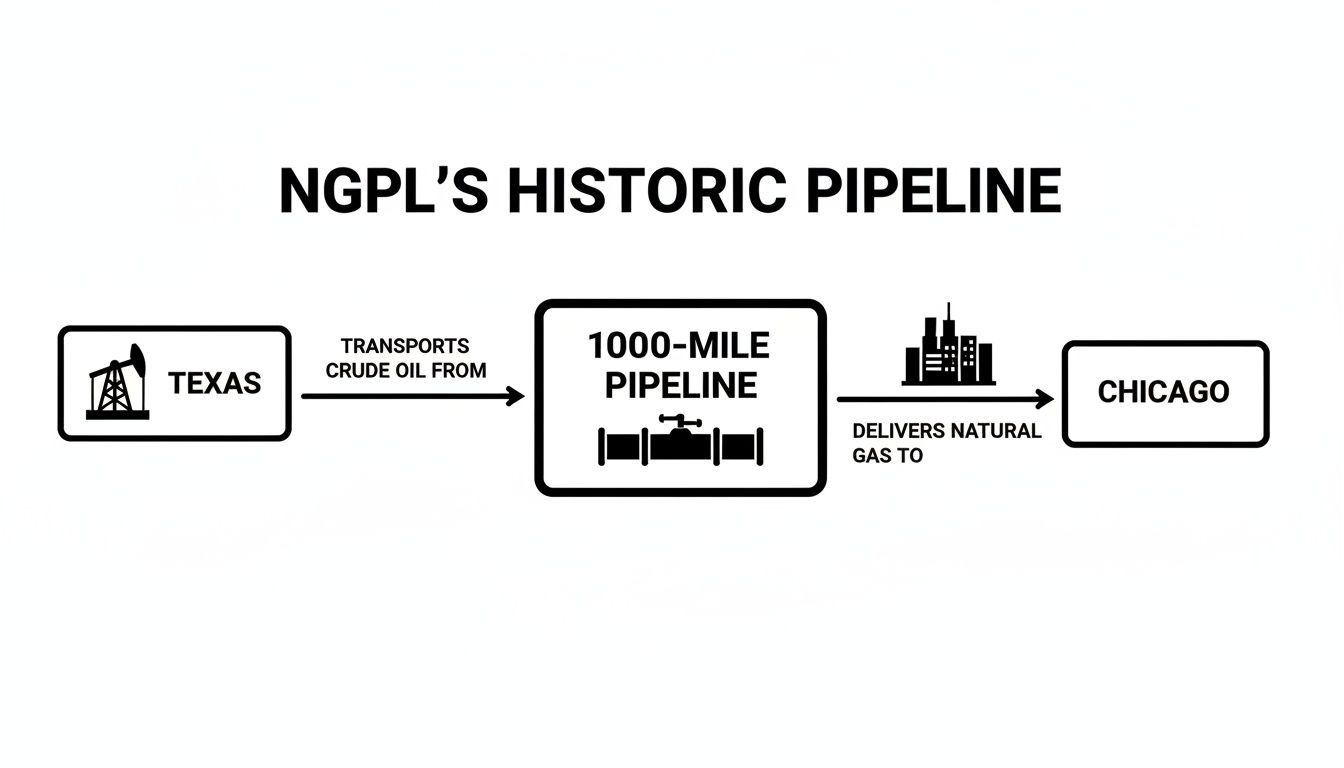
That original design principle—connecting distant, abundant supply with concentrated, high-demand markets—is still the bedrock of NGPL's strategy today.
The Sheer Scale of the Network
It’s hard to wrap your head around just how big this network is. We're talking about approximately 9,100 miles of mainline and lateral pipelines. This massive web is powered by dozens of compressor stations and supported by huge seasonal storage facilities.
On a peak day, this system has the capacity to move an incredible 7.8 billion cubic feet (Bcf/d) of natural gas.
To put that number in perspective, 7.8 Bcf is enough natural gas to power over 130,000 homes for an entire year. And the system can deliver that much energy every single day.
Keeping a system this vast and complex running smoothly and safely is a monumental task. It requires sophisticated control mechanisms, and understanding the nuances between various industrial control systems like SCADA and DCS gives you a glimpse into the technology needed to orchestrate it all with precision.
The Core Components That Make It All Work
A modern pipeline network is far more than just a series of pipes buried in the ground. It’s a dynamic system where several key components have to work together perfectly to ensure gas gets where it needs to go, when it needs to get there.
Compressor Stations: Think of these as the powerful hearts of the pipeline. Placed at strategic points along the thousands of miles of pipe, these stations re-pressurize the natural gas, giving it the push it needs to continue its long journey. Without them, the flow would eventually grind to a halt.
Storage Facilities: NGPL operates enormous underground storage fields that can hold a whopping 288 billion cubic feet of natural gas. These act like giant energy reservoirs. The company can inject gas into storage when demand is low (like in the summer) and then withdraw it when demand spikes (during a winter cold snap), which is absolutely critical for maintaining a reliable supply.
A Look at Core Services and Key Markets
Beyond its massive network of steel pipes and compressor stations, the Natural Gas Pipeline Company of America offers a set of fundamental services that are all about one thing: keeping the energy moving reliably to its customers. The core job is simple on the surface—transport and store natural gas—but the way they deliver on that promise is what really matters. They have to cater to a whole range of clients, from local gas utilities to huge industrial plants.
Think of NGPL’s transportation services a bit like booking a flight. You have a couple of main options, and each one comes with its own set of rules and benefits. This flexibility ensures that everyone, whether it's a power plant needing a constant, steady stream of fuel or a factory with more sporadic energy needs, gets the right level of service.
Firm vs. Interruptible Transportation
The two main ways NGPL moves gas for its customers are called firm and interruptible transportation. Getting the difference between these two is crucial to understanding how a pipeline of this scale manages its capacity.
Firm Transportation (FT): This is the VIP treatment. It’s like buying a first-class, non-refundable ticket where your seat is absolutely guaranteed. Customers with an FT contract have a reserved, non-negotiable right to that pipeline space. Their gas flows, no matter what. This is the go-to service for clients who can't afford any disruption, like local utility companies keeping homes warm in the dead of winter.
Interruptible Transportation (IT): This is the standby option. IT customers get to use whatever space is left over after the firm customers have had their fill. It’s a much more budget-friendly choice, but it carries a risk—if demand spikes and the pipeline gets crowded, their service can be cut back or shut off completely.
This tiered system is what allows NGPL to get the most out of every inch of its pipeline. It ensures that critical energy needs are always met first, while still allowing others to tap into the network when there's room to spare.
For a utility serving a major city, firm transportation isn't just a preference—it's a lifeline. It's the promise that millions of homes will have heat and businesses will have power, even when the weather is at its worst.
The Critical Role of Storage Services
Moving gas is only half the story. NGPL also provides a crucial storage service, with an incredible capacity of 288 billion cubic feet. Think of these vast underground storage fields as a massive energy savings account.
When natural gas prices are low and demand is light, utilities and other large users can pump gas into these storage facilities. Later, when a winter storm or a summer heatwave sends demand soaring, they can withdraw that gas to meet the need. This acts as a vital buffer, protecting consumers from wild price swings and preventing supply shortages. It’s a cornerstone of the region's energy security.
The Natural Gas Pipeline Company of America focuses its efforts on the powerhouse markets of the Midwest, especially the greater Chicago area. Its network is the essential energy artery connecting the prolific gas fields of the Gulf Coast and the Permian Basin straight to this high-demand consumption hub. This link is what keeps the lights on and the furnaces running for millions, making NGPL a true pillar of the regional economy.
How Businesses Partner with NGPL
For a power plant, a sprawling manufacturing facility, or a major construction site, getting hooked into a massive energy artery like the Natural Gas Pipeline Company of America is a foundational move. It's all about securing pipeline capacity—a strategic decision that locks in a dependable, long-term energy supply. But what happens when that permanent connection hits a snag, or planned maintenance takes your line down?
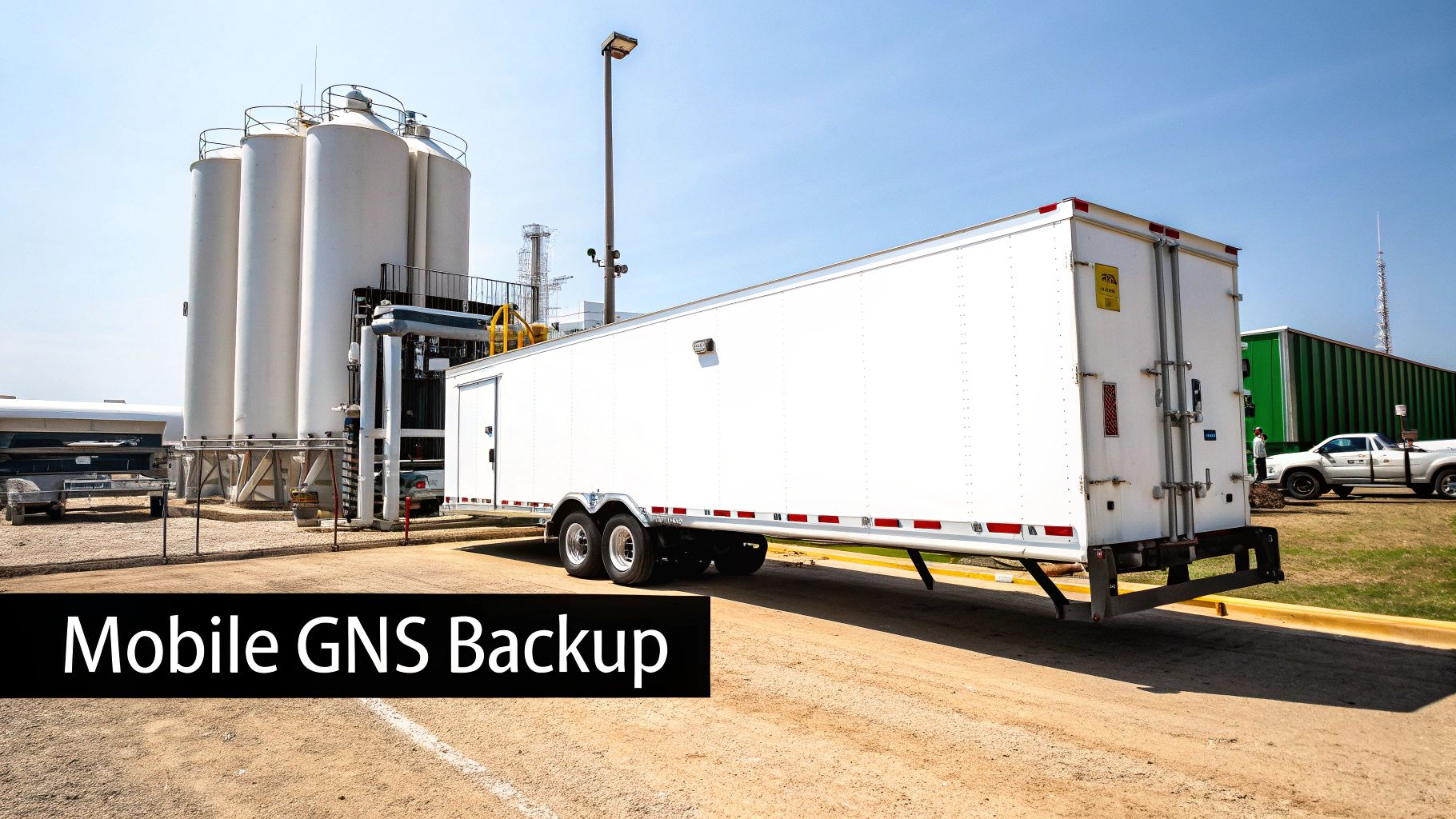
It’s a surprisingly common headache. Delays in pipeline hookups or scheduled service interruptions can bring a project to a dead stop, bleeding time and money. The good news is there's a flexible way to bridge those gaps and turn potential downtime into seamless productivity.
Securing Your Connection to the Grid
Getting connected with the Natural Gas Pipeline Company of America is a formal process, not as simple as flipping a switch. It takes careful planning and contracts designed around your project’s specific energy demands.
A new factory, for instance, needs to lock in a long-term contract for firm transportation to guarantee its gas supply never falters. This involves in-depth negotiations, technical assessments for the physical tie-in, and working through the required regulatory approvals.
In another case, a local utility might need to contract for storage services to build up reserves before winter, making sure they can handle the spike in residential heating demand. The crucial takeaway is to plan far ahead, aligning your project's timeline with NGPL’s capacity and interconnection schedules.
Bridging the Gap During Delays and Outages
Even with perfect planning, things happen. Pipeline construction gets delayed. Existing lines need scheduled maintenance, causing temporary outages. This is exactly where mobile natural gas solutions step in as an invaluable partner—not a competitor—to the permanent pipeline.
Think of it as a strategic backup that keeps your project moving forward. While waiting for the final connection to NGPL’s system, a mobile provider like Blue Gas Express can bring compressed natural gas (CNG) or liquefied natural gas (LNG) right to your site. This temporary supply means you can power up equipment and keep working.
A mobile gas solution acts as a temporary energy bridge. It allows businesses to maintain full operational continuity, turning a potential project-stopping delay into a minor logistical detail.
This approach is a lifesaver for construction projects trying to hit deadlines for occupancy permits or for industrial sites where shutting down a production line simply isn't an option.
Pipeline Connection vs Mobile Gas Solutions
Understanding when to rely on a permanent pipeline versus a mobile solution is key to effective energy management. Each has its ideal role depending on the situation.
The table below breaks down the primary use-cases for each.
| Scenario | Permanent Pipeline (NGPL) | Mobile Gas Solution (e.g., Blue Gas Express) |
|---|---|---|
| Long-Term Operations | Ideal. Provides a continuous, high-volume, and cost-effective energy supply for daily needs. | Not suitable. Designed for temporary, not permanent, primary supply. |
| New Construction Delays | The end goal. The permanent connection you're waiting for. | Perfect bridge. Supplies gas to commission equipment and start operations before the pipeline is live. |
| Planned Maintenance | Temporarily unavailable. The reason for the scheduled outage. | Ideal solution. Keeps the facility running seamlessly during the maintenance window. |
| Emergency Outages | The system under repair. Offline until the issue is resolved. | Critical first responder. Rapidly deployed to restore power and prevent operational losses. |
| Peak Demand Shaving | Provides the baseline supply. May have capacity limits during peak periods. | Excellent supplement. Can be brought in to handle short-term demand spikes without new infrastructure. |
| Remote/Off-Grid Sites | Not feasible. Too expensive or geographically impossible to extend the pipeline. | Primary source. Can provide a "virtual pipeline" for locations far from the main grid. |
Ultimately, these two solutions are not mutually exclusive; they form a powerful partnership. The pipeline provides the backbone, and mobile gas provides the flexibility and resilience.
Common Scenarios for Mobile Gas Support
Temporary mobile gas isn't just an emergency fix; it’s a proactive strategy for making the entire energy network more reliable. Here are a few real-world situations where it complements a major pipeline like NGPL:
- New Construction Hookup Delays: Your facility is ready to go, but the final pipeline tie-in is weeks or months behind. Mobile CNG can get your systems running now, allowing you to begin operations on schedule.
- Planned Pipeline Maintenance: NGPL schedules a maintenance shutdown on the line that feeds your plant. A mobile LNG setup can be brought in beforehand to keep you running without a single hiccup during the service window.
- Emergency Outages: An unexpected issue takes a pipeline offline. Mobile gas units can be deployed quickly to restore your energy supply while permanent repairs get underway.
By working together, the permanent infrastructure of the Natural Gas Pipeline Company of America and the agile nature of mobile gas providers create a more robust and dependable energy ecosystem for everyone. It’s a partnership that ensures the gas keeps flowing, no matter what.
When you're dealing with nearly 10,000 miles of high-pressure natural gas pipeline, safety isn't just a priority—it's everything. For the Natural Gas Pipeline Company of America (NGPL), operating such a massive network means navigating a world of intense regulatory oversight. This isn't an industry that polices itself; it's governed by a strict set of rules designed to protect people and the planet.
Think of it as the energy equivalent of air traffic control. Just like the FAA keeps a close watch on every flight, a handful of federal agencies act as the guardians of the nation's pipeline infrastructure. This framework ensures a company with NGPL’s reach operates with precision, accountability, and an unwavering commitment to public safety.
The Watchdogs of the Pipeline Industry
Two federal bodies, in particular, hold the reins when it comes to overseeing companies like the Natural Gas Pipeline Company of America. Grasping what each one does shows how safety is managed from Washington D.C. all the way down to a single valve in a field.
Federal Energy Regulatory Commission (FERC): These are the gatekeepers. Before NGPL can even think about laying a new pipeline, FERC has to sign off on it. They scrutinize everything from the economic need for the project to its environmental footprint, making sure any new construction is both necessary and responsibly planned.
Pipeline and Hazardous Materials Safety Administration (PHMSA): This is the agency focused on the nuts and bolts of safety. PHMSA writes the rulebook for how pipelines must be designed, built, operated, and maintained. They're the ones who mandate the rigorous inspection schedules and integrity management plans that keep the system running safely.
To put it simply: FERC decides if and where a pipeline gets built. PHMSA dictates how it must be operated safely for its entire working life. This one-two punch of oversight creates a powerful system of checks and balances.
How Regulations Play Out in the Real World
These rules aren't just bureaucratic red tape; they lead to tangible actions on the ground every single day. For NGPL, staying compliant means a constant loop of monitoring, maintenance, and community outreach aimed at catching potential problems long before they can escalate.
This hands-on approach looks like this:
- Integrity Management Programs: This is a fancy term for using high-tech tools—often called "smart pigs"—that travel inside the pipeline to look for tiny issues like corrosion or microscopic cracks that are invisible from the outside.
- Public Awareness Initiatives: NGPL has a legal duty to communicate with people living and working near its pipelines, teaching them how to spot signs of a leak and what to do in an emergency.
- Environmental Protection Measures: From start to finish, the company must follow strict protocols to protect sensitive areas like wetlands, wildlife habitats, and water crossings during both construction and day-to-day operations.
This level of diligence isn't a choice. It's a fundamental part of the job, ensuring that natural gas is delivered reliably while safeguarding the communities and environments the pipelines run through.
Common Questions About NGPL
When you're dealing with a company as foundational to the U.S. energy grid as the Natural Gas Pipeline Company of America, a few key questions always come up. Let's break down the answers in a straightforward way.
Who Actually Owns the Natural Gas Pipeline Company of America?
It’s a partnership. While the name you might recognize is Kinder Morgan—they handle the pipeline's daily operations and hold a major share—the majority owner is actually ArcLight Capital Partners.
Think of it this way: ArcLight provides the major investment muscle for the infrastructure, while Kinder Morgan brings its deep operational expertise to the table to keep the gas flowing smoothly.
What Is NGPL’s Main Job?
At its heart, NGPL is a massive energy highway. Its core mission is to transport huge volumes of natural gas from the country's most productive supply areas, like the Permian Basin in Texas, all the way to major market hubs in the Midwest, especially the critical Chicago area.
But they do more than just transport gas. NGPL also offers vital natural gas storage services. These underground reservoirs act like a strategic reserve, ensuring there’s enough gas to go around during sudden spikes in demand, like a brutal winter cold snap.
You can think of NGPL as a vital energy artery. It's built to safely connect the places where natural gas is abundant with the communities and industries that absolutely depend on it to function.
Who Are NGPL's Customers?
NGPL doesn't sell gas directly to homeowners. Instead, they serve the big players who do. Their customer base is made up of large-scale energy consumers who need reliable, high-volume supply.
These typically include:
- Local Distribution Companies (LDCs): These are your local utility companies, the ones responsible for getting gas to homes and businesses in your town.
- Industrial End-Users: We're talking about large factories, manufacturing plants, and other industrial sites that need a constant, uninterrupted supply of natural gas for their processes.
- Electric Power Generators: Many power plants rely on natural gas to generate the electricity that keeps the lights on for millions of people.
Getting set up with their services isn't like signing up for home internet. It’s a formal process where a customer contracts for a specific amount of transportation or storage capacity based on their exact needs.
When pipeline access is delayed or an unexpected interruption occurs, your operation can't just stop. Blue Gas Express provides a crucial energy bridge, delivering mobile natural gas solutions right where you need them. To keep your project on track, visit https://bluegasexpress.com and see how we can help.