

A site supervisor is two weeks away from pouring foundations, but the permanent gas connection still has no confirmed date. The project team needs heat, fuel for commissioning, and a clear answer from the utility, yet the published customer-service page offers little beyond a phone number and an outage map.
That gap creates avoidable delays. Gas customer service involves several different teams, each handling a different risk, from emergency dispatch and field repairs to meter activation, billing review, and temporary supply planning. The guide below follows the customer's path after the call, so builders and facility managers can prepare the right information, choose the right channel, and verify that a problem is fully resolved.
What Builders and Facility Managers Actually Ask About Gas Customer Service
The first question is usually practical: when will gas be available at the site? A utility may need to confirm main capacity, approve the service design, coordinate permits, and schedule a meter set before it can energize the building. A customer-service representative may provide a general status, while a construction or field-services desk owns the actual connection schedule.
The next question is about safety. If a worker smells gas near a new building, the supervisor needs to know whether to call the project contact, the utility's emergency line, or emergency services. Odor reports, damaged lines, and sudden pressure loss should be treated differently from a statement question because the first group may involve immediate risks to people and property.
A project lead also needs a usable answer to several routine questions:
- Connection timing: Which approvals are complete, which are still pending, and what event controls the next appointment?
- Site readiness: Is the meter location accessible, is the lock box installed, and has the responsible gasfitter completed the interior work?
- Temporary supply: Can CNG or LNG support commissioning, heating, freeze prevention, or another temporary load while the permanent meter is delayed?
- Billing resolution: Who reviews an estimated read, a disputed charge, or a bill issued after a service interruption?
- Incident closure: What evidence confirms that a leak, regulator issue, or outage has been resolved?
Keep those questions in a project log rather than relying on informal updates. For estimating and planning work, Exayard HVAC estimating software can help teams organize scope and cost information before they discuss fuel requirements with the utility. The utility still makes the service decision, but a clear load summary gives its engineers and coordinators something concrete to evaluate.
Field rule: Treat every utility interaction as a handoff. Record who owns the next action, what evidence is required, and when the team should follow up.
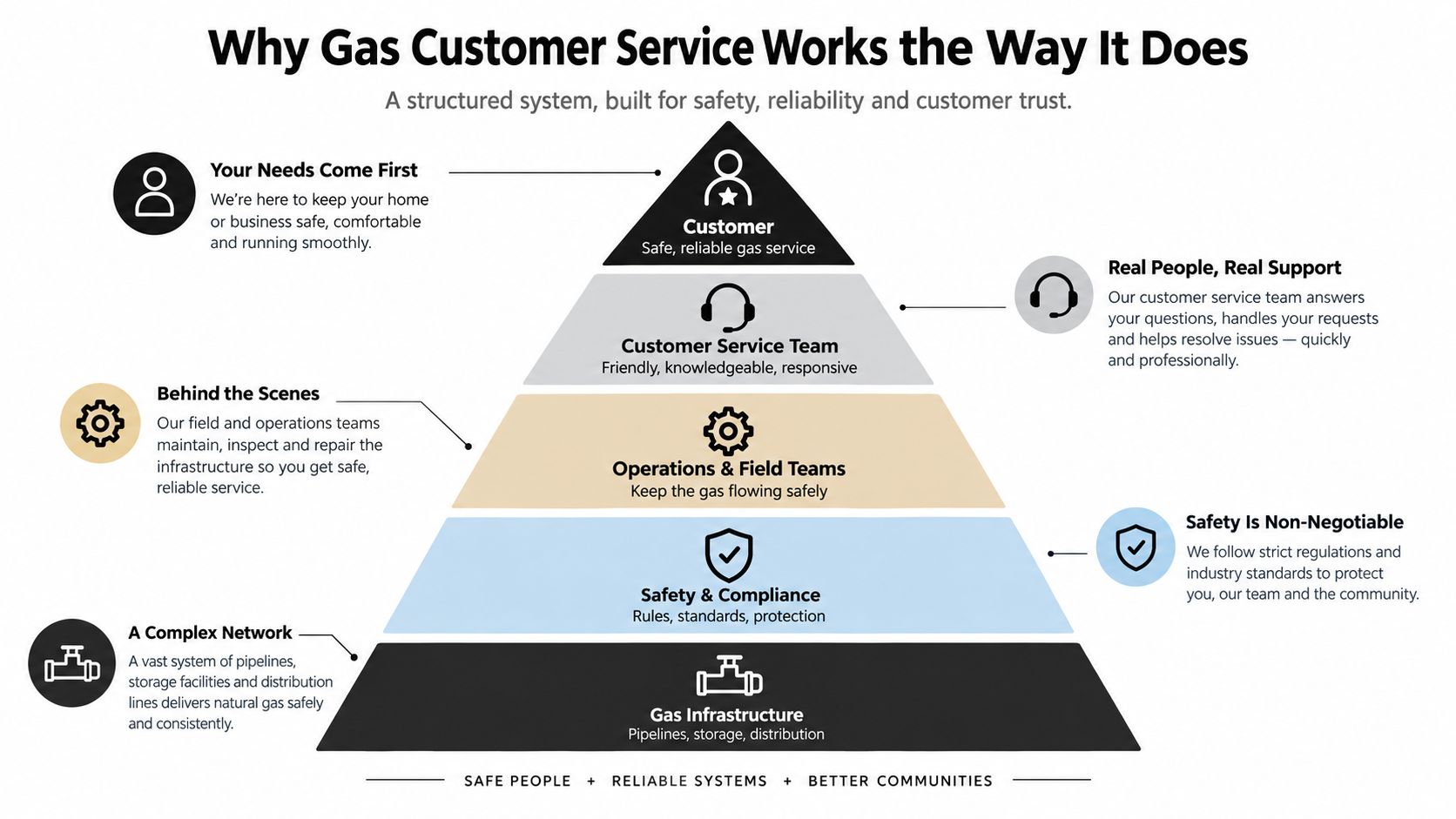
Why Gas Customer Service Works the Way It Does
Gas customer service is easier to understand if you compare it with a household plumbing system. A question about a water bill can usually remain with an account representative. A suspected gas leak is different because one damaged section can affect appliances, buildings, workers, and nearby property. The utility must identify the hazard before it can discuss normal service.
Three priorities shape the structure:
- Safety comes first. Odor reports, damaged lines, pressure problems, and emergency outages move toward trained dispatch and field crews.
- Measurement must be accurate. Meter reads, estimated usage, tariff charges, deposits, and payment records require account specialists and documented corrections.
- Supply must remain dependable. Planned work and rare interruptions need coordination between control rooms, dispatchers, contractors, and customer communications.
The reliability record explains why many gas utilities focus heavily on service clarity rather than frequent interruption handling. An industry assessment estimated that one in 112 natural gas customers would experience any outage in a year, while unplanned outages affected about one in 800 customers. It also estimated average annual interruption time at about three minutes, with unplanned downtime averaging about 1.2 minutes. The industry reliability assessment provides that context.
Why the queue changes with the problem
A call-center agent gathers the initial facts. A control-room or emergency specialist then decides whether the report needs immediate dispatch, planned-work confirmation, or account support. A field technician examines the physical condition, isolates equipment when necessary, and records what the utility must do next.
That separation protects both safety and service quality. A billing representative shouldn't hold an emergency caller in a routine queue, and a field crew shouldn't be expected to settle a complex tariff dispute beside a meter. Regulators, tariff documents, and emergency procedures define the boundaries between those teams, so the process may feel layered because it is designed to prevent the wrong person from making the wrong decision.
Customer satisfaction is measured at a large scale. The 2025 U.S. Gas Utility Residential Customer Satisfaction Study surveyed 72,765 customers across 87 of the largest gas utility brands and represented more than 125,000 residential customers. The same study reported an overall score of 729 on a 1,000-point scale in 2024, down 11 points year over year, while customer-care satisfaction fell to 774, down 26 points from the prior year. J.D. Power's study summary shows why billing, payments, and direct support matter alongside physical reliability.
Contact Channels and the Service Levels Behind Them
The fastest response usually comes from choosing the channel that matches the risk. A leak or odor report belongs on the published emergency line. A question about an invoice belongs with account support. A new construction request belongs with the utility's construction or contractor desk, not a general outage form.
The windows below describe typical operating expectations in qualitative terms, not a guarantee from a specific utility. Local tariffs, staffing, weather, permits, and the severity of the event can change the schedule.
| Channel | Best Used For | Typical Service Level |
|---|---|---|
| Emergency phone line | Gas odor, suspected leak, damaged line, immediate safety concern | Immediate safety screening and dispatch priority |
| Non-emergency phone queue | Billing, payments, account changes, service questions | Queue-based response during operating hours |
| Online account portal | Statements, payment history, move requests, service updates | Self-service access with electronic confirmation |
| Email or web form | Non-urgent documentation and written questions | Logged review after submission |
| Mobile app | Outage alerts, notifications, appointment requests | Automated updates and digital status changes |
| Construction or contractor desk | New connections, load information, meter work, site coordination | Review by a project or field-services team |
A same-day acknowledgment may be realistic for an outage report submitted through a utility's supported digital channel, but customers shouldn't assume that acknowledgment means restoration. The first message can confirm receipt while dispatch still evaluates the cause, access conditions, and crew requirements.
Prepare the account before you call
Have the account number, meter number, service address, caller name, and site contact ready. For a construction request, add the site plan, expected load, meter location, gasfitter information, and the date when fuel is needed. For a suspected leak, state where the odor is strongest, whether anyone is inside, whether equipment is operating, and whether excavation or construction is underway.
Don't use a billing portal for an odor report just because it offers a convenient message box. Channel choice determines which queue receives the information, and queue choice influences how quickly a qualified person can act.
New Connections and Temporary Gas Service Workflows
A permanent connection starts with a feasibility question, not a meter appointment. The utility first checks whether gas is available at the address, where the nearest main sits, and whether the existing infrastructure can support the proposed demand. A builder who supplies a clear load calculation early gives the utility a better basis for discussing capacity and design.
The connection path
The process normally develops through several working stages:
- Feasibility inquiry: Provide the site address, intended use, estimated demand, requested pressure, and target occupancy or commissioning date.
- Formal application: Submit the site plan, load calculation, service details, and the identity of the qualified gasfitter responsible for interior piping.
- Site visit and load review: Utility or contractor personnel check the proposed meter location, access, clearances, service route, and relationship between the requested load and available supply.
- Quote and agreement: The utility issues the applicable cost information and customer agreement. Review service boundaries, customer-owned work, deposits, and conditions before signing.
- Construction and activation: The parties complete trenching, easements, road work, piping, pressure checks, meter installation, commissioning, and account setup.
The most common schedule slips occur outside the basic application. An easement may need another party's approval. A road cut may require a municipal permit. A meter-set appointment can move if the site isn't accessible or the interior installation isn't ready for inspection.
Give the project coordinator one document register. Mark each item as submitted, accepted, returned for revision, or awaiting an outside approval. Ask the utility to identify the critical path, meaning the unresolved item that controls the next physical activity.
What energized actually means
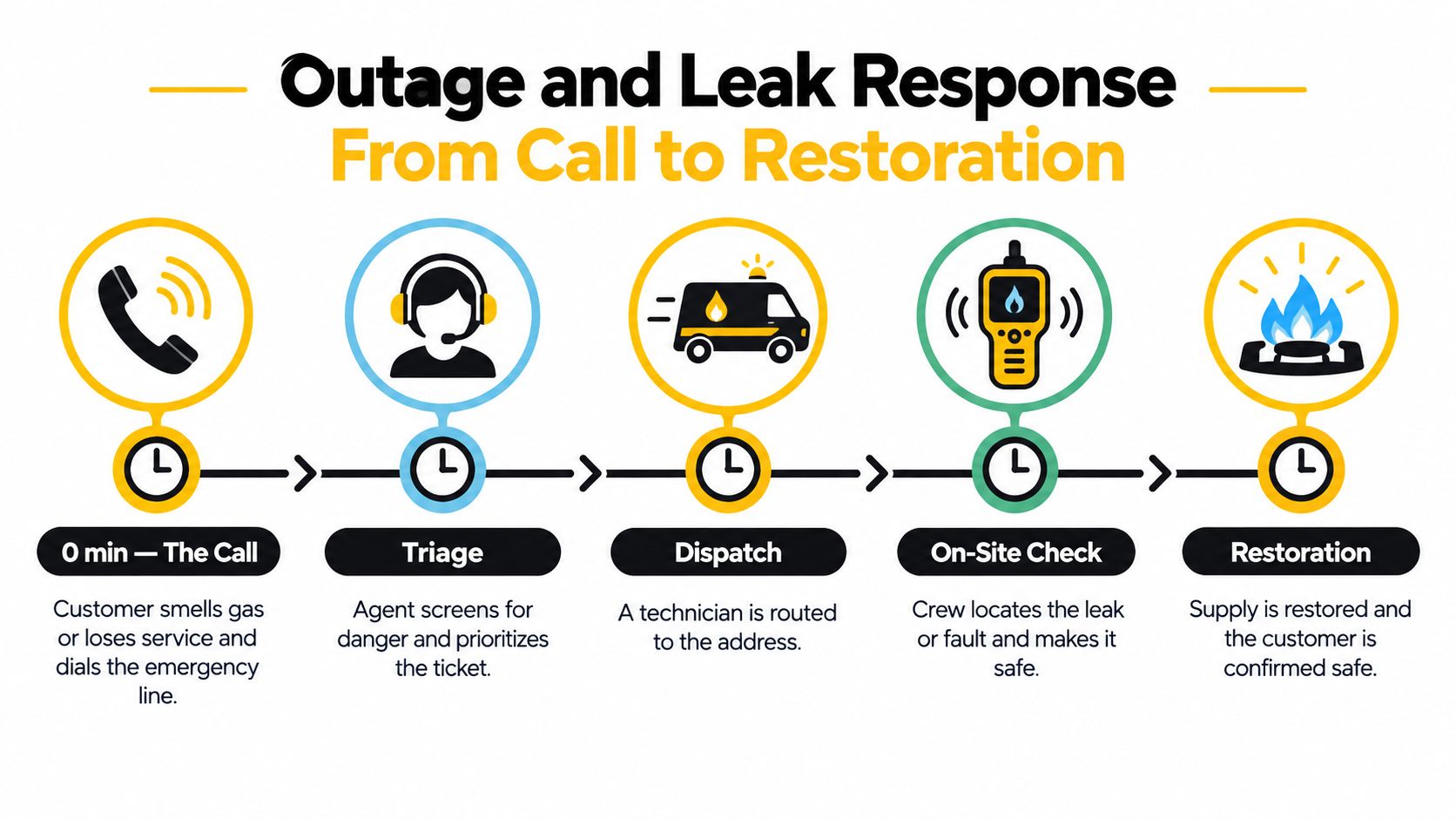
“Energized” shouldn't mean only that a meter has been installed. The site needs an approved meter, a safe and accessible regulator arrangement, completed customer-side piping, tested appliances or equipment, and a confirmed account handoff. Ask who authorizes activation, who performs the relight or commissioning work, and what record proves that the service is live.
If the permanent date remains uncertain, request a temporary-service review at the same time. That lets the utility and the project team evaluate a bridge option without waiting for every permanent-connection question to be settled.
Outage and Leak Response From Call to Restoration
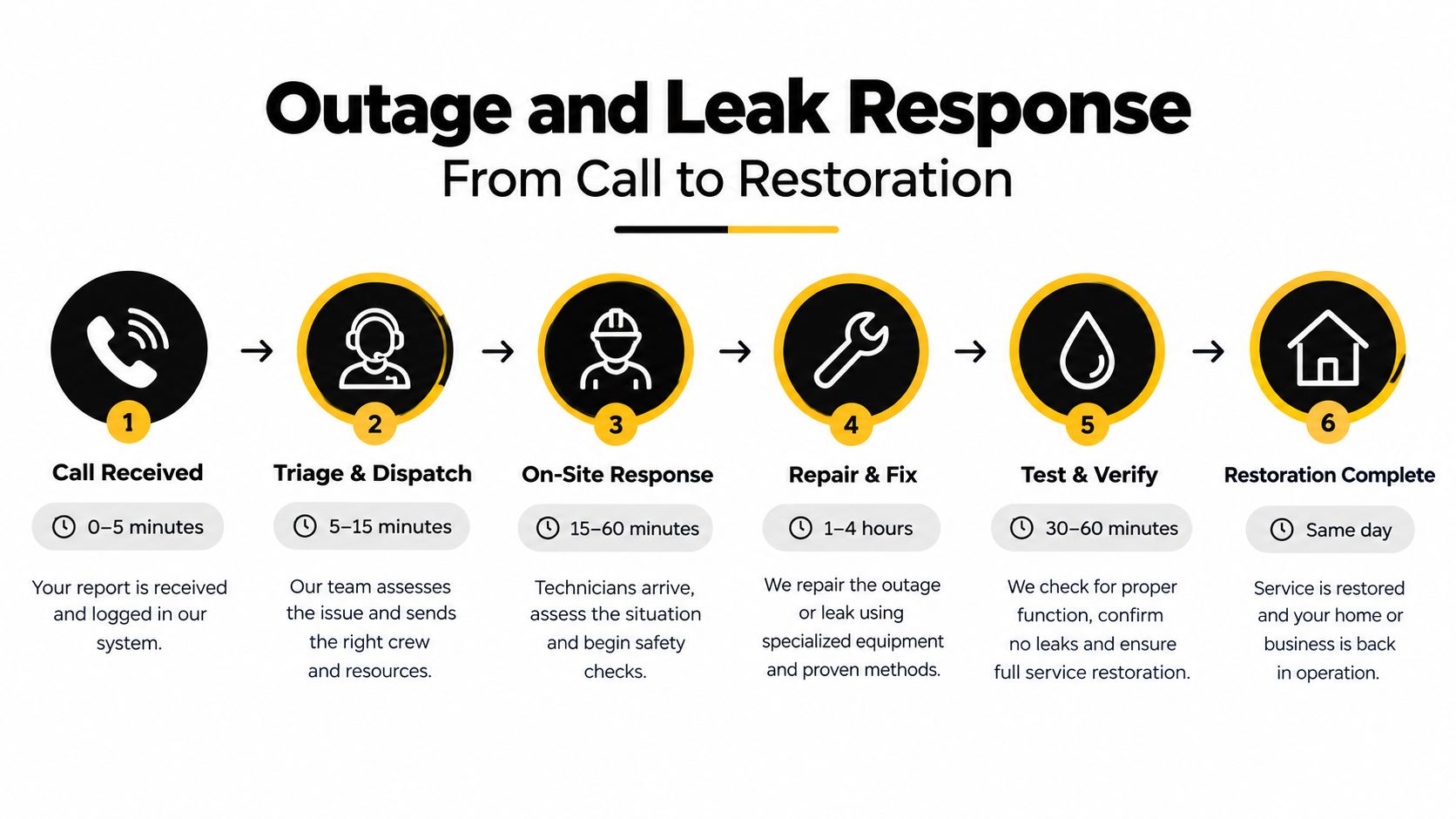
At a commercial site, the sequence may begin with a worker reporting a sulfur-like odor near the meter set. At a different site, every appliance may stop working without an odor. The caller should use the utility's published emergency or outage number and describe the condition plainly, rather than trying to diagnose the equipment.
The first handoff usually occurs through the phone system. The caller may hear an automated menu, then speak with an agent who confirms the address, callback number, immediate danger, and whether people have evacuated. A gas-control specialist or emergency dispatcher classifies the report as a suspected leak, planned shutdown, wider supply interruption, or a customer-side regulator or equipment problem.
That classification matters because it determines the next action. A suspected leak may require rapid field response and isolation. A planned shutdown may call for a status explanation and restoration notice. A customer-side regulator issue may require coordination with the property owner, gasfitter, or appliance contractor instead of utility repair.
What the field crew does
The technician may isolate the affected section, test the atmosphere, locate the fault, vent gas where procedures permit, repair or replace damaged components, and verify that the area is safe. The crew's work depends on the cause, site access, weather, ownership boundaries, and whether other contractors must correct a customer-side condition.
Emergency response has a measurable benchmark in some utility programs. Avista targets an average natural gas emergency response time of 55 minutes or less, and its 2024 Idaho reporting showed an average of about 41 minutes across 2,190 qualifying emergency reports. The report measures response from dispatch confirmation to arrival at the scene, so Avista's service-quality report connects performance with dispatch, staffing, and crew location.
Restoration can involve relighting approved equipment, performing safety checks, replacing a regulator, or waiting for a qualified person to correct customer-owned piping. Ask for the restoration condition in writing. A text, email, door tag, work-order note, or control-room update should state whether gas is restored, whether equipment must remain off, and whether a follow-up inspection remains open.
The incident isn't complete when the burner relights. The utility may issue a cause summary, close the field ticket, adjust outage records, and return the account to normal billing. A facility manager should keep the ticket number, crew notes, photographs, and any temporary operating instructions with the site record.
Billing Questions, Complaints and Formal Dispute Paths
Billing disputes work best as a documented ladder. Start with the utility's customer-service team and ask the representative to separate the issue into meter data, usage, tariff application, payment history, and account status. A disputed amount may result from an estimated read, a correction, a rider, a rebill, or a simple account-entry error, and each cause needs different evidence.
Write down the representative's name or identifier, the date, the issue summary, and the case number. If the first call doesn't resolve the matter, submit the dispute in writing through the utility's approved channel. Ask for confirmation that the dispute is logged and for the response window that applies to the review.
| Stage | Owner | Typical Response Window | What to Submit |
|---|---|---|---|
| Initial inquiry | Customer-service representative | Live handling or routine queue follow-up | Account number, bill, meter details, specific question |
| Written dispute | Billing specialist | Defined review window, usually measured in business days | Disputed bill, prior bills, payment record, photographs |
| Formal utility complaint | Complaint officer or ombudsman | Document review under the utility's complaint process | Case number, correspondence, requested remedy |
| Regulatory complaint | Public utility commission or consumer-affairs office | Governed by the regulator's intake and review process | Utility decision, supporting records, timeline |
Include historical bills, photographs of the meter, work orders, payment confirmations, and weather records when they explain the disputed usage. Don't overwhelm the reviewer with unrelated files. A short timeline that connects each document to the disputed charge is more useful than a large unindexed folder.
Knowing when to escalate
Internal customer service ends when the utility has issued a formal position or fails to act within its stated process. The next route can vary by state, city limits, utility type, and regulator. The utility-questions guidance from Ocean City, New Jersey illustrates why customers must check the local pathway instead of assuming that every complaint goes to the same office.
For facility teams managing broader consumption, total energy management guidance from Facility Management Insights can provide useful context for organizing utility data alongside operating decisions. Keep the billing dispute focused, though. A request for a meter correction shouldn't become an informal review of the entire facility's energy strategy.
During review, ask how the utility will handle the disputed amount, late fees, payment arrangements, and any threatened interruption. Get that answer in writing, then follow the applicable tariff and regulatory rules rather than relying on a verbal promise.
How Temporary CNG and LNG Delivery Fits In
Temporary mobile gas can bridge the period between a delayed permanent connection and the date a project needs fuel. Compressed natural gas, or CNG, arrives in tube trailers and is regulated and delivered as compressed gas. Liquefied natural gas, or LNG, arrives in cryogenic tankers and is vaporized at the site before entering the temporary distribution system.
CNG often fits a lower-volume or shorter-duration requirement, such as commissioning a boiler room, supporting a temporary canteen, or keeping a small operation moving. LNG can fit a larger or longer-duration requirement, such as peak shaving, seasonal heating support, or an industrial restart. The right choice depends on the load and site design, not on the label alone.
| Factor | CNG Tube Trailer | LNG Cryogenic Tanker |
|---|---|---|
| Delivery form | Compressed gas in tube bundles | Cryogenic liquid requiring vaporization |
| Typical planning role | Shorter-duration or lower-volume temporary service | Higher-volume or longer-duration temporary service |
| Main site equipment | Pressure regulation and connection equipment | Storage, vaporization, regulation, and connection equipment |
| Key constraints | Trailer capacity, pressure, access, and changeover planning | Tanker access, cryogenic controls, vaporizer capacity, and separation requirements |
| Useful project question | Can the unit maintain required flow during commissioning? | Can storage and vaporization support the full operating profile? |
Before requesting a mobile unit, confirm the required pressure, flow rate, expected BTU demand per day, vaporization equipment, hose route, grounding method, and setback distances. Confirm who controls the emergency shutdown and who will be present for delivery. The utility or authority having jurisdiction may also require notice, drawings, inspection records, and a commissioning plan.
Blue Gas Express offers temporary CNG and LNG delivery for sites dealing with delayed line installation or maintenance outages, including expedited mobilization, coordination around utility outage windows, and documentation that can be matched with commissioning and billing records. Treat the supplier as part of the project handoff, not as a substitute for utility approval. The utility, site owner, qualified gasfitter, and temporary-gas provider must agree on the connection and operating boundaries before fuel flows.
Common Pitfalls and a Quick Pre-Handoff Checklist
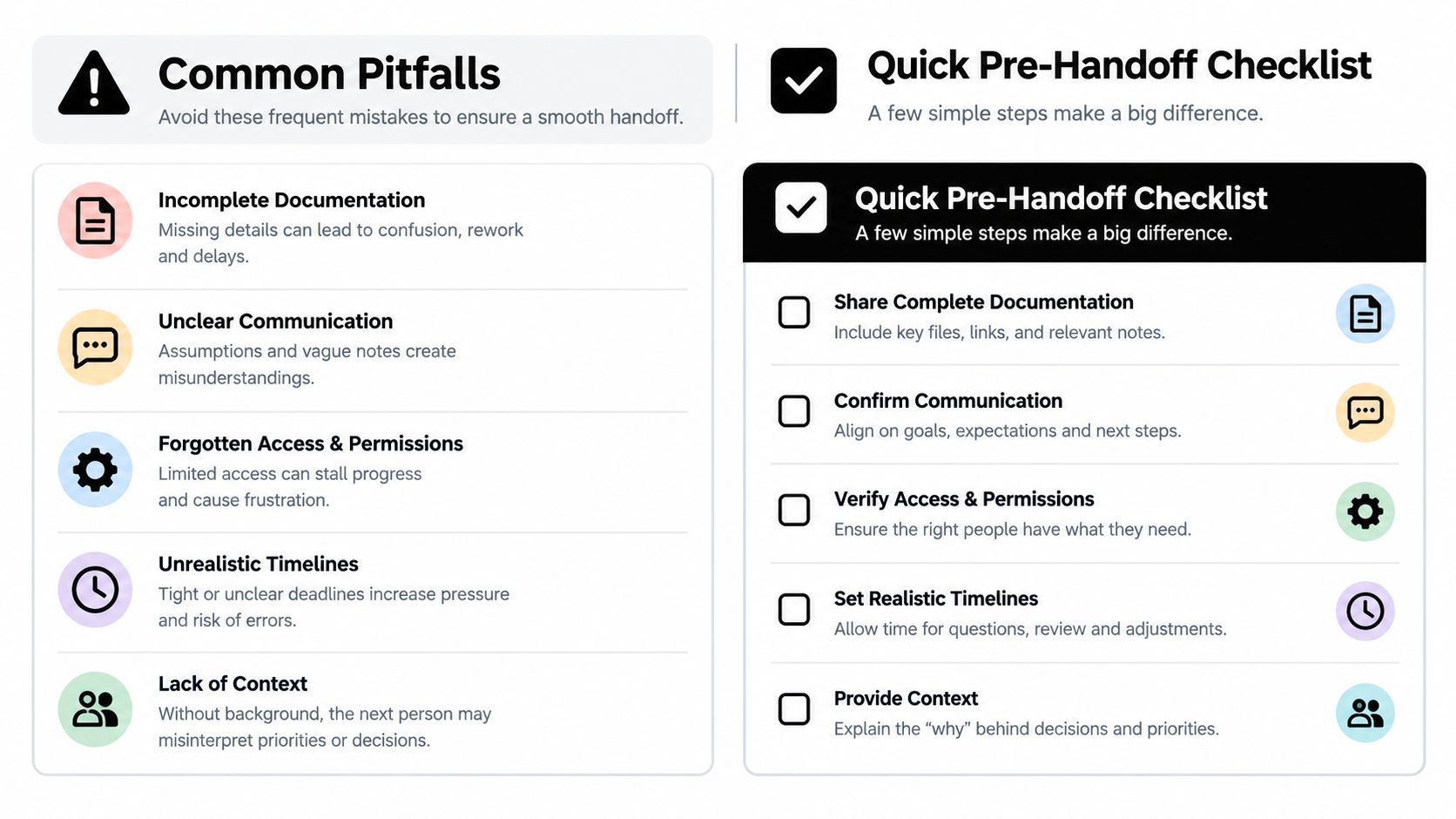
Most delays come from weak handoffs rather than a lack of effort. A caller reaches the wrong queue, an outage ticket lacks a verified account match, or a field employee makes a verbal commitment that never appears in the work order. The project team can reduce those failures by requiring evidence at each stage.
- Misrouted calls: Confirm that the issue reached emergency dispatch, construction services, billing, or the correct specialist queue.
- Unmatched accounts: Read back the account number, meter number, service address, and caller details before the ticket is closed.
- Unrecorded commitments: Ask the representative to place the promised action, date, or condition in the case notes.
- Premature sign-off: Don't approve completion until restoration, meter status, equipment operation, and site safety have been checked.
- Billing and field silence: Give the billing reviewer the field ticket number and give the field coordinator the billing case number.
Request the estimated restoration time in writing, even when the estimate can change. Photograph the meter set, lock box, regulator area, labels, and surrounding access route at handoff. Reconcile the final invoice line by line against the applicable tariff and the agreed work scope.
Pre-handoff checklist
- Account confirmation: Verify the service address, account, meter, billing contact, and emergency contact chain.
- Site readiness: Confirm access, meter location, lock box, piping completion, equipment status, and inspection records.
- Regulator clearance: Keep copies of permits, easement approvals, road-work permissions, and regulator or authority sign-offs.
- Temporary supply records: File delivery tickets, pressure and flow details, equipment approvals, safety documents, and changeover instructions.
- Closure evidence: Save the final work order, restoration confirmation, meter reading, photographs, and outstanding-action list.
Closeout standard: If the team can't show what was completed, who accepted it, and what remains open, the handoff isn't finished.
If a delayed connection or maintenance outage is putting your project at risk, visit Blue Gas Express to discuss temporary CNG or LNG delivery, site requirements, and mobilization planning. Share the required load, pressure, access conditions, and utility timeline so the team can evaluate a practical bridge to permanent gas service.