

Ever wonder what a mobile fueling truck actually is? Put simply, it’s a gas station on wheels that comes directly to you. Instead of your drivers spending valuable time finding a gas station, the fuel—be it diesel, gasoline, or other crucial fluids—is delivered right to your yard or job site.
This service is usually scheduled during your fleet's downtime, which is a game-changer for keeping your operations running smoothly.
How a Mobile Fueling Truck Works for Your Business
Picture it like having a personal pit crew for your entire fleet. Your vehicles are sitting idle overnight or between shifts, and that’s precisely when a trained technician shows up to get them ready for the next day. Every truck, piece of equipment, or vehicle is fueled up and good to go by morning.
This completely sidesteps the old-school problem of sending drivers off-route just to refuel. The whole process is incredibly straightforward. You schedule the service, typically through an app or a web portal, and list which assets need fuel. A specialized truck then arrives with certified, digital meters to pump the exact amount needed, which makes tracking fuel expenses and preventing theft a breeze.
A Modern Approach to Fleet Management
This isn't just about convenience; it’s a smarter way to manage your fleet. The demand for services like this is growing fast, with the global fuel and lube truck market valued at around USD 1.86 billion and projected to hit USD 2.50 billion by 2030. Industries like construction and logistics are leading the charge because they know that downtime is a direct hit to their profits. You can dig into more data on the mobile fueling market growth to see just how big this trend is becoming.
When you stop wasting time on fueling, you get that time back. Those are hours your team can spend on the job, which means more deliveries made, more projects completed, and a healthier bottom line.
To make this crystal clear, let's look at a side-by-side comparison of the two fueling methods.
Mobile Fueling vs Traditional Fueling at a Glance
The table below breaks down the immediate differences you'll notice when switching to a mobile fueling service. It's a high-level look at how bringing the fuel to your fleet flips the traditional model on its head.
| Attribute | Mobile Fueling Truck | Traditional Gas Station |
|---|---|---|
| Fueling Time | Zero driver time wasted; occurs during off-hours. | 30-60 minutes per vehicle, per trip. |
| Location | Fuel comes directly to your yard or job site. | Requires driving off-route to a physical station. |
| Efficiency | Fleet is 100% ready at the start of the day. | Disrupts schedules and causes operational delays. |
| Labor Costs | Drivers focus on core tasks, not fueling. | Wages are paid for non-productive driving and wait time. |
| Record Keeping | Automated, detailed digital reports for easy tracking. | Manual receipt collection, prone to errors and loss. |
As you can see, the benefits go far beyond just saving a few minutes. It's a fundamental improvement to your entire workflow.
The infographic below really drives home the difference in key efficiency metrics.
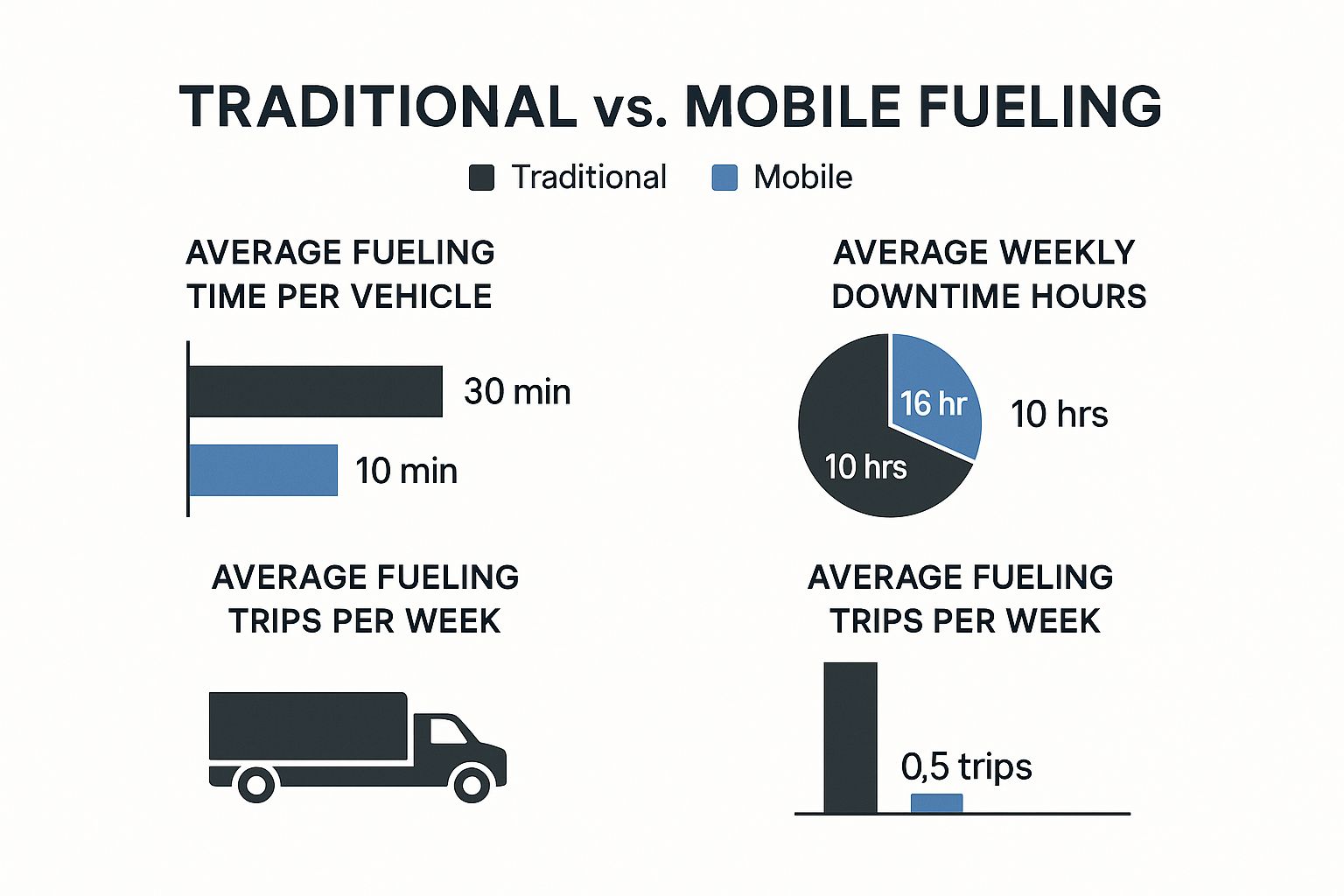
The numbers don't lie. Adopting a mobile fueling service is one of the most direct ways to cut waste and keep your fleet where it belongs: on the road and earning revenue.
The True ROI of On-Site Mobile Fueling
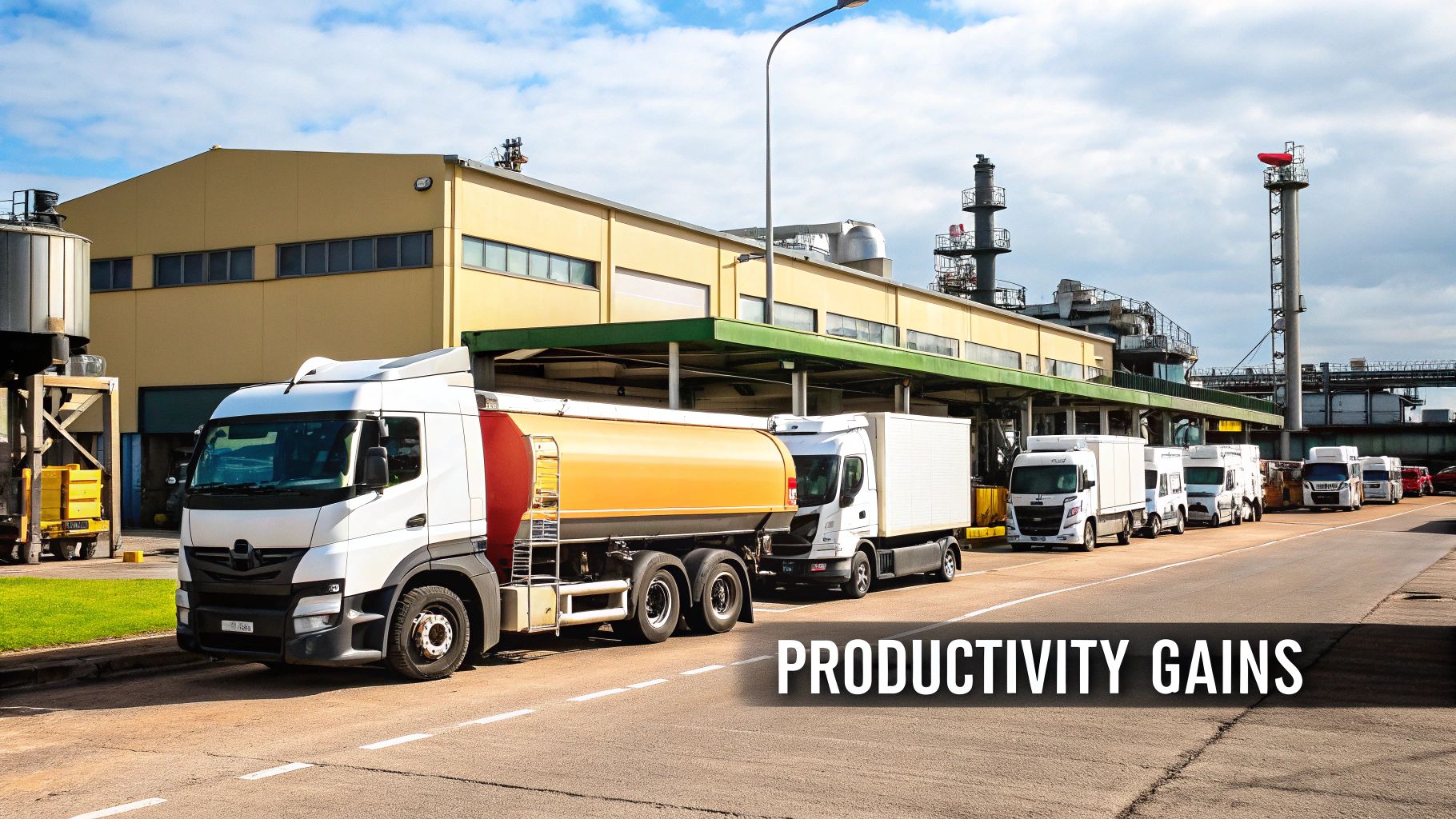
Everyone gets that on-site fueling is convenient. But the real story—the one that shows up on your P&L sheet—is the financial impact. A mobile fueling truck isn't just dropping off diesel; it's delivering a tangible return on investment by plugging the leaks in your operational efficiency.
This ROI really comes from three places: getting productive hours back, slashing labor costs, and cutting down on unnecessary risks. To see the full picture, you first have to look at the hidden costs you’re already paying. Every trip your team makes to a gas station is time off-task, wages paid for unproductive work, and extra wear and tear on your vehicles. Bringing the fuel to your assets flips that script, turning those hidden drains into real savings.
Quantifying Productivity Gains
The first thing you’ll notice is the huge jump in fleet productivity. Think about what a typical fueling run involves. A driver has to stop what they're doing, drive to a gas station, maybe wait in line, fill up, and then head back to the job. That whole process can easily eat up 30 to 60 minutes for just one vehicle.
Now, multiply that across a fleet. If you have 20 vehicles, you could be losing over 10 hours of operational time every single day. When a mobile fueling truck handles refueling during downtime or overnight, you reclaim all those hours. Suddenly, that's more time for your crew to make deliveries, service more clients, or simply get more work done. It directly boosts your company’s ability to generate revenue.
Breaking Down Labor Cost Reduction
Paying a skilled employee to sit at a gas pump is a direct labor cost with absolutely no return. It’s one of the easiest expenses to overlook, but the numbers add up quickly.
Let's do some quick back-of-the-napkin math for one vehicle that needs fuel three times a week:
- Weekly Fueling Time: 3 trips x 45 minutes each = 135 minutes (or 2.25 hours).
- Driver's Hourly Wage: Let's say it's $25/hour.
- Weekly Labor Cost for Fueling: 2.25 hours x $25 = $56.25 per vehicle.
That might not sound like much for one truck, but for a small fleet of 10 vehicles, you're looking at over $560 a week. Annually, that’s more than $29,000 spent on the simple, non-productive task of getting fuel. A mobile fueling service wipes that cost right off the books by having professionals handle it during scheduled downtime. Your drivers stay focused on their actual jobs.
The real cost of traditional fueling isn't just the price per gallon; it's the sum of lost productivity, wasted wages, and increased operational risk. On-site fueling addresses all three simultaneously.
Mitigating Costly Risks and Liabilities
Beyond the obvious time and money, on-site fueling also acts as a powerful form of risk management. When you let a professional service handle your fueling, you’re outsourcing a lot of the common headaches and potential disasters that come with self-fueling.
For one, it helps prevent fuel theft and unauthorized purchases because every gallon is digitally tracked and accounted for. More importantly, trained technicians follow strict safety and environmental protocols. This drastically lowers the odds of a hazardous spill, which could lead to thousands in cleanup costs and fines. This commitment to compliance keeps your operation safe, responsible, and protected from unexpected liabilities, adding yet another layer of financial security.
Real-World Mobile Fueling Applications
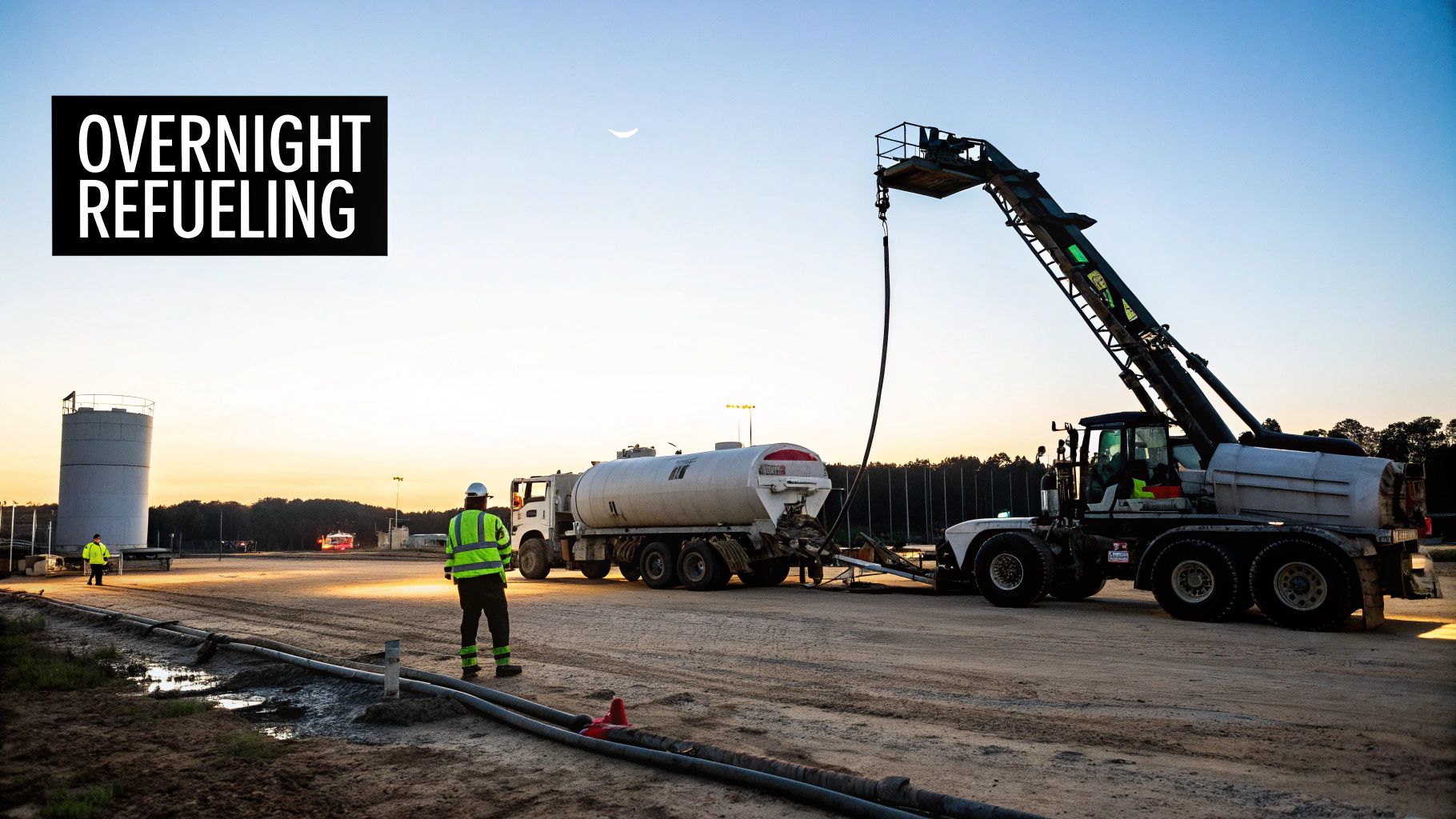
The idea of on-site fueling is great on paper, but where the rubber really meets the road is in seeing how a mobile fueling truck changes the game in real-world operations. For many industries, this isn't just a matter of convenience; it’s a core strategy for getting ahead and staying there. These examples really drive home just how flexible and effective mobile fueling can be.
The market for this service is booming, and for good reason. Projections show it’s on track to grow from USD 5.84 billion to a staggering USD 11.93 billion by 2035. Diesel fuel still makes up a massive 62% share of that, which tells you just how critical it is for the commercial fleets and heavy machinery that benefit most. You can dig deeper into this growing market trend to see how it’s shaking up different sectors.
This isn't just abstract growth—it's fueled by real results. Let's look at how three key industries are putting mobile fueling to work.
Boosting Efficiency on Construction Sites
If you've ever managed a construction site, you know that every minute of daylight is precious. One of the most common productivity killers is the morning ritual of fueling up. Getting excavators, bulldozers, and loaders ready often means lugging fuel cans around or driving bulky equipment to a central tank, all of which eats into valuable work time.
A mobile fueling truck flips that script entirely.
Picture this: your crew arrives at dawn to a job site where every single piece of equipment has been refueled overnight. Everything is ready to go the moment they clock in. No more morning delays. No more paying for expensive rental equipment to sit idle. The whole project stays on schedule.
By turning idle overnight hours into productive refueling time, construction firms ensure their most critical assets are always ready to work, directly translating into faster project completion and higher profitability.
This is especially true for remote sites, where just getting to a gas station is a project in itself. In those cases, on-site delivery isn't a luxury; it's a lifeline.
Streamlining Logistics and Delivery Fleets
In logistics and last-mile delivery, the schedule is king. A single late departure can create a domino effect of delays for the rest of the day. Fleet managers are constantly wrestling with the puzzle of getting dozens, sometimes hundreds, of trucks gassed up and ready for their routes.
This is where a mobile fueling service becomes a secret weapon. Instead of drivers wasting the first 20 minutes of their shift waiting in line at the pump, a mobile fueling truck can service the entire fleet right in the yard before anyone even arrives. It’s a synchronized, efficient process that gets every vehicle ready for a perfectly timed dispatch.
The impact is immediate:
- Tighter Schedules: On-time departures become the norm, not the exception, which builds a reputation for reliability.
- Reduced Overtime: You stop paying drivers to wait around at a gas station.
- Optimized Routes: Drivers start their day on their route, not driving to their route.
That kind of operational efficiency gives logistics companies a serious edge in a cutthroat industry.
Maximizing Uptime in Agriculture
Farming is a race against the clock, with weather and short seasonal windows dictating everything. When it’s time to harvest, you can't afford downtime. A combine that runs out of fuel in the middle of a field can mean thousands of dollars in lost revenue.
Think about a farmer working a huge field during harvest season. A mobile fueling provider can bring diesel directly to the machinery, topping off tractors and harvesters right where they are. No more long, fuel-wasting treks back to the main farm tank. This keeps the machines running, helping them make the most of every precious hour in that tight harvest window and ultimately boosting their yield.
Integrating Mobile Fueling Into Your Fleet
Bringing an on-site fueling service into your operation isn't some massive, complicated project. It's actually a pretty smooth process designed to fit right into your existing workflow without causing any headaches. A good provider handles all the logistics for you, walking you through four simple steps to get your fleet fueled and ready to roll.
The whole point is to create a partnership from the get-go. The goal isn't just to sell you fuel; it's to build a service that understands the unique rhythm of your business, making sure every truck and piece of equipment is topped off and ready for the day ahead.
Let’s break down what that looks like.
Needs Analysis and Site Walkthrough
It all starts with a conversation. A fueling expert will sit down with you to get the lay of the land—what kinds of vehicles you run, what fuel they need (diesel, DEF, etc.), and what your daily or nightly schedule looks like. This is more than a sales pitch; it's a deep dive into how your fleet operates.
Next, they’ll come out to your yard or job site for a walkthrough. This is a critical step. They're looking for the safest, most logical spots for the fueling truck to park and operate. They’ll check for things like easy access, proper lighting for overnight service, and any potential safety hazards to map out a precise, no-nonsense fueling plan.
Building a Customized Service Plan
With a clear picture of your needs and your site, the provider will put together a service plan that's built specifically for your business. This is where you really see the difference between a professional service and just buying fuel.
Your custom plan will lock in the important details:
- Fueling Schedule: Pinpointing the exact days and times for service, usually when your fleet is idle, so you don't lose a minute of productive time.
- Fuel Types: Listing out all the different products your assets need.
- Reporting Needs: Setting up the automated, detailed reports you need for easy bookkeeping and tracking every gallon.
A great service plan isn't set in stone. It should be flexible enough to grow with your business or adapt to seasonal shifts, making sure the fueling solution always fits what you need right now.
Seamless Technology Onboarding
Modern mobile fueling runs on smart, simple tech. As part of the setup, your team will get a quick tour of the software platform that manages everything. Don't worry, it’s usually a straightforward portal or a mobile app that's easy to pick up.
You’ll see how to schedule services (both one-offs and recurring), monitor fuel usage for each vehicle, and pull up detailed delivery reports anytime. This tech gives you total transparency and puts real data in your hands, finally getting rid of the old-school hassle of chasing down receipts and guesstimating fuel costs.
First Fueling and Ongoing Partnership
The final step is the first scheduled fueling. A trained technician will show up with a modern mobile fueling truck and service your vehicles exactly as planned. This first run is all about making sure the process is as smooth in reality as it is on paper.
After that, the service just becomes part of your routine, humming along in the background to keep your fleet ready. To really get the most out of mobile fueling, it helps to view it within the larger context of smart operations. Understanding broader fleet management best practices can help you weave this new efficiency into your entire workflow. It’s a partnership that's all about supporting your long-term growth and keeping things running efficiently.
Understanding Critical Fueling Safety Standards
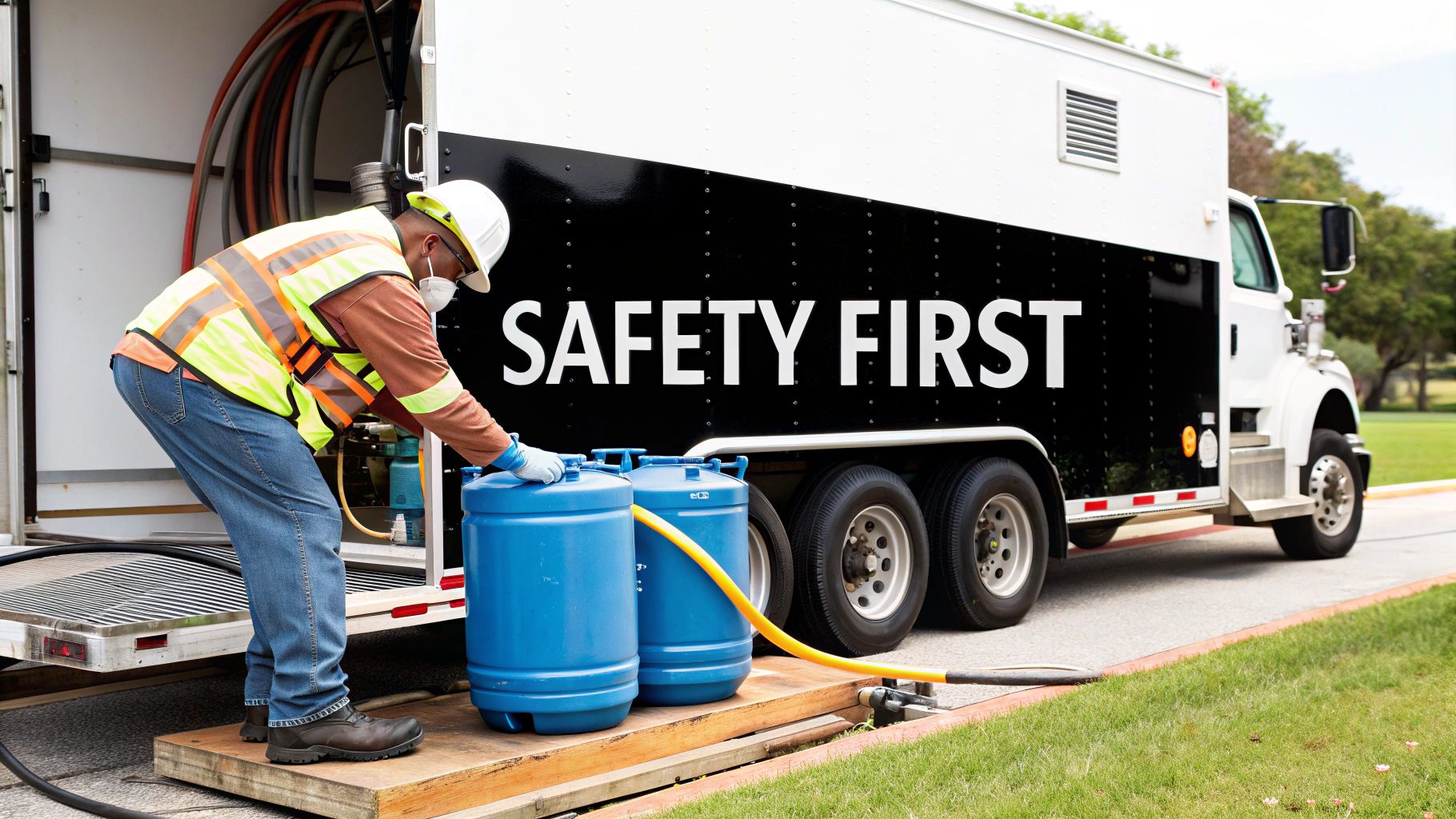
When you’re dealing with thousands of gallons of fuel, safety isn't just a priority—it's everything. A professional mobile fueling service operates under a strict set of safety and compliance protocols that are far more rigorous than what you’d find at a typical gas station. This dedication to safety protects your assets, your team, and your entire operation from preventable accidents.
This professional-grade approach is a huge reason the industry is growing so quickly. For example, some providers have scaled from just four trucks to a fleet of 139 across six states, a business model that supports delivering a projected 26 million gallons of fuel each year. That kind of expansion only happens when it's built on a foundation of trust and impeccable safety. You can learn more about the market adoption of professional mobile fueling services.
Rigorous Training and Certifications
Your first line of defense is a highly trained technician. These operators aren't just drivers; they are certified professionals who have gone through extensive training to handle hazardous materials correctly and safely.
You should expect any qualified technician to hold:
- HAZMAT Endorsements: This is a federal requirement for anyone transporting hazardous materials. It ensures the technician knows all about containment, proper labeling, and what to do in an emergency.
- Defensive Driving Courses: Specialized training gives drivers the skills to handle a heavy, liquid-filled vehicle safely, no matter the road or weather conditions.
- Site-Specific Safety Protocols: Before a single drop of fuel is pumped, technicians are trained to assess each unique fueling location for potential risks.
Vetting a provider's training program is one of the most important steps a fleet manager can take. A company that invests heavily in its people is a company that prioritizes safety above all else.
Advanced On-Truck Safety Equipment
A modern mobile fueling truck is engineered from the ground up with multiple layers of safety features. This specialized equipment is what truly separates a professional service from a simple delivery truck.
Think of it as a rolling safety system. These trucks are packed with critical gear that works in concert to minimize risk at every step. Clear, weather-resistant markings on all this equipment are also vital, which is why sourcing durable industrial labels is a common practice for maintaining compliance.
Essential on-board systems include:
- Spill Containment Kits: Every truck carries a full kit with absorbent pads, booms, and other materials to immediately contain any potential leaks or drips.
- Automatic Shut-Off Nozzles: Just like at a regular pump, these nozzles automatically stop the flow of fuel once a tank is full, preventing dangerous and wasteful overflows.
- Emergency Shut-Off Switches: Multiple, easily accessible switches are located around the truck, allowing the operator to instantly stop all pumping in an emergency.
Strict adherence to regulations from bodies like the Department of Transportation (DOT) and the Environmental Protection Agency (EPA) is non-negotiable. This compliance is what gives you peace of mind, knowing your fueling is always handled responsibly.
Common Questions About Mobile Fueling
Making the switch from a century-old fueling model to a modern, on-site service is a big change, so it's natural to have a few questions. To help clear things up, we've put together answers to some of the most common things fleet managers ask when they're thinking about working with a mobile fueling truck provider.
Think of this as a quick guide to address the practical side of things. Getting these details straight can help you see the full picture and make a confident choice for your fleet.
Is On-Site Fueling More Expensive Than Using a Gas Station?
This is usually the first question on everyone's mind, and for good reason. While the per-gallon price from a mobile service might look slightly higher on an invoice to cover the convenience, most businesses discover their total cost of ownership is significantly lower.
The price you see at the pump is only a fraction of the real cost. Traditional fueling is packed with hidden expenses, like the wages you pay drivers while they're sitting at the station, the extra vehicle wear from off-route trips, and the simple fact that a truck not moving is a truck not earning. Mobile fueling cuts all of that waste out.
When you add up the savings from getting those operational hours back and slashing unproductive labor, the financial benefit is almost always a net positive. That slightly higher per-gallon rate becomes an investment that pays for itself through huge gains in efficiency.
What Types of Fuel Can Be Delivered?
Versatility is a huge part of what makes a professional mobile fueling truck service so valuable. The vast majority of providers can easily handle the most common fuels your commercial fleet depends on.
Typically, this includes:
- On-Road Diesel for your standard commercial trucks and vehicles.
- Off-Road Diesel (Dyed Diesel) for heavy machinery, construction equipment, and generators.
- Gasoline for your fleet's lighter-duty vehicles and support equipment.
- Diesel Exhaust Fluid (DEF), which is essential for any modern diesel engine to meet today's emissions standards.
Many companies are also adding alternative fuels like biodiesel to their lineup. The best move is to simply talk with a potential provider about what your fleet runs on. They should be able to confirm they can meet all your needs with a single service.
How Is Fuel Dispensing Tracked Accurately?
Accuracy and transparency are everything. The days of lost receipts and guesstimates in fuel logs are over. Professional mobile fueling services use sophisticated technology to make sure every single gallon is tracked and accounted for.
Every professional mobile fueling truck is equipped with a certified, high-precision digital meter that tracks fuel dispensing down to a fraction of a gallon. This technology provides an indisputable record of service.
This data is logged automatically and sent straight to a central management platform. You can then log in and see detailed, vehicle-specific reports showing exactly how much fuel each asset received and when. This digital paper trail is a game-changer for preventing fuel theft, making your bookkeeping a breeze, and giving you hard data to better manage your fleet's fuel budget. It replaces guesswork with precise, actionable information.
Ready to eliminate fueling downtime and boost your fleet's productivity? Blue Gas Express provides reliable mobile natural gas solutions tailored to your operational needs. Discover how our on-site services can benefit your business today!