

At its heart, a home CNG fueling station is a personal appliance you install in your garage. It taps directly into your home's natural gas line, letting you refuel your natural gas vehicle while you sleep. This setup gives you the ultimate convenience, turning your home into your own private, slow-fill fuel station.
Is a Personal CNG Fueling Station Right for You?
Think about plugging in your electric car at night. A home CNG station works on a very similar principle. Instead of electricity, it pulls from the same natural gas supply that runs your furnace or water heater. You come home, connect the hose to your vehicle, and wake up to a full tank every single morning, completely side-stepping the need to ever visit a public fueling station again.
It's essentially a powerful, specialized compressor designed for home use. The system takes the low-pressure gas from your utility line, pressurizes it, and then slowly and safely fills your vehicle's onboard storage tank overnight.
Who Benefits from Home Refueling?
This kind of setup is a game-changer for people with consistent, predictable driving routines—think daily commuters or local delivery drivers. If you already own a CNG-compatible vehicle and have a natural gas line running to your house, you're the perfect candidate. The motivation for this investment usually boils down to a few key reasons:
- Significant Long-Term Savings: On a gallon-equivalent basis, natural gas is consistently cheaper than gasoline. Over the life of your vehicle, those savings really add up and can eventually pay for the cost of the system itself.
- Unmatched Convenience: The simple act of refueling at home saves an incredible amount of time and eliminates the hassle of finding and waiting at public stations.
- Environmental Considerations: Natural gas burns much cleaner than gasoline, which means fewer harmful emissions and a smaller carbon footprint for your daily driving.
A home CNG fueling station transforms a daily chore—refueling your vehicle—into a seamless, automated overnight process. It’s a practical step toward energy independence for the everyday driver.
That said, it's important to be realistic. The upfront cost for the equipment and professional installation is a serious investment. This is definitely not a weekend DIY project; it requires certified technicians to handle the gas lines, electrical work, and ensure everything is up to code. Before you jump in, you really need to weigh that initial expense against your personal driving habits and how much you stand to save on fuel over the long haul.
How Your Home CNG Refueling System Works
Ever wonder how you can take the same natural gas that cooks your dinner and use it to power your car? A home CNG fueling station makes this possible, and the concept is actually quite straightforward. It’s essentially a personal, scaled-down refinery for your garage that works while you sleep.
The process kicks off by tapping into your home’s existing natural gas line—the very one that feeds your furnace or stove. A certified plumber will hook up the fueling unit to this supply, which delivers gas at a very low pressure, typically under 1 PSI (pounds per square inch). This is the starting point for creating your own vehicle fuel.
The Heart of the System: The Compressor
Once connected, the natural gas flows into the powerhouse of the operation: the compressor. This is the core component doing all the heavy lifting. It methodically draws in the low-pressure gas and, through a multi-stage process, squeezes it down until it reaches the high pressure needed for vehicle storage—usually between 3,000 and 3,600 PSI.
But you can't just put any gas into a high-tech engine. It needs to be clean and dry. To ensure this, the gas passes through an integrated dryer before the final compression stage. This critical step strips out any moisture, preventing corrosion and guaranteeing your tank is filled with pure, "pipeline quality" natural gas.
This diagram shows just how simple the flow is, from your house supply straight to your vehicle.
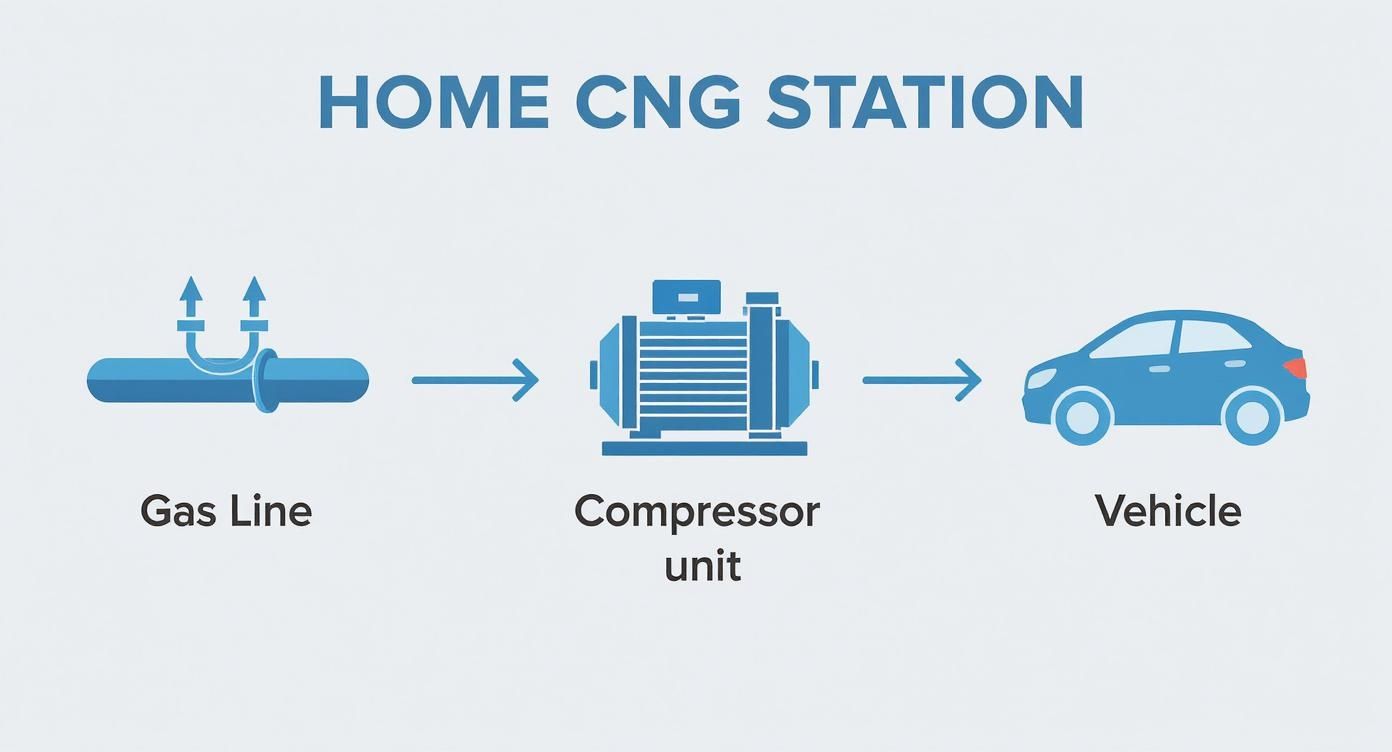
As you can see, it's a direct path: low-pressure gas goes into the compressor, and high-pressure CNG comes out to fill your car.
The Slow-Fill Advantage
Most home setups are "slow-fill" systems, and that’s by design. They're meant to refuel your vehicle over several hours—think six to eight for an average car. This deliberate, gentle pace is a key safety feature. It puts less strain on the equipment and allows the whole system to run quietly and efficiently overnight, powered by a standard electrical outlet.
The slow-fill approach is what makes home refueling so practical. You just hook up the hose when you park for the evening, and the system does the rest. You wake up to a full tank every single morning, no extra trips needed.
The last step is getting the fuel into your car. A specialized, heavy-duty hose and nozzle connect directly to your vehicle's fueling port. Safety is built right in, with mechanisms that prevent gas from flowing unless there’s a secure connection. This makes the process as safe and simple as plugging in an electric lawnmower.
This kind of convenience is a big reason why the natural gas fueling infrastructure market, valued at around USD 15 billion in 2025, is expected to grow. You can discover more insights about the growing CNG market and its infrastructure to see where things are headed.
What Does It Really Cost to Install a Home CNG Station?
Thinking about getting a home CNG fueling station? It's a great idea, but the price tag is more than just the cost of the compressor itself. To get a real sense of the investment, you need to factor in the skilled labor, potential home upgrades, and the necessary permits.
Let's break down what you can expect.
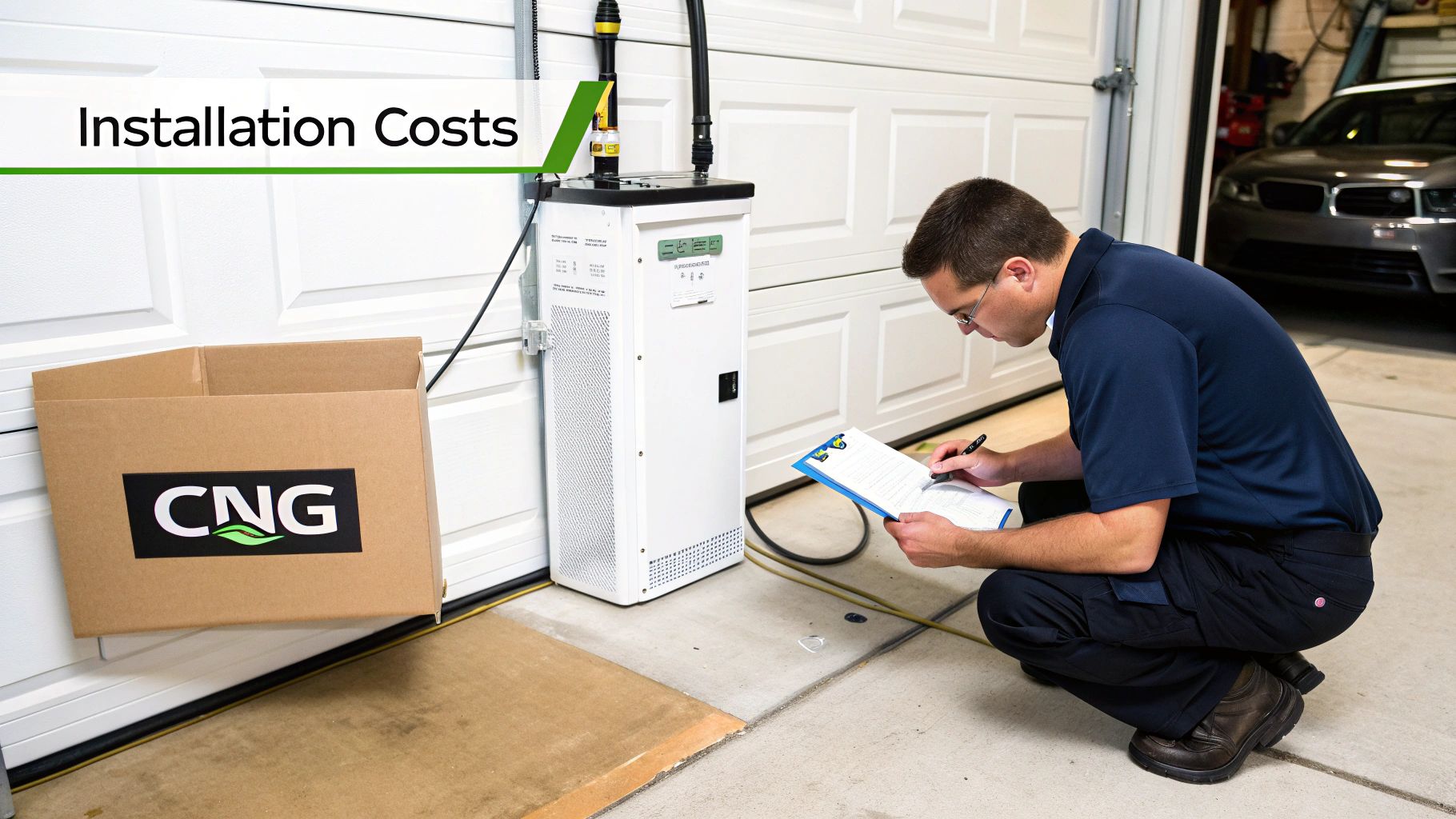
This move toward home refueling is part of a much bigger picture. The worldwide demand for compressed natural gas is booming as people look for cleaner, cheaper fuel options. This isn't just for big commercial fleets anymore; as home systems become more affordable, more and more homeowners are making the switch. You can dive deeper into the trends by checking out this full analysis on the expanding CNG market.
The Main Installation Costs
The fueling appliance itself is your biggest line item, typically running between $4,500 and $10,000. The exact price depends on the model's capacity and features. But that's just the hardware. Getting it installed correctly and safely requires a couple of pros.
- Certified Plumber: You'll need a licensed plumber to connect the unit to your home’s natural gas line. This is precision work—they'll make sure the connection is leak-free and up to all local utility codes.
- Certified Electrician: The compressor needs its own dedicated electrical circuit. A qualified electrician will handle the wiring and install the right outlet, giving your system a safe, steady power supply.
Professional installation is not a DIY project. For safety and legal compliance, it's mandatory. Expect to pay between $2,000 and $5,000 for the combined plumbing and electrical work.
Home Upgrades and Permits You Might Need
Before the installer even shows up, a professional assessment might find that your home needs a few tweaks to handle the new equipment. It's smart to budget for these potential costs from the get-go.
You might be looking at:
- A New Gas Meter: Your existing gas meter may not have the capacity to handle the flow rate the compressor needs. Swapping it out for a higher-capacity one through your utility provider is a common step.
- An Electrical Panel Upgrade: If your home's electrical panel is already maxed out, you’ll need to add a new circuit or possibly upgrade the whole panel to safely power the compressor.
- Permits and Inspections: Your local city or county will require permits for this kind of work. This ensures everything is installed to current safety and building codes. The fees for the permits and the final inspections will add to your total.
And don't forget about housing the unit. If you need to build a small enclosure or shed for it, you'll want to look into things like steel building kit prices to get an idea of that extra cost.
Estimated Cost Breakdown vs Long-Term Savings
To put it all together, here’s a table that outlines the typical one-time costs for a home CNG station and compares them to the kind of fuel savings you might see each year.
| Expense Category | Typical Cost Range (USD) | Annual Fuel Savings Example (vs Gasoline) |
|---|---|---|
| CNG Appliance (Compressor) | $4,500 – $10,000 | Driving 15,000 miles/year at 25 MPG |
| Professional Installation (Plumber & Electrician) | $2,000 – $5,000 | Gasoline at $3.50/gallon = $2,100 |
| Permits & Inspections | $300 – $1,000 | CNG at $1.50/GGE = $900 |
| Potential Home Upgrades (Gas Meter, Electrical Panel) | $500 – $3,000+ | Annual Savings = $1,200 |
| Total Estimated One-Time Cost | $7,300 – $19,000+ | Payback Period: 6-16 years |
Note: Savings are illustrative. Your actual payback period will depend on your vehicle's efficiency, miles driven, and local utility/gasoline prices.
While the upfront investment can be significant, the long-term fuel savings are what make a home CNG station so attractive. Working closely with your installer is the best way to map out all these potential costs and create a clear, realistic budget for your project.
Understanding Safety Standards and Regulations
When you install a home CNG fueling station, you’re bringing a high-pressure fuel source into your garage. Let's be clear: safety isn't just a feature—it's the entire foundation of the system. Thankfully, modern units are engineered with multiple, overlapping safety mechanisms designed to prevent, detect, and respond to any potential issue long before it becomes a problem.
This isn't like an old gas can sitting in the corner. Think of it as a sophisticated, smart appliance that constantly monitors itself. If it senses anything out of the ordinary, its first and only response is to shut down safely.
Core Safety Components
Several key technologies work together to ensure a safe refueling process from start to finish. These aren't optional add-ons; they are integral parts of any certified home CNG system.
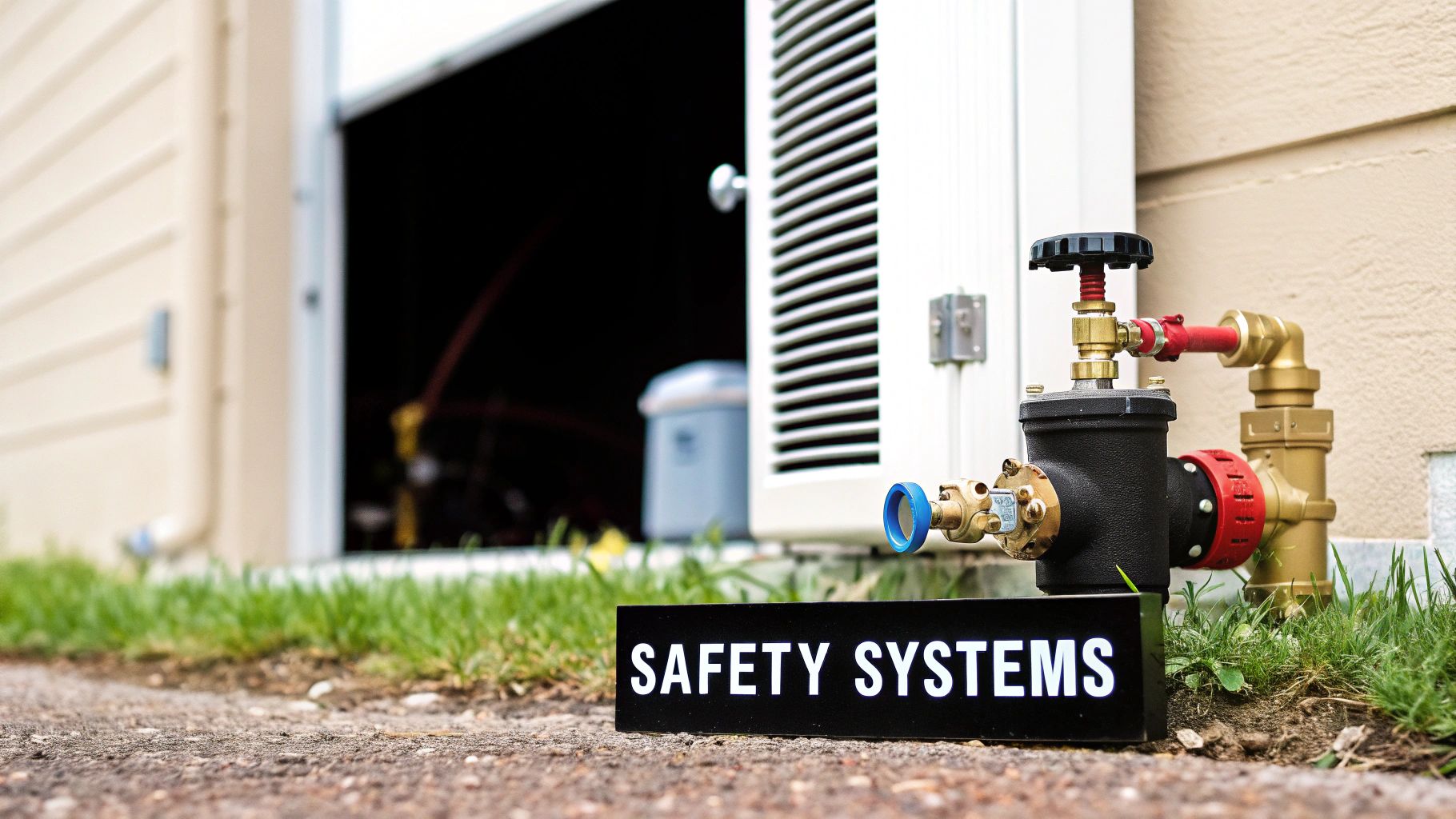
- Automatic Shut-Off Valves: These are the system's vigilant gatekeepers. They are designed to immediately stop the flow of gas if they detect a leak, a sudden pressure drop, or even if the refueling hose isn't connected just right.
- Integrated Methane Detectors: Your utility company adds a substance called mercaptan to natural gas to give it that distinct "rotten egg" smell for leak detection. As a crucial backup, many units also include electronic methane detectors that can sense gas concentrations far too low for the human nose to pick up, triggering an alarm and a shutdown.
- Pressure Relief Systems: The compressor's entire job is to pressurize gas up to 3,600 PSI. To prevent any risk of over-pressurization, a pressure relief device (PRD) acts as a safety valve. If the pressure ever exceeds safe limits, it automatically vents the excess in a controlled manner.
These components create a failsafe environment, working in concert to keep the system operating within strict safety parameters at all times.
Navigating Codes and Permitting
Beyond the hardware itself, a robust regulatory framework governs every installation. You can't just buy one of these units and plug it in. The process is carefully managed to ensure compliance with national and local safety codes, which is exactly why using a professional, certified installer is non-negotiable.
The National Fire Protection Association (NFPA) publishes NFPA 52, the Vehicular Gaseous Fuel Systems Code. This is the gold standard, outlining the mandatory requirements for the design, installation, and operation of a home CNG fueling station. It covers everything from electrical wiring to proper ventilation.
Your installer is responsible for handling the entire permitting process with your local city or county. This ensures the installation is officially inspected and approved, confirming that it meets all relevant building, fire, and electrical codes. While the scale is different, understanding operational safety is paramount across the energy sector; for a broader view, it can be insightful to explore essential communication solutions for gas industries.
Finally, proper placement and ventilation are absolutely critical. The installer will make sure your unit has the required clearance from any potential ignition sources—think a water heater pilot light or electrical outlets. Adequate ventilation is also mandatory to prevent any potential accumulation of gas, turning your garage into a safe and compliant refueling zone.
Weighing the Pros and Cons of Home Refueling
A home CNG fueling station is one of those ideas that sounds amazing on paper—and for the right person, it absolutely is. But it’s a big decision, not a one-size-fits-all solution. Before you get too excited about the idea of your own personal fuel pump, it’s crucial to take a hard look at both sides of the coin.
Let’s break down whether this investment makes sense for your driving habits, your property, and your wallet.
The Clear Advantages of Home CNG
The biggest, most attention-grabbing benefit is the money you'll save on fuel. It's that simple. Natural gas is almost always cheaper than gasoline, often by a wide margin. For someone who drives every day, those savings can easily add up to $1,000 or more a year. Over time, that money goes right back into your pocket, paying down the initial cost of the system.
But the appeal goes way beyond just the dollars and cents. The convenience factor is a game-changer.
- Effortless Refueling: Think about it: no more detours to the gas station. You just pull into your garage, connect a hose to your car, and walk away. The next morning, you have a full tank.
- Time Savings: All those little 10-minute stops at the pump really add up over a year. A home station completely eliminates that errand from your to-do list, giving you that time back.
- Cleaner Emissions: Driving on natural gas is just plain better for the environment. It burns cleaner than gasoline, which means you’re actively reducing your vehicle's carbon footprint every single day.
For many owners, a home CNG fueling station isn't just about saving money—it's about buying back time and simplifying daily life. The convenience of starting every day with a full tank transforms vehicle ownership.
When you combine the long-term savings with this level of daily ease, it’s easy to see why so many people are drawn to the idea.
The Realistic Downsides to Consider
Of course, it’s not all sunshine and savings. Getting set up for home refueling comes with some real hurdles, and the biggest one is the upfront cost. There's no sugarcoating it—this is a significant investment. Between the compressor unit itself and paying a professional for the installation, you can expect to spend anywhere from $7,000 to $15,000, and sometimes more.
Beyond the initial price tag, there are a few other practical things to keep in mind:
- Slow Refueling Time: This isn't like a commercial pump. A home unit is a "slow-fill" system, designed to work overnight. A complete fill-up from empty will typically take 6-8 hours, so it’s not an option for a quick top-off before you head out again.
- Space Requirements: The compressor isn't tiny. It's about the size of a large home appliance, and it needs a permanent, dedicated spot. You’ll have to make sure you have enough well-ventilated space in your garage or a sheltered area outside to install it properly.
- Maintenance Needs: Just like any other major piece of machinery, the compressor needs regular upkeep to run safely and reliably. This means things like routine oil changes and swapping out filters, which is another long-term responsibility to factor in.
A Side-by-Side Comparison
To really see how things balance out, it helps to put the good and the bad right next to each other.
Home CNG Refueling Pros vs Cons
| Advantages | Disadvantages |
|---|---|
| Significant Fuel Cost Savings: Consistently cheaper than gasoline. | High Upfront Investment: Substantial initial cost for equipment and installation. |
| Ultimate Convenience: Wake up to a full tank every day, no station visits. | Slow Refueling Process: Takes several hours, designed for overnight use only. |
| Environmental Benefits: Lower emissions and a smaller carbon footprint. | Physical Space Requirement: The unit requires dedicated garage or outdoor space. |
| Increased Energy Independence: Less reliance on fluctuating gasoline prices. | Regular Maintenance: Requires periodic servicing like oil and filter changes. |
Ultimately, a home CNG fueling station is a strategic investment. It’s a fantastic fit for homeowners with predictable daily commutes who can comfortably handle the initial cost to unlock years of savings and incredible convenience.
Got Questions About Home CNG Fueling?
Even after getting a handle on the costs and safety rules, it's completely normal to have a few more questions rattling around. After all, you're thinking about adding a major piece of infrastructure to your home, so getting into the nitty-gritty of daily life with a CNG system is a smart final step. Let's walk through some of the most common things people ask.
We find these questions usually boil down to refueling times, how it hits the utility bills, and who handles the upkeep. Getting clear answers here helps set realistic expectations and makes sure you're ready for what ownership really looks like.
How Long Does It Take to Fill Up?
This is probably the number one question we hear. A standard slow-fill home CNG fueling station is designed to work while you sleep. Think of it like charging your phone overnight. For an average passenger car, you're looking at about 6 to 8 hours for a complete fill-up from empty. The exact time really depends on two things: the size of your car's CNG tank and the power of your specific compressor.
This slower pace is by design. The slow-fill method is quieter, uses less energy, and is much easier on the system’s parts over the long haul. It fits perfectly into a daily routine—just plug in when you get home, and you’ll wake up to a full tank every morning.
Will My Utility Bills Spike?
Yes, they'll go up, but that’s actually where the savings come from. Your compressor needs electricity to run, and it pulls natural gas from your home's utility line to fill your vehicle. The trick is that this increase is almost always way less than what you would have been spending on gasoline.
The real win is the price gap between natural gas and gasoline. When you break it down to the cost per gasoline gallon equivalent (GGE), natural gas is consistently cheaper. That means every fill-up at home is money you're not spending at the pump.
You’re essentially just shifting your spending from the gas station to your utility provider, and that's what creates the return on your investment over time.
Can I Just Install This Myself?
Let me be crystal clear: absolutely not. This is not a weekend DIY project. Installing a home CNG fueling station is a complex job that has to be done by certified professionals. You're dealing with high-pressure gas lines and dedicated electrical circuits—things that can be incredibly dangerous if they aren't handled perfectly.
A professional installation will always involve:
- A certified plumber to connect the unit to your natural gas supply safely and correctly.
- A licensed electrician to wire the dedicated power circuit it needs to run.
- Strict compliance with local building codes and national standards like NFPA 52.
Hiring certified pros isn't just a suggestion; it's a must-have for safety, staying on the right side of the law, and keeping your homeowner's insurance valid.
What Kind of Maintenance Does It Need?
Just like your furnace or air conditioner, a home CNG compressor needs a little TLC to keep it running safely and efficiently for years. The good news is that the maintenance is pretty straightforward and will be clearly laid out in the manufacturer's manual.
Typically, you'll be looking at:
- Regular oil changes for the compressor motor.
- Replacing filters to ensure the natural gas stays clean.
- Routine check-ups to look for any wear and tear on hoses or connections.
The support for this technology is definitely growing. Both governments and private companies are making it easier for people to make the switch, which is part of a much bigger trend in how we think about fueling our vehicles. It's a key step in getting more CNG cars on the road and cutting down on emissions. You can see the global trends in the CNG market to get a sense of the bigger picture.
Waiting on your natural gas line to be installed but can't afford the downtime? Don't let your project grind to a halt. Blue Gas Express delivers mobile CNG and LNG solutions to keep your fleet moving. Reach out and see how we can bring temporary natural gas right to your doorstep. Learn more at https://bluegasexpress.com.