

Picture this: you wake up, head to your garage, and get into a vehicle that's already fully fueled. You didn't have to stop at a gas station yesterday, and you spent a fraction of what you would have on gasoline. This isn't some far-off future; it's exactly what a home CNG filling station offers.
Think of it less like a miniature gas station and more like a smart appliance. It simply connects to your home's existing natural gas line and safely refuels your vehicle overnight while you sleep.
Is a Personal Fueling Station in Your Future?
The idea of having your own personal fueling station might sound like something out of a sci-fi movie, but it's a very real and practical solution available today. A home CNG filling station directly tackles two of the biggest headaches for drivers: the ever-rising cost of gasoline and the time wasted at the pump. It's a technology designed for anyone looking for a smarter, cleaner, and more affordable way to get around.
This isn't just a niche idea, either. The global market for compressed natural gas (CNG) is on a serious upward trend. It's expected to jump from USD 12,463.34 million in 2024 to over USD 22,479.39 million by 2032. That’s a compound annual growth rate of 8.4%, which points to a major shift in how we think about transportation fuel, driven largely by environmental awareness. You can discover more insights about the expanding CNG market and its key drivers.
Who Benefits from a Home CNG Station?
So, who is this technology really for? You might be surprised. It’s not just for tech enthusiasts or die-hard environmentalists. A home CNG unit brings tangible, real-world benefits to a wide range of people.
- Daily Commuters: If you own a natural gas vehicle (NGV) and drive to work every day, this is a game-changer. It completely eliminates range anxiety and the need to plan your day around refueling stops. You just start every morning with a full tank.
- Small Business Owners: For businesses running a small fleet of service vans or delivery trucks, the savings can be huge. Imagine all your vehicles refueling overnight at a central location, cutting down on wasted time and dramatically lowering your fuel budget. It's a direct boost to your bottom line.
- Cost-Conscious Families: With household budgets stretched thin, finding ways to cut down on transportation costs is a big win. A home system provides a stable, predictable fuel cost, freeing up money for other important things.
At the end of the day, a home CNG filling station is for anyone who wants more control over their energy use and transportation expenses. It's a practical step toward energy independence, turning your garage into your own private, low-cost refueling hub.
How Your Home CNG Station Actually Works
Ever wondered how you can take the same natural gas that heats your water and use it to power your car? It all happens with a home CNG filling station, which is basically a smart, personal fuel compressor for your garage. Think of it less like a gas pump and more like a high-tech appliance that works quietly while you sleep.
The process kicks off by tapping into your home’s existing natural gas line. This is the very same low-pressure gas—typically under 1 PSI—that runs to your furnace or stove. The fueling unit draws this gas in and begins a fascinating transformation from a simple utility into high-octane vehicle fuel.
This handy visual breaks down the journey from your utility line, through the station, and right into your car's tank.
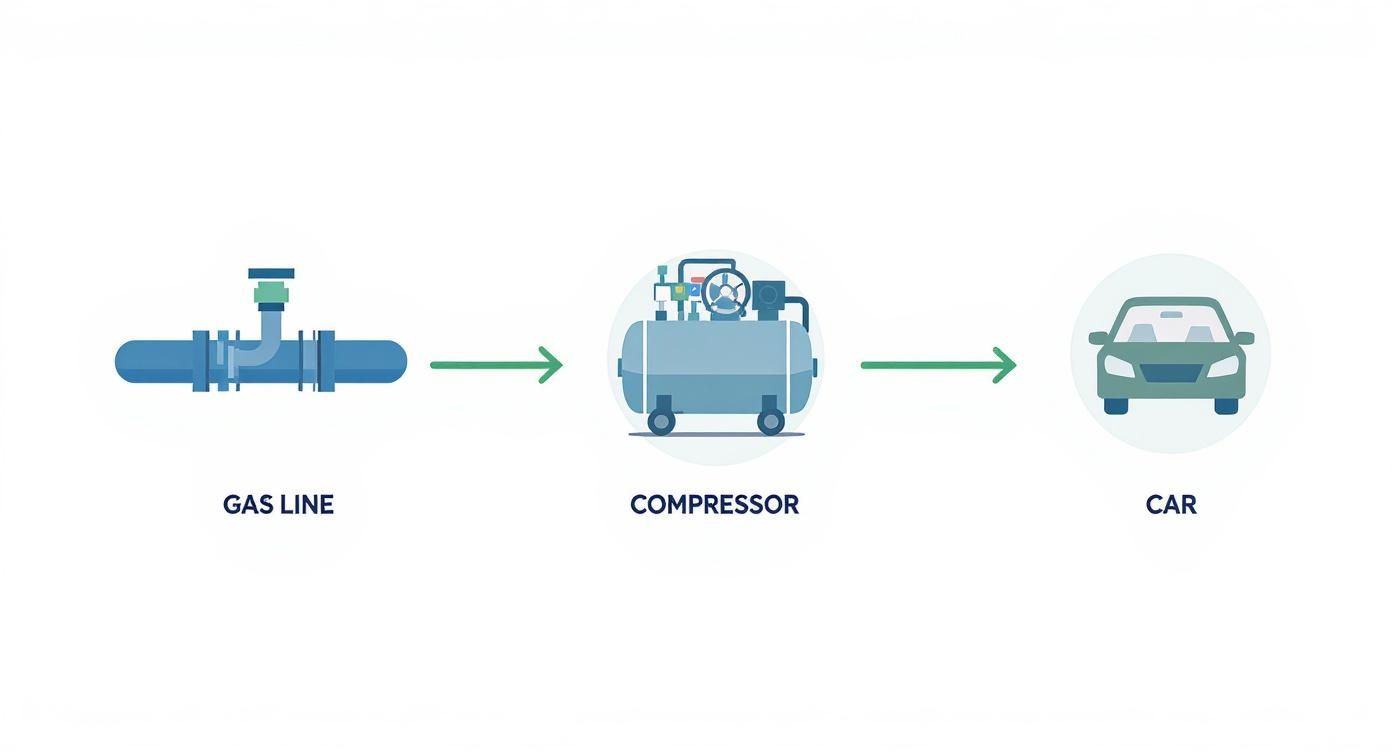
As you can see, the system is a bridge, turning something you already have at home into a convenient, ready-to-use transportation fuel.
The Compression and Purification Stages
At the heart of your home station is a multi-stage compressor. This isn't a simple, one-shot process. Instead, it carefully and methodically squeezes the gas in several stages, gradually bumping up the pressure. It takes that whisper of incoming gas and safely pressurizes it all the way up to 3,000 or 3,600 PSI—the level needed to pack enough fuel into your vehicle's tank.
But pure pressure isn't the whole story. The natural gas from your utility line contains tiny amounts of water vapor and other impurities that could cause trouble for your engine over time. That’s why the gas must pass through a critical filtration and drying system first.
This purification step is non-negotiable. It's what ensures the health of your vehicle and the longevity of the fueling system. By stripping out moisture, it prevents corrosion and keeps fuel lines from freezing up in cold weather.
Once the gas is perfectly clean, dry, and compressed, it’s ready to go.
Safe and Slow Overnight Refueling
Most home units are designed for what's called "time-fill" refueling. Forget the frantic five-minute fill-up at a public station. This is a slow, steady process that happens over several hours, usually overnight. This gentle approach is much easier on the equipment and guarantees a full, safe tank every time.
The routine is simple: park your car, connect the fueling nozzle, and walk away. The appliance does all the thinking for you.
- Set It and Forget It: The system starts, runs, and monitors itself without any babysitting.
- Safety First: It constantly checks pressure and temperature to keep everything running smoothly.
- Smart Shut-Off: When your tank is full, the unit automatically stops the flow of gas.
It’s an incredible convenience. You can head to bed and wake up every morning to a car that’s fully fueled and ready to hit the road, all done safely and efficiently while you slept.
Understanding the Core System Components
A home CNG filling station isn't just a single box you plug in; it's a sophisticated system where several powerful parts work in concert. Getting to know these core components is a lot like learning what's under the hood of a car before you buy it—it helps you understand the technology and feel confident in your decision.
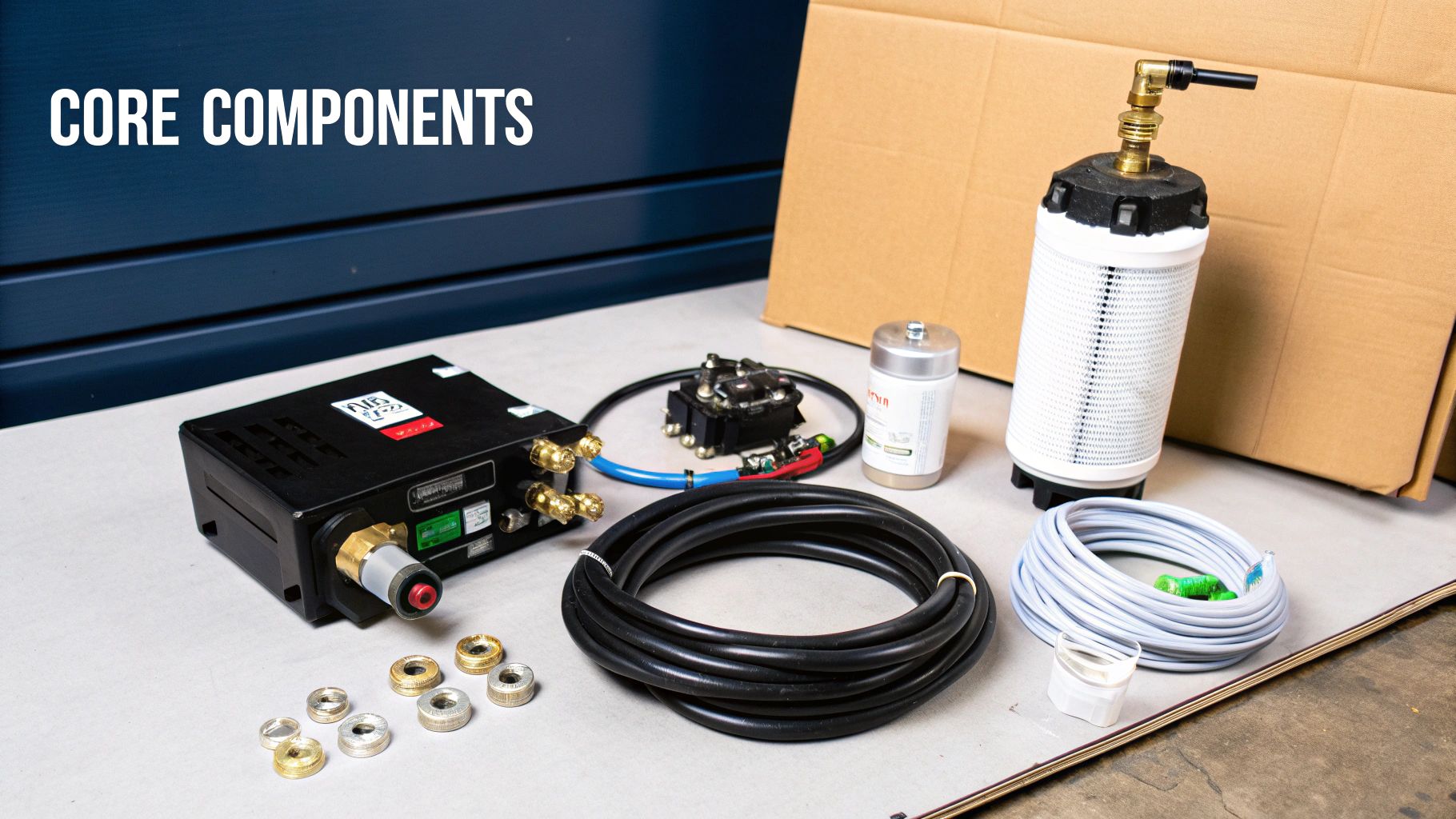
Each piece has a specific, crucial job to do, from pulling in the gas to safely pumping it into your vehicle. Let's take a closer look at the four main players that make up this incredible appliance.
The Compressor: The Heart of the System
At the center of it all is the compressor. This is the real powerhouse of your home CNG station. Its one and only job is to take the low-pressure natural gas from your home's utility line and crank up the pressure—all the way up to 3,600 PSI. To put that in perspective, it’s like taking a gentle puff of air and concentrating it into a powerful, focused stream.
This massive increase in pressure is what makes it possible to pack enough gas into your vehicle's tank to give you a practical driving range. The best compressors are built for the long haul with quiet operation in mind, often using several stages to build pressure gradually and safely. When you're shopping around, pay close attention to the compressor's reputation for reliability, because this is the part that does all the heavy lifting.
The Filtration System: The Lungs
Before that natural gas can even think about getting compressed, it needs to be spotlessly clean. This is where the filtration and drying system comes in, acting as the unit's lungs. It meticulously strips out any moisture, oil, or tiny impurities from the gas supply that could damage the compressor or, even worse, your vehicle’s engine down the road.
A robust filtration system is non-negotiable for the long-term health of your entire setup. It directly protects your investment by ensuring only clean, dry fuel enters both the station and your car, preventing corrosion and performance issues.
You can often tell how well-designed a home cng filling station is by the quality of its purification stage.
Hoses and Nozzle: The Delivery Network
Okay, so the gas is compressed and purified. Now what? You need a safe and reliable way to get it into your vehicle. That's the job of the high-pressure hoses and nozzle. And trust me, these are nothing like your garden hose. They are purpose-built from incredibly durable materials engineered to handle thousands of pounds of pressure, day in and day out, without breaking a sweat.
- Hoses: These need to be tough yet flexible enough to handle constant pressure changes and whatever the weather throws at them.
- Nozzle: The nozzle is designed to form a perfect, leak-proof seal with your car's fuel port. It also has critical safety features that won't let gas flow until it's securely locked in place.
The quality of these parts is directly linked to how safe and easy the system is to use every day.
The Control Panel: The Brain
Last but not least, we have the control panel, which serves as the intelligent nerve center for the whole operation. This is the electronic "brain" that keeps a constant watch on pressure levels, temperature, and the filling process, making sure everything runs like a well-oiled machine.
It's also what manages the automatic shut-off, stopping the gas flow the second your tank is full. This is what makes convenient, worry-free overnight refueling possible. A good, user-friendly control panel with clear lights and simple diagnostics takes all the guesswork out of the process and gives you complete peace of mind.
To tie it all together, here’s a quick breakdown of how these essential parts function.
Core Components of a Home CNG Station
| Component | Primary Function | Key Features to Consider |
|---|---|---|
| Compressor | Increases natural gas pressure from the utility line to 3,600 PSI for vehicle storage. | Multi-stage design, noise level (decibels), reliability ratings, service life. |
| Filtration & Dryer | Removes moisture, oil, and impurities from the gas before compression. | Multi-stage filtration, desiccant-based drying, filter replacement indicators. |
| Hoses & Nozzle | Safely transfers the high-pressure gas from the unit to the vehicle. | Material durability, hose length, ergonomic nozzle design, quick-disconnect features. |
| Control Panel | Monitors and manages the entire fueling process for safety and efficiency. | Automatic shut-off, pressure/temperature sensors, diagnostic alerts, user-friendly interface. |
Each component is a link in a chain, and the strength of that chain determines the safety, reliability, and performance of your home fueling experience.
What Are the Real-World Benefits of Refueling at Home?
Looking past the technical specs and hardware, the true value of a home CNG filling station is how it improves your daily life. This isn't just about installing a new appliance; it's about completely changing how you think about and manage vehicle fuel. The advantages really boil down to three big wins: major cost savings, incredible convenience, and a much smaller environmental impact.
These benefits are why more and more drivers are looking into personal refueling. The global market for natural gas filling stations, which includes home units, was valued at around USD 2.22 billion in 2024 and is expected to keep growing. It's all part of a larger shift toward smarter, cleaner ways to power our vehicles. You can see the bigger picture on natural gas station market growth to understand the trend.
Slash Your Fuel Costs
The first thing you’ll notice is the impact on your bank account. Natural gas piped directly to your home is almost always far cheaper than gasoline or diesel at the pump. Even though prices can change, the cost per gasoline gallon equivalent (GGE) for natural gas can be 50% less than what you'd pay for regular fuel.
Just think about cutting your monthly fuel spending in half. For anyone with a daily commute or a small business fleet, those savings pile up fast—often adding up to thousands of dollars every year. That's real money you can put toward other things, turning a recurring grudge purchase into a source of savings.
Think of it this way: You're tapping into a wholesale fuel source (your utility line) instead of paying retail prices at the pump. The difference is your direct savings.
This steady cost advantage also gives you a predictable transportation budget, protecting you from the wild price swings we’ve all come to expect at the gas station.
The Ultimate Convenience: Fueling While You Sleep
How much is your time worth? A home CNG station gives you back all those hours you would have spent finding, driving to, and waiting in line at public stations. The ability to refuel your car overnight while you sleep is an absolute game-changer.
- Wake Up to a Full Tank: Imagine starting every single day with a full vehicle. No more last-minute stops on the way to work or stressing about the fuel gauge before an important meeting.
- Kiss "Range Anxiety" Goodbye: You’ll never have to worry if you have enough fuel for the day or plan your routes around where the next CNG station might be.
- Take Back Your Schedule: Your vehicle refuels on your time, not the other way around. This simple change gives you a sense of freedom that public fueling just can't match.
A Greener Choice for the Planet
Fueling with natural gas at home is also a choice you can feel good about. Natural gas is the cleanest-burning fossil fuel, and it releases far fewer harmful emissions than gasoline. When you make the switch, you're directly helping to improve local air quality.
Specifically, CNG can cut carbon monoxide emissions by up to 90% and slash nitrogen oxide emissions by 50%. It also reduces greenhouse gases, shrinking your carbon footprint every time you drive. A home CNG station is a practical, powerful way to make a positive environmental impact without giving up an ounce of performance or convenience.
Getting It Installed: A Guide to Professional Setup and Safety
When you decide to install a home CNG filling station, one thing becomes crystal clear: this is not a DIY job. Proper installation is the bedrock of a safe and reliable system. Think of it less like plugging in a new appliance and more like a major home utility upgrade—it requires certified professionals who know their way around gas, electrical, and structural codes.
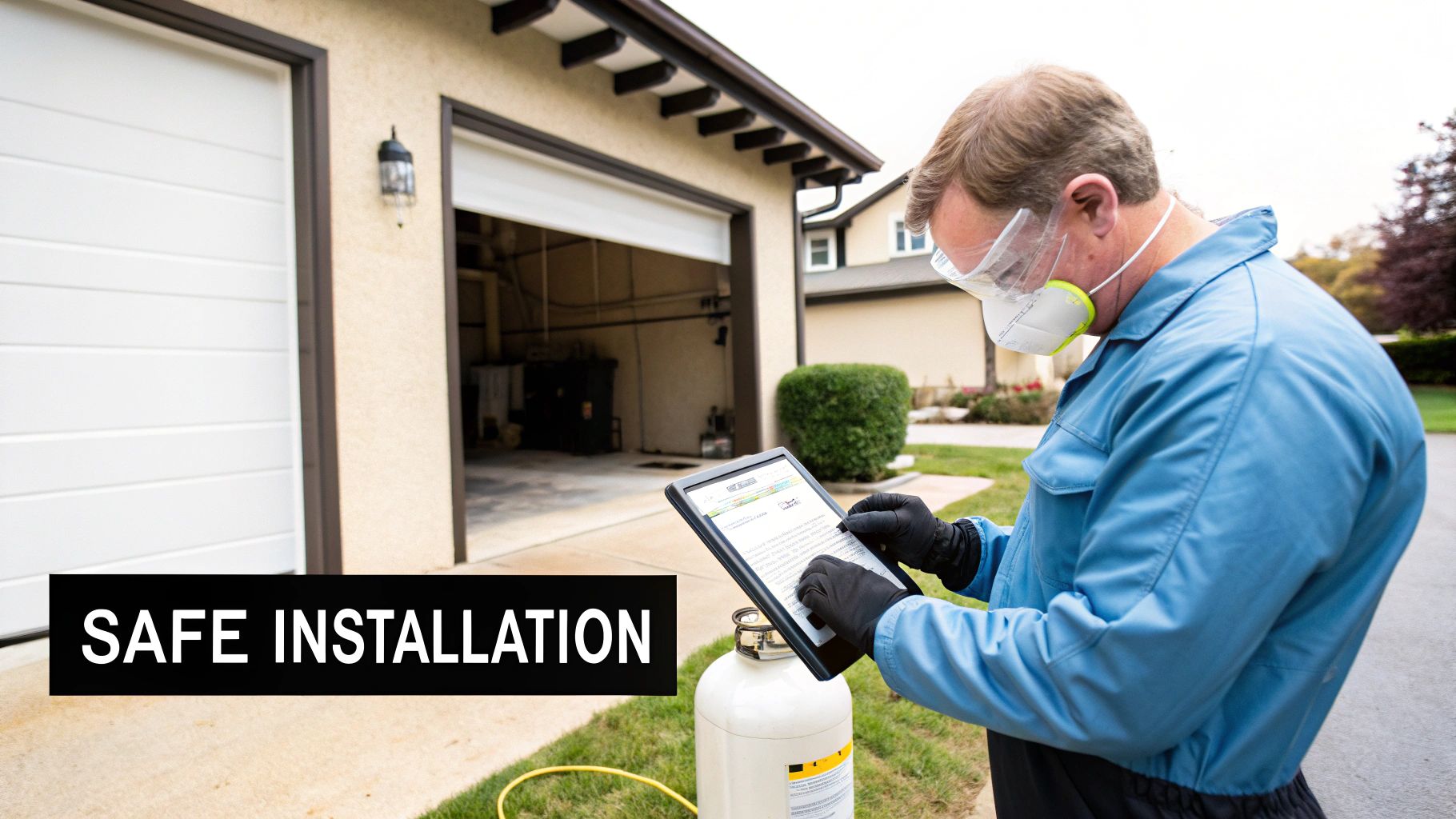
The whole process kicks off with a detailed site assessment. A qualified installer will come to your home and scout the perfect spot, whether it's in the garage or a dedicated outdoor space. They're looking for proper ventilation, clearances from other objects, and a solid foundation. Getting this right from the start prevents a lot of headaches later on.
The Professional Installation Process
After your site gets the green light, the certified team gets to work. They follow a precise, step-by-step process to make sure every connection is tight, every component is secure, and the whole system works exactly as it should.
Here’s what you can expect:
- Mounting the Unit: The fueling appliance gets bolted down securely to a concrete floor or a sturdy wall. This is crucial for preventing vibrations and keeping it stable while the compressor is running.
- Connecting the Gas Line: A licensed plumber will tap into your home's natural gas supply, adding shut-off valves and ensuring every single fitting is leak-free and meets local plumbing codes.
- Wiring It Up: Next, a certified electrician runs a dedicated circuit to power the unit. They’ll follow the National Electrical Code (NEC) to the letter, because with gas and electricity, there are no shortcuts.
- Commissioning and Testing: Before they leave, the technicians will fire up the system for the first time. They run a battery of tests to check for leaks, confirm pressure levels, and make sure every safety feature is working perfectly. Only then do they sign off on the job.
For a broader understanding of proper setup, checking a general tank installation guide can offer helpful insights on preparing the site and foundation, which nicely complements the specific protocols for a CNG system.
Safety and Compliance Are Built-In
Today’s home CNG stations are designed with safety as the top priority. They come packed with redundant features that work behind the scenes to keep you and your property safe. These aren't just bells and whistles; they're essential, non-negotiable parts of the system.
It's simple: adhering to local building codes and national safety standards is mandatory. Your installer handles all the permits and inspections to ensure your system is 100% legal and safe.
Here are some of the key safety mechanisms at play:
- Automatic Shut-Offs: The system knows exactly when your vehicle’s tank is full. It automatically stops the gas flow to prevent overfilling—no guesswork required.
- Pressure Relief Valves: Think of these as a critical failsafe. If the system pressure ever gets too high, these valves safely vent the excess gas to bring it back to a safe level.
- Methane Detectors: Many units come with these built-in sniffers. If they detect even a tiny gas leak, they'll instantly shut the whole system down and trigger an alarm.
All these features work in concert to make refueling at home incredibly safe—often even safer than a visit to the public pump.
The Future in Your Garage
When you install a home CNG station, you're doing more than just adding a convenient appliance. You're putting yourself right at the forefront of a major shift in how we think about fuel and transportation. This isn't just a niche hobby anymore; it's a movement driven by a global push for cleaner air and greater energy independence.
Think of it this way: as more people look for smarter, cheaper alternatives to gasoline, technologies like home refueling are naturally moving from the fringe into the mainstream. This isn't just a fleeting trend. It’s a direct response to some very real global challenges.
Governments around the world are sweetening the deal with incentives, and drivers are voting with their wallets for greener options. The game-changer here is the rise of Renewable Natural Gas (RNG). Made from organic waste, RNG is pushing CNG toward a truly carbon-neutral future, piped directly to your home.
A Growing Global Movement
The switch to natural gas vehicles is picking up speed, with certain parts of the world really hitting the accelerator. This growth isn't a fluke; it's a clear signal that investing in your own personal fueling system is a smart, long-term move.
By installing a home CNG filling station, you are not just saving money; you are becoming an active participant in a worldwide transition toward cleaner and more self-sufficient transportation solutions. Your garage becomes a small but meaningful part of this global energy evolution.
The market data tells a compelling story. The Asia Pacific region is expected to have the highest demand for compressed natural gas, largely due to booming cities and strong government backing for clean energy. At the same time, North America is on track for the fastest growth, thanks to an expanding network of refueling stations and a bigger appetite for clean vehicles.
If you want to dive deeper into the numbers, you can learn more about these global CNG market trends and see just how big this shift is becoming.
Got Questions? We've Got Answers
So, you've seen how a home CNG station works and the benefits it offers, but you probably still have a few practical questions. That's completely normal. Let's dig into the details that matter most for day-to-day ownership so you can feel confident about this decision.
We'll cover the common "what ifs" and "how-tos" that come up when people consider adding a personal fueling station to their garage.
How Long Does It Take to Fill Up at Home?
Most home systems are designed for what's called a "time-fill," which is just a fancy way of saying you fill up overnight. For a standard car, you're looking at about 6 to 10 hours to go from empty to a full tank. The exact time really depends on your specific unit and the size of your vehicle's tank.
The beauty of this slow-and-steady approach is its convenience. You just pull into the garage, connect the nozzle, and head inside. When you wake up, you have a full tank waiting for you—no more trips to the gas station, ever.
What's Involved in Maintaining a Home CNG Unit?
The maintenance is straightforward and pretty minimal, but it’s crucial for keeping the system safe and running efficiently for the long haul.
A little bit of upkeep goes a long way. The routine tasks usually include:
- Filter Changes: You'll need to swap out the filters periodically to make sure the gas going into the compressor is clean.
- Oil Top-Ups: Just like a car engine, the compressor needs its oil changed on a schedule recommended by the manufacturer.
- Visual Checks: It's a good habit to regularly look over the hoses and connections for any obvious signs of wear or damage.
Most brands also recommend a yearly check-up from a certified technician. This quick professional service ensures all the safety systems are working perfectly and gives you complete peace of mind.
Think of it like the annual service you get for your furnace or air conditioner. It's a small investment in preventative care that ensures everything runs safely and reliably.
How Will This Affect My Utility Bills?
Yes, your utility bills will change—but it’s important to look at the whole picture. Your natural gas bill will go up because you're now using it to fuel your car, and you'll see a slight bump in your electricity bill from running the compressor.
However, the cost of that extra gas is far, far cheaper than what you'd pay for gasoline at the pump. When you do the math, the increase in your utility bills is easily offset by what you're no longer spending on traditional fuel, resulting in a significant net savings every month.
For situations where a permanent natural gas line isn't an option, Blue Gas Express offers reliable mobile CNG and LNG solutions to keep your projects on track. Find out more about their mobile fueling services.