

Ever wished you could refuel your car overnight, right in your own garage, just like you charge your phone? That’s exactly what a home CNG fueling station does for a Natural Gas Vehicle (NGV). It's your own personal, compact fuel pump that taps directly into your home's natural gas line.
What Is a Home CNG Fueling Station?
Imagine this: you pull into your garage after a long day, plug a nozzle into your car, and head inside. The next morning, you wake up to a completely full tank, and you never had to make a special trip to a fueling station. This is the reality of having a home CNG system.
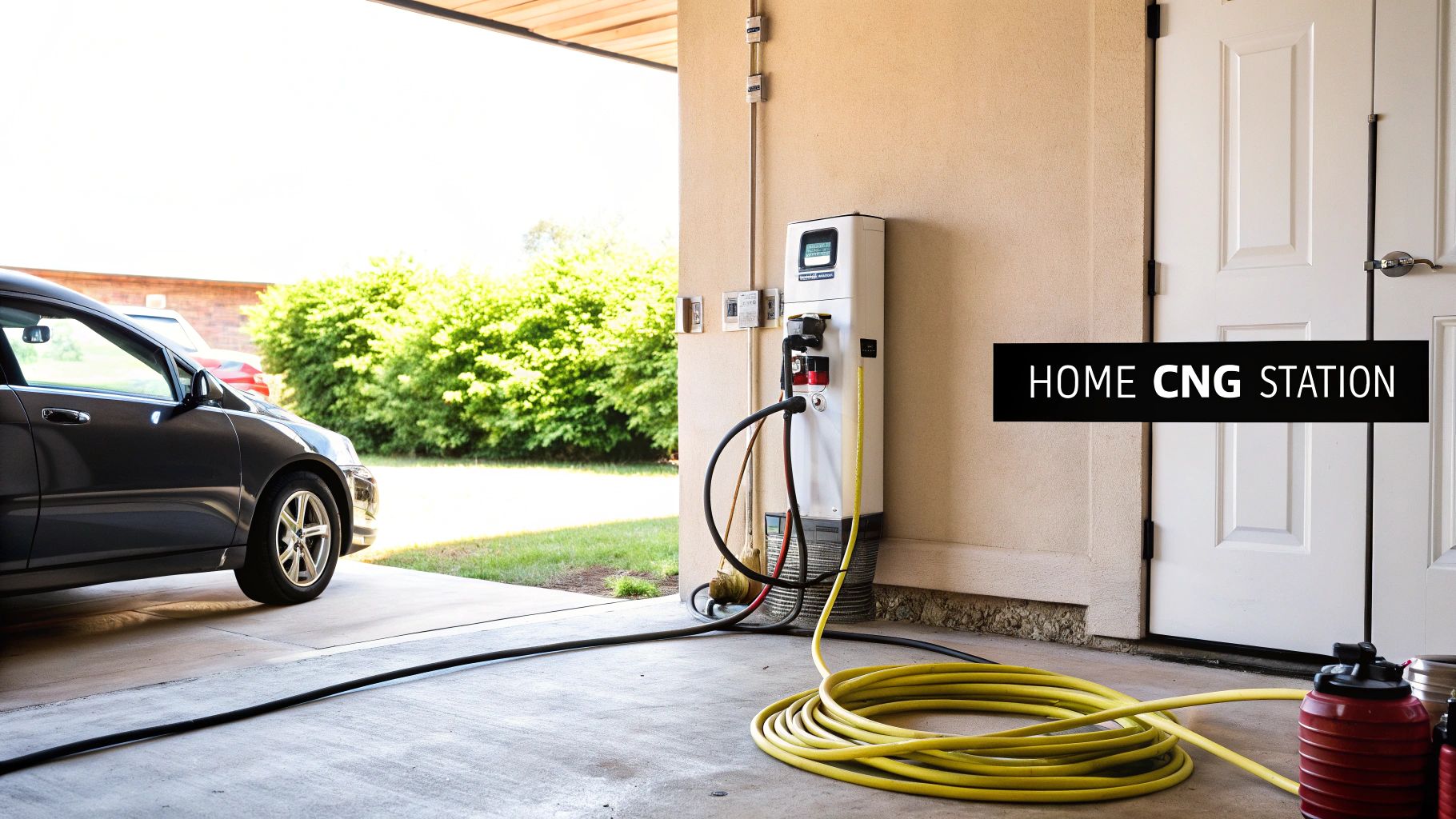
These units are typically wall-mounted and connect to the same natural gas supply that runs your stove or furnace. The magic lies in how it takes that low-pressure gas and gets it ready for your vehicle. Instead of a quick, high-volume fill like at a commercial station, home units use a "slow-fill" approach. It's a gentle, overnight process that’s perfectly safe and incredibly convenient for residential use.
The Three Core Components
When you break it down, the system is surprisingly straightforward. There are really only three key parts that work in harmony to get the job done.
- The Compressor: This is the brains and the brawn of the operation. The compressor draws in the natural gas from your utility line and, as the name suggests, compresses it to the high pressure needed for a vehicle tank—usually around 3,600 psi.
- The Hose: You can't just use any old hose. This is a specialized, high-pressure line designed to safely carry the compressed gas from the unit to your car without any issues.
- The Dispenser Nozzle: This is the final connection point. It's engineered to click securely onto your vehicle’s refueling port, creating a tight, leak-proof seal while it fills up.
By bringing the refueling process home, you gain unmatched convenience and can take full advantage of the lower cost of natural gas compared to gasoline. It completely changes the dynamic of vehicle ownership, turning your garage into your personal energy hub.
At the end of the day, the biggest reason people install a home CNG fueling station is simple: convenience. No more mapping out your day around the location of the nearest public station, which can be few and far between. It’s a smart piece of technology that offers a new level of energy independence and the quiet confidence of starting every single day with a full tank.
How the Technology Compresses Gas for Your Vehicle
You might be wondering how the same natural gas that runs your furnace can power your car. It’s actually a pretty straightforward process. Think of a home CNG system like a supercharged air compressor—the kind you might already have in your garage for filling tires, just far more powerful. It takes the low-pressure gas from your utility line, cleans it up, and pressurizes it to a level that your vehicle can use.
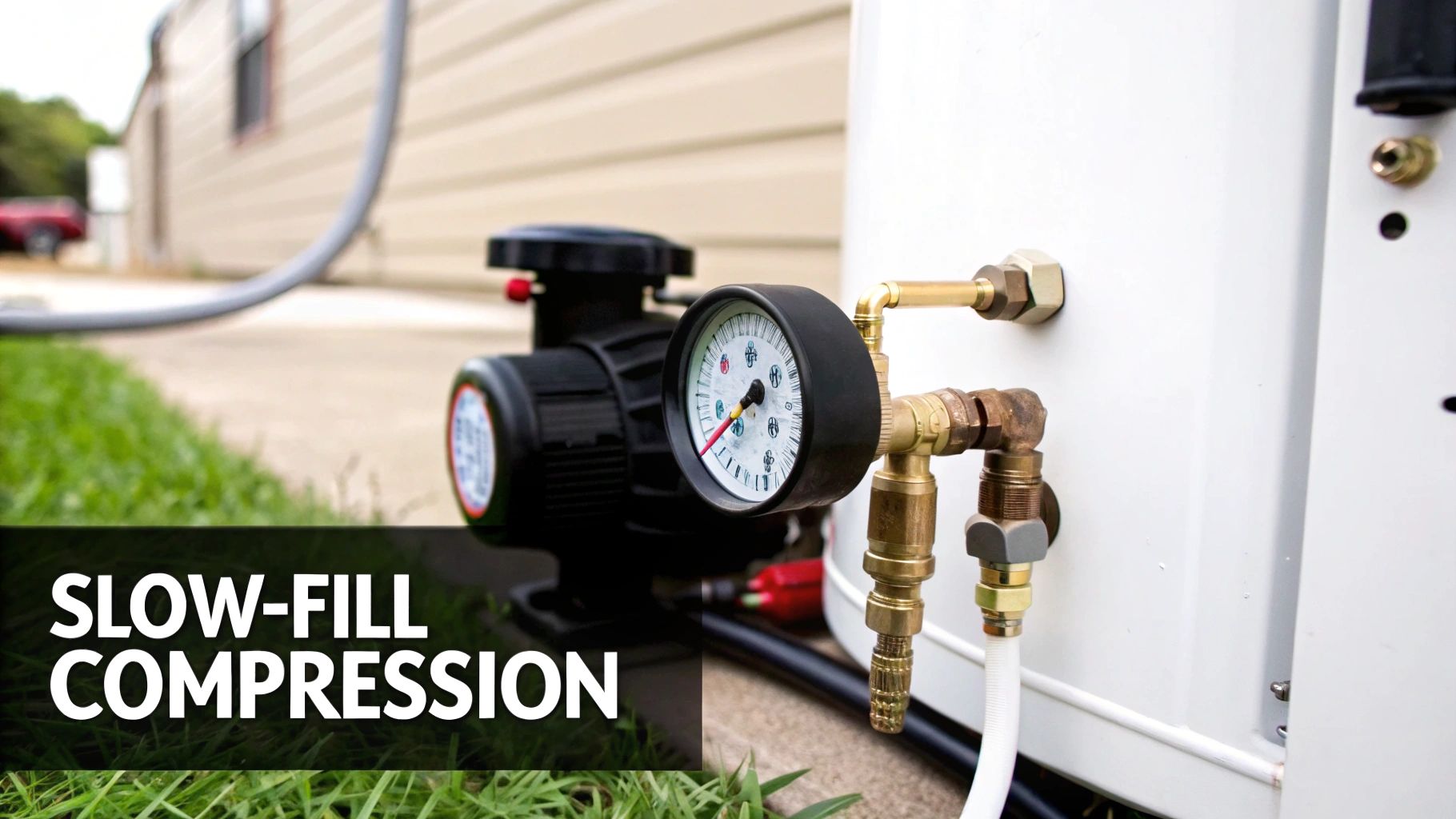
The secret sauce is a method called slow-fill. Unlike the gush of fuel you get at a commercial station, a home unit is designed to work methodically overnight. This approach is much gentler on your home’s existing gas and electrical systems and doesn't require a massive, industrial-sized setup to get the job done right.
This whole setup is a perfect example of how a cng fueling station for home is engineered for safety and efficiency in a residential setting. Once you plug in, it's a completely hands-off operation that turns your nightly downtime into real fuel savings.
The Journey from Utility Line to Vehicle Tank
The magic starts the moment you connect the dispenser nozzle to your car. Your home fueling appliance then wakes up and begins a precise, multi-stage process to get the gas ready for your engine. Every step is crucial for protecting your vehicle and ensuring you get the best performance.
Here’s a look at what happens behind the scenes:
- Gas Intake: First, the unit draws natural gas directly from your home's utility line—the very same source that fuels your stove or water heater.
- Moisture Removal: Raw natural gas has a little water vapor in it, which can cause corrosion or even freeze inside a high-pressure fuel system. To prevent this, the gas is pushed through an integrated dryer that strips out all the moisture.
- Multi-Stage Compression: This is where the heavy lifting happens. The gas is sent through a series of compressor stages. In each stage, pistons squeeze the gas into a smaller and smaller volume, steadily building its pressure until it hits the target of roughly 3,600 pounds per square inch (psi).
- Controlled Delivery: Finally, the dry, high-pressure gas flows through a reinforced hose and into your vehicle’s tank. The system is smart, constantly monitoring the pressure and automatically shutting off the moment the tank is full to prevent any chance of over-pressurization.
Why Slow-Fill Makes Sense for Homes
There's a very practical reason residential units rely on the slow-fill method. The fast-fill systems at public stations are beasts—they need huge compressors and massive storage tanks to dump fuel in minutes. That kind of industrial hardware is just not practical, safe, or affordable for a garage.
The beauty of the slow-fill system is its efficiency and simplicity. By working over several hours—typically 6 to 8 hours for a full tank—it can use a much smaller, quieter compressor that runs on a standard household electrical circuit.
This gradual process ensures your vehicle's tank gets filled completely and safely, all without putting a sudden, massive strain on your home’s utilities. It’s an elegant solution that makes refueling as simple as plugging in your car before you go to bed.
While a cng fueling station for home is incredibly convenient, it helps to understand its place in the bigger picture. These systems are still a niche market, typically installed by high-mileage drivers or small business fleets trying to get a handle on fuel costs. For perspective, the U.S. had just over 700 public CNG stations in 2023, a tiny number compared to the roughly 125,000 gasoline stations. This gap in public access is exactly why many people decide to take control by installing their own private refueling systems. You can learn more about national natural gas fueling infrastructure from the U.S. Department of Energy.
Calculating the Real Costs and Potential ROI
For most people, the big question behind installing a home CNG station is simple: will it actually save me money? The convenience is great, no doubt, but the financial case is what makes or breaks the decision. To get the real story, you have to look past the attractive price of natural gas and see the whole picture.
Let's break it down into two main buckets. First, you have the upfront investment—this is the cost of the compressor unit itself and getting it professionally installed. Then, you've got the ongoing operational costs, which are mainly the electricity to run the compressor and the routine maintenance that keeps everything humming along safely.
Unpacking the Initial Investment
The biggest check you'll write is for the fueling appliance and its installation. This isn't your average garage gadget; it's a sophisticated piece of machinery built to handle high pressures, and the price tag reflects that. Costs can swing quite a bit depending on the unit's power, speed, and brand.
Generally, you can expect a small home refueling system for a light-duty vehicle to run anywhere from $5,000 to $30,000 for the basic hardware. Of course, certified, faster-filling systems designed for more frequent use will push you toward the higher end of that range. If you want to dig deeper into the market for these systems, you can read the full research on CNG filling stations.
But the hardware is just one piece of the puzzle. You absolutely must budget for professional installation, and this is not a corner you can cut. This typically involves:
- A Licensed Gas Fitter: You'll need a pro to safely tap into your home's natural gas line and run new piping to wherever you're placing the compressor.
- A Certified Electrician: The compressor needs its own dedicated electrical circuit, and a qualified electrician has to install it to meet all local safety codes.
- Permitting Fees: Your city or county will require permits for both the gas and electrical work, which come with their own costs.
Analyzing Ongoing Operational Expenses
Once your system is up and running, the costs don't disappear, but they become much more predictable. Your two main ongoing expenses will be electricity and maintenance. The compressor runs on electricity, and while they’re built to be efficient, you will see a noticeable bump in your monthly utility bill.
How much of a bump depends entirely on your local electricity rates and how often you're filling up your vehicle. This is a critical number to factor into your ROI calculation. On top of that, these systems need regular check-ups—things like changing filters and inspecting seals—to keep them operating safely and reliably. It's smart to plan for an annual maintenance budget right from the start.
Think of the electricity cost as the real "price at the pump" for your home station. You might be paying pennies for the natural gas itself, but the electricity needed to compress it is the operational fuel cost you really need to watch.
A Practical Guide to Calculating Your ROI
This is where the rubber meets the road. Calculating your return on investment (ROI) tells you how long it will take for your fuel savings to cover the initial setup costs. To figure this out, you'll need to gather a few numbers specific to your life and your vehicle.
Let's walk through an example to see how it works. This will give you a clear framework for estimating your own payback period based on your driving habits and the price difference between gasoline and natural gas in your area.
The table below lays out a sample calculation. The real power here is plugging in your own numbers to see if a cng fueling station for home makes sense for you.
Sample Payback Period Calculation for a Home CNG Station
| Variable | Example Value | Your Calculation |
|---|---|---|
| A. Total Upfront Cost (Hardware + Installation) | $15,000 | ____________ |
| B. Annual Miles Driven | 15,000 miles | ____________ |
| C. Vehicle MPG (Gasoline) | 25 MPG | ____________ |
| D. Vehicle MPGe (CNG) | 25 MPGe | ____________ |
| E. Annual Gallons of Gasoline Used (B ÷ C) | 600 gallons | ____________ |
| F. Annual GGE of CNG Used (B ÷ D) | 600 GGEs | ____________ |
| G. Local Price per Gallon of Gasoline | $3.50 | ____________ |
| H. Local Price per GGE of Natural Gas + Electricity | $1.50 | ____________ |
| I. Annual Gasoline Cost (E x G) | $2,100 | ____________ |
| J. Annual CNG Cost (F x H) | $900 | ____________ |
| K. Annual Fuel Savings (I – J) | $1,200 | ____________ |
| L. Payback Period in Years (A ÷ K) | 12.5 years | ____________ |
By swapping in your own data, you can move past the hype and get a realistic estimate of your personal payback period. This simple math empowers you to make a smart financial decision based on your real-world driving needs, not just on industry averages.
Navigating Safety Codes and Permit Requirements
Installing a CNG fueling station for home isn't like plugging in a new appliance. It’s a major infrastructure project that involves bringing a high-pressure fuel system into your home. Safety isn’t just a bullet point on a feature list; it's the bedrock of the entire installation. You have to follow a strict set of rules designed to keep you, your property, and your neighbors safe.
Think of it this way: you wouldn’t rewire your house or replumb a bathroom without a licensed pro and the proper inspections. The same logic applies here, but the stakes are even higher. When you're dealing with high-pressure natural gas, there's absolutely no room for cutting corners.
Core Safety Components Your System Must Have
Any certified home CNG system is built with multiple layers of protection. These aren't optional upgrades; they are non-negotiable safety features baked into the design and required by national standards.
Your installer will make sure your setup has these critical parts:
- Automatic Shut-Off Mechanisms: These are the brains of the operation, constantly watching the pressure. If your vehicle's tank gets full or the system detects a problem, it instantly cuts the gas flow to prevent dangerous over-pressurization.
- Sensitive Leak Detectors: Most modern units have built-in sensors that can sniff out even the tiniest amount of methane in the air. If a leak is detected, the system shuts down and an alarm goes off.
- Proper Ventilation: Your garage needs to have enough airflow to ensure gas can't build up. This is a huge deal and something your installer and the local fire department will be looking at very closely.
When you're planning this kind of project, it's a good idea to understand the typical duration and process of a home gas safety check, as the core safety principles overlap with any residential gas installation.
Demystifying the Permitting Maze
Getting the official go-ahead for your installation means working your way through a web of local and state rules. And no, you can't just skip this part. An unpermitted installation is not only incredibly dangerous but also illegal and will likely void your homeowner's insurance policy.
Regulatory frameworks really dictate what’s possible with home CNG fueling. In the U.S., which had over 700 public CNG stations in 2023, the rules are mainly driven by National Fire Protection Association (NFPA) standards, utility company requirements, and local permits for compressors and storage. These stringent rules are a big reason why most small-scale systems end up in commercial fleet depots rather than suburban garages.
Key Takeaway: Think of the permitting process as your project's official safety audit. Every signature—from the building department, the fire marshal, and the gas company—is another expert confirming your system is built to life-saving standards.
The Agencies You Will Work With
Your certified installer should handle most of the paperwork and legwork, but you should know who’s involved. You'll need a green light from a few different authorities, and each one has a specific job.
- Local Building Authority: This is your city or county. They’ll look at the plans to make sure everything meets structural, electrical, and zoning codes.
- Fire Department: The local fire marshal has the final word on fire safety. They'll inspect where the unit is placed, check the ventilation, and test the emergency shut-offs to make sure there's no fire or explosion risk.
- Gas Utility Company: Your gas company has to approve the connection to their main line. They need to be sure your existing service can handle the extra demand and that the connection itself is installed safely.
Hiring a licensed professional who truly specializes in high-pressure gas systems is an absolute must. These experts know the codes inside and out, have working relationships with local inspectors, and have the skills to make sure your CNG fueling station for home runs safely and reliably for years to come.
The Step-by-Step Home Installation Process
So, you’ve decided to bring a cng fueling station for home into your garage. Great! But it’s not quite like getting a new refrigerator delivered. Think of it more as a small construction project—one that needs careful planning and skilled professionals to get right. Knowing the steps from start to finish will help you understand the timeline and who you’ll need to hire. The entire process is broken down into a few clear stages to make sure everything is safe, legal, and ready to go.
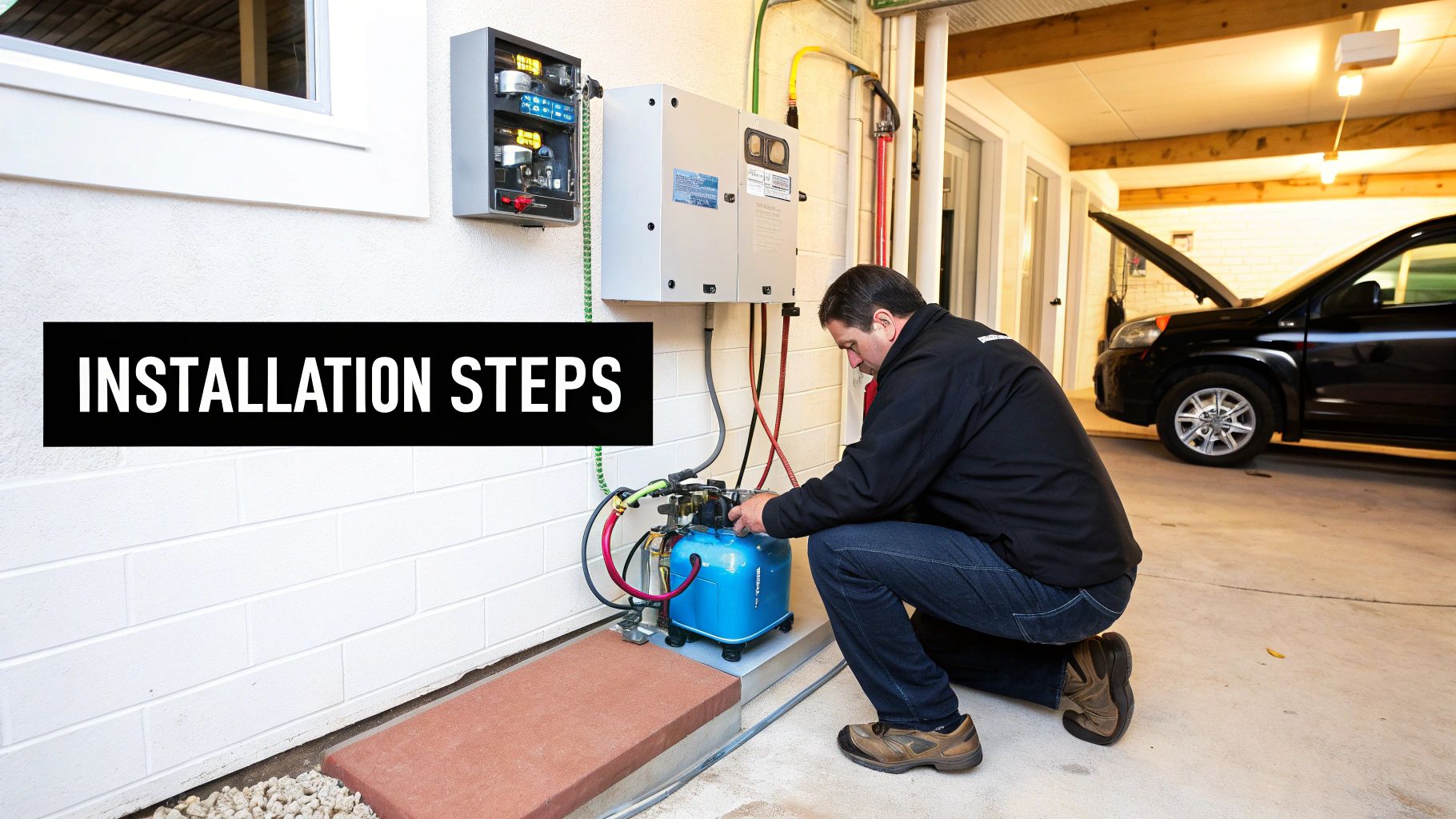
The journey doesn't start with buying a unit; it starts with a conversation. Your very first move should be a detailed consultation with a certified installer. They'll walk through your needs, show you different equipment options, and give you a ballpark budget so you know exactly what you’re getting into.
Stage 1: Initial Site Assessment
Before a single tool comes out, a professional needs to come to your home for a thorough site assessment. This isn't about picking a random spot on the garage wall. It’s a crucial step to ensure the project is both safe and practical.
An installer will be looking at a few specific things:
- Garage Space and Layout: They'll pinpoint the best place for the compressor that meets all building codes, making sure it has enough clearance from things like a water heater and has proper ventilation.
- Gas Line Capacity: Your home's existing natural gas line has to be beefy enough to handle the compressor's draw without starving your furnace or stove. They'll check the pipe diameter and pressure to be sure.
- Electrical Infrastructure: These compressors are power-hungry and need their own dedicated, heavy-duty electrical circuit. An electrician will inspect your panel to make sure it can handle the extra load.
This initial check-up confirms your home is ready for the upgrade. If it’s not, you’ll know exactly what needs to be done—like running a new gas line or adding a circuit breaker—before the real work begins.
A successful installation is built on a solid foundation. The site assessment is the most important phase, as it confirms your home can safely and effectively support the demands of a high-pressure fueling system.
Stage 2: Permitting and Approvals
With a solid plan from the assessment, the next hurdle is paperwork. Your installer will typically handle the permitting process, submitting detailed plans to local authorities. This usually means getting the green light from the local building department, the fire marshal, and your gas utility. This step is non-negotiable; it's the official confirmation that your project is fully compliant with all safety and legal standards.
Stage 3: Physical Installation and Final Checks
Once the permits are in hand, it’s time for the fun part: the actual installation. This is where the certified pros turn your garage into your personal fueling depot.
Here’s what typically happens on install day:
- Mounting the Compressor: The main unit gets securely bolted to the garage wall.
- Running Utilities: A licensed gas fitter plumbs the unit into your home’s natural gas supply, and a certified electrician wires up the dedicated electrical circuit.
- Final Connections: The high-pressure hose and dispenser nozzle are connected and meticulously leak-tested.
After all the hardware is in place, one last visit from the local inspector is needed to sign off on the permits. This final approval confirms that every part of your cng fueling station for home is up to code, officially clearing you to start fueling up your vehicle overnight.
Let's be honest: a permanent CNG fueling station for your home is a serious commitment. We're talking about a major investment in both cash and garage space, and it's definitely not the right move for everyone. The steep upfront cost and the hoops you have to jump through for installation are enough to make anyone think twice.
The good news is that the market is catching on. New, more flexible solutions are popping up for homeowners and small businesses who want the benefits of CNG without the permanent tie-down. These alternatives are built for people whose fueling needs might change, recognizing that one size rarely fits all. Let's explore a couple of practical options that might better suit your budget, property, and future plans.
Mobile CNG Delivery Services
What if you could get CNG delivered right to your driveway, just like ordering a pizza? That's the simple but brilliant concept behind mobile CNG fueling. Companies like Blue Gas Express have built their business around bringing compressed natural gas directly to you, cutting out the need for any permanent equipment at your house.
This "fuel-on-demand" model is a fantastic fit for small business fleets or anyone who needs consistent access to CNG without dropping thousands on their own compressor.
Here’s why it works so well:
- No Big Check to Write: You completely skip the huge cost of buying and installing a fueling station.
- Ultimate Flexibility: Perfect if you're renting or think you might move in the next few years. No need to leave a valuable appliance behind.
- Pay for What You Use: You can scale your fuel deliveries up or down as your needs change.
This service turns CNG from a massive infrastructure project into a simple utility you order when you need it. It's an excellent way to dip your toes into the world of natural gas vehicles without the hefty financial plunge.
Mobile delivery completely flips the financial script. Instead of a huge, one-time investment that takes a decade to pay for itself, you're looking at a predictable operating cost you can adjust on the fly.
The Neighborhood Co-Op Model
Another smart workaround is the neighborhood co-op. Think of it like a community garden, but for fuel. A few neighbors get together, pool their money, and invest in a single, higher-quality fueling appliance that everyone can share. It could be installed at one person's house, and everyone chips in for the cost and upkeep.
By sharing the burden, you can afford a much better, faster-filling unit than you could on your own. Sure, this takes some real community organization and clear ground rules for scheduling and maintenance. But it can slash the cost per household dramatically. It blends the convenience of fueling up at home with the cost-effectiveness of a shared resource, making it a powerful option for close-knit communities wanting to lower their fuel bills and carbon footprint together.
Common Questions About Home CNG Fueling
Even after crunching the numbers and understanding the installation, a few practical questions always seem to pop up when you're seriously considering a cng fueling station for home. It’s a big step, and it’s completely normal to have questions about how it all works day-to-day.
Let's walk through some of the most common things people ask before they decide to install their own private refueling setup. Getting straight answers here can help you move forward with confidence.
How Long Does It Take to Refuel a Car at Home?
Think of it like charging your phone overnight. A residential slow-fill system isn't built for gas-station speed; it’s designed for convenience. Filling up a typical natural gas vehicle from empty will take about 6 to 8 hours.
You just pull into your garage, connect the fueling hose, and head inside for the night. By the time you wake up, you'll have a full tank ready to go. Commercial fast-fill stations that you see on the road are a different beast entirely—their power needs and costs make them totally unsuitable for a home setting. The slow-fill approach is much safer and easier on your home's gas and electric systems.
Can I Install a CNG Fueling Station Myself?
In a word: no. This is one of those jobs you absolutely must leave to the pros. Installing a home CNG station means working with high-pressure natural gas lines and complex electrical connections. One wrong move could be incredibly dangerous.
The installation has to be done by a licensed gas fitter and a certified electrician, both of whom need to be experts in local building codes and national safety standards like those from the NFPA.
A DIY installation is not just a major safety hazard—it's illegal in most places. Trying to do it yourself will instantly void your equipment warranty and could even get your homeowner's insurance policy canceled. When it comes to high-pressure gas, safety and professional work are everything.
Will a Home CNG Station Affect My Property Value?
This is a great question, and the answer is: it depends. If you eventually sell your home to another NGV owner, a professionally installed, fully permitted station could be a huge plus. It’s a unique feature that adds a ton of convenience.
For a buyer who doesn't own a natural gas vehicle, however, it might just be an unfamiliar piece of equipment in the garage. The key to protecting your investment is to ensure the entire installation is done by the book—professionally, with all the right permits and documentation. In some situations, you might even classify the unit as personal property that you can sell or take with you when you move.
This quick decision tree can help you think through the alternatives if a permanent station doesn't feel right.

As the chart shows, if a permanent setup isn't in the cards, you still have great options. Mobile delivery services or even a community co-op can give you access to CNG without the personal installation.
If a permanent station seems like too much, services like Blue Gas Express offer mobile CNG and LNG delivery. They bring the fuel right to you, which is a fantastic way to bypass the upfront costs and installation hassle. You can explore their mobile fueling solutions on their website.