

A cathodic protection system is a clever way to stop corrosion on pipelines buried in the ground or submerged in water. At its core, the technology makes the entire pipeline the "cathode" in an electrochemical reaction, which is a fancy way of saying it stops rust dead in its tracks. This is done by either connecting a more reactive "sacrificial" metal to the pipeline or by using an external power source to apply a small, protective electrical current.
How Cathodic Protection Shields Your Pipeline
Think of corrosion as a tiny electrical thief, constantly trying to steal electrons from your steel pipeline. When those electrons get stolen, the steel oxidizes—it rusts—and the pipe starts to weaken. This thievery isn't happening in just one spot; it's occurring at millions of microscopic points all over the pipe's surface.
These tiny spots act like miniature batteries, each with an anode (where corrosion happens) and a cathode (which stays protected). Left to its own devices, different parts of your pipeline will naturally become anodes and start to decay. Cathodic protection is all about rigging this game so the pipeline always wins.
The Science of Stopping Corrosion
The whole strategy is to force the entire pipeline to act as the cathode, the part of the battery that doesn't corrode. You can do this in two main ways, which we'll get into later: you can either give the corrosive forces a more attractive target to attack (a sacrificial anode) or use a powered system to gently push a protective current onto the pipe.
This diagram shows how a sacrificial anode protects a pipeline in a nutshell.
As you can see, the current flows from a more reactive metal, like magnesium or zinc, over to the pipeline. This makes the pipeline the protected cathode, and the anode simply corrodes away in its place.
By turning the entire pipeline into a cathode, the system effectively neutralizes the corrosion process. It’s like giving the pipeline an invisible, continuous shield against the natural forces trying to break it down, ensuring its structural integrity for decades.
This isn't just a minor tweak; it's a foundational technology for keeping modern infrastructure safe and reliable. Its importance is underscored by just how widely it's used across the energy industry.
A Critical Investment in Infrastructure
The demand for this technology has grown tremendously, proving just how vital it is for protecting our essential energy infrastructure. In 2023, pipelines accounted for over 45% of the total cathodic protection market revenue, making it the dominant application by a long shot. This is no surprise, given the enormous global network of pipelines constantly battling corrosive soils and water. You can find more insights about cathodic protection market trends on openpr.com.
This widespread adoption makes one thing clear: a cathodic protection system for a pipeline isn't a "nice-to-have"—it's an essential investment for ensuring long-term operational safety and preventing catastrophic failures.
Choosing Between Sacrificial Anodes and Impressed Current
Picking the right cathodic protection system for a pipeline is a huge decision. It really comes down to the scale of your project, the environment you're working in, and what you need operationally for the long haul. The two main approaches—sacrificial anodes and impressed current—tackle corrosion prevention in fundamentally different ways. One is like a bodyguard taking the hit, while the other is more like an electronic force field.
Imagine a sacrificial anode system as a simple, passive guardian. You connect a more electrochemically active metal, like zinc or magnesium, directly to your pipeline. Because this "sacrificial" metal is more eager to react, it corrodes first, willingly taking on the damage that would otherwise eat away at your steel pipe. It's a beautifully simple, self-contained solution that needs no outside power.
On the flip side, an impressed current cathodic protection (ICCP) system is an active, powered shield. It uses a rectifier to convert AC power into a controlled DC current. This current is then fed to the pipeline through a set of long-lasting anodes made from tough materials, effectively overpowering the natural corrosion process. It’s all about precision and power.
When to Choose a Sacrificial Anode System
Sacrificial anode systems are the perfect fit for smaller, simpler jobs or in places where getting an external power source is a non-starter. Their straightforward design and lack of moving parts make them incredibly reliable and almost maintenance-free.
Here’s where they really shine:
- No External Power Needed: They are the obvious choice for remote locations or short pipeline segments where running power lines would be ridiculously expensive.
- Simple Installation: The install is generally much less of a headache, often just involving burying the anodes near the pipeline and connecting them up.
- Lower Interference Risk: Since they operate at lower voltages, they’re far less likely to cause electrical interference with other buried metal structures nearby.
But their passive nature has its limits. The driving voltage is low and fixed by the anode material, which means they don’t work as well in high-resistivity soils where you need more muscle to protect the pipe. Their lifespan is also limited—once the anode is gone, it’s gone, and you have to replace it.
When an Impressed Current System Is the Better Option
Impressed current systems are the heavy lifters of cathodic protection, built for large-scale, critical infrastructure. This is what you see on long-distance pipelines, complex networks, and any structure sitting in a highly corrosive environment.
The real magic of an ICCP system is its adjustability and power. You can fine-tune the protective current to match changing soil conditions or coating degradation over time, making sure the pipeline stays fully protected for its entire service life—which could be 50 years or more.
Their main advantages are clear:
- High Current Output: They can protect enormous surface areas, making them ideal for pipelines that stretch for miles and miles.
- Long-Term Performance: Anodes in an ICCP system can last for decades, and you can simply dial up the system's output as the pipeline coating gets older.
- Versatility: They work exceptionally well in all sorts of soil conditions, including the high-resistivity environments where sacrificial systems just can't keep up.
The trade-off? More complexity and a higher upfront cost. ICCP systems need a constant power supply, regular checks on the rectifier, and a more involved design and installation process. Even so, for major projects, their power and longevity often make them the most cost-effective solution in the long run.
This decision tree gives you a visual for that first assessment step—figuring out if a pipeline even needs protection in the first place.
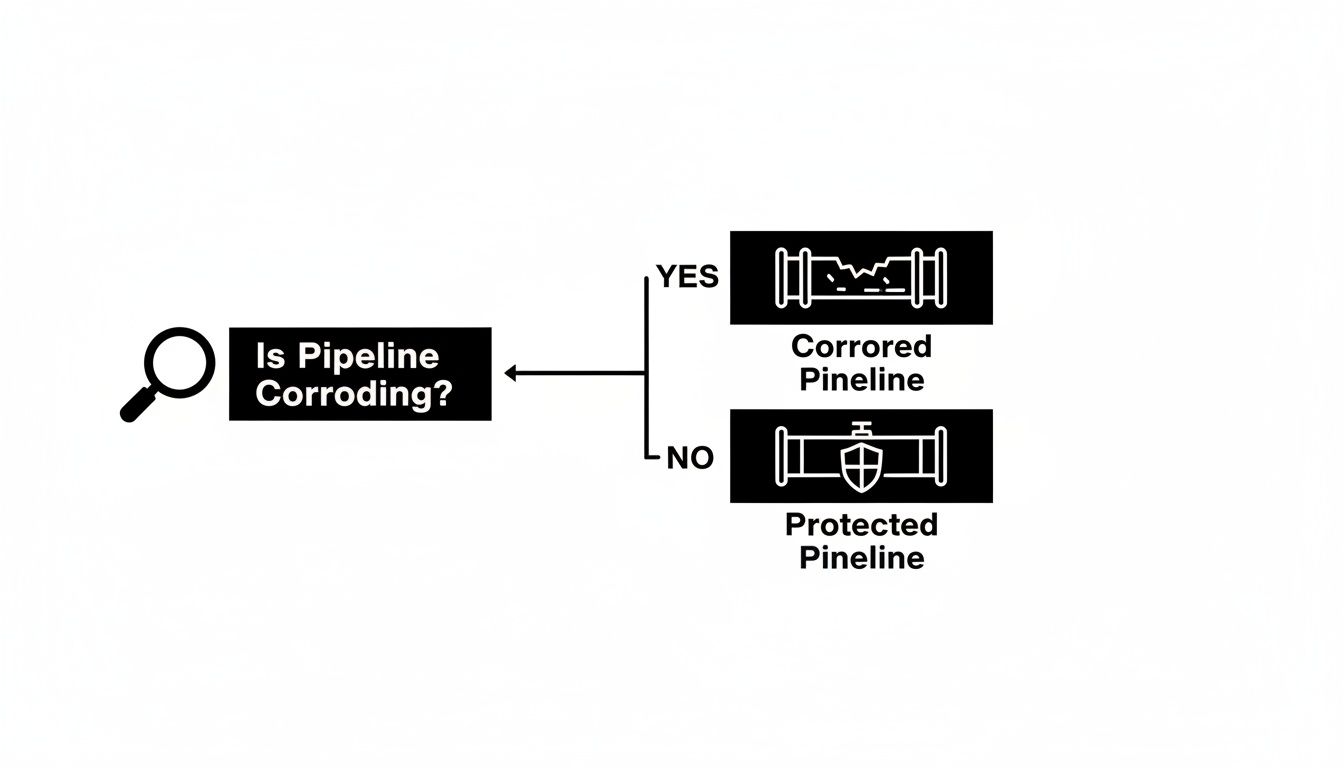
As the flowchart shows, once you've confirmed corrosion is a threat, putting a protective system in place is critical for keeping the asset intact.
Sacrificial Anode vs Impressed Current System Comparison
To lay it all out and make the choice a bit clearer, here's a direct comparison of the two corrosion-fighting strategies. This table breaks down the key differences to help you see which one fits your project's needs.
| Feature | Sacrificial Anode System | Impressed Current System |
|---|---|---|
| Power Source | None required; self-powered. | External AC/DC power source (rectifier). |
| Typical Lifespan | 10-20 years, depending on anode mass. | 30-50+ years with proper maintenance. |
| Initial Cost | Lower for small-scale projects. | Higher due to power supply and components. |
| Operating Cost | None, aside from monitoring. | Continuous electricity costs. |
| Ideal Application | Short pipelines, isolated structures. | Long-distance pipelines, large networks. |
| Maintenance | Periodic potential surveys, eventual anode replacement. | Regular rectifier checks and monitoring. |
| Soil Conditions | Best in low-resistivity soils. | Effective in all soil types. |
Ultimately, the right answer comes from a careful analysis of what your pipeline actually needs. For a small, temporary gas line on a construction site, a simple sacrificial anode setup is probably more than enough. But for a major transmission pipeline serving thousands of people, the robust, adjustable protection you get from an impressed current system is an absolutely essential investment.
Diving Into the Core Components of Cathodic Protection
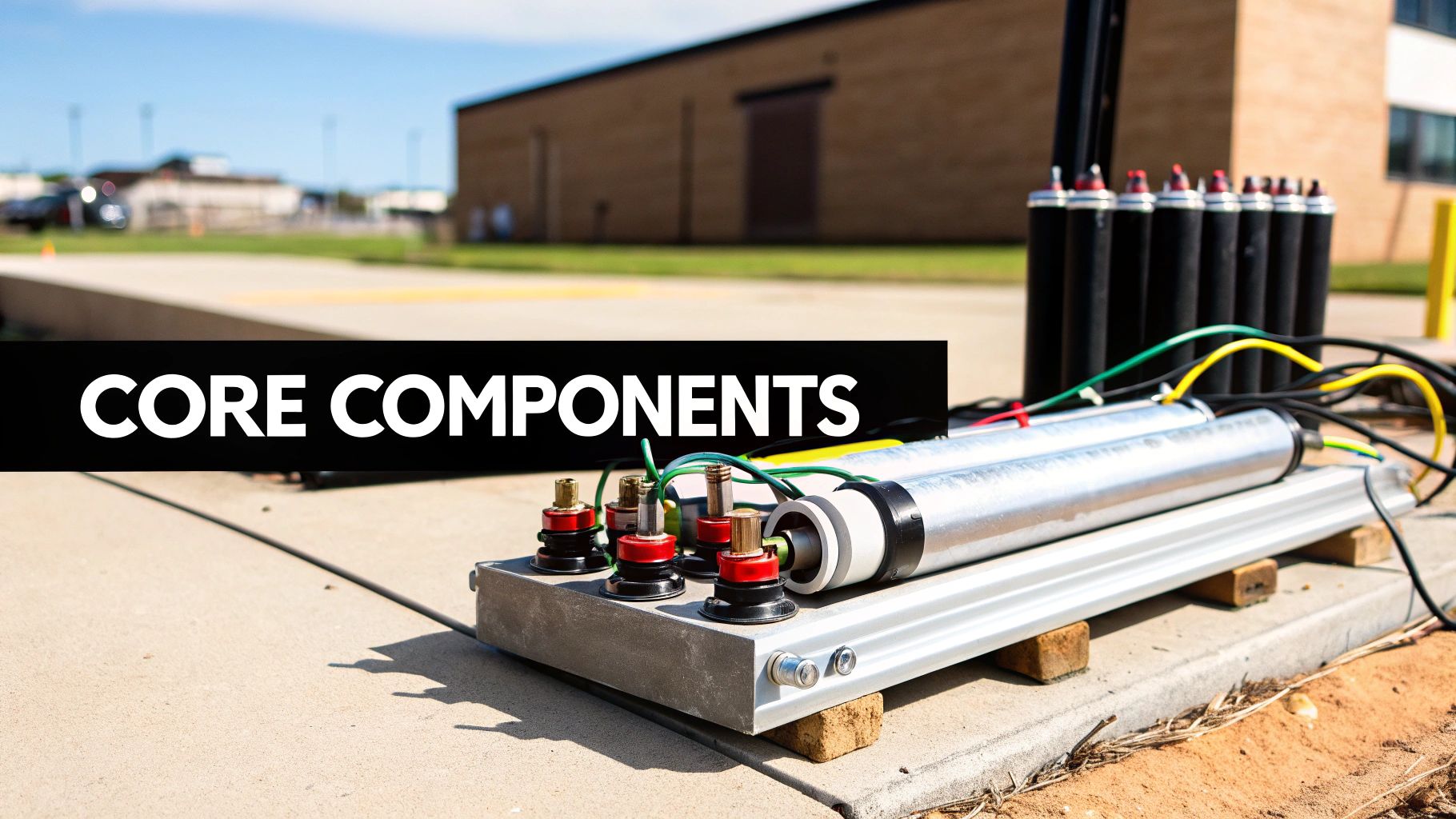
To really get a handle on how a cathodic protection system works on a pipeline, you have to look at the hardware doing the heavy lifting. These components are what turn electrochemical theory into tangible asset protection. Whether you're looking at a straightforward sacrificial system or a more involved impressed current setup, every part has a critical job to do in the fight against corrosion.
Knowing this equipment is essential for anyone running a pipeline project. It gives managers and field crews the confidence to oversee installations, carry out meaningful inspections, and talk shop with corrosion engineering specialists. Let’s pull back the curtain on the key pieces for both system types.
Essential Parts of a Sacrificial Anode System
The real genius of a sacrificial (or galvanic) system is its simplicity. It's a self-contained, self-powered solution that relies on just a handful of tough components working in harmony.
- Sacrificial Anodes: These are the heart and soul of the system. They’re blocks of metal—usually magnesium, zinc, or aluminum—that are naturally more "active" on the electrochemical scale than steel. When you wire one to a pipeline, it starts corroding first, literally sacrificing itself to save the pipe. The specific material you choose boils down to the resistivity of the soil or water it's buried in.
- Test Stations: Think of these as a window into what’s happening underground. They are simple, above-ground access points wired directly to the pipeline and often the anode. Technicians connect their instruments here to take pipe-to-soil potential readings, which is how we know for sure if the pipe is getting enough protection. Without them, you'd be digging up the pipeline just to check if the system was working.
- Connecting Cables and Bonds: It all comes down to the connection. Insulated copper cables create a solid electrical path from the anode to the pipeline. This bond is what completes the protective circuit, giving the current a path to flow from the anode to the pipe.
In a sacrificial system, the anode is the engine, the cable is the driveshaft, and the test station is the dashboard. Each part is essential for delivering and verifying the protection that keeps the pipeline safe from environmental attack.
This simple, elegant setup is perfect for well-coated, shorter pipelines or for sites where you don't have a reliable power source. It’s a passive but incredibly effective line of defense.
Key Components of an Impressed Current System
When you need more power, you turn to an impressed current cathodic protection (ICCP) system. These are more complex setups that use an external power source to drive a much higher, and adjustable, level of protection. This muscle makes them the go-to choice for long-distance, large-diameter pipelines or older infrastructure with a failing coating.
Here’s what makes an ICCP system tick:
- Rectifier: This is the brains of the whole operation. The rectifier takes standard AC power from the grid and converts it into the low-voltage DC power the system needs. That controlled DC current is then "impressed" onto the anodes. Critically, rectifiers allow operators to fine-tune the current output, letting them dial in the perfect level of protection as soil conditions or the pipeline's coating degrades over time.
- Inert Anodes: Unlike their sacrificial cousins, these anodes aren't designed to be consumed. They are made from extremely durable materials like high-silicon cast iron, mixed metal oxide (MMO), or graphite. Their only job is to act as a delivery device, discharging the protective current from the rectifier into the ground to create a protective field around the pipeline.
- Reference Electrodes: These are the system's sensors, providing the crucial feedback loop. A reference electrode, typically a copper-copper sulfate cell (CSE), is buried near the pipeline to provide a stable electrochemical benchmark. All pipe-to-soil potential readings are measured against this reference, giving an accurate picture of the protection level. This is the data that tells an operator if they need to crank the rectifier up or down.
Designing and Installing Your Protection System
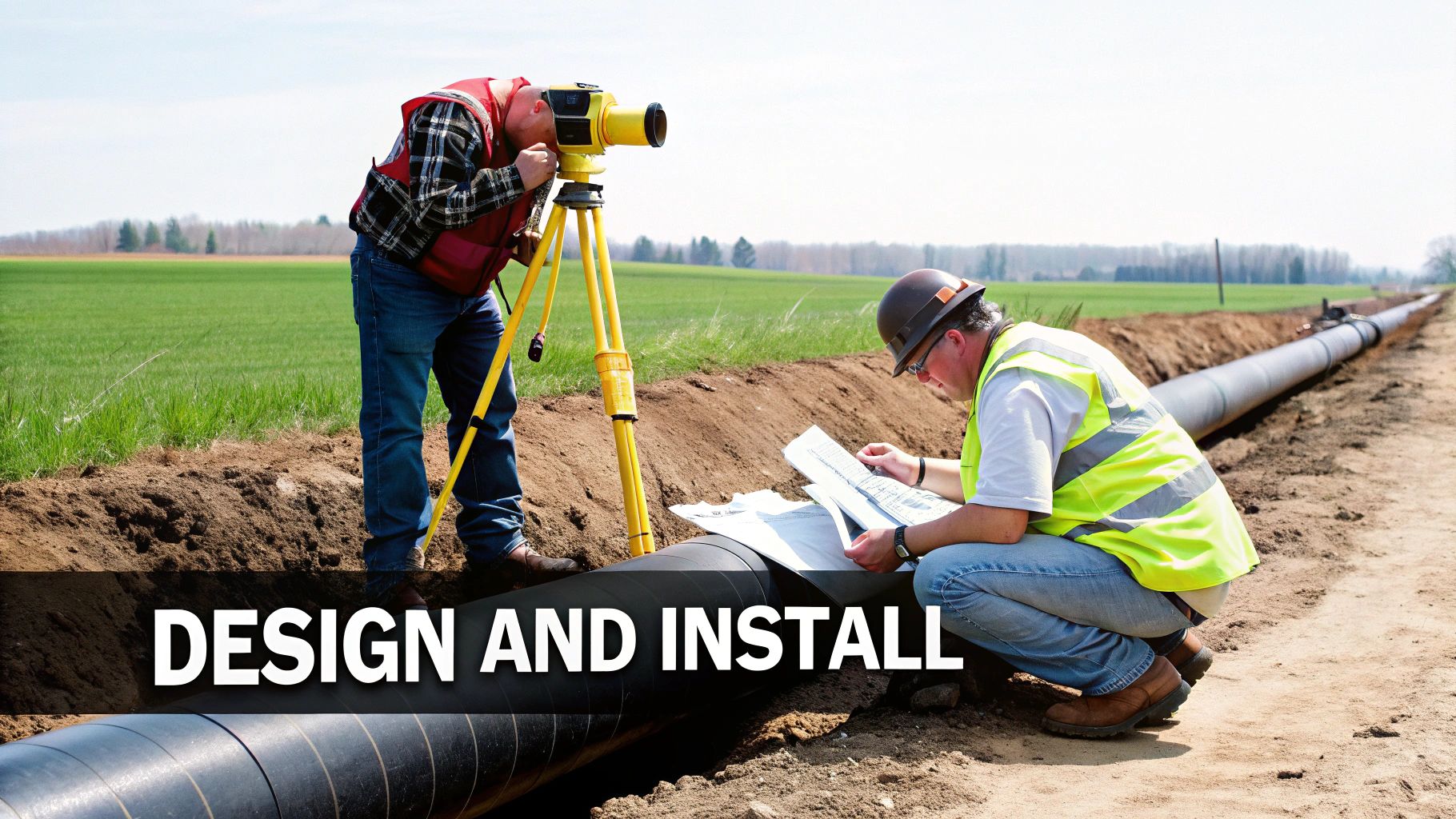
Getting a cathodic protection system for a pipeline right isn't about guesswork; it's a careful science. A system that’s designed with foresight and installed with precision is the difference between an asset that lasts for decades and one that becomes a constant source of costly repairs. This whole process kicks off long before a single anode ever touches the soil.
It all begins with getting to know the environment your pipeline will call home. Think of it like a doctor running diagnostics before writing a prescription. For a pipeline, this means gathering key data that informs every single decision, from the type of system you choose to where you place each component.
The Critical First Steps in System Design
Before you even think about ordering hardware, a thorough site assessment is an absolute must. This initial data-gathering phase is the technical bedrock for your entire protection strategy, making sure the system you build is just right—not underpowered and not over-engineered.
Two surveys are the foundation of this process:
- Soil Resistivity Survey: This test tells you how easily electricity can move through the ground. Soil with low resistivity is highly conductive, letting current flow freely. High-resistivity soil, on the other hand, acts like an insulator. This one measurement massively impacts the type and number of anodes you'll need.
- Pipeline Coating Assessment: Let's be honest, no coating is perfect. A detailed look at the pipeline's primary anti-corrosion barrier will tell you its quality and integrity. The more holidays (small defects) or wear and tear it has, the more protective current the cathodic protection system will have to pump out to compensate.
A common mistake is to treat system design as a one-size-fits-all task. In reality, a pipeline running through clay-heavy, moist soil will require a completely different protection design than one crossing dry, rocky terrain.
This kind of meticulous planning is a big deal across North America, a region with a huge and aging pipeline network. In fact, North America accounts for nearly 37% of the global market share for cathodic protection, a figure driven by its massive infrastructure and strict federal regulations. This dominance reflects a serious investment in modernizing assets to keep them safe and in service for the long haul.
Choosing the Right System and Components
With the site data in your back pocket, the engineering team can now make a smart call between a sacrificial anode or an impressed current system. If you have a short, well-coated pipeline sitting in conductive soil, a straightforward sacrificial system is probably your most cost-effective bet. But for a long-distance pipeline, or one where the coating isn't what it used to be, the power and control of an impressed current system become essential.
From there, the design gets down to the nitty-gritty:
- Anode Selection and Placement: Based on soil conditions and how much current is needed, engineers will pick the right anode material (like magnesium for sacrificial systems or Mixed Metal Oxide for impressed current) and figure out the best spacing and depth.
- Rectifier Sizing: For impressed current systems, the rectifier needs to be powerful enough to protect the pipeline for its entire life, with some extra juice to handle coating degradation down the road.
- Test Station Locations: Placing test stations strategically is key for future monitoring. You need to ensure technicians can easily get to them to measure how the system is performing all along the pipeline.
Understanding how to design and install these systems is a core part of building large-scale infrastructure. To get a better grasp on the bigger picture, exploring guides on heavy civil construction projects can provide some great foundational knowledge.
Installation and Commissioning Best Practices
When you move from a blueprint to the real world, precision is everything. Even the most brilliant design can fall flat if the installation is sloppy. Key steps include handling anodes with care to avoid damage, making sure all cable connections are solid and have low resistance, and burying reference electrodes at the correct depth.
Once everything is in the ground, you don't just flip a switch and walk away. The system has to be commissioned. This is the final, all-important testing phase to make sure it’s working exactly as intended.
Commissioning involves a series of detailed electrical checks to confirm a few things:
- The system is pushing out the required protective current.
- The pipe-to-soil potentials meet the industry standard for protection (which is typically -850mV or more negative).
- Your system isn't causing electrical interference with any other metal structures nearby.
This final check-up ensures the cathodic protection system for the pipeline is ready to start its lifelong job of stopping corrosion in its tracks, protecting your asset from the moment it goes into service.
Keeping Your System in Fighting Shape
Putting a cathodic protection system in place is a huge win for pipeline integrity, but the job isn’t over once the switch is flipped. It’s not a “set it and forget it” technology. Think of it more like the essential upkeep on a high-performance engine; routine checks and smart troubleshooting are what guarantee that protection stays strong for the entire life of your pipeline. Skipping this part is like installing a top-tier alarm system but letting the batteries die.
The real secret to effective maintenance comes down to one thing: good data. By consistently monitoring the system, you can catch subtle shifts and budding problems long before they escalate into something that could actually threaten the pipeline. This isn't just about stopping rust; it's about being proactive to avoid massive repair bills and squeeze every last year of service out of your asset. For any owner, this is where the true, long-term value of cathodic protection really shines.
Routine Monitoring and Essential Checks
Regular, scheduled monitoring is the absolute bedrock of a healthy cathodic protection program. These checks are like taking the system’s vital signs—they tell you whether it's performing as intended or if it’s time to make some adjustments. The process doesn’t have to be overly complex, but it absolutely must be consistent.
Here are the most common and critical monitoring tasks:
- Pipe-to-Soil Potential Readings: This is the big one. It's the single most important measurement you can take. A technician uses a reference electrode and a voltmeter at designated test stations to make sure the pipeline is holding a protective potential. The magic number is typically at or more negative than -850 millivolts; this reading is the direct proof that corrosion is being held at bay.
- Rectifier Output Checks: In an impressed current system, the rectifier is the heart of the whole operation. Monthly checks of its voltage and amperage are non-negotiable. Keeping a log of these outputs helps you spot any slow drifts, sudden drops, or power issues that could be weakening the protective current.
- Anode Bed Inspections: These are less frequent but still crucial. It’s a good idea to visually inspect the anode beds and their connections, especially if there has been any construction or ground disturbance nearby. You’re looking for solid connections and making sure nothing has been physically damaged.
This dedication to maintenance isn't just a best practice; it's a global priority, especially as infrastructure booms in developing regions. The Asia-Pacific, for example, has become the fastest-growing market for pipeline cathodic protection, now accounting for 31% of the global share. This surge, driven by industrial and urban expansion in countries like China, is expected to fuel a 9% CAGR through 2030 as new energy networks come online. You can get more insights on this global push for corrosion control on pressebox.com.
A Practical Troubleshooting Guide
Even the best-maintained systems can run into trouble. Knowing how to diagnose the usual suspects is key for field crews to get things back on track quickly and restore full protection. The trick is to connect the symptom to its most likely cause and apply the right fix.
A sudden drop in a pipe-to-soil potential reading isn't just a number; it's a signal that the pipeline's protective shield has weakened. Promptly investigating the cause—whether it's a damaged cable or a rectifier malfunction—is crucial to preventing corrosion from getting a foothold.
When things go wrong, it's essential to have a clear, logical process for figuring out what's happening. The table below is a handy reference for maintenance teams to identify and solve the most common issues they'll encounter with a cathodic protection system pipeline.
Common Cathodic Protection System Troubleshooting Guide
| Symptom / Issue | Potential Cause | Recommended Action |
|---|---|---|
| Low Pipe-to-Soil Potential | Damaged test station wire, depleted sacrificial anodes, or insufficient rectifier output. | Check wire continuity. For sacrificial systems, test anode output and plan for replacement. For impressed current systems, gradually increase rectifier output. |
| Fluctuating Rectifier Output | Loose connections, faulty power supply, or a damaged anode cable in the ground. | Inspect all visible wiring at the rectifier. Verify the AC power source is stable. If issues persist, conduct an anode string resistance test. |
| Interference with Other Structures | Your system's current is being picked up by a nearby foreign pipeline or metallic structure. | Conduct an interference survey to identify the affected structure. Adjust rectifier output or install mitigation bonds to drain stray current safely. |
| Zero Rectifier Output | Blown fuse, tripped breaker, internal component failure, or a complete loss of AC power. | Check fuses and breakers first. Confirm AC power is supplied to the unit. If power is present but the unit is dead, a qualified technician is needed for internal diagnostics. |
Having a systematic approach like this takes the guesswork out of troubleshooting. It empowers your team to move from problem to solution efficiently, ensuring the pipeline remains shielded from the constant threat of corrosion.
Your Pipeline Cathodic Protection Questions, Answered
Even when you've got the basics down, you're bound to run into practical questions when it's time to actually design, install, or manage a cathodic protection system. Let's tackle some of the most common things that come up for project managers and engineers in the field.
Getting these details right can make a huge difference in how well the system performs, what it costs you over the long haul, and whether you're staying on the right side of regulations.
How Long Does a Cathodic Protection System Last?
There's no single answer here—it really comes down to which type of system you've installed and how well it was designed from the start. The two approaches have completely different lifecycles.
- Sacrificial Anode Systems: These are built to be consumed. Think of them like batteries that slowly drain over time. You can typically expect a lifespan of 10 to 20 years, but that number is heavily influenced by soil conditions, how much metal the anode is made of, and the pipeline's current demand.
- Impressed Current Systems: These are designed for the long game. The anodes themselves are incredibly durable and can last 30 to 50 years, sometimes even longer, as long as you keep up with maintenance. The rectifier—the power supply—is usually the first major component to need attention, often requiring service or replacement every 15 to 25 years.
No matter which system you have, consistent monitoring and proactive maintenance are what will truly stretch its service life.
Is Cathodic Protection a Standalone Solution?
Absolutely not. Cathodic protection is a team player, and its partner is the pipeline's primary coating. The coating is the first and most important line of defense, like a thick coat of armor that physically blocks corrosive elements from ever touching the steel.
But no coating is perfect. You'll always have tiny flaws, nicks, or scrapes—what we call "holidays"—that happen during transport and installation.
That's where cathodic protection steps in. It acts as the essential backup, zeroing in on those exact spots where the coating is compromised. It’s the failsafe that prevents localized corrosion and pitting that could threaten the pipeline's integrity.
This one-two punch of a good coating backed by a solid CP system is the industry standard for a reason. It's how you achieve total, long-term protection.
What Are the Primary Costs Involved?
When you're budgeting for a cathodic protection system pipeline, the costs fall into two buckets: what you pay upfront (CapEx) and what you pay over time to keep it running (OpEx).
Initial Costs (CapEx):
- Design & Engineering: This covers soil resistivity surveys, creating the system design, and specifying all the materials.
- Materials & Equipment: The price of the anodes, rectifiers, cabling, test stations, and other hardware.
- Installation & Labor: The cost of the crew doing the physical work—digging trenches, burying anodes, and getting the system commissioned.
Operational Costs (OpEx):
- Power Consumption: For impressed current systems, this is your ongoing electricity bill. It's usually a pretty modest cost.
- Monitoring & Maintenance: This involves paying technicians for regular surveys, rectifier checks, and analyzing the performance data.
- Repairs & Replacements: Things eventually wear out. This covers fixing failed components or, eventually, replacing an entire anode bed at the end of its life.
It's worth noting that while impressed current systems cost more to install, their lower maintenance needs and longer lifespan often make them the more economical choice for large pipelines over the long run.
How Do You Know if the System Is Working Correctly?
The gold standard for checking if a CP system is doing its job is to take pipe-to-soil potential measurements. A technician uses a high-impedance voltmeter and a portable reference electrode (usually a copper-copper sulfate half-cell) to take readings at test stations located along the pipeline.
The magic number you're looking for comes from industry standards set by organizations like NACE (now AMPP). The criterion for effective protection is a pipe-to-soil potential of -850 millivolts (mV) or more negative. As long as your readings are hitting that mark, you can be confident that corrosion has been successfully halted.
These regular checks aren't just good practice; they're required for regulatory compliance and are the single best way to keep tabs on your system's health.
Can Cathodic Protection Damage the Pipeline?
It sounds counterintuitive, but yes, you can have too much of a good thing. If the level of cathodic protection is set too high (meaning the potential is too negative), it can cause a problem called cathodic disbondment.
Here's what happens: the intense electrical field generates hydrogen gas on the steel surface, right under the coating. The pressure from these gas bubbles can physically lift the coating off the pipe, breaking the adhesive bond and causing it to peel or blister. This not only exposes fresh steel to the environment but also increases the amount of current the CP system needs to supply.
This is precisely why a well-thought-out design and routine monitoring are non-negotiable. By keeping the protective potential within the recommended window (usually no more negative than -1200 mV), you avoid this problem entirely, ensuring the system is protecting the pipe without unintentionally damaging its coating.
At Blue Gas Express, we know that construction delays can throw a wrench in your project timeline. If you're waiting on a pipeline connection and need a temporary natural gas supply to keep things moving, we've got you covered. Learn more about our mobile CNG and LNG services at Blue Gas Express and see how we can bridge the gap for your operations.