

Nothing stalls a project faster than a construction delay. They're not just frustrating; they can blow up your budget and throw your entire schedule into chaos. When the permanent natural gas line isn't ready—a far too common scenario—you need a way to keep the lights on and the heat running. This is where xpress natural gas services, like mobile CNG or LNG units, come in. Think of it as an immediate, reliable energy source on wheels that keeps your project on track and prevents those costly standstills.
Keep Your Project Moving With Xpress Natural Gas
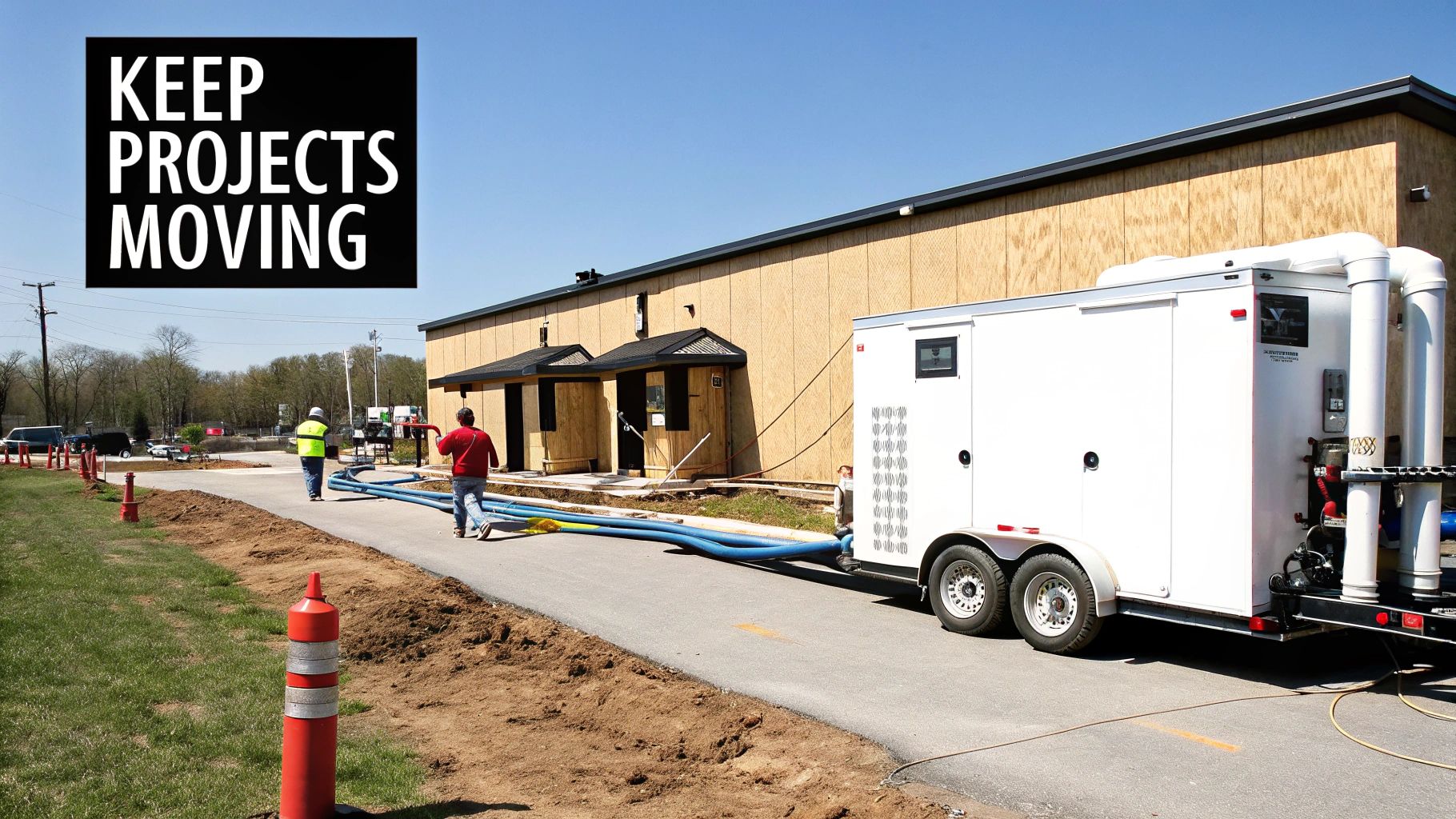
Let's be honest, utility delays are a fact of life in the construction world. But they don't have to bring your job site to a grinding halt.
Picture this: your new multi-family housing complex is finished, looking great, but the local gas utility is weeks, maybe even months, behind schedule on hooking up the main line. You're stuck. No gas means you can't get final inspections signed off or secure that all-important Certificate of Occupancy. This is the exact moment a mobile gas solution saves the day.
A temporary natural gas service effectively builds a bridge over that gap in the schedule. It provides the fuel needed to fire up the HVAC systems and water heaters, letting you prove to inspectors that everything is fully functional. Suddenly, you can get your occupancy permit and start leasing units, all without being at the mercy of the utility's timeline. What could have been a month-long delay becomes nothing more than a simple logistical step you planned for.
Essential Use Cases for Mobile Natural Gas
The benefits go far beyond just getting your occupancy permit. I've seen mobile gas solve critical problems on countless job sites. Here are a few real-world examples:
- Generator Commissioning: You've just installed a massive backup generator, but you can't sign off on it until it's been tested under a full load. A mobile gas unit delivers the fuel to run those crucial tests, ensuring your facility is genuinely protected when the next power outage hits.
- Freeze Prevention: It’s the middle of winter, and a cold snap is rolling in. Your building has a brand new wet pipe fire sprinkler system or completed plumbing. Without heat, you're looking at a high risk of catastrophic pipe bursts, leading to thousands in damage and rework. Temporary heaters, powered by mobile gas, can hold the building's temperature steady and prevent a disaster.
- Industrial Process Continuity: For a manufacturing plant, an uninterrupted natural gas supply is the lifeblood of its operation. When the utility schedules a planned pipeline maintenance event, a mobile LNG or CNG solution can be brought in to ensure production never stops. No interruption, no lost revenue.
This isn't a niche problem; it's becoming more common everywhere. As global natural gas demand continues to climb, temporary CNG and LNG solutions are more important than ever for sidestepping delays. Especially in areas like North Carolina, South Carolina, Tennessee, and Virginia, utilities often have significant backlogs for new installations. A provider like Blue Gas Express can deploy a mobile solution, sometimes within hours, to keep critical milestones on track. You can read more about these global gas trends in the IGU’s 2025 report.
Key Takeaway: Temporary natural gas isn't just a contingency plan; it's a strategic tool for maintaining momentum. It directly solves the conflict between your project's deadline and the utility's schedule, protecting your bottom line and ensuring you hit your targets.
Figuring Out What You Really Need
Before you can get a truck rolling to your site, you’ve got to get a handle on your project's actual energy needs. This isn't a time for guesswork. Nailing down your requirements from the get-go is the single most important step to making sure your temporary gas setup is efficient, effective, and doesn't blow your budget. Get it wrong, and you're either paying for gas you don't use or, worse, scrambling for an emergency delivery when the pressure drops.
First things first, you need to calculate your total BTU load. This means taking a hard look at every single piece of equipment that will be drawing from the temporary supply. We’re talking about everything—the main HVAC system, water heaters, any big industrial heaters for curing concrete, and even backup generators. You’ll find the BTU per hour rating on the manufacturer's data plate for each appliance. Add them all up.
With that number in hand, the next question is duration. How long will you need the gas for? Is this a quick hit, like a 24-hour generator test to get your certificate of occupancy? Or are you settling in for the long haul, needing a bridge fuel solution for a few months while the local utility gets its act together? The answer completely changes the kind of equipment and delivery schedule you'll need.
Getting Specific on Consumption
Once you know your total load and how long you'll need it, there's one more critical piece to the puzzle: your peak demand. It's almost never the case that every piece of equipment is running full-blast at the same time. Think about it—a commercial kitchen’s gas usage will go through the roof during lunch and dinner service, then drop off. An apartment building's heating demand will spike in the morning as people wake up and again in the evening when they get home.
You have to think through your project’s daily and weekly rhythm to pinpoint those high-demand windows. This is the kind of detail that helps a provider like Blue Gas Express size the mobile unit correctly and map out a refueling plan that prevents any surprises. You don't want to run out of gas in the middle of a critical concrete pour on a cold morning.
Don't make the mistake of just adding up the maximum rating of every appliance. A realistic estimate of your true peak demand will get you a much more accurate quote and a far more efficient temporary gas setup.
Getting these numbers wrong can be painful. If you underestimate your needs, you’ll be making a panicked call for a second delivery and paying rush fees. If you overestimate, you’re literally just paying for capacity that sits there unused. A solid, data-based approach built on these three pillars—total load, duration, and peak demand—is always the best way to go.
Matching Your Project Need To The Right Gas Solution
To help you get started, here's a quick look at some common scenarios we see in the field. Use this table to quickly identify the typical temporary natural gas requirements for common construction and industrial situations. It's a great starting point for a conversation with your provider and helps ensure you’re asking the right questions from day one.
| Project Scenario | Common BTU Load Range | Typical Duration | Recommended Solution |
|---|---|---|---|
| Securing Occupancy Permit | 500k – 2M BTU/hr | 1-4 weeks | Mobile CNG Trailer |
| Generator Commissioning | 2M – 10M+ BTU/hr | 24-72 hours | High-Volume CNG or LNG |
| Winter Freeze Prevention | 250k – 1M BTU/hr | 1-3 months | Standard CNG Trailer |
| Industrial Process Bridge | 5M – 20M+ BTU/hr | Weeks to Months | Scalable LNG Solution |
This table should give you a solid baseline, helping you align your project's specific needs with the right scale of service and equipment from the very beginning.
How The Deployment Process Really Works
Once you’ve nailed down your project's energy needs, the next big question is getting the actual Blue Gas Express service on-site. This can feel like a complex puzzle, but with an experienced provider, it's a clear, well-trodden path. It all starts with getting a solid, accurate quote.
To kick things off, you'll need those key details you already figured out: your total BTU load, how long you'll need the service, and when your peak demand will hit. Be ready with the exact site address and a target start date. This information is crucial for the provider to map out the right equipment, plan refueling logistics, and calculate mobilization costs, giving you a precise proposal.
This flowchart lays out the core data points that get the ball rolling.
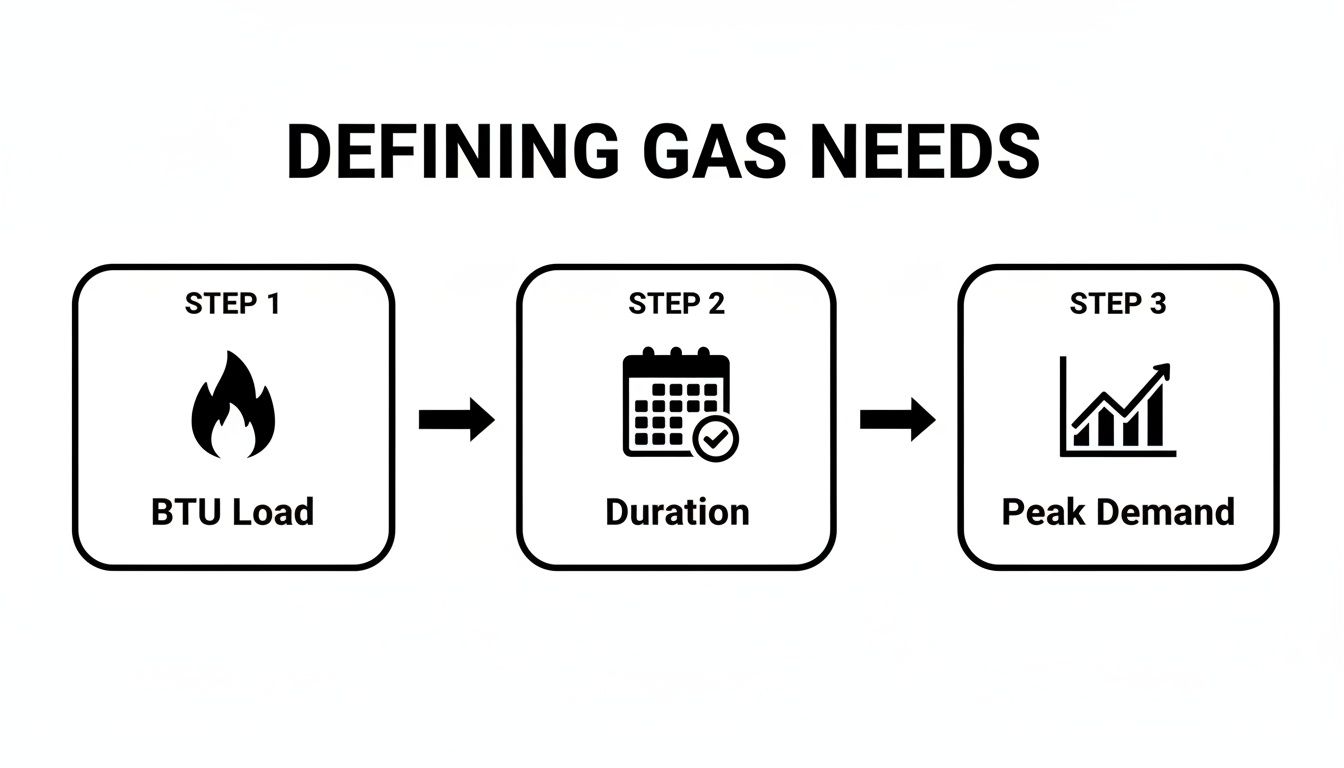
As you can see, a firm grasp on your load, timeline, and peak usage is the foundation for an efficient and cost-effective setup.
From Agreement To On-Site Delivery
After you've reviewed and signed the service agreement, the real logistical dance begins. The provider’s operations team will get to work scheduling the mobilization of the mobile gas unit—this is usually a large tube trailer for CNG or a specialized tanker for LNG. They’ll connect with your site manager to lock in a delivery window and run through the site readiness checklist, making sure everything is good to go for a smooth arrival.
A critical piece of this phase is coordinating with your local gas utility. This is where a company like Blue Gas Express proves its worth, acting as a true partner to the utility, not a competitor.
Insider Tip: Don't leave your local gas utility in the dark. Give them a heads-up that you're bringing in a temporary mobile gas source and share your provider's contact information. This simple step ensures a safe, seamless handover when their permanent line is finally ready to go live.
The Bigger Picture For Utilities And Contractors
This partnership model is more vital than ever. With U.S. natural gas output and demand projected to shatter records in 2025, the strain on local pipeline infrastructure is only getting worse. For construction companies across the Southeast U.S., these infrastructure gaps can stall multimillion-dollar projects indefinitely.
Temporary mobile CNG and LNG units are the perfect bridge solution. They can be deployed quickly to keep schedules on track, whether it’s for generator testing or critical freeze prevention. For utilities, teaming up with mobile providers means they can accelerate new hookups and keep customers online during planned maintenance or unexpected outages. You can dig deeper into how market trends are impacting local supply on OilPrice.com.
Getting Your Site Ready For Mobile Gas Delivery
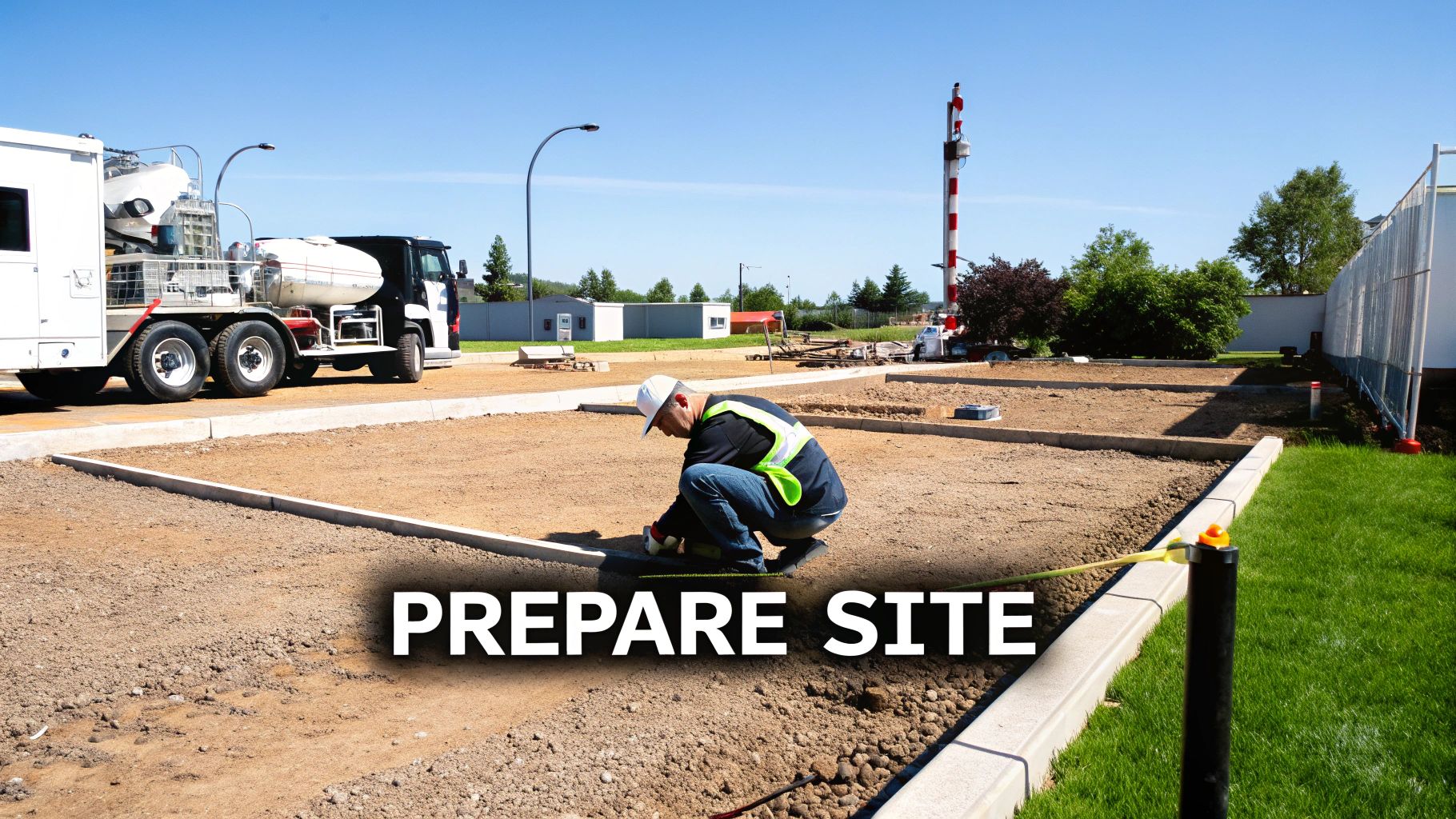
A successful xpress natural gas deployment doesn't just happen when the truck shows up. The real work starts with smart site prep. Getting this right is non-negotiable, and frankly, it’s what separates a smooth operation from a last-minute scramble that bleeds time and money. Think of it as rolling out the welcome mat for your temporary energy source.
First things first: the ground. We’re talking about parking a fully loaded tractor-trailer, so the surface has to be firm, level, and stable. A compacted gravel pad or a paved lot is what you're aiming for. Trying to set up on soft dirt or an uneven patch is asking for problems.
You also need to think like a truck driver. Is there clear access for a full-sized rig? This is more than just a wide enough gate. You have to account for tight turning radii, low-hanging power lines, and even tree branches. A little foresight here will save you a massive headache on delivery day.
Establishing A Safe And Secure Zone
When you’re dealing with natural gas, safety is everything. Your site layout has to reflect that. You’ll need to set up a secure perimeter around the mobile unit to keep unauthorized people out and manage risk effectively.
This involves mapping out clear setback distances from several key points on your site. Your provider will give you the exact specs, but you should generally plan for a safe buffer zone from:
- Ignition Sources: Keep the unit far away from anything that could create a spark—generators, welding stations, or other fuel tanks.
- Buildings and Structures: Maintaining a proper distance from occupied buildings and property lines isn't just a good idea, it's a requirement.
- High-Traffic Areas: Position the unit away from the main flow of construction vehicles and foot traffic to minimize potential impacts.
To get this done right, you'll need to establish clear boundaries. Many contractors find that using temporary fencing combos is one of the most effective ways to create these secure zones.
Pro Tip: Before delivery day, grab your site superintendent and physically walk the truck’s planned route and the placement area. Try to see it from the driver’s perspective. This simple exercise often reveals potential obstacles you would have otherwise completely missed.
Preparing The Plumbing Tie-In
While the gas provider brings the fuel, your crew is responsible for the final connection point. This is crucial: your on-site plumber needs to have everything ready to go before the Blue Gas Express truck even pulls onto your street.
This means having the correct tie-in point installed with the specified fittings. It also means your building’s internal gas piping must be fully installed, pressure-tested, and, most importantly, signed off by the local inspector. The provider's technician will connect their equipment to your tie-in, but they can't do their job if yours isn't 100% ready.
Getting Safety and Regulatory Compliance Right
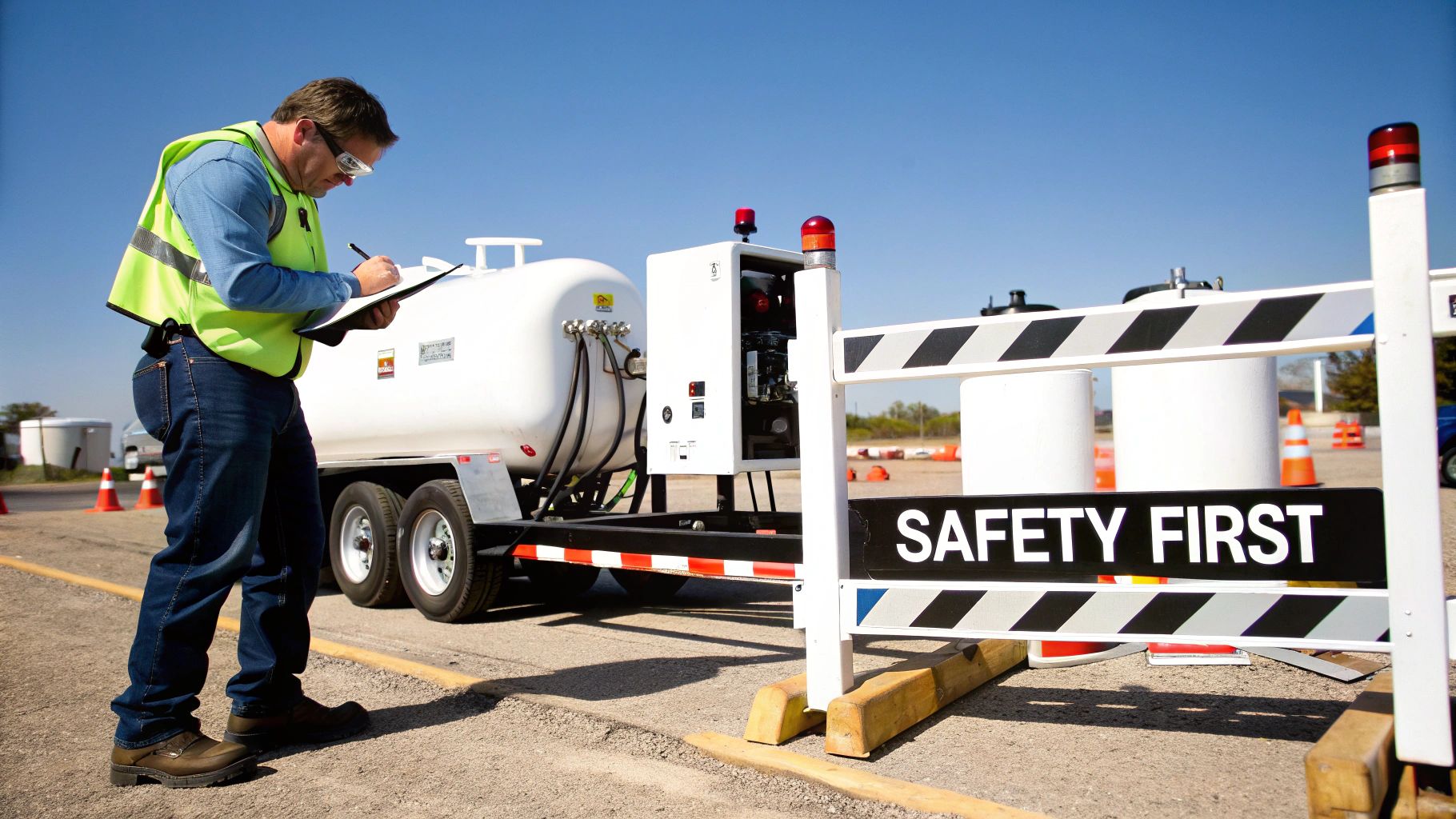
Let's be blunt: when you have natural gas on your job site, there's zero room for error. A proactive approach to safety and compliance isn't about ticking boxes on a form—it's about protecting your people, your project, and the public. This all comes down to working hand-in-hand with your provider and knowing exactly what your on-site responsibilities are.
Your provider, like Blue Gas Express, takes care of the mobile gas unit itself. Their technicians are the experts trained to manage the equipment, monitor pressures, and handle all the maintenance. But the minute that unit is on your property, your team is responsible for securing the site and maintaining a safe, clear perimeter around it.
This shared responsibility is really the foundation of a safe operation. It all hinges on clear communication and a solid understanding of the protocols for using a temporary xpress natural gas solution.
Your On-Site Safety Checklist
Think of this as your daily mission brief. Every site manager needs to bake these checks into their morning routine to keep the area secure and compliant. Honestly, a few minutes of prevention can head off a major incident.
- Secure the Perimeter: Is the temporary fencing still solid? Gates locked? Are the "No Smoking" and "Authorized Personnel Only" signs still visible and where they're supposed to be?
- Maintain Clear Access: The path to and from the mobile gas unit has to stay completely clear. We've all seen sites where mud, stray construction debris, or a parked truck can block the way. That's a huge problem for emergency access and needs to be cleared immediately.
- Daily Site Inspection: Do a quick walk-around. Look for any new potential ignition sources that might have popped up nearby—things like a new portable generator, a welding station, or even a vehicle left running too close.
Key Takeaway: Your provider manages the gas equipment, but you own the site. Your team's diligence in maintaining the safety zone is just as critical as the technician's expertise with the hardware.
Navigating Permits and Local Codes
Don't even think about skipping the regulatory side of things. Before a mobile unit can ever roll onto your site, you will almost certainly need permits from your local fire marshal or the authority having jurisdiction (AHJ). Don't just assume this is being handled for you.
You need to start this conversation early in the planning process. Your gas provider will give you all the equipment specs and safety documentation you need, but it's typically your job as the contractor to actually file the permit application. Following local fire codes, especially setback distances from buildings and property lines, is absolutely crucial for getting that green light.
Never skip this step. Trying to operate without the right permits is a surefire way to get hit with a shutdown order and some pretty painful fines. And while you're at it, make sure you and every key person on your crew know the emergency shutdown procedures by heart.
Managing the Service and Planning Your Transition
Once your temporary natural gas service is flowing, the game shifts from setup to smooth operation and, eventually, a clean handoff. A good provider, like Blue Gas Express, doesn't just drop off the equipment and vanish. They're actively in the loop, managing the service to make sure you have a rock-solid fuel supply for the entire duration of your project.
So, how does that work? It's all about remote monitoring. Technicians keep a close eye on your gas consumption in real-time. This isn't just for kicks; it lets them schedule refueling deliveries before you even know you need them. You won't have to worry about checking gauges or making last-minute calls. A fresh supply trailer will be on its way automatically, well before the current one runs low. This proactive approach means zero interruptions, whether you're keeping a high-rise warm for occupancy or firing up a new generator set.
You’ll also have a dedicated contact person for any questions or support. Having that single point of contact is invaluable for coordinating on-site work or troubleshooting any hiccups along the way.
Planning the Cutover to Permanent Gas
The whole point of temporary gas is to bridge a gap, so the end goal is always to switch over to the permanent utility line. A well-planned "cutover" is the difference between a seamless transition and a frantic, costly scramble. Don't leave this to the last minute.
This move requires a bit of a three-way dance between your team, us (your mobile gas provider), and the local gas utility.
As soon as the utility gives you a firm go-live date for their permanent service, that's your cue to bring us into the conversation. We'll then work directly with you and the utility to nail down the exact schedule for the switch.
Expert Tip: Try to schedule the transition during a low-demand window if you can, like overnight or on a weekend. The switch requires a very brief shutdown, so doing it during off-hours means most people will never even notice the change from the temporary feed to the permanent line.
Demobilization Day
With the permanent utility connection up and running smoothly, the final piece of the puzzle is demobilization. We'll coordinate a time to come out and safely disconnect our equipment from your piping.
Our technicians handle everything:
- Purging any lingering gas from the connection lines.
- Securing the mobile unit for transport.
- Removing all of our equipment from your site.
The whole process is quick and efficient, leaving your site clear and fully operational on its permanent gas supply. It’s all about making sure the end of your temporary service is just as professional and well-managed as the beginning.
Got Questions? We've Got Answers.
When you're looking at a temporary energy solution for the first time, a few key questions always come up. Here’s the straight talk on what you can expect when bringing in an xpress natural gas service to your site.
How Fast Can I Get Gas Flowing?
This is usually the first thing people ask, and for good reason. Speed is everything. For emergencies, we can often have a unit on your site and fully operational within a matter of hours after we get the green light.
For planned projects, it’s all about your timeline. We’ll coordinate directly with your site supervisor to make sure the equipment arrives exactly when you need it, preventing any gaps in your schedule.
What Does This Actually Cost?
We keep the pricing simple and transparent. There are really only three parts to the cost:
- Mobilization/Demobilization: This is a one-time charge to get the equipment to your site, set it up, and then remove it when the job is done.
- Equipment Rental: A straightforward daily or monthly fee for having the unit on-site.
- Gas Consumption: You only pay for the natural gas you actually burn.
You’ll get an all-inclusive quote based on your project's needs, so you won't have to worry about hidden fees or surprises down the road.
The single best way to keep costs down is to give us an accurate estimate of your BTU load and how long you'll need service. That lets us size the equipment perfectly from day one.
Does My Crew Need Any Special Training?
Nope, not at all. Think of this as a completely turnkey service. Our trained technicians handle everything related to the mobile gas unit.
We manage the delivery, the connection to your system, all the safety checks, ongoing monitoring, and every single refueling. Your team just needs to have your internal plumbing ready to connect and point us to a safe, accessible spot for the trailer. We handle the rest.
Don't let a utility delay put your project on hold. Blue Gas Express delivers the reliable, on-demand temporary natural gas you need to stay on schedule and protect your budget. Get your project back on track today.