

Yes, you absolutely can fill your CNG vehicle right in your own driveway. It's become a practical reality for many drivers looking to skip the public filling stations.
You essentially have two main ways to go about it: either install a personal refueling unit that taps into your home’s gas line for slow, overnight fills, or use a mobile service that brings the fuel to you on demand.
Is Home CNG Refueling a Realistic Option for You?
The convenience of "fueling up" while you sleep isn't just for EV owners anymore. If you drive a compressed natural gas (CNG) vehicle, the idea of having a full tank every morning without ever leaving your house is incredibly appealing. It completely changes the game, freeing you from planning your day around the nearest public CNG station.
But getting there involves a choice. You're looking at two very different approaches, and the best one for you will depend on your budget, your living situation, and how much convenience you're willing to pay for.
The Two Paths to Home Refueling
Your decision really boils down to whether you want a permanent, on-site setup or a flexible, service-based solution.
- Home Refueling Appliance (HRA): Think of this as your own personal gas pump. It's a small compressor, usually installed in a garage or another well-ventilated space, that connects directly to your home's natural gas line. It slowly compresses the gas and fills your vehicle's tank over several hours. The whole process is designed to happen overnight—just hook it up when you get home, and you wake up to a full tank. It’s the ultimate “set it and forget it” system.
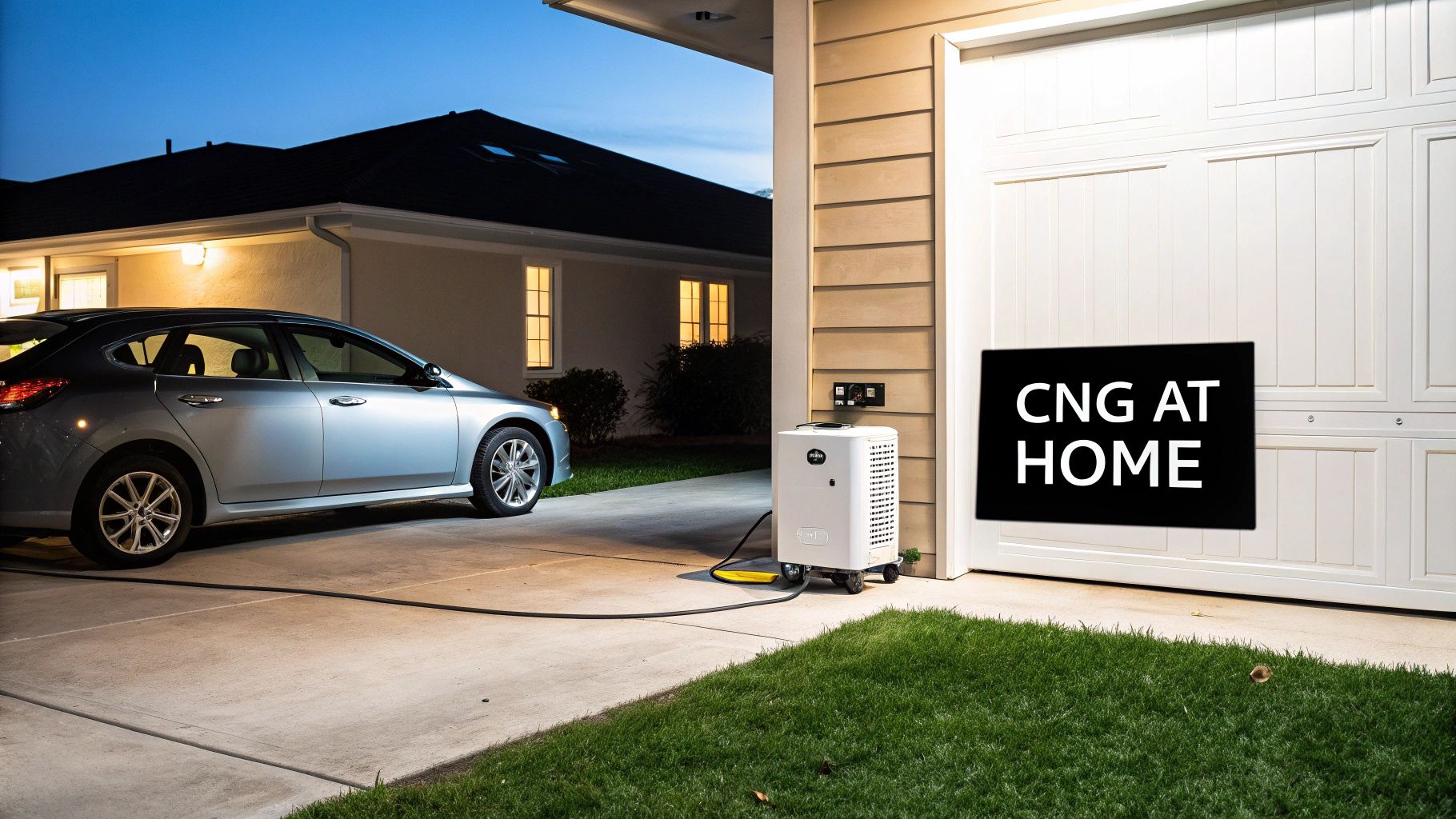
- Mobile Refueling Service: This is the no-install, no-fuss option. Companies like Blue Gas Express bring a specialized refueling truck right to your location, whether it's your home or office. A trained technician handles the entire fill-up, which is both fast and safe. This is a perfect solution if you're a renter, live in a community with a strict HOA, or simply don't want the upfront cost and maintenance of installing your own equipment.
It's a classic case of ownership versus access. An HRA means you own the equipment and can refuel anytime, 24/7. A mobile service means you're paying for the convenience of fuel delivered on your schedule, with zero hardware to worry about.
At a Glance Comparing Your Home CNG Options
Here’s a quick breakdown to help you see the differences side-by-side.
| Feature | Home Refueling Appliance (HRA) | Mobile Refueling Service |
|---|---|---|
| Initial Cost | High (equipment purchase and installation) | Zero |
| Installation | Required (professional install, permits, potential upgrades) | None required |
| Convenience | High (24/7 access, overnight fills) | High (fuel delivered to you, no effort) |
| Refueling Speed | Slow (typically 6-8 hours for a full tank) | Fast (similar to a public station) |
| Maintenance | Owner's responsibility | Handled entirely by the service provider |
| Flexibility | Low (fixed to your property) | High (can refuel at different locations, no commitment) |
| Best For | Homeowners, long-term CNG drivers, small fleet owners | Renters, HOA residents, those wanting a trial run with CNG |
Ultimately, both paths lead to the same result: a conveniently refueled CNG vehicle without the hassle of a public station.
As more drivers turn to natural gas, the market is responding. Valued in the tens of billions in the mid-2020s, the compressed natural gas market has seen steady growth. This expansion is helping to drive down the costs of small-scale compressors and storage, making home refueling a more affordable option than ever for homeowners and even small businesses. You can find more information about these CNG market trends and see where the industry is headed.
So, you're thinking about installing your own personal CNG station at home. That's a huge move toward taking control of your fuel supply, turning your garage into a private filling station and saying goodbye to public pumps for good. But let's be clear: this isn't like buying a new appliance. It’s a full-fledged project that takes serious planning, professional help, and an unwavering commitment to safety.
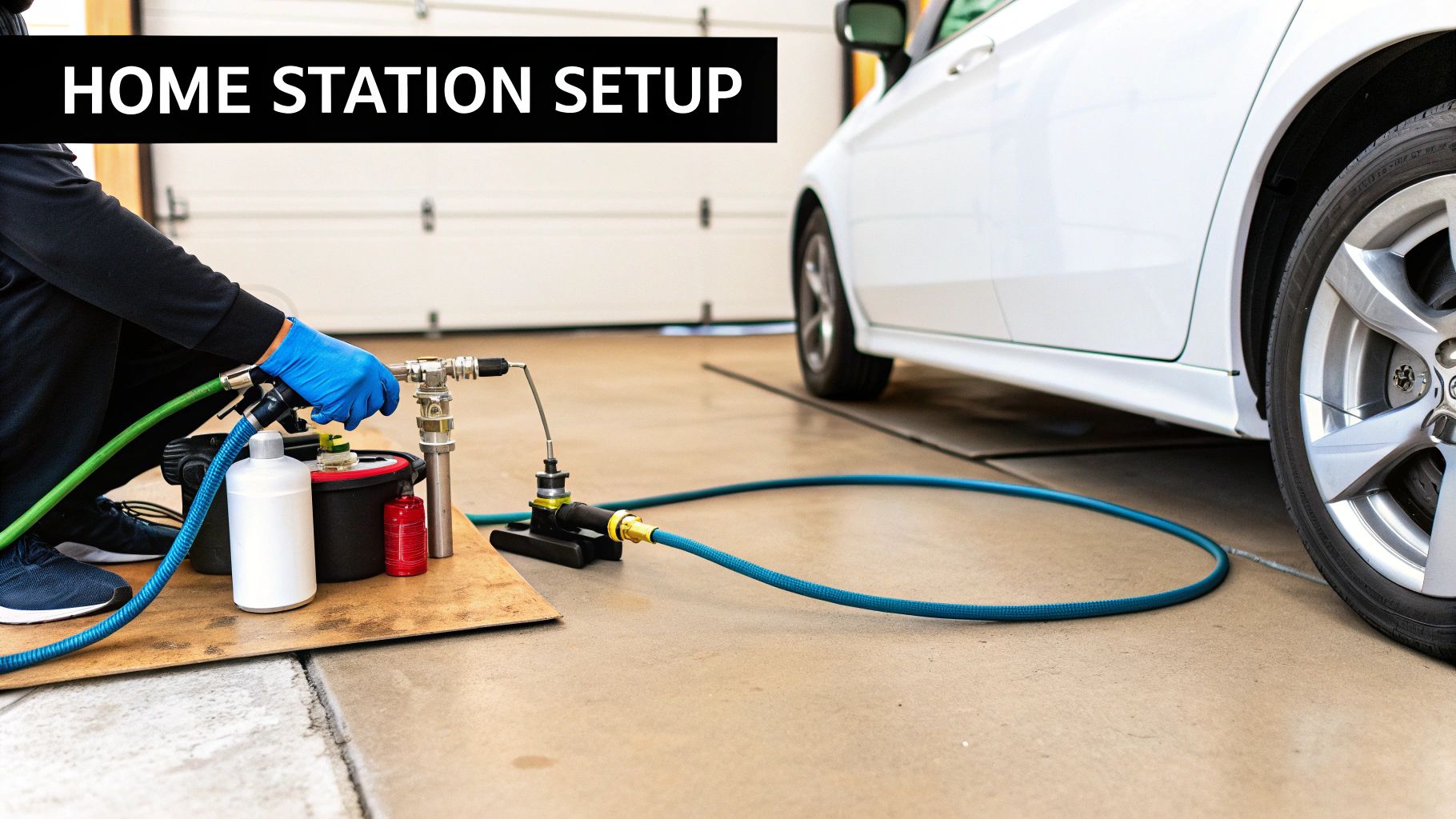
The workhorse of any home setup is what’s known as a Home Refueling Appliance (HRA). Think of it as a small, smart compressor built for residential use. It connects directly to the same low-pressure natural gas line that feeds your furnace or stove. Its entire job is to compress that gas up to the high pressure your vehicle needs—typically around 3,600 psi.
This isn't a quick fill-up. An HRA is designed for "slow-fill" overnight refueling. It takes several hours to gently bring your vehicle's tank to full pressure, which is actually better for the longevity of the equipment and your tank. This is the real convenience of cng filling at home—you just plug it in before you go to bed and wake up with a full tank, ready to go.
The Hardware and the Hands-On Work
An HRA system is more than just the compressor box. It’s a whole package of specialized gear that has to work together perfectly to deliver fuel safely. Knowing the different parts helps you understand why this is absolutely not a DIY job.
Here’s what a typical installation looks like:
- The Compressor: This is the main unit, usually about the size of a small filing cabinet. It needs to be installed somewhere with plenty of ventilation.
- Gas Line Connection: A certified gas plumber has to tap into your home's natural gas supply and run a dedicated line to the compressor.
- High-Pressure Hose & Nozzle: A heavy-duty, specialized hose rated for 3,600 psi runs from the compressor to the refueling nozzle. That nozzle is designed to lock onto your vehicle's port and create an airtight seal.
- Electrical Hookup: These units are power-hungry and need a dedicated electrical circuit, often 240 volts, much like an electric stove. A licensed electrician has to run the wiring and install the right outlet.
The installation itself requires a team of pros. You’ll have a gas fitter for the plumbing, an electrician for the power, and finally, the HRA technician to commission the unit. This coordination ensures every connection is tight, all safety checks pass, and the whole system is up to code.
Sorting Out Permits and Finding a Safe Spot
Before anyone even thinks about picking up a tool, you've got to handle the paperwork. Installing an HRA is a major home modification, so getting the right permits is your first, and most critical, task. A good installer will walk you through this process.
You'll almost certainly need permits from your local building, electrical, and fire departments. They exist to make sure the installation meets strict safety standards. Trying to skip this step is a recipe for disaster—you could face fines, be forced to remove the equipment, and your insurance company would likely deny any claim if something went wrong.
Key Takeaway: Professional installation is non-negotiable. It ensures your system is safe, compliant with all local codes, and covered by your homeowner's insurance. The risks associated with improper gas and electrical work are far too great for a DIY approach.
Choosing where to put the HRA is just as crucial as the installation itself. The number one rule is excellent ventilation. Natural gas is lighter than air, so if a leak ever happened, the gas needs to escape upwards and dissipate, not get trapped in an enclosed space.
Your best bets for a location are:
- A well-ventilated garage: This is the most common choice, but it must have good airflow from windows, vents, or even a fan system.
- An outdoor enclosure: Placing the unit outside in a protected, weatherproof housing is an even safer option, as it eliminates any risk of gas building up indoors.
The unit must sit on a solid, level surface like a concrete pad. You also need to position it so the hose can easily reach your vehicle without being stretched tight or creating a trip hazard. Your installer will do a site survey to help you find the safest, most practical spot that ticks all the regulatory boxes for cng filling at home.
Mobile Refueling: The Zero-Installation Alternative
What if you want the convenience of filling up your CNG vehicle at home but can't stomach the thought of a permanent installation? For many people, the idea of digging up the yard, running new gas lines, and navigating a maze of city permits is an instant "no."
This is where on-demand mobile refueling services completely change the game.
Imagine having a full tank of CNG delivered right to your driveway, just like ordering dinner or a package. That’s exactly what these services do. A company brings a specialized refueling truck to you, and a trained technician handles the entire process. You just schedule a fill-up, usually through an app, and they do all the heavy lifting.
This model sidesteps the biggest headaches of a home refueling appliance. You're not on the hook for steep equipment costs, complex installation projects, or any maintenance. The service provider owns and maintains all the high-pressure gear, so you don't have to.
It’s All About App-Based Convenience
The whole experience is built for modern life. It's designed to be simple, turning a chore into something that just happens in the background.
Here’s a real-world look at how it usually works:
- You schedule the fill. Just pop open the provider's app or website and pick a time that works for you. Many services even let you set up a recurring schedule—say, every Tuesday morning—so your car is always ready to go without you even thinking about it.
- A technician shows up. A pro arrives at your home or office with a mobile refueling unit. Think of it as a filling station on wheels, fully kitted out with the right hoses, nozzles, and safety equipment.
- They handle the refueling. The tech connects the hose to your vehicle's CNG port and safely manages the fill. It’s surprisingly quick, often taking just a few minutes, which is about what you’d spend at a public station anyway.
- Payment is automatic. Once you're topped off, they disconnect, and the payment is handled right through the app. You get a notification and a digital receipt, and your car is good to go.
The best part? You don't need to be an expert in high-pressure gas systems. It’s a completely hands-off service that delivers the #1 benefit of home refueling—a full tank whenever you need it—without any of the long-term baggage of owning the equipment.
Who Is This Really For?
While a permanent home refueling appliance (HRA) is a fantastic fit for some homeowners, the mobile service model is a perfect solution for a much wider group of people.
This is probably your best bet if you:
- Are a renter. Let's be honest, installing a permanent gas appliance is almost always off the table if you don't own the property.
- Live in an HOA community. Homeowners' associations can have notoriously strict rules about exterior modifications, making a permanent compressor installation a bureaucratic nightmare.
- Want to avoid a huge upfront cost. The initial price tag for an HRA can easily run into thousands of dollars. Mobile services work on a pay-per-fill model, turning a big one-time expense into a predictable, manageable cost.
- Aren't sure about your long-term plans. If you think you might move in a few years or aren't 100% committed to a CNG vehicle for the long haul, a mobile service gives you total flexibility. No strings attached.
The real appeal is freedom. Mobile refueling decouples the convenience of at-home fuel from the burdens of property ownership and permanent infrastructure. It's a service, not a project.
Of course, there are a couple of trade-offs to keep in mind. The cost per gallon equivalent will be higher than what you'd pay for natural gas straight from your utility line, since you're paying for the convenience and labor. And, these services aren't available everywhere. Their existence depends on being within a provider’s service area, which is usually limited to certain metro regions.
You'll need to check if a provider like Blue Gas Express operates near you. For those who can get it, though, mobile refueling is an incredibly practical way to make CNG filling at home a reality.
Costs, Safety, and Red Tape: What You Need to Know
Making the jump to home CNG refueling is about more than just equipment. You’ve got to get real about the numbers, commit to safety above all else, and be ready to navigate the local rules. This is where we get down to brass tacks: what it costs, and how to do it right.
When you're weighing your options, the choice between a permanent Home Refueling Appliance (HRA) and a mobile service really boils down to your budget and how you plan to use it. One requires a hefty upfront investment, while the other feels more like paying a regular utility bill.
The Financial Breakdown: HRA vs. Mobile Service
Let's be clear: installing your own HRA is a serious upfront investment. The compressor unit is just the start—the total cost quickly balloons once you add the professional work needed to get it running safely and legally.
Here's a realistic look at what you can expect to pay:
- The Compressor: The unit itself will set you back anywhere from $4,000 to over $10,000, depending on its capacity and features.
- Professional Installation: This is not a DIY project. You'll need licensed electricians and gas plumbers, which typically costs $1,500 to $4,000 or even more.
- Permits and Inspections: Your local government will require permits to ensure everything is up to code. Budget at least a few hundred dollars for this.
- Potential Upgrades: If your home's electrical panel or gas line can't handle the load, you'll need to upgrade them, a cost that can vary dramatically.
On the flip side, a mobile refueling service like Blue Gas Express wipes those big upfront costs off the table entirely. The model couldn’t be simpler: you just pay for the fuel you use, when you need it. This pay-per-fill approach turns a major capital expense into a predictable operational one, which is a much easier pill for most household budgets to swallow.
Long-Term Value and Your Payback Period
If you put a lot of miles on your vehicle, the long-term savings from an HRA can look pretty good. You’re essentially buying natural gas at the low residential rate, not the marked-up price you find at public stations. That price gap is where you’ll eventually see a return on your investment.
Still, there’s a reason home CNG refueling has always been a niche market. With roughly one CNG station for every 430 gasoline stations in the U.S., public options are scarce. This pushed early adopters toward setting up their own systems at home. Those pioneers faced high initial costs, but they often saw fuel savings between 20% and 50% per mile in areas with cheap natural gas.
Thinking through the logistics of a personal CNG station has parallels in other private energy systems. For example, looking at resources on workplace charging infrastructure can offer valuable insights into cost analysis, safety protocols, and the kind of regulatory hurdles you might face.
Safety Protocols Are Not Optional
When you're dealing with high-pressure natural gas, safety is everything. Modern HRAs are packed with safety features, but that doesn't mean you can get complacent. Responsible ownership means treating every single fill-up with focused attention.
Run through this practical checklist every time you refuel:
- Inspect Your Gear: Before you connect anything, give the hose a quick visual check for cracks, wear, or abrasions. Make sure the nozzle is clean.
- Check for Leaks: The old-school soapy water trick works wonders. After the system is pressurized, spray it on the connections. If you see bubbles, shut everything down immediately.
- Keep it Ventilated: Never, ever refuel in a sealed, unventilated space. If your compressor is in a garage, that door needs to be open to let any potential gas leaks escape.
- Listen and Watch: Get to know the normal sounds of your compressor. That way, you’ll immediately notice an unusual hiss or clank that could signal a problem.
Critical Safety Insight: Never try to fix a high-pressure CNG component yourself. These systems operate at up to 3,600 psi, and a failure can be catastrophic. If something seems off, call a certified technician. Period.
Navigating Permits and Certifications
You can't just buy a compressor off the internet and plug it in. To be safe, legal, and insurable, your whole setup—from the equipment to the installation—has to meet specific standards.
The most important thing to look for on the equipment itself is a UL (Underwriters Laboratories) certification or a similar mark from a Nationally Recognized Testing Laboratory. A UL-certified HRA has been put through the wringer to ensure it meets strict safety standards. Installing a non-certified unit is not only a huge risk but will almost certainly void your homeowner's insurance.
Before any work starts, you or your installer must file for permits with your local building department. Once the job is done, an inspector will have to sign off on it, confirming it complies with all local building, fire, and electrical codes. It might seem like a hassle, but it’s a final, crucial check that protects you, your family, and your neighbors.
How to Safely Refuel Your CNG Vehicle at Home
Once your Home Refueling Appliance (HRA) is professionally installed and ready to go, the actual process of filling up your vehicle is surprisingly straightforward. Think of it less like a complex technical procedure and more like a simple, repeatable routine. Still, it's critical to approach every fill-up with a safety-first mindset.
Let's walk through turning this new task into a confident, everyday habit, starting with a quick check that should become second nature.
Your Pre-Fueling Safety Check
Before you even think about connecting the nozzle, take thirty seconds to give your equipment a quick once-over. This simple habit is your first and best line of defense against any potential problems.
- Check the Hose: Run your eyes along the high-pressure hose. Are there any visible cracks, scuffs, or kinks? A compromised hose is a serious red flag and needs to be addressed by a technician immediately.
- Inspect the Nozzle: Is the nozzle clean? Any dirt or debris can interfere with a proper seal, so make sure it's clear before you connect.
- Use Your Senses: Pause for a moment. Do you hear any unusual hissing sounds coming from the compressor or its connections? Natural gas is odorless on its own, but utility companies add a sulfur-like, "rotten egg" smell (mercaptan) so you can detect leaks. If you smell anything, stop immediately.
This quick scan ensures everything is in good working order before you start pressurizing the system.
Connecting and Starting the Fill
With your safety check done, you're ready to hook up to your vehicle. The connection is designed to be fool-proof, but getting it right is crucial for a safe fill.
First, pop the protective dust caps off your vehicle's receptacle and the refueling nozzle. Line up the nozzle with the port and push it on firmly. You should hear a distinct click as the locking mechanism engages. Give it a gentle tug to be sure it’s seated correctly.
Now, you can fire up the compressor. Most home units keep it simple with a basic on/off switch. You’ll hear the motor kick on as it begins its slow-and-steady fill process. Over time, you'll get used to the normal hums and clicks of your unit, making it easier to notice if anything ever sounds out of place.
The flowchart below provides a great overview of the entire process, from weighing the costs to navigating the necessary permits and safety rules.
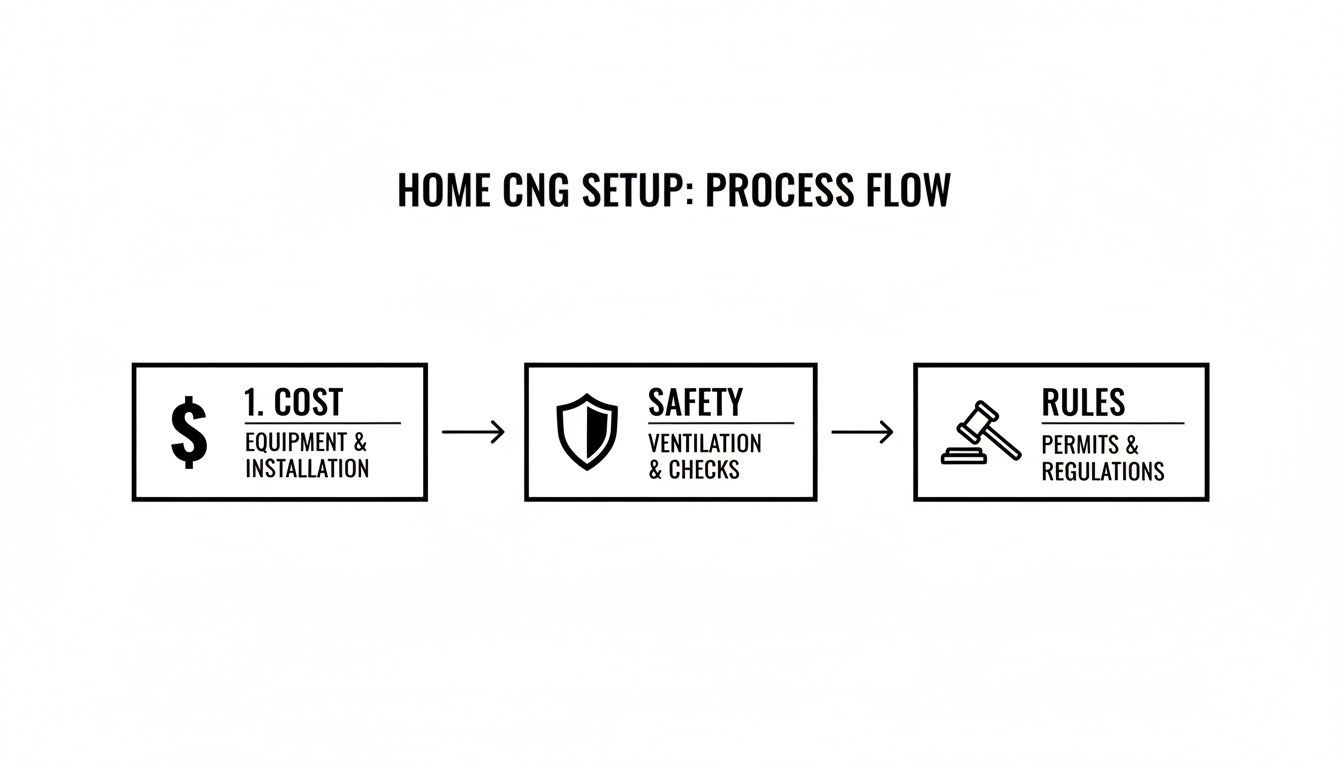
As you can see, a successful setup is about more than just the hardware; it's about following the right steps to ensure everything is safe and compliant.
Monitoring and Disconnecting Safely
One of the best features of a home refueling appliance is its "set it and forget it" nature. The system is designed to fill your tank to the correct pressure—usually 3,600 psi—and then shut off automatically. This means you can plug it in before bed and wake up to a full tank.
My Personal Tip: While the system is fully automatic, I always like to do a quick walk-around about five minutes after I start a fill. With the system fully pressurized, it’s the best time to listen for any faint hissing that might indicate a tiny leak. It's a simple step that gives me complete peace of mind before I leave it for the night.
Once the compressor has finished its cycle, the disconnection process is just as important as the connection.
First, always turn the compressor off. This depressurizes the hose, which makes disconnecting a breeze.
Next, grip the nozzle's handle to disengage it from the vehicle's port. You'll likely hear a short, sharp hiss of gas as the residual pressure in the line is released—don't be alarmed, this is perfectly normal. Finally, put the protective caps back on both the nozzle and the vehicle's receptacle and coil the hose neatly. This keeps your equipment clean and ready for the next time.
Got Questions About Home CNG? Let's Clear Things Up.
Even after laying out the options, it's totally normal to have a few more questions rattling around. Deciding to refuel with CNG at home is a big move, and the nitty-gritty details really matter. Let's tackle some of the most common things people ask when they're seriously thinking about making at-home CNG fueling a reality.
Getting a few straight answers is often the last step before you can confidently move forward.
How Long Does It Take to Fill a CNG Car at Home?
This is usually the first thing people want to know. A typical home refueling appliance is what we call a "slow-fill" system. That means filling a totally empty tank can take anywhere from 5 to 10 hours. The exact time depends on your vehicle's tank size and the specific output of the compressor you choose.
That might sound like a long time, but it’s designed to be completely hands-off. The whole idea is for it to happen overnight while you sleep, just like charging an electric car. You pull into your garage, connect the nozzle, and wake up to a full tank. No extra trips, no waiting in line.
Mobile refueling services are a different story. A provider like Blue Gas Express uses powerful, high-capacity equipment. They can fill you up in just a few minutes, giving you an experience that's much closer to a quick stop at a traditional gas station.
Can I Install a Home CNG Refueling Station Myself?
Let me be crystal clear on this one: absolutely not. Installing a home CNG refueling appliance is not a weekend DIY project. This is serious business involving high-pressure natural gas lines and dedicated electrical circuits. A mistake isn’t just a costly do-over; it’s incredibly dangerous.
Safety First, Always: An improper installation creates a major risk of gas leaks, fire, or even an explosion. For the safety of your home and everyone in it, hiring a licensed and certified technician is non-negotiable.
A professional installer makes sure every component meets local building codes, fire regulations, and the manufacturer’s own strict guidelines. Plus, having that professional sign-off is usually required to keep your homeowner's insurance valid.
Is Refueling with CNG at Home Actually Cheaper?
When you look at the fuel alone, yes. The natural gas coming from your utility line is much cheaper per unit than what you'll pay at a public CNG station, which has to cover its own overhead and make a profit. But the real question of cost-effectiveness comes down to that big upfront investment in the equipment and professional installation.
The payback period really depends on how much you drive.
- For high-mileage drivers: If you're on the road a lot, the fuel savings can be substantial. You could easily recoup the initial system cost within a few years, making it a great long-term financial move.
- For low-mileage drivers: If you don't put a lot of miles on your vehicle, the math doesn't look as good. It could take a very long time to break even. In that case, a pay-as-you-go mobile service or just using public stations makes more financial sense.
You have to weigh that initial capital expense against your potential fuel savings over time to see if a home refueling appliance is the right call for your specific needs.
Ready to skip the installation headache and have CNG delivered right to your door? Blue Gas Express brings the filling station to you. Explore our on-demand mobile refueling services and see just how easy it is to keep your vehicle fueled and ready to go. Learn more at https://bluegasexpress.com.